Unmasking Censored Histories: Illuminating Hidden Truths and Challenging Historical Cover-Ups
History, as we often learn it, is a carefully curated narrative, a mosaic built from selected facts and interpretations. Yet, beneath the surface of official accounts lies a vast, often uncomfortable realm of suppressed history—stories, events, and perspectives that have been deliberately obscured, forgotten, or outright denied. Unmasking these hidden truths isn’t just an academic exercise; it’s a vital quest for a more complete understanding of our past, challenging the very foundations of what we believe to be true and forcing us to confront the intricate web of historical cover-ups that have shaped our world.
This journey into censored histories invites us to become diligent truth-seekers, questioning established narratives and digging deeper into the archives, oral traditions, and even the silences of the past. It’s about recognizing that history isn’t static; it’s a dynamic, contested field where power, politics, and prejudice often dictate what gets remembered and what gets buried. By engaging with revisionist history—not as denial, but as rigorous re-evaluation—we can begin to piece together a richer, more nuanced human story, one that acknowledges the full spectrum of experiences, injustices, and triumphs that have been systematically marginalized.
The Mechanisms of Suppression: How History Gets Hidden
How does history become censored? It’s rarely a single, dramatic act, but rather a multifaceted process involving a range of deliberate and systemic mechanisms. Understanding these methods is crucial for anyone hoping to uncover suppressed history.

Intentional Erasure and Destruction
One of the most direct ways to control a historical narrative is to eliminate the evidence itself. This can manifest in several forms:
- Physical Destruction of Documents and Artifacts: From the legendary burning of the Library of Alexandria to state-sponsored purges of dissenting records, the deliberate destruction of books, manuscripts, artworks, and archaeological sites effectively removes inconvenient truths from the historical record. Regimes often target materials that contradict their ideology or expose past wrongdoings.
- Systematic Omission from Official Records: Sometimes, the suppression isn’t about destroying existing records, but simply ensuring certain events are never formally documented. This might involve ignoring protests, downplaying atrocities, or failing to record the contributions of marginalized groups. When official archives remain silent on significant events, it creates a void that can be difficult to fill later.
- Rewriting or Altering Existing Records: Beyond outright destruction, documents can be altered, sections redacted, or new, fabricated records introduced to paint a different picture. This form of historical manipulation is particularly insidious, as it presents a seemingly legitimate, yet fundamentally false, account.
- Controlling Educational Curricula and Textbooks: What children learn in school profoundly shapes their understanding of history. Governments and cultural institutions often exert significant influence over textbooks, emphasizing certain national heroes, glossing over controversial periods, or omitting the perspectives of minority groups. This creates a foundational narrative that can be hard to challenge later in life.
- Propaganda and Nation-Building Narratives: Throughout history, states have used historical narratives to foster national unity, justify wars, or legitimize their rule. This often involves crafting heroic myths, demonizing external enemies, and presenting a sanitized version of national achievements while downplaying internal conflicts or injustices. Such narratives become deeply embedded in public consciousness.
- The Double-Edged Sword of Revisionist History: The term “revisionist history” can be contentious. On one hand, it refers to the legitimate, ongoing process by which historians re-examine past events with new evidence, methodologies, or perspectives, leading to a more accurate understanding. This is how hidden truths are often brought to light. On the other hand, the term is sometimes co-opted by those who seek to deny well-established facts, promote conspiracy theories, or rehabilitate discredited figures, often for ideological or political gain. Distinguishing between genuine historical re-evaluation and politically motivated distortion is a critical skill for any truth-seeker.
- Dominant Paradigms and Resistance to New Theories: Academic fields often develop dominant interpretations or “paradigms” that can be resistant to radical new ideas. Scholars who challenge these established views with hidden truths may face skepticism, difficulty in getting published, or even professional marginalization, especially if their findings disrupt comfortable narratives.
- Funding Influences Research Directions: Research funding, whether from government bodies, private foundations, or corporations, can subtly influence what historical questions are pursued and which ones are left unexplored. Areas of history that are politically sensitive or economically inconvenient may receive less support, thus inadvertently contributing to their suppression.
- The Challenge for Independent Scholars and Marginalized Voices: Those outside mainstream academic institutions, or scholars from marginalized communities, often face greater hurdles in having their research recognized and disseminated. Yet, it is often these voices that bring crucial new perspectives and unearth suppressed history that mainstream narratives have overlooked.
- Protecting Regimes and Avoiding Public Dissent: Governments frequently suppress records of human rights abuses, economic mismanagement, or electoral fraud to prevent public outrage and maintain their grip on power. Exposing such hidden truths could lead to revolutions, protests, or a loss of legitimacy. The Soviet Union, for instance, famously rewrote its history to erase figures like Leon Trotsky and later, even Stalin himself, from official narratives when they fell out of favor.
- Justifying Actions and Policies: Historical narratives are often manipulated to justify past wars, colonial conquests, or controversial domestic policies. By presenting a sanitized or biased account of events, leaders can garner public support or deflect criticism for decisions that might otherwise be seen as unjust or self-serving.
- Preventing International Condemnation: Nations may engage in historical cover-ups to avoid international sanctions, legal repercussions, or diplomatic isolation. Admitting to war crimes, genocides, or other grave violations of international law can have severe consequences on the global stage.
- Hiding Unethical Business Practices: Corporations have a vested interest in suppressing information about environmental damage, labor abuses, product defects, or financial malfeasance. Exposing these hidden truths could lead to massive lawsuits, regulatory fines, and irreparable damage to their brand and profits. Think of historical cases involving tobacco companies, pharmaceutical giants, or industries with significant environmental impact.
- Protecting Wealth and Resources: The historical exploitation of natural resources, land grabs, or the accumulation of wealth through illicit means are often obscured to protect the descendants or beneficiaries of those actions. Suppressed history in this context often involves the dispossession of Indigenous peoples or the systematic exploitation of certain populations.
- Creating a Mythic Past for Unity: Many nations build their identity on foundational myths that emphasize heroism, unity, and a shared glorious past. Hidden truths about internal divisions, civil conflicts, or ignominious defeats might be downplayed or omitted to present a more cohesive and inspiring national narrative.
- Downplaying Uncomfortable Aspects of National Origin: Colonial powers, for example, often downplayed the violence, exploitation, and cultural destruction inherent in their expansion, instead framing it as a civilizing mission. Confronting these historical cover-ups is essential for nations to reconcile with their past and build a more inclusive future.
- Maintaining Social Order and Avoiding Collective Guilt: Societies may collectively avoid confronting painful historical episodes, such as slavery, genocide, or widespread discrimination, to prevent social unrest or to avoid feelings of collective guilt. This can lead to generations growing up unaware of the full scope of their nation’s past.
- Individuals, Families, and Institutions: Powerful individuals, prominent families, or respected institutions might actively work to suppress information that could tarnish their legacy or expose past misdeeds. This could involve destroying personal papers, influencing biographers, or leveraging their influence to prevent critical examination.
- The Challenge of Confronting Revered Figures: Society often struggles to reconcile the positive contributions of historical figures with their less admirable actions. This can lead to a reluctance to fully acknowledge hidden truths about their involvement in slavery, misogyny, or other problematic behaviors, for fear of undermining their perceived heroism.
- Mechanisms of Suppression: Local authorities actively suppressed news reports, property records vanished, and official investigations were either nonexistent or quickly closed. Insurance claims were denied, and the event was largely omitted from state and national histories, effectively becoming a suppressed history for generations.
- Unmasking the Truth: It was primarily through the persistent efforts of survivors, their descendants, local historians, and journalists that the story slowly re-emerged in the late 20th and early 21st centuries. Commemorations, academic studies, and media attention finally brought this hidden truth to national consciousness, leading to calls for reparations and a deeper reckoning with racial violence in America.
- Mechanisms of Suppression: After the war, the United States granted immunity from prosecution to the leaders of Unit 731, including its head, Shiro Ishii, in exchange for their research data. This strategic decision was a clear historical cover-up to gain a military advantage during the nascent Cold War, ensuring that these egregious war crimes were largely kept secret from the public and international tribunals.
- Unmasking the Truth: Decades later, through the work of investigative journalists, historians, and former Unit 731 members who broke their silence, the full extent of the atrocities gradually came to light. The revelations forced Japan to confront a deeply uncomfortable aspect of its wartime past and sparked ongoing debates about accountability and historical memory.
- Mechanisms of Suppression: These operations were designed to be secret, with intelligence agencies employing strict classification protocols and plausible deniability. Information was deliberately withheld from the public and often even from Congress. The official narrative presented a simpler story of American foreign policy, free from covert interference. This created a vast realm of suppressed history concerning U.S. foreign relations.
- Unmasking the Truth: Over time, through declassified documents, congressional investigations (like the Church Committee in the 1970s), and the work of whistleblowers and investigative journalists, many of these hidden truths have emerged. These revelations have fundamentally altered our understanding of Cold War history, revealing the extent of U.S. interventionism and its long-term consequences.
- Mechanisms of Suppression: Colonial powers systematically downplayed or ignored the complex societies, advanced agricultural practices, and rich cultural traditions that existed before their arrival. Indigenous peoples were often depicted as “savage” or “primitive” to justify conquest, land dispossession, and assimilation policies. Oral histories, sacred sites, and traditional knowledge were actively suppressed or dismissed as unreliable, creating a dominant revisionist history from the colonizer’s perspective.
- Unmasking the Truth: Today, a powerful movement led by Indigenous scholars, activists, and communities is working to decolonize archives, revitalize languages, and restore their ancestral narratives. Through archaeological discoveries, linguistic analysis, and the recording of oral traditions, hidden truths about pre-colonial civilizations, brutal massacres, and ongoing resistance are being brought to light, fundamentally reshaping our understanding of national histories from Canada to Australia, and across the Americas.
- Questioning Official Narratives: Always approach official histories, government reports, and mainstream media accounts with a critical eye. Ask: Who wrote this? What was their agenda? What might they have gained or lost by presenting this particular version of events?
- Primary vs. Secondary Sources: Prioritize primary sources (first-hand accounts, original documents, artifacts) whenever possible, but critically evaluate them for bias. Understand that even primary sources can be incomplete or deliberately misleading. Use secondary sources (interpretations by historians) to provide context, but always trace their claims back to their original evidence.
- Identifying Biases and Agendas: Every source has a perspective. Learn to identify the political, social, economic, or cultural biases inherent in historical records. This means looking beyond the explicit statements to understand the underlying assumptions and motivations of the creators.
- Archaeology and Anthropology: These fields can provide tangible evidence of past societies, cultures, and events that may have been erased from written records. Archaeological digs can uncover forgotten settlements, burial sites, or evidence of conflict, offering material proof of hidden truths.
- Oral Histories and Folklore: For many communities, especially those without long traditions of written records or those whose written histories were destroyed, oral traditions are vital sources. Interviewing elders, listening to traditional stories, and analyzing folklore can reveal suppressed history and perspectives that are otherwise lost.
- Forensics and Scientific Analysis: Modern forensic techniques can shed light on historical crimes, mass graves, or the causes of death in ways previously impossible. Scientific analysis of artifacts, bones, or environmental data can corroborate or challenge written accounts, providing objective evidence for historical cover-ups.
- Access to Previously Restricted Documents: Online archives, declassification initiatives, and digital libraries have made millions of historical documents accessible to anyone with an internet connection. This has empowered independent researchers to uncover suppressed history that was once confined to obscure government vaults.
- The Internet’s Role in Disseminating Suppressed History: While the internet also harbors misinformation, it provides a powerful platform for sharing lesser-known historical accounts, fostering discussions, and connecting researchers globally. It allows marginalized voices to publish their findings and challenge dominant narratives.
- The Courage of Whistleblowers: Individuals who leak classified documents or expose institutional wrongdoing often provide the initial spark that ignites investigations into historical cover-ups. Their bravery is frequently essential for bringing hidden truths into the public domain.
- Valuing Non-Written Forms of History: Recognize that history is not solely contained in written documents. Oral traditions, performative arts, communal memory, and cultural practices are rich repositories of historical knowledge, particularly for Indigenous and diasporic communities.
- Giving Voice to Marginalized Communities: Actively seek out and amplify the voices of those whose histories have been silenced. This involves collaborative research, respecting community protocols, and ensuring that the interpretation and dissemination of suppressed history are done ethically and with appropriate attribution.
- Justice, Reparations, and Healing: Uncovering past injustices—such as genocides, massacres, or systemic exploitation—can pave the way for formal apologies, reparations, and restorative justice initiatives. This process is vital for victims and their descendants to achieve a measure of closure and for societies to heal from collective trauma.
- Understanding Present-Day Inequalities: Many of the inequalities we observe today, whether racial, economic, or social, have deep historical roots. By understanding the historical cover-ups that obscured the origins of these disparities, we can better comprehend contemporary challenges and formulate more effective solutions for a more equitable future.
- Preventing Future Manipulation: When we understand how history has been manipulated in the past, we become more adept at recognizing attempts at propaganda, misinformation, and narrative control in the present. This fosters a more discerning public less susceptible to political or ideological manipulation.
- Promoting Critical Thinking: The act of questioning established narratives and seeking out alternative perspectives cultivates essential critical thinking skills. It encourages individuals to analyze information, weigh evidence, and form independent judgments rather than passively accepting official versions of events.
- Acknowledging Complexity and Nuance: Rather than simplistic narratives of good versus evil or inevitable progress, suppressed history reveals the full complexity of human experience—the moral ambiguities, the diverse motivations, and the multifaceted nature of historical events. This allows for a more nuanced and empathetic understanding of our shared past.
- Moving Beyond Simplistic Narratives: By integrating the experiences of marginalized groups, acknowledging the darker chapters, and challenging triumphant national myths, we construct a more honest and comprehensive human story. This expanded perspective fosters greater empathy, intercultural understanding, and a more robust sense of global citizenship.
- History of Propaganda: Shaping Public Opinion Through the Ages
- The Evolution of Archaeology: Unearthing Ancient Civilizations
- Understanding Systemic Injustice: A Historical Perspective
- National Archives and Records Administration (NARA) (for primary source access and declassified documents)
- American Historical Association (AHA) (for academic standards and historical scholarship)
- “A hand brushing dust off an old, partially obscured historical document, symbolizing the unmasking of hidden truths.”
- “A diverse group of people engaged in discussion around a timeline, representing the re-evaluation of revisionist history.”
- “A magnifying glass hovering over an old map, highlighting a forgotten place or event, illustrating the investigation of suppressed history.”
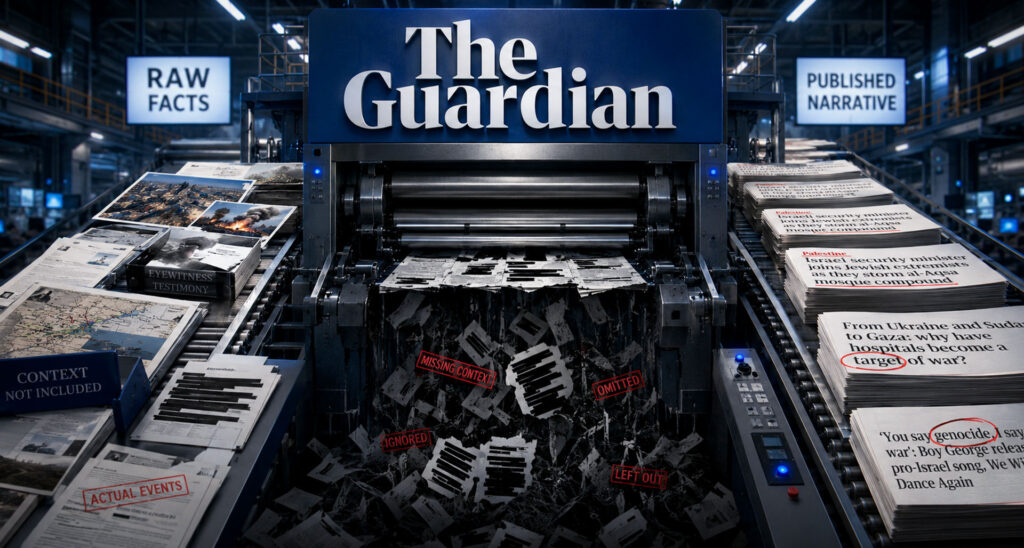
Selective Omission and Narrative Control
More subtle, yet equally powerful, are the methods used to control the story we tell about the past, even when some evidence survives.
Gatekeeping and Academic Bias
Even within academic circles, the path to uncovering suppressed history can be fraught with challenges.

Why Do Cover-Ups Happen? Unpacking the Motivations
The act of covering up history is rarely random; it’s almost always driven by powerful motivations rooted in self-preservation, control, and the desire to shape public perception. Unpacking these motivations helps us understand the pervasive nature of historical cover-ups.
Political Stability and Power Preservation
Perhaps the most common driver for historical suppression is the desire to maintain political power and stability.
Economic Interests and Corporate Secrecy
Beyond political motivations, powerful economic interests frequently play a role in burying uncomfortable historical facts.
Social Cohesion and National Identity
Sometimes, the impulse to suppress history stems from a desire to foster a particular sense of national identity or social cohesion, even if it means glossing over uncomfortable truths.
Protecting Reputations and Legacies
On a more personal or institutional level, the desire to protect reputations can also drive historical suppression.
Case Studies: Illuminating Specific Hidden Truths and Historical Cover-Ups
Examining specific examples brings the concept of suppressed history into sharp focus. These case studies demonstrate the varied motivations and methods behind historical cover-ups and the profound impact of their eventual unmasking.
The Tulsa Race Massacre (1921)
For decades, the horrific events of May 31 – June 1, 1921, in Tulsa, Oklahoma, remained largely absent from mainstream history books. A prosperous Black community known as Black Wall Street was attacked by a white mob, leading to the destruction of homes and businesses, the murder of hundreds, and the displacement of thousands.
Unit 731 and Japanese War Crimes
During World War II, the Imperial Japanese Army conducted horrific biological and chemical warfare experiments on human subjects in Unit 731, located in occupied China. These experiments resulted in tens of thousands of deaths and unimaginable suffering.
The CIA’s Operation Mockingbird and Cold War Interventions
Throughout the Cold War, the U.S. Central Intelligence Agency (CIA) engaged in numerous covert operations, including media manipulation (dubbed “Operation Mockingbird” in some accounts, though the specific program’s existence is debated, the broader phenomenon of media influence is not), regime change efforts, and political assassinations in countries across the globe.
Indigenous Histories in Colonial Narratives
The history of colonization across the globe is rife with historical cover-ups concerning the experiences, knowledge systems, and resistance of Indigenous peoples.
The Role of the Truth-Seeker: How We Unmask the Past
Unmasking censored histories is an active, ongoing process that requires curiosity, skepticism, and a commitment to rigorous inquiry. For history scholars and truth-seekers alike, a specific toolkit and mindset are essential to bring hidden truths to light.
Critical Source Analysis
The foundation of any historical investigation lies in scrutinizing the sources.
Interdisciplinary Approaches
History doesn’t exist in a vacuum. Drawing on other fields can unlock dimensions of suppressed history that traditional methods might miss.
Digital Archives and Whistleblowers
The digital age has democratized access to information in unprecedented ways, while whistleblowers continue to play a crucial role.
Community Engagement and Oral Traditions
Engaging directly with communities whose histories have been marginalized is fundamental.
The Impact of Unmasking: Why Hidden Truths Matter Today
The pursuit of hidden truths and the unmasking of historical cover-ups is far more than an academic exercise; it has profound and tangible impacts on our present and future.
Reckoning with the Past
Acknowledging suppressed history is a crucial step towards justice and healing.
Informed Citizenship
A clear understanding of censored histories empowers citizens to engage more critically with the world around them.
Building a More Complete Human Story
Ultimately, unmasking hidden truths enriches our collective understanding of humanity.
Challenges and Ethical Considerations in Revisionist History
While the pursuit of hidden truths is vital, engaging with revisionist history also presents significant challenges and ethical dilemmas. It’s crucial to distinguish between legitimate re-evaluation and politically motivated denialism. True historical revisionism is based on new evidence, methodologies, or perspectives that offer a more accurate or complete understanding of the past. It’s a continuous, self-correcting process driven by inquiry.
However, the term is sometimes co-opted by those who seek to deny well-established facts, promote conspiracy theories, or rehabilitate discredited figures for ideological or political gain. Historians and truth-seekers bear a profound responsibility to uphold academic integrity, rigorously vet sources, and transparently present their findings. Dealing with painful truths, especially those that implicate revered national figures or deeply held beliefs, requires sensitivity, courage, and a commitment to fostering understanding rather than simply generating controversy. The goal is always to build a more accurate and complete historical record, not to replace one set of biases with another.
Conclusion
The journey into censored histories is a testament to the enduring power of truth and the relentless human spirit of inquiry. It reminds us that history is not a dusty collection of facts, but a living, breathing narrative, constantly being shaped, challenged, and re-evaluated. Unmasking hidden truths and confronting historical cover-ups is an essential endeavor, not just for understanding where we’ve come from, but for navigating where we’re going. It equips us with the critical tools to question authority, resist manipulation, and build a more just and informed future. The work of the truth-seeker is never truly finished, for every unearthed truth often reveals new questions, urging us to continue digging, analyzing, and illuminating the often-uncomfortable, yet profoundly necessary, complexities of our shared past.
Subscribe for exclusive updates on suppressed historical evidence and join our community of truth-seekers as we continue to illuminate the untold stories that shape our world.
—
Internal Link Suggestions:
External Link Suggestions:
Image Alt Text Suggestions: