
Challenging History: Unearthing Provocative and Controversial Archaeological Finds
Archaeology is often seen as a dusty, meticulous science, but beneath its careful excavations lie stories that ignite passionate debates, challenge established timelines, and sometimes even hint at “forbidden” chapters of human history. These controversial discoveries push the boundaries of our understanding, forcing us to reconsider everything we thought we knew about ancient civilizations, lost technologies, and the very origins of humanity. For history buffs and those fascinated by alternative theories, these finds aren’t just curiosities; they’re invitations to a grand intellectual adventure, questioning the narratives we’ve long held sacred.
From perplexing artifacts that defy conventional explanation to structures that seem impossible for their era, these archaeological enigmas spark heated arguments between mainstream academics and proponents of “forbidden archaeology.” While many such theories are eventually debunked by rigorous scientific analysis, their persistent appeal lies in their ability to tap into our innate desire for discovery and the tantalizing possibility that there’s more to our past than meets the eye. Let’s delve into some of the most provocative and controversial finds that continue to challenge our historical perspectives.

What Are Out-of-Place Artifacts (OOPArts) and Why Are They So Controversial?
Out-of-Place Artifacts, or OOPArts, are objects discovered in contexts that challenge conventional historical chronology, often suggesting a level of technological advancement or cultural interaction that doesn’t fit the established timeline. These finds are a cornerstone of “forbidden archaeology,” sparking intense debate because they seem to contradict what we understand about the development of human civilization. Mainstream archaeologists typically seek conventional explanations, often attributing OOPArts to misidentification, natural formations, or even hoaxes, while alternative theorists see them as evidence of lost civilizations, extraterrestrial influence, or suppressed history.
The allure of OOPArts lies in their ability to make us question our assumptions. If an object appears far too advanced for the period it was found in, it implies that ancient peoples possessed knowledge or capabilities we haven’t accounted for. This intellectual tension creates a fertile ground for speculation and alternative historical narratives.

The Antikythera Mechanism: A Glimpse of Ancient Ingenuity
One of the most famous and now largely accepted OOPArts is the Antikythera Mechanism. Discovered in a Roman shipwreck off the coast of Greece in 1901, this intricate device, dating back to the 2nd century BCE, is often described as the world’s first analog computer. Composed of dozens of bronze gears, it was used to predict astronomical positions and eclipses decades in advance.
Initially, its complexity baffled researchers, as nothing comparable was known from that period. It took decades of careful study and advanced imaging techniques to fully understand its function. While it no longer falls into the “controversial” category in the same way some other OOPArts do, it serves as a powerful reminder that ancient civilizations were capable of astonishing technological feats that can easily be overlooked or forgotten by history. It demonstrates how a single find can drastically alter our perception of ancient capabilities, prompting us to ask what other incredible inventions might lie buried.

The Baghdad Battery: An Ancient Power Source?
Another intriguing OOPArt is the Baghdad Battery, discovered in Khujut Rabu, Iraq, in 1936. Dating to the Parthian era (around 250 BCE to 224 CE), this artifact consists of a clay jar containing a copper cylinder, an iron rod, and traces of acid. For decades, some researchers have proposed it served as a galvanic battery, capable of producing a small electrical current.
If true, this would mean ancient Parthians possessed knowledge of electricity long before its “official” discovery in the modern era. Mainstream archaeologists, however, offer alternative explanations. Some suggest it was a storage vessel for sacred scrolls, while others propose it was used for electroplating small objects with gold or silver, a technique known as gilding. While experiments have shown that replicas can indeed generate electricity, its original purpose remains a subject of lively debate, tantalizing those who wonder about ancient electrical technology.

The Klerksdorp Spheres: Natural Wonders or Crafted Mysteries?
From the depths of a South African mine, the Klerksdorp Spheres have fueled decades of speculation. These small, metallic spheres, some with parallel grooves around their equator, were found in pyrophyllite deposits estimated to be 2.8 billion years old. For proponents of “forbidden archaeology,” their seemingly perfect spherical shape and distinct grooves suggest intelligent design and advanced machining by an unknown, ancient civilization—perhaps even pre-dating complex life on Earth.
Geologists and mineralogists, however, classify the Klerksdorp Spheres as natural concretions, specifically “pyrophyllite concretions.” They argue that the spheres formed naturally through geological processes, where minerals accumulated around a central core, and the grooves are a result of layering within the rock. While the scientific explanation is robust, the sheer visual impact of these spheres continues to captivate those who prefer to imagine an incredibly ancient, technologically sophisticated past.
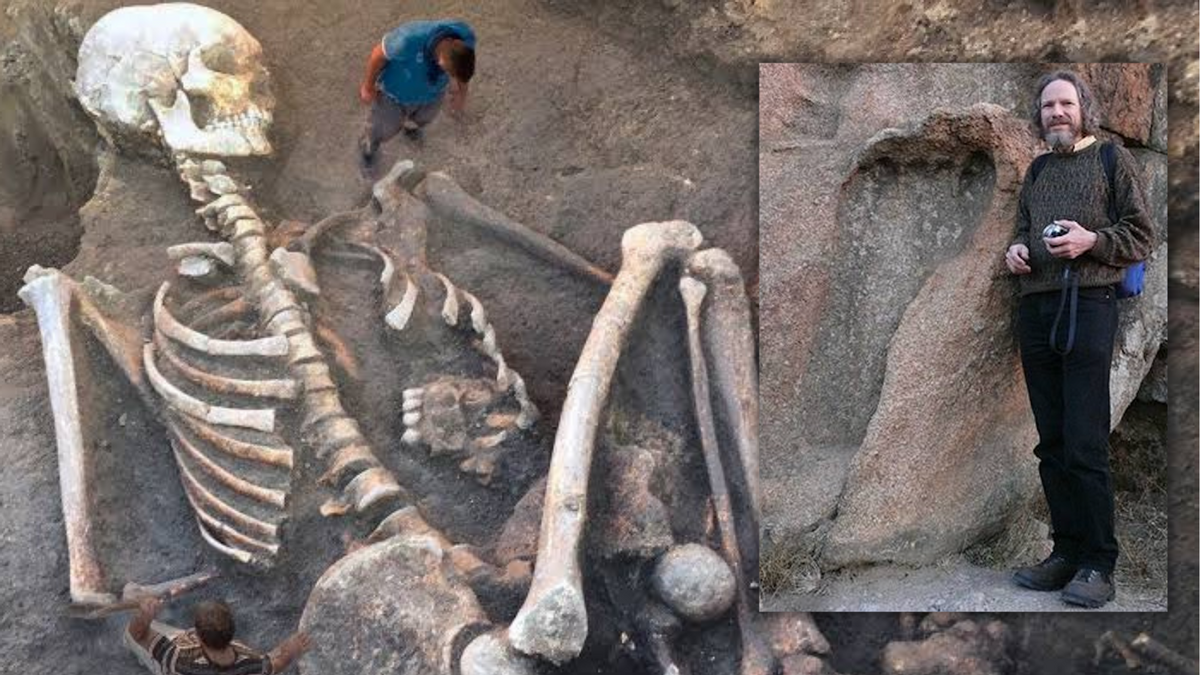
Did Giants Walk Among Us? The Enduring Allure of Anomalous Skeletons
The idea of giant humans existing in antiquity is a persistent thread in folklore, religious texts, and alternative history. From biblical accounts of the Nephilim to myths of colossal beings in various cultures, tales of giants spark curiosity. When archaeologists or amateur excavators unearth unusually large skeletal remains, these stories often resurface, igniting “controversial discoveries” that challenge our understanding of human evolution and size.
While mainstream archaeology carefully examines such finds, often attributing them to unusual individual growth (gigantism) or misinterpretation of fragmented bones, the notion of a forgotten race of giants continues to captivate the imagination. The debate often centers on the interpretation of evidence and the willingness to consider possibilities outside the established scientific paradigm.
The Cardiff Giant: A Famed Hoax That Fooled a Nation
One of the most famous instances of a “giant” discovery was the Cardiff Giant in 1869. Discovered by workmen digging a well in Cardiff, New York, this 10-foot-tall petrified man quickly became a national sensation. Thousands flocked to see what many believed was the fossilized remains of a biblical giant.
However, it was soon exposed as an elaborate hoax orchestrated by George Hull, an atheist who wanted to lampoon fundamentalists who took biblical passages literally. The giant was carved from a block of gypsum, treated with acids, and purposefully buried. While proven to be a fake, the Cardiff Giant illustrates the powerful human desire to find evidence supporting ancient myths and how readily people can be swayed by sensational claims, even in the face of skepticism. This event remains a cautionary tale in archaeology, highlighting the importance of critical analysis.
Unraveling Pre-Columbian Contact: Evidence of Ancient Global Travelers?
For decades, the prevailing historical narrative taught that Christopher Columbus “discovered” the Americas, implying that significant trans-oceanic contact before 1492 was minimal or non-existent. However, a growing body of “controversial discoveries” and interpretations suggests otherwise, positing that various cultures—from Vikings to Africans, Chinese, or Phoenicians—may have reached the Americas long before Columbus. These theories often draw on archaeological finds, linguistic similarities, and ancient accounts, challenging the idea of isolated continental development.
The Kensington Runestone: Norsemen in Minnesota?
Discovered in 1898 near Kensington, Minnesota, the Kensington Runestone is a slab of greywacke inscribed with runes. The inscription purportedly tells of a group of Norse explorers, eight Goths and 22 Norwegians, who traveled inland from the “west sea” in 1362. If authentic, it would be definitive proof of Norse presence deep within North America centuries before Columbus.
Mainstream runologists and linguists widely consider the runestone a hoax, pointing to anachronisms in the language and runic forms that do not match 14th-century Norse. They argue the inscription exhibits characteristics of 19th-century Swedish-American dialect. However, proponents steadfastly defend its authenticity, citing circumstantial evidence and arguing that the linguistic anomalies could be explained by dialectal variations or the circumstances of its creation. The debate continues, fueled by regional pride and the romantic notion of forgotten explorers.
Olmec Heads and African Connections: A Suppressed History?
The colossal basalt heads carved by the ancient Olmec civilization of Mesoamerica (circa 1500-400 BCE) are among the most iconic archaeological finds in Mexico. Characterized by their distinct facial features, thick lips, and broad noses, these massive sculptures have sparked a “controversial discovery” theory: that they depict individuals of African descent, suggesting pre-Columbian trans-Atlantic contact.
Proponents of this theory argue that the facial features are undeniable evidence of African presence in ancient Mesoamerica, implying that Africans voyaged across the Atlantic and influenced early American civilizations. Mainstream archaeologists, however, largely reject this interpretation. They contend that the facial features are consistent with the diverse physiognomy of indigenous Mesoamerican populations, and that the stylistic choices were simply a reflection of Olmec artistic conventions, not necessarily an accurate depiction of any specific race. The debate highlights how interpretations of art can become highly charged, especially when they touch upon sensitive topics of origin and influence.
Lost Civilizations and Advanced Ancient Technology: The Allure of a Forgotten Past
The idea that highly advanced civilizations existed in the distant past, only to be lost to catastrophe or time, holds immense appeal for many. These “suppressed history” narratives often point to monumental structures or sophisticated engineering feats that seem to defy the capabilities of the cultures credited with building them. Such “forbidden archaeology” theories suggest a forgotten golden age, where ancient peoples possessed knowledge and technology far beyond what we currently attribute to them.
Puma Punku and Tiahuanaco: Precision Engineering in the Andes
High in the Bolivian Andes, the ruins of Puma Punku and the nearby city of Tiahuanaco present an archaeological puzzle that continues to fuel theories of advanced ancient technology. Dating back to as early as 500 CE, the site features massive, intricately cut stone blocks, some weighing over 100 tons. What makes them so controversial are the incredibly precise cuts, perfectly straight edges, and complex interlocking designs, often compared to modern machine tooling.
How could ancient people, presumably without metal tools capable of such precision, quarry, transport, and perfectly shape these enormous stones? Alternative theorists propose a range of explanations, from lost ancient technologies involving sophisticated cutting tools and lifting devices to even extraterrestrial assistance. Mainstream archaeologists, while acknowledging the extraordinary skill involved, explain the construction through ingenious methods of stone working, leveraging natural fracture planes, and using abrasive tools like sand and water, along with massive human labor. The precise methods, however, remain a subject of ongoing research and admiration, keeping the “advanced ancient technology” debate alive.
The Bosnian Pyramids: Europe’s Oldest Structures?
In Visoko, Bosnia, a series of hills has been proclaimed by one researcher, Semir Osmanagich, to be ancient pyramids—the largest and oldest in the world, dating back tens of thousands of years. He claims these structures exhibit perfect geometric orientations, intricate tunnel systems, and energy beams emanating from their apexes, suggesting a highly advanced, long-lost civilization. This “controversial discovery” has garnered significant international attention and drawn many tourists.
However, the overwhelming consensus from the geological and archaeological communities is that these are natural geological formations, known as “flat-iron” hills. Geologists have found no evidence of artificial construction materials, and archaeologists have criticized the methods used by Osmanagich’s team, citing a lack of proper excavation techniques and scientific peer review. Despite the scientific rejection, the Bosnian Pyramids remain a powerful symbol for those who believe in “suppressed history” and the idea that conventional academia is unwilling to accept paradigm-shifting evidence.
Gobekli Tepe: Rewriting the Dawn of Civilization
While not controversial in the sense of being a hoax, Gobekli Tepe in southeastern Turkey is a genuinely paradigm-shifting site. Discovered in the mid-1990s, this complex of massive stone pillars, intricately carved with animals, dates back to approximately 9600 BCE—making it thousands of years older than Stonehenge and the earliest known monumental architecture.
Gobekli Tepe predates the invention of agriculture and settled life, challenging the long-held theory that complex societies and monumental construction only arose after people settled down and began farming. Instead, it suggests that hunter-gatherer societies were capable of immense organizational feats and sophisticated spiritual practices. This find has forced archaeologists to fundamentally rethink the origins of civilization, proving that sometimes the “forbidden” truth is simply what hasn’t been discovered yet. It’s an example of how genuine “unearthing provocative” finds can utterly transform our understanding of history, rather than just fueling speculation.
The Enduring Appeal of Challenging History
The realm of “challenging history” and “controversial discoveries” offers a fascinating lens through which to view our past. While many alternative theories are eventually “debunked,” their existence highlights a crucial aspect of human inquiry: the desire to question, to explore, and to imagine possibilities beyond the established narrative. These finds, whether genuine enigmas or elaborate hoaxes, serve as powerful reminders of the dynamic nature of history, which is constantly being rewritten with every new excavation and every fresh interpretation of evidence.
For history buffs and those drawn to the mysteries of the past, the journey through “forbidden archaeology” is not just about finding definitive answers, but about engaging with the questions themselves. It’s about the thrill of the unknown, the possibility that our textbooks might be incomplete, and the tantalizing thought that there are still profound secrets waiting to be unearthed. The debate between mainstream science and alternative theories is where new ideas are forged, old ones are tested, and our collective understanding of humanity’s long and complex story continues to evolve.
Join the debate in our community forum and share your thoughts on these and other archaeological mysteries!
—
Internal Link Opportunities:
- Anchor Text: ancient civilizations
- Anchor Text: human evolution
- Anchor Text: origins of civilization
- Anchor Text: Antikythera Mechanism
- Anchor Text: Gobekli Tepe
- This article is suitable for Article schema.
- A section like “What Are Out-of-Place Artifacts (OOPArts) and Why Are They So Controversial?” could be structured as an FAQPage item if it were a dedicated question-and-answer section.
Alt Text: An intricate bronze gear mechanism with many small teeth, part of the Antikythera Mechanism, displayed in a museum.Alt Text: A clay jar with a copper cylinder and iron rod inside, replicating the structure of the Baghdad Battery.Alt Text: Several small, perfectly spherical metallic stones with distinct grooves, known as Klerksdorp Spheres.Alt Text: A massive, petrified gypsum statue of a man, known as the Cardiff Giant, displayed upright.Alt Text: A large, flat stone slab covered in ancient runic inscriptions, the Kensington Runestone.Alt Text: A colossal Olmec head sculpture made of basalt, featuring distinct facial features and a helmet.Alt Text: Precisely cut and interlocking stone blocks at the ancient ruins of Puma Punku in Bolivia.Alt Text: A large, tree-covered hill with a distinct pyramidal shape, claimed to be an ancient structure, in Visoko, Bosnia.Alt Text: Massive T-shaped megalithic pillars with intricate animal carvings at the archaeological site of Gobekli Tepe.
Suggested Link: /blog/lost-ancient-civilizations-uncovered (assuming a relevant article exists)
Suggested Link: /blog/new-theories-on-human-evolution (assuming a relevant article exists)
Suggested Link: /blog/revisiting-the-cradle-of-civilization (assuming a relevant article exists)
External Link Opportunities:
Suggested Link: https://www.antikythera-mechanism.gr/ (Official Antikythera Mechanism Research Project)
Suggested Link: https://www.dainst.org/project/-/project-display/20994 (German Archaeological Institute, Gobekli Tepe project page)
Schema Markup Suggestions:
Image Alt Text Suggestions: