
Unmasking Censored Histories: Illuminating Hidden Truths and Historical Cover-Ups
Have you ever paused to consider that the history we learn, the narratives enshrined in textbooks and public memory, might not be the whole story? It’s a thought that can be unsettling, even provocative, but it’s one that resonates deeply with truth-seekers and dedicated scholars alike. The past, much like a complex tapestry, often has threads deliberately cut, colors faded, or entire sections rewoven to fit a particular design. We’re not talking about simple forgetfulness; we’re talking about suppressed history, where hidden truths are actively obscured, and historical cover-ups reshape our understanding of pivotal events.
For those of us with an insatiable curiosity about the real story, the idea that significant portions of our past might be intentionally concealed is both a challenge and an invitation. It invites us to look beyond the official accounts, to question the prevailing narratives, and to embark on an investigative journey into the shadows of collective memory. This isn’t about conspiracy theories; it’s about rigorous historical inquiry, scrutinizing evidence, and understanding the powerful forces that often dictate what becomes “history” and what remains revisionist history—or, worse, completely erased.
In this comprehensive exploration, we’re going to delve into the fascinating and often frustrating world of censored histories. We’ll uncover why certain events and facts are pushed into obscurity, examine the mechanisms used to keep these truths hidden, and shine a light on compelling case studies that reveal the profound impact of these historical manipulations. Prepare to challenge your assumptions, sharpen your critical lens, and join us in the vital quest to unmask the past.

What Exactly is Suppressed History? Beyond Mere Oversight
When we talk about suppressed history, it’s crucial to understand that we’re not simply referring to facts or events that have been forgotten over time, or those that have simply faded from collective memory due to lack of interest. While historical amnesia certainly exists, suppressed history implies a more active, deliberate process. It’s about the intentional obscuring, minimizing, or outright erasing of past events, individuals, or perspectives from official records, public discourse, and educational curricula.
Think of it this way: official historical narratives are often constructed, much like a national monument. Certain figures are celebrated, certain events are highlighted as heroic or pivotal, and certain interpretations are cemented as undeniable truth. But what about the stories that don’t fit? What about the inconvenient truths that challenge the prevailing power structure, undermine a national myth, or expose uncomfortable realities about past actions? These are the elements that are most susceptible to suppression.
This isn’t always a grand, orchestrated conspiracy. Sometimes, suppression occurs through subtle means: the selective archiving of documents, the biased funding of research, the omission of certain topics from textbooks, or the marginalization of voices that offer alternative perspectives. The result, however, is the same: a partial, incomplete, and often misleading understanding of the past. For history scholars and truth-seekers, distinguishing between genuine historical oversight and deliberate historical cover-ups is a fundamental, albeit challenging, task. It requires a commitment to questioning, cross-referencing, and digging deeper than the surface narrative.

The Architects of Amnesia: Why History Gets Covered Up
Why would anyone want to suppress history? The motivations behind historical cover-ups are as varied as the societies that engage in them, but they often boil down to core issues of power, identity, and control. Understanding these motivations is key to recognizing when and where hidden truths might be lurking.
One primary driver is the desire to maintain political power and legitimacy. Governments, ruling parties, or specific regimes often seek to control the historical narrative to justify their existence, legitimize their actions, and consolidate their authority. Revealing past misdeeds, atrocities, or failures could undermine their standing, provoke dissent, or even lead to their downfall. For instance, many authoritarian states meticulously control historical accounts to present a flawless image of their leaders and policies, often demonizing opposition or external influences.
Another significant motivation is the protection of national or institutional reputations. Nations, like individuals, cultivate identities, and these identities are often built upon specific historical interpretations. Admitting to past genocides, colonial brutalities, or systemic injustices can be deeply damaging to a nation’s self-image and international standing. Similarly, powerful institutions—be they religious, corporate, or military—might engage in suppressed history to shield themselves from accountability, legal repercussions, or public outrage over past actions. Consider how some corporations might try to bury evidence of environmental damage or unethical labor practices from decades past.
Furthermore, economic interests frequently play a role. Historical events that reveal exploitative economic practices, resource grabs, or the unjust accumulation of wealth can be suppressed to protect existing economic structures or prevent reparations. The historical context of land dispossession, for example, is often minimized or ignored to maintain current property distributions.
Finally, ideological control and the shaping of collective memory are potent forces. By controlling what is remembered and how it is remembered, those in power can influence public opinion, foster national unity (or division), and steer future generations towards specific political or social viewpoints. This can manifest as revisionist history, where past events are reinterpreted to fit a new ideological framework, often minimizing dissenting voices or inconvenient facts. The aim is to create a homogenous, manageable past that serves present-day agendas.
Mechanisms of Obscurity: How Hidden Truths are Concealed
Once the motivation to suppress history exists, various mechanisms come into play to ensure hidden truths remain obscured. These methods can be sophisticated and insidious, making the work of uncovering suppressed history a true investigative challenge.
One of the most direct methods is outright censorship and the destruction of evidence. This can involve burning books, banning specific publications, scrubbing archives, or simply “losing” critical documents. In the digital age, this extends to deleting online records or manipulating search results. Think about regimes that systematically remove any mention of dissidents from public records or obliterate photographic evidence of protests.
Rewriting textbooks and controlling educational curricula is a powerful long-term strategy for embedding revisionist history. By shaping what students learn from a young age, authorities can ensure that certain narratives are normalized and alternative perspectives are never introduced. This creates generations who are unaware of the historical cover-ups that have taken place, perpetuating a filtered version of the past. For example, the way civil wars or periods of national conflict are taught can vary dramatically depending on the political orientation of the state.
Another common tactic is the discrediting of witnesses or dissenting voices. Individuals who come forward with inconvenient truths, whether they are survivors, whistleblowers, or independent researchers, are often smeared, ridiculed, or accused of being unpatriotic, biased, or even mentally unstable. This creates an environment where others are hesitant to speak out, further entrenching the suppression.
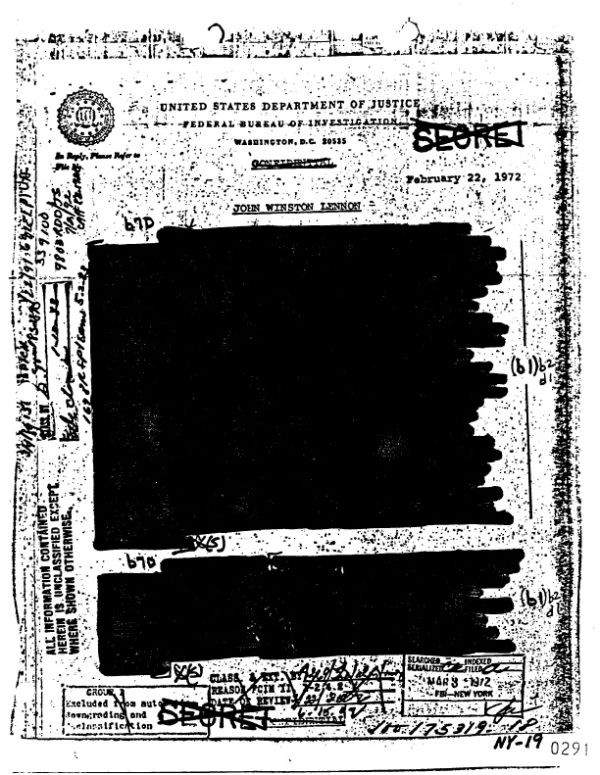
Controlling access to archives and delaying declassification are more bureaucratic, yet equally effective, methods. Governments and institutions can simply restrict who can view certain documents, place long embargoes on sensitive materials, or redact crucial information before public release. This can delay the uncovering of hidden truths for decades, sometimes even centuries, until key witnesses are gone and the immediate political stakes have diminished.
Finally, propaganda and media manipulation play a crucial role. By consistently promoting a specific narrative through state-controlled or sympathetic media outlets, and by ignoring or downplaying contradictory information, public perception can be significantly swayed. This creates a powerful echo chamber where the official story becomes the accepted reality, making it incredibly difficult for suppressed history to break through.

When the Narrative Shifts: Case Studies in Revisionist History and Suppression
The best way to truly grasp the impact of suppressed history and historical cover-ups is to examine concrete examples. These cases reveal not only the mechanisms at play but also the enduring power of truth to eventually emerge.
Consider the Tulsa Race Massacre of 1921. For decades, this horrific event, in which a thriving Black community known as “Black Wall Street” was bombed from the air and destroyed by a white mob, was largely erased from official histories. Newspapers of the time downplayed or ignored it, and local authorities actively worked to suppress information. It wasn’t taught in schools, and many survivors were afraid to speak out. This was a classic example of suppressed history designed to protect the reputation of the state and avoid accountability. It took decades of grassroots activism, scholarly research, and the eventual declassification of documents for the hidden truths to finally come to light, leading to efforts at remembrance and reconciliation.
Another stark example comes from the realm of colonial atrocities. Many former colonial powers have engaged in revisionist history, presenting their imperial past as a civilizing mission rather than a period of brutal exploitation, violence, and cultural destruction. The true extent of atrocities, such as those committed in the Belgian Congo or during the British Raj, was systematically downplayed or omitted from national histories. It is only through the persistent work of historians, often from the formerly colonized nations, that these historical cover-ups are being challenged, forcing a re-evaluation of national identities and global power dynamics.
The “Comfort Women” issue from World War II provides a poignant case study of ongoing suppression and denial. The systematic sexual enslavement of women, primarily from Korea, China, and other occupied territories, by the Imperial Japanese Army, was a devastating historical cover-up for many years. Despite survivor testimonies and mounting evidence, official recognition and full reparations have been fiercely resisted by elements within the Japanese government, leading to continuous diplomatic tensions and a struggle for historical justice. This demonstrates how political will can perpetuate suppression even in the face of overwhelming evidence.
Finally, government intelligence operations like the CIA’s Operation Mockingbird or MKUltra offer chilling examples of hidden truths eventually emerging, often through declassified documents and whistleblowers. These programs involved extensive psychological experimentation, mind control research, and attempts to influence media, all conducted under deep secrecy. While initially dismissed as conspiracy theories, the eventual release of documents confirmed the existence of these projects, proving that even seemingly outlandish claims can sometimes be suppressed history waiting to be unveiled.

The Scholar’s Quest: Navigating Archives and Challenging Dogma
For history scholars and dedicated truth-seekers, the pursuit of hidden truths within suppressed history is a demanding but essential endeavor. It’s a quest that often involves navigating bureaucratic labyrinths, deciphering fragmented evidence, and, at times, confronting entrenched institutional resistance.
The primary battlefield for this quest is often the archive. Public and private archives hold the raw materials of history: letters, reports, photographs, government documents, and personal testimonies. However, as we’ve seen, these spaces can also be sites of active suppression. Historians must develop a keen eye for what is missing as much as what is present. They cross-reference documents from different sources, look for inconsistencies in official narratives, and meticulously trace footnotes to their original context. This painstaking work is crucial for identifying potential historical cover-ups.
Challenging established dogma is another core aspect of the scholar’s quest. Academic institutions, while champions of free inquiry, can sometimes be slow to adopt new interpretations, especially if those interpretations fundamentally disrupt long-held beliefs or revered figures. Historians who present evidence of revisionist history often face skepticism, rigorous peer review, and sometimes outright opposition from those invested in existing narratives. Yet, it is through this very process of critical engagement and evidence-based argumentation that our understanding of the past evolves.
Moreover, the ethical responsibility of the historian is paramount. Uncovering suppressed history often means giving voice to the marginalized, rectifying injustices, and holding power accountable. This requires not only intellectual rigor but also a profound sense of empathy and a commitment to historical accuracy, even when the truths uncovered are uncomfortable or painful.
The Digital Age: A Double-Edged Sword for Unmasking Truths
The advent of the internet and digital technologies has profoundly reshaped the landscape of historical inquiry, presenting both unprecedented opportunities and new challenges for those seeking to unmask hidden truths and expose historical cover-ups.
On one hand, the digital age has been a powerful democratizing force. Vast amounts of information, previously locked away in physical archives or obscure publications, are now accessible with a few clicks. Digital archives, online databases, and digitized historical newspapers have made it possible for researchers, citizen historians, and truth-seekers worldwide to access primary sources that might have been impossible to obtain just a few decades ago. This has significantly aided the uncovering of suppressed history by allowing for broader scrutiny and cross-referencing of information. Whistleblowers and investigative journalists can now share declassified documents or leaked information with a global audience almost instantaneously, forcing public conversations about past misdeeds.
Social media and online communities also play a role, allowing individuals to share personal stories, oral histories, and local knowledge that might never have made it into official records. This can be particularly vital for marginalized communities whose histories have been systematically ignored or suppressed. These platforms can act as powerful catalysts for collective memory, bringing hidden truths to the forefront and demanding recognition.
However, the digital age is a double-edged sword. While it facilitates the unmasking of truths, it also provides fertile ground for the propagation of misinformation, conspiracy theories, and new forms of revisionist history. The sheer volume of information online makes it challenging to discern credible sources from unreliable ones. Sophisticated digital manipulation, deepfakes, and algorithm-driven echo chambers can further complicate the search for objective truth, allowing for new forms of historical cover-ups to take root in the digital sphere. Therefore, critical thinking, media literacy, and a commitment to verifying sources are more important than ever for anyone venturing into the digital realm of historical discovery.
The Ethical Imperative: Why Uncovering Suppressed History Matters
You might be thinking, “Why should we invest so much effort in digging up old historical cover-ups and suppressed history? Isn’t it better to just move on?” This question goes to the heart of the ethical imperative that drives the work of historians and truth-seekers. The answer is unequivocal: uncovering hidden truths from the past is not merely an academic exercise; it is fundamental to building a just, informed, and resilient society.
Firstly, unmasking suppressed history is about justice for victims. When atrocities, injustices, or systemic abuses are acknowledged, it provides a crucial step towards recognition, dignity, and, sometimes, even reparations for those who suffered. Ignoring these past harms perpetuates the injustice and denies victims and their descendants the right to have their stories heard and validated.
Secondly, understanding historical cover-ups is vital for learning from past mistakes. Societies that fail to confront the darker aspects of their history are condemned to repeat them. By analyzing how and why certain events were suppressed, we gain invaluable insights into the mechanisms of power, propaganda, and human behavior, equipping us to identify and prevent similar patterns in the present and future. It fosters a critical consciousness that is essential for navigating complex contemporary issues.
Thirdly, it’s about building a more accurate and inclusive collective memory. A society’s collective memory shapes its identity, values, and understanding of itself. When this memory is based on revisionist history or deliberate omissions, it creates a distorted self-perception that can lead to division, prejudice, and a lack of empathy for different groups. Acknowledging the full, complex tapestry of the past, including its uncomfortable truths, allows for a more robust and honest national dialogue.
Finally, confronting suppressed history fosters critical citizenship. It encourages individuals to question authority, scrutinize information, and engage actively with the narratives presented to them. In an age of information overload and competing truths, the ability to critically evaluate historical claims is a cornerstone of an informed and engaged citizenry.
Your Role in the Unmasking: A Call to Truth-Seekers
The journey to unmask censored histories is not solely the domain of professional historians; it’s a vital endeavor for every curious mind and truth-seeker. You have a crucial role to play in challenging historical cover-ups and bringing hidden truths into the light.
How can you contribute? Start by cultivating a healthy skepticism towards official narratives. Ask questions: Who wrote this history? Whose voices are missing? What motivations might exist for presenting the past in a particular way? Engage with diverse perspectives, seeking out histories written by marginalized communities, independent scholars, and international sources. Don’t be afraid to delve into primary sources yourself, whether through online archives or local libraries.
Support organizations and initiatives dedicated to historical research and preservation. Advocate for comprehensive and honest historical education in schools. Most importantly, share what you learn. Engage in thoughtful discussions, challenge misinformation when you encounter it, and help amplify the voices that have been silenced for too long.
The pursuit of suppressed history is an ongoing, evolving process. There are always more layers to peel back, more documents to declassify, and more stories to tell. Each piece of hidden truth we uncover helps to build a more complete and accurate understanding of our shared human story.
Conclusion: The Unending Quest for Historical Truth
Our journey through the landscape of suppressed history has revealed a profound truth: history is rarely a static, immutable record. It is a dynamic, often contested, narrative shaped by power, politics, and human agency. From deliberate historical cover-ups to the subtle biases that lead to revisionist history, the past is frequently filtered before it reaches us. Yet, as truth-seekers and scholars, we carry the torch of inquiry, compelled to illuminate the hidden truths that lie beneath the surface.
The ethical imperative to