
Cracking Ancient Enigmas: Exploring Mysteries and Lost Knowledge from the Past
Have you ever gazed at an ancient ruin or pondered a historical artifact and felt a shiver of wonder? What secrets do these silent witnesses hold? The human story is riddled with ancient mysteries, from forgotten civilizations to perplexing technological feats that defy our modern understanding. For centuries, historians, archaeologists, and curious minds alike have been captivated by the unsolved puzzles left behind by our ancestors. These enigmatic remnants hint at lost knowledge and advanced cultures that may have existed long before recorded history, challenging our perceptions of human progress and intelligence.
Join us on a journey through time as we delve into some of the most profound ancient enigmas. We’ll explore the tantalizing clues, the incredible theories, and the enduring questions that continue to baffle experts today. From colossal structures built with impossible precision to cryptic texts that remain undeciphered, the past is a treasure trove of enigmatic artifacts and unexplained phenomena. This article isn’t just about listing mysteries; it’s about igniting your imagination and encouraging you to look at history with a fresh, inquisitive eye. Prepare to question what you thought you knew, as we attempt to crack the codes of antiquity and uncover the whispers of civilizations long vanished. Get ready to explore the compelling evidence that suggests our ancestors held wisdom we are still striving to comprehend.
The Enduring Allure of Lost Civilizations and Their Secrets
The concept of lost knowledge and forgotten civilizations holds a powerful grip on our collective imagination. Stories of advanced societies that vanished without a trace, leaving behind only tantalizing clues, resonate deeply. These tales aren’t just myths; archaeological discoveries continually unearth evidence of sophisticated cultures whose achievements often seem to defy the perceived technological limitations of their era. The very existence of these ancient mysteries forces us to re-evaluate the linear progression of history we often take for granted.
Consider the sheer scale and complexity of some ancient sites. How did people centuries or even millennia ago manage to construct monuments that challenge even modern engineering capabilities? What drove them to create intricate art, develop complex writing systems, and devise astronomical observations with such precision? These questions are at the heart of our fascination with the past. We yearn to understand the minds that conceived these wonders and the societies that supported their creation. The pursuit of answers to these unsolved puzzles often leads to groundbreaking discoveries, pushing the boundaries of archaeology and historical research.

Atlantis: The Ultimate Lost City Myth?
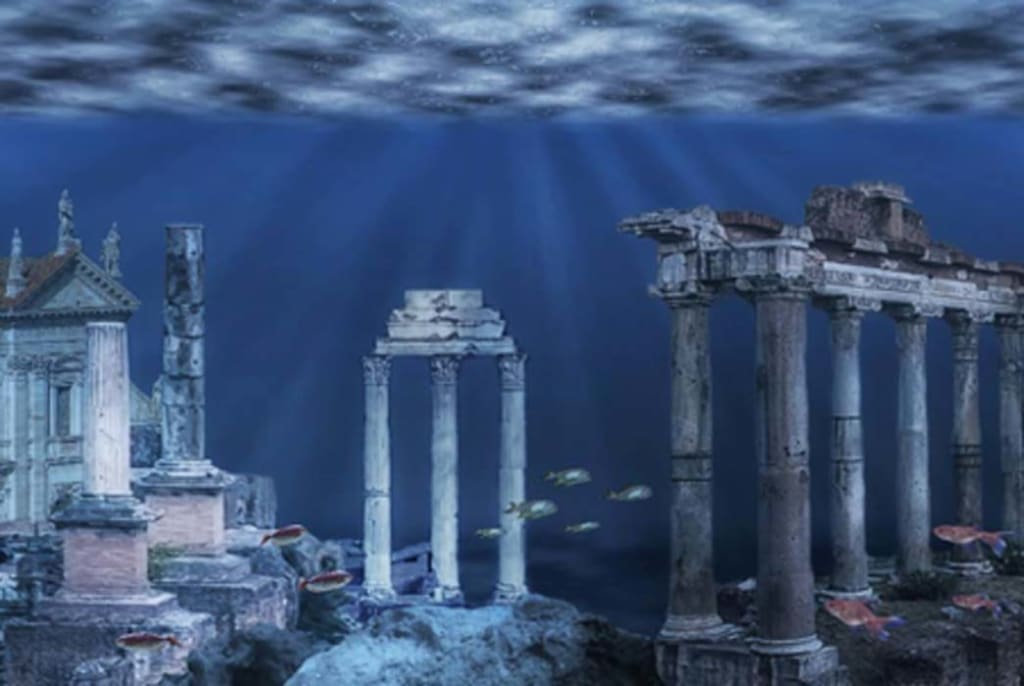
Perhaps no lost civilization captures the imagination quite like Atlantis. First mentioned by the Greek philosopher Plato around 360 BC, Atlantis was described as a powerful and technologically advanced island nation that sank into the ocean in a single day and night of misfortune. Plato detailed its advanced infrastructure, sophisticated society, and naval power, before its dramatic demise due to the hubris of its people.
For millennia, scholars and adventurers have scoured the globe for any trace of this legendary city. From the Mediterranean to the Caribbean, countless theories have been proposed regarding its true location. Some believe Atlantis was a fictional allegory used by Plato to convey philosophical ideas, while others are convinced it was a real place, perhaps inspired by actual events like the volcanic eruption that destroyed the Minoan civilization on Thera (Santorini). The search for Atlantis continues to this day, fueled by the hope of unearthing proof of an incredibly advanced, yet tragically lost, ancient society. The mystery of Atlantis truly embodies the quest for lost knowledge and the allure of a hidden past.
Göbekli Tepe: Rewriting the Dawn of Civilization
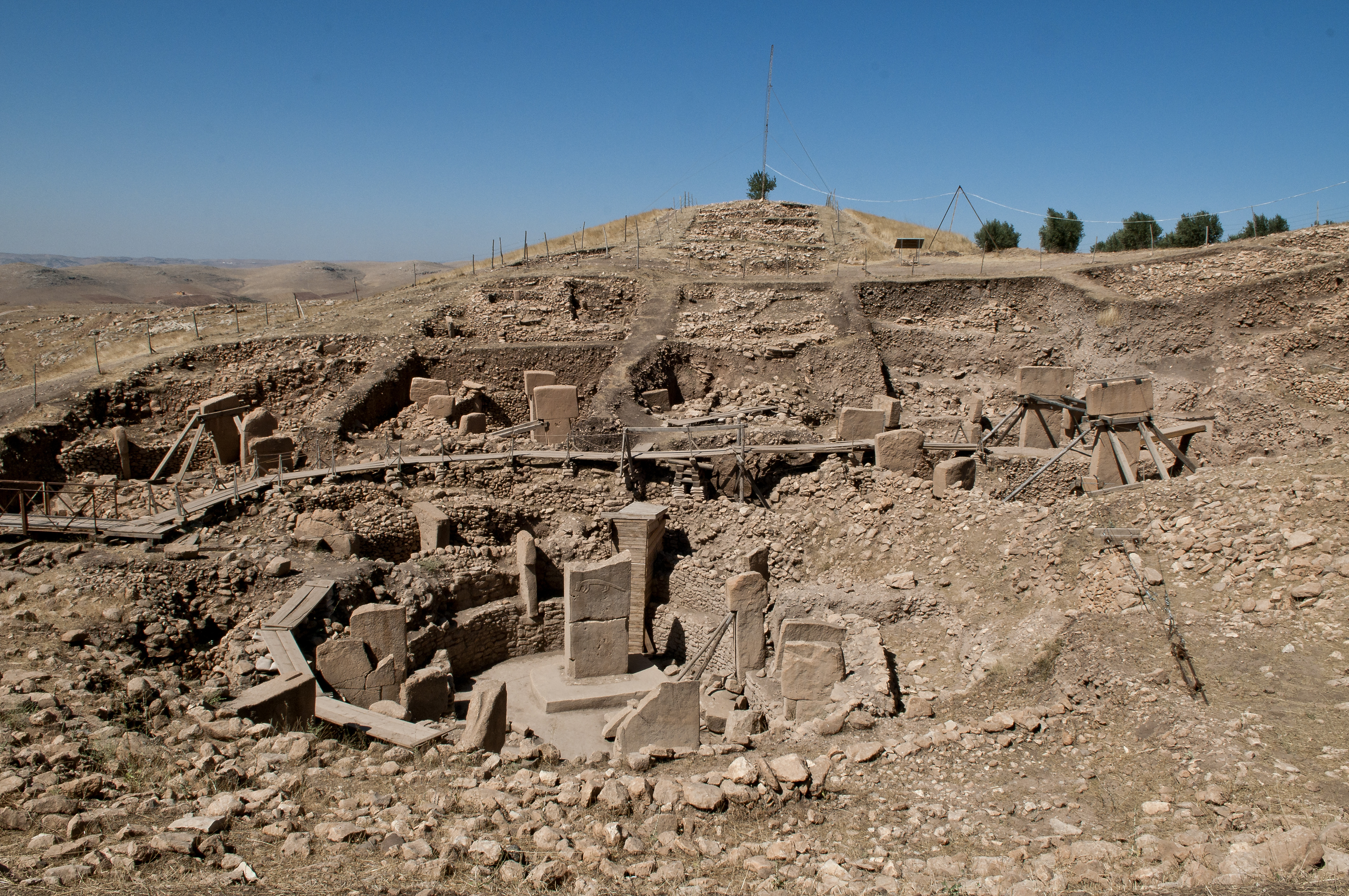
While Atlantis remains a myth, Göbekli Tepe is a very real, and equally mind-boggling, archaeological site in southeastern Turkey. Discovered in the mid-1990s, this complex of massive stone pillars, some weighing up to 20 tons, predates Stonehenge by an astonishing 6,000 years. Dating back to around 9600 BC, Göbekli Tepe was built by hunter-gatherers, a fact that completely overturns our understanding of when and how complex societies and monumental architecture first emerged.
Prior to Göbekli Tepe, it was widely believed that agriculture and settled communities were prerequisites for such large-scale construction. Yet, these hunter-gatherers organized immense labor, carved intricate animal reliefs, and erected sophisticated structures without the aid of metal tools or pottery. The site appears to have been a ritual center, not a settlement, raising profound questions about the origins of religion, social hierarchy, and the very impetus for civilization itself. Göbekli Tepe is an undeniable example of an ancient enigma that forces historians to reconsider the entire timeline of human development and lost knowledge that might have been far more advanced than previously imagined.

Enigmatic Artifacts and Unexplained Phenomena
Beyond entire lost cities, the archaeological record is replete with individual enigmatic artifacts that challenge our understanding of ancient capabilities. These objects, often unearthed in unexpected places or displaying advanced features, fuel countless theories and debates. They serve as tangible links to ancient mysteries, prompting us to wonder about the hands that crafted them and the purpose they served. Each artifact is an unsolved puzzle, a piece of a larger historical jigsaw that we are still trying to complete.

The Antikythera Mechanism: An Ancient Computer?
Discovered in a shipwreck off the coast of the Greek island of Antikythera in 1901, the Antikythera Mechanism is arguably the most complex ancient artifact ever found. Dating from around 150-100 BC, this intricate device, originally housed in a wooden box, consists of dozens of interlocking bronze gears. Modern analysis, including X-ray tomography, has revealed that it was an astronomical calculator of astonishing sophistication.
This mechanism could predict eclipses, track the movements of the moon and planets, and even calculate the dates of ancient Olympic Games. Its complexity rivals 18th-century clockwork, suggesting a level of engineering and astronomical knowledge far beyond what was previously attributed to the ancient Greeks. The existence of such a device raises questions about the extent of lost knowledge in antiquity. Was this a unique invention, or were there others like it that simply haven’t survived? The Antikythera Mechanism remains a monumental ancient mystery, a testament to forgotten genius.
The Voynich Manuscript: An Unbreakable Code?
Imagine a book filled with strange illustrations of unknown plants, celestial diagrams, and tiny naked women, all accompanied by a beautiful, flowing script that no one, despite centuries of effort, has ever been able to read. This is the Voynich Manuscript, a medieval codex dating from the early 15th century, named after the Polish book dealer Wilfrid Voynich, who acquired it in 1912.
The manuscript’s language, dubbed “Voynichese,” has defied cryptographers, linguists, and codebreakers from both world wars. Its structure seems too complex to be a hoax, yet too consistent to be random gibberish. Theories about its origin and purpose range from it being an elaborate cipher, a lost natural language, an alchemical text, or even a sophisticated medical treatise from a forgotten culture. The Voynich Manuscript is the ultimate unsolved puzzle, a tantalizing piece of lost knowledge that continues to resist all attempts at decipherment, making it one of the most famous enigmatic artifacts in history.
The Nazca Lines: Messages from Above?
Stretching across vast plains in Peru, the Nazca Lines are geoglyphs—enormous designs etched into the desert floor—created by the Nazca culture between 500 BC and 500 AD. These incredible designs depict animals like hummingbirds, monkeys, and spiders, as well as geometric shapes and straight lines, some extending for miles. What makes them truly mysterious is their scale: many of these figures