
The Silent Witnesses of the Peat: Unearthing the Enduring Mystery of Europe’s Bog Bodies
Deep within the acidic embrace of Europe’s peat bogs lie some of the most haunting and remarkably preserved archaeological mysteries of the ancient world: the bog bodies. These chillingly well-preserved human remains, dating primarily from the Iron Age, offer an unparalleled, albeit unsettling, window into the lives, deaths, and rituals of prehistoric societies. Unlike skeletal remains, bog bodies often retain skin, hair, internal organs, and even clothing, presenting a vivid, almost lifelike, connection to people who lived thousands of years ago. Yet, with this incredible preservation comes an enduring, profound question: who were these individuals, and why did they meet their end in the desolate, watery confines of a bog?
Archaeological discoveries across Denmark, Germany, the Netherlands, Ireland, and the United Kingdom have unearthed hundreds of these silent witnesses, each telling a fragmented story of a forgotten past. Their discovery has ignited intense scholarly debate, bridging forensic science, ancient history, and cultural anthropology. Were they revered sacrifices to ancient deities, victims of brutal executions, or perhaps even accidental casualties of the treacherous terrain? This article delves into the documented mysteries surrounding these fascinating ancient artifacts, separating verifiable archaeological evidence from the layers of speculation, folklore, and modern interpretation, inviting us to ponder the true nature of their enigmatic demise and the societies that left them behind.
A Glimpse into the Peat: The Discovery of Tollund Man
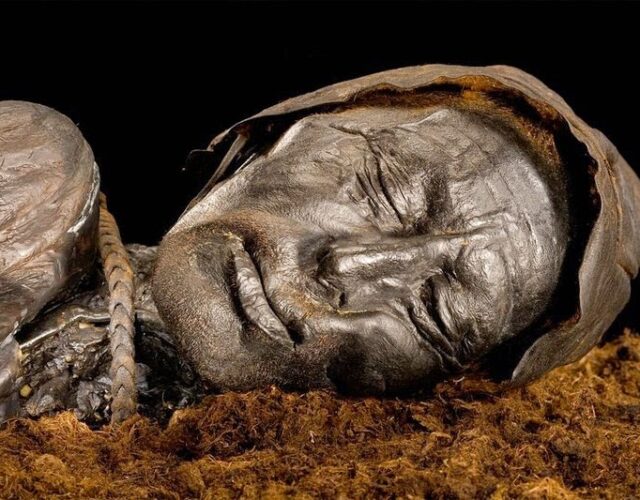
One of the most iconic and perfectly preserved bog bodies is the Tollund Man, discovered on May 6, 1950, in a peat bog near Bjældskovdal, 10 km west of Silkeborg, Denmark. Brothers Emil and Viggo Højgaard, cutting peat for fuel, stumbled upon a body so remarkably intact they initially believed it to be a recent murder victim. They immediately notified the police, who in turn brought in archaeologists, recognizing the unique nature of the find.
The Tollund Man lay curled in a fetal position, as if asleep, roughly 60 meters from solid ground. He wore a pointed sheepskin cap, fastened under his chin, and a smooth leather belt. A noose made of plaited animal hide was tightly drawn around his neck, trailing down his back. His face, serene yet haunting, was almost perfectly preserved, his eyes closed, and a faint stubble visible on his chin. Radiocarbon dating, a cornerstone of modern archaeological analysis, placed his death at approximately 375–210 BCE, firmly within the pre-Roman Iron Age.
Forensic examination revealed that Tollund Man was an adult male, likely in his 30s or 40s, standing about 161 cm (5 ft 3 in) tall. Analysis of his digestive tract provided a poignant detail: his last meal consisted of a porridge made from barley, flax, knotweed, and pale persicaria – a meal devoid of meat, suggesting it was eaten in winter or early spring. Crucially, the presence of the noose, along with the lack of signs of struggle or violence on his body beyond the strangulation, immediately presented a profound historical mystery. Was this a ritualistic killing, an execution, or something else entirely? His peaceful expression, often cited, only deepens the enigma, making him a compelling symbol of the archaeological mysteries that continue to captivate us.
Image Alt Text: The remarkably preserved face of Tollund Man, with his distinctive cap and serene expression, found in a Danish peat bog.
Lindow Man: The “Pete Marsh” of Britain
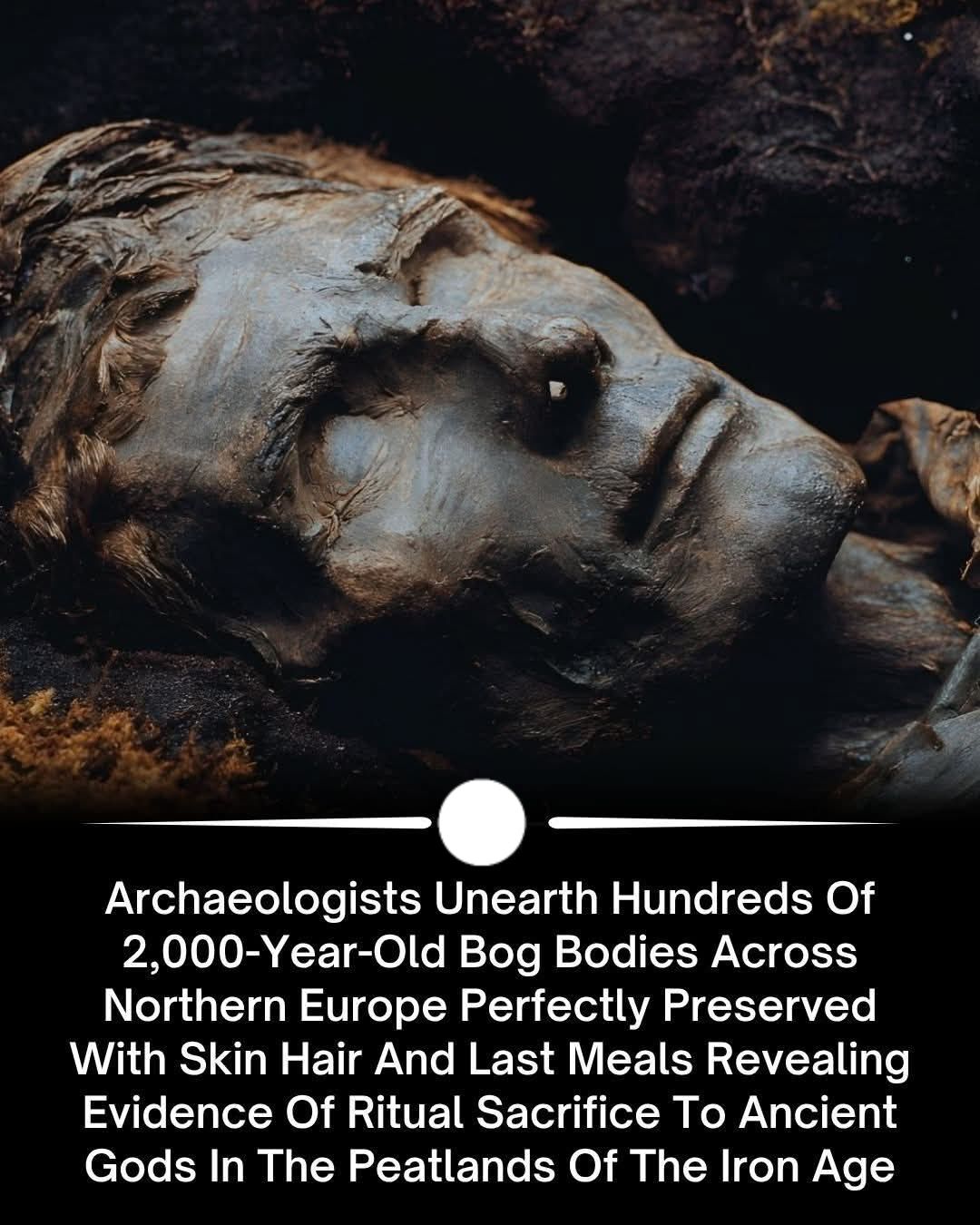
Across the North Sea, another extraordinary discovery further illuminated the phenomenon of bog bodies: Lindow Man, affectionately nicknamed “Pete Marsh” by the press, unearthed on August 1, 1984, in Lindow Moss, Cheshire, England. Andy Mould, a peat cutter, initially found fragments of a human leg, which were at first mistaken for a piece of wood. Subsequent excavation by archaeologists, notably from the Manchester Museum and British Museum, revealed the remarkably preserved torso and head of a male individual.
Lindow Man’s preservation was exceptional, though not as complete as Tollund Man’s face. His hair, beard, and mustache were intact, and his skin had the characteristic leathery texture of bog finds. Radiocarbon dating placed his death between 2 BCE and 119 CE, firmly within the Iron Age, spanning the transition into the Roman occupation of Britain. What truly distinguished Lindow Man was the forensic evidence of his brutal, multi-faceted death.
Archaeologists and forensic experts determined that Lindow Man suffered at least three distinct forms of violence: he was struck twice on the head, possibly with an axe, resulting in skull fractures; a garrote was tightened around his neck, breaking his neck; and his throat was cut. Furthermore, analysis of his stomach contents revealed a last meal of griddle cake, indicating consumption shortly before his death. The presence of mistletoe pollen in his stomach has often been cited as a potential indicator of ritualistic significance, given mistletoe’s importance in Celtic belief systems, as documented by Roman authors like Pliny the Elder.
Image Alt Text: The preserved torso and head of Lindow Man, showing the garrote around his neck and evidence of severe trauma.
The Ritual or the Reprisal? Unraveling the Theories
The consistent patterns of violent death and deliberate deposition seen in Tollund Man, Lindow Man, and many other bog bodies (such as Grauballe Man, Windeby Girl, and Yde Girl) have led archaeologists and historians to propose several compelling, though often debated, theories regarding their fate. The central question revolves around whether these individuals were willing sacrifices, unwilling victims of social justice, or a complex blend of both.
Sacrificial Offerings to the Gods
One of the most widely accepted interpretations, particularly for bodies like Tollund Man, is that they were victims of ritualistic sacrifice. Proponents of this theory point to several key pieces of evidence. The careful placement of bodies, often in specific positions within the bog, suggests a deliberate act rather than a haphazard disposal. The methods of killing – strangulation, throat-cutting, blunt force trauma – frequently appear to be systematic and precise, sometimes involving combinations of methods, as seen with Lindow Man, which some scholars have termed a “triple death.” These methods align with descriptions of sacrificial practices in classical texts, though these are often written by Roman authors with a clear bias against “barbarian” practices.
The environmental context of bogs themselves also lends credence to this theory. Bogs were often seen as liminal spaces, borders between the human world and the spiritual realm, making them ideal sites for offerings to chthonic deities or fertility gods. The presence of valuable artifacts, such as gold torcs or weapons, found near some bog bodies (though not typically on the bodies themselves), further supports the idea of offerings. Historian P.V. Glob, who extensively studied Danish bog bodies, was a strong advocate for the sacrifice theory, suggesting these individuals were offerings to a fertility goddess, perhaps in hopes of ensuring good harvests or averting disaster. The last meals, often simple and plant-based, could also be interpreted as ritualistic fasting or preparation.

Executions and Punishments
While the ritual sacrifice theory holds significant weight, another strong interpretation suggests that many bog bodies were victims of execution or punishment for social transgressions. In ancient societies, crimes such as adultery, incest, or treason were often met with severe, sometimes ritualized, forms of capital punishment. The remote location of bogs might have been chosen as a place to dispose of those deemed unworthy or outcast from society, ensuring their complete removal and perhaps preventing their spirits from haunting the living.
Tacitus, the Roman historian, in his work Germania (circa 98 CE), describes Germanic tribes drowning traitors and cowards in bogs, weighted down with hurdles. While Tacitus’s account must be read with caution due to its Roman perspective and potential for exaggeration, it provides a contemporary (or near-contemporary) external reference that aligns with some archaeological findings. The violent nature of death for many bog bodies, particularly those with multiple injuries like Lindow Man, could be interpreted as a brutal form of justice rather than a reverent offering. Distinguishing between a ritual sacrifice and a ritualized execution remains one of the central disputed interpretations in bog body archaeology, often relying on subtle contextual clues and the absence or presence of specific grave goods or care in deposition.
Accidental Deaths or Natural Burial
A less prevalent, but still considered, theory for some bog finds is that they represent accidental deaths or natural burials. Bogs are treacherous environments, and it is plausible that individuals could have fallen in, become trapped, and drowned. Over time, the unique preservative qualities of the bog could then have taken effect. However, for the vast majority of well-preserved bog bodies, particularly those exhibiting clear signs of deliberate violence and careful placement, this theory is largely dismissed by archaeologists. The evidence of specific killing methods, clothing, and often a lack of struggle, points away from accidental drowning for figures like Tollund Man or Lindow Man.
It is important to distinguish between the hundreds of human remains found in bogs – many of which are fragmented or less well-preserved – and the relatively small number of exceptionally preserved “bog bodies” that show clear signs of deliberate human intervention. While some individuals undoubtedly met accidental ends in bogs, the focus of the central historical mystery lies with those whose deaths bear the hallmarks of intentional human action.
Separating Fact from Folklore: The Rigorous Approach
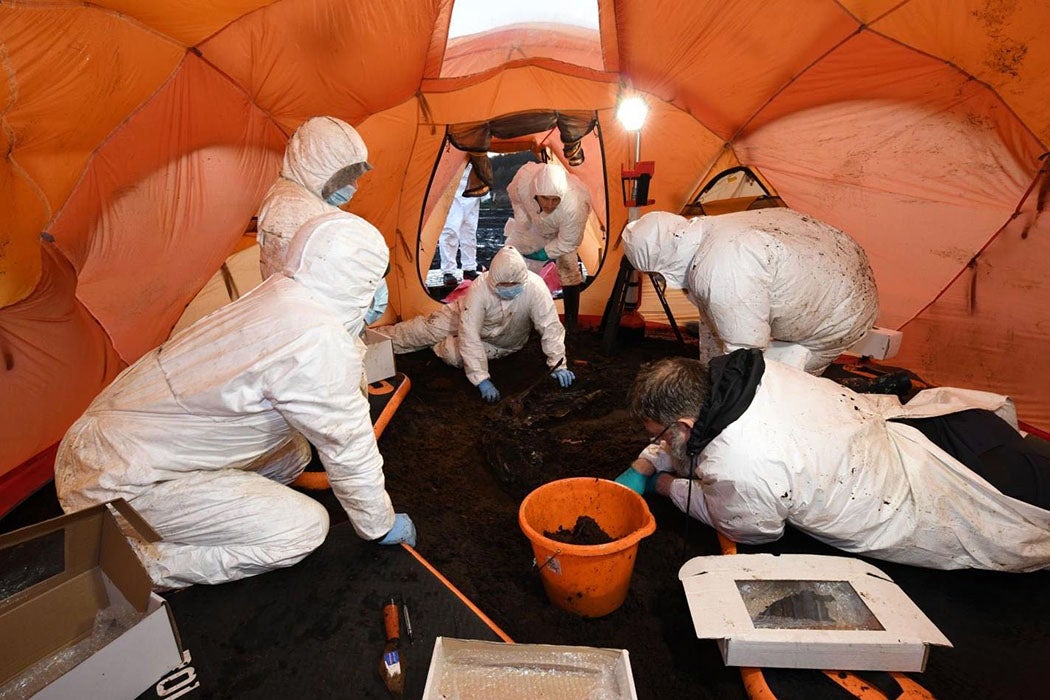
The study of bog bodies exemplifies the rigorous, multidisciplinary approach of modern archaeology. To move beyond mere speculation and internet mythology, researchers employ a battery of scientific techniques:
- Forensic Archaeology and Anthropology: Detailed examination of the remains provides crucial information about age, sex, health, and most importantly, the cause and manner of death. Experts can identify bone fractures, soft tissue damage, and weapon marks.
- Radiocarbon Dating: This technique is fundamental for establishing the precise chronological context of the remains, placing them within specific periods of ancient history.
- Pollen Analysis (Palynology): Studying pollen grains preserved in the bog and within the digestive tracts of the bodies can reveal the season of death and the local environment at the time. As seen with Lindow Man’s mistletoe pollen, it can also hint at ritualistic practices.
- Stable Isotope Analysis: By analyzing the ratios of stable isotopes (e.g., carbon, nitrogen, oxygen) in hair, bone, and teeth, scientists can reconstruct the individual’s diet and geographical origins, providing insights into their lifestyle and mobility within the ancient world.
- Textile Analysis: The preserved clothing and textiles offer invaluable data on ancient craftsmanship, materials, and fashion, providing a tangible link to the daily lives of these forgotten people.
- CT Scans and X-rays: Non-invasive imaging techniques allow for detailed internal examination without damaging the fragile remains, revealing internal injuries or anomalies not visible externally.
- Daily Life: From the types of food eaten (last meals), to the clothing worn (preserved textiles), to the health and physical conditions of individuals, bog bodies provide intimate details of ancient life.
- Social Structures: The varying degrees of care in burial, the presence or absence of valuable items, and the nature of their deaths can offer clues about social status, hierarchy, and legal systems.
- Religious Beliefs and Rituals: The most compelling aspect for many, the evidence of ritualistic killing and deposition speaks volumes about the spiritual world, deities, and practices of Iron Age societies. They shed light on the complex relationship between humans and their environment, and their attempts to appease or communicate with the divine.
- Violence and Conflict: The injuries sustained by many bog bodies provide direct evidence of the forms of violence, both interpersonal and systemic, present in the ancient world.
Through these methods, archaeologists piece together a narrative, carefully weighing evidence. For instance, the presence of a noose doesn’t automatically mean suicide; the context of the body’s placement, the lack of struggle, and other findings are crucial. Disputed interpretations often arise when the evidence is ambiguous or allows for multiple plausible explanations. For example, whether a cut throat was a swift sacrifice or a violent execution can be incredibly difficult to definitively prove thousands of years later, leading to ongoing, healthy academic debate within the field of archaeology.
The Bog’s Enduring Embrace: Preservation and Significance
The remarkable preservation of bog bodies is not due to any mystical properties of the peat, but rather a specific set of environmental conditions. Peat bogs are waterlogged, acidic environments that are largely devoid of oxygen (anaerobic). These conditions inhibit the growth of bacteria and fungi responsible for decomposition. The sphagnum moss often found in bogs also releases humic acids, which essentially “tan” the skin, turning it leathery and dark brown, resembling leather. This unique chemistry creates a natural time capsule, allowing soft tissues, hair, and even delicate internal organs to survive for millennia.
These ancient discoveries are far more than mere curiosities; they are invaluable archaeological artifacts that have profoundly shaped our understanding of prehistoric Europe. They offer direct, tangible evidence of:
The bog bodies stand as enduring testaments to a forgotten history, captivating us with their silent stories and the profound questions they continue to pose. They remind us that the ancient world was a place of deep beliefs, stark realities, and complex human experiences, many of which remain just beyond our full comprehension, preserved in the murky depths of the peat.
Conclusion
The documented mysteries surrounding Europe’s bog bodies represent some of the most compelling archaeological mysteries of our time. From the serene, enigmatic face of Tollund Man to the brutally murdered Lindow Man, these ancient artifacts challenge us to confront the complex realities of Iron Age life and death. While scientific rigor has allowed us to verify their age, diet, and methods of death, the ultimate question of why they were placed in the bogs—whether as sacrifices to powerful deities, victims of unforgiving justice, or a blend of both—continues to fuel debate and fascination.
These discoveries are more than just archaeological finds; they are poignant windows into the human condition thousands of years ago, forcing us to reconcile the scientific facts with the atmospheric and often unsettling interpretations of ancient belief systems. The bog’s unique preserving qualities have ensured that these individuals remain silent, yet powerful, witnesses to a forgotten history, inviting us to reflect on the enduring allure of the unknown and the profound connections we share with those who walked the earth millennia before us. The mystery endures, a testament to the rich tapestry of the ancient world that still waits to be fully unraveled.
To delve deeper into documented mysteries and forgotten stories from the ancient world, visit TrueHistories.com.