
Deciphering Ancient Mysteries and Lost Knowledge of the Past: Unraveling Enigmatic Artifacts and Unsolved Puzzles
Have you ever gazed at the stars and wondered about the secrets they hold, or perhaps stumbled upon an old photograph and felt the pull of a story untold? Humanity has an insatiable curiosity for the unknown, a deep-seated desire to piece together the fragments of our past. But what if some of the most profound stories, the most incredible achievements, and the most vital knowledge from ancient civilizations have been lost to time, buried under layers of dust, or simply forgotten? This is the captivating realm of ancient mysteries and lost knowledge—a world brimming with enigmatic artifacts and unsolved puzzles that continue to baffle and inspire us.
From colossal structures built with impossible precision to undeciphered scripts that whisper tales of forgotten languages, the echoes of our ancestors challenge our understanding of history. We stand at the precipice of discovery, constantly seeking to decode the messages left behind by cultures long vanished. This journey isn’t just about uncovering relics; it’s about understanding the ingenuity, wisdom, and sometimes the inexplicable brilliance of those who came before us. Join us as we delve into the heart of these captivating ancient enigmas, exploring the tantalizing clues, the groundbreaking discoveries, and the enduring questions that fuel our quest to rediscover the lost knowledge of the past.

The Allure of the Unknown: Why Ancient Mysteries Captivate Us
There’s a unique thrill in confronting the limits of our understanding, isn’t there? Ancient mysteries hold a powerful sway over the human imagination precisely because they defy easy explanation. They challenge our preconceived notions of what was possible in antiquity, forcing us to reconsider the timeline of human advancement and the capabilities of early civilizations. This fascination isn’t merely academic; it taps into a primal sense of wonder and a yearning to connect with our roots.
Think about it: every unsolved puzzle from the past is a story waiting to be completed, a piece of a grand historical mosaic that remains elusive. Whether it’s the sheer scale of ancient engineering feats or the sudden disappearance of thriving cultures, these enigmas ignite a collective curiosity. They remind us that history isn’t a static collection of facts, but a dynamic, evolving narrative with countless chapters yet to be written. This enduring appeal drives archaeologists, historians, and enthusiasts alike to continue their tireless pursuit of answers, hoping to bridge the chasm between our present knowledge and the profound secrets of the past.
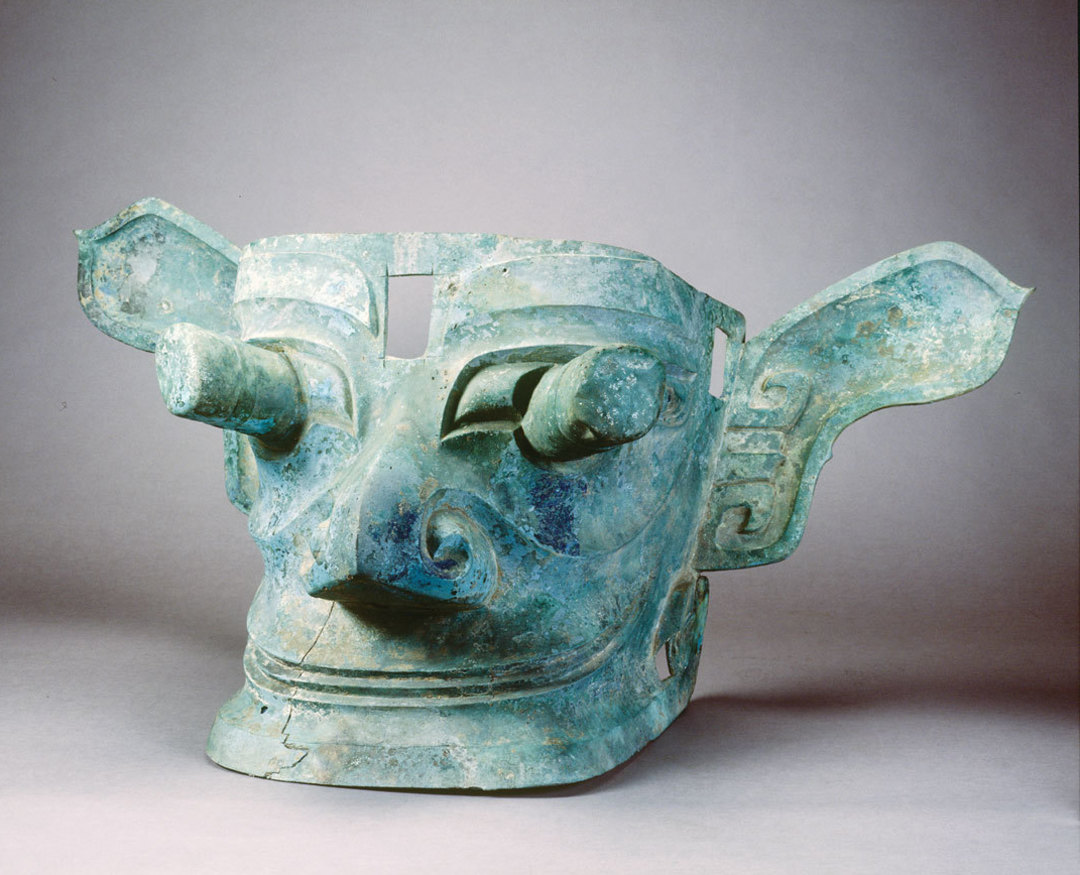
Echoes of Forgotten Eras: Unveiling Lost Knowledge
Imagine a world where advanced scientific principles, sophisticated engineering techniques, or profound philosophical insights were commonplace, only to vanish almost entirely from collective memory. This isn’t science fiction; it’s the reality of lost knowledge. Throughout history, entire libraries have burned, civilizations have collapsed, and oral traditions have faded, taking with them invaluable wisdom and groundbreaking discoveries. The concept of lost knowledge isn’t just about forgotten facts; it encompasses entire bodies of understanding that once shaped societies.
These lost insights could range from sustainable agricultural practices perfectly adapted to ancient climates to forgotten medical remedies, or even complex astronomical models that rivaled much later observations. The tantalizing possibility that our ancestors possessed a deeper understanding of the world than we currently credit them with fuels much of the research into ancient mysteries. Recovering even fragments of this lost wisdom could offer invaluable lessons for our modern world, providing new perspectives on everything from technology to environmental stewardship.
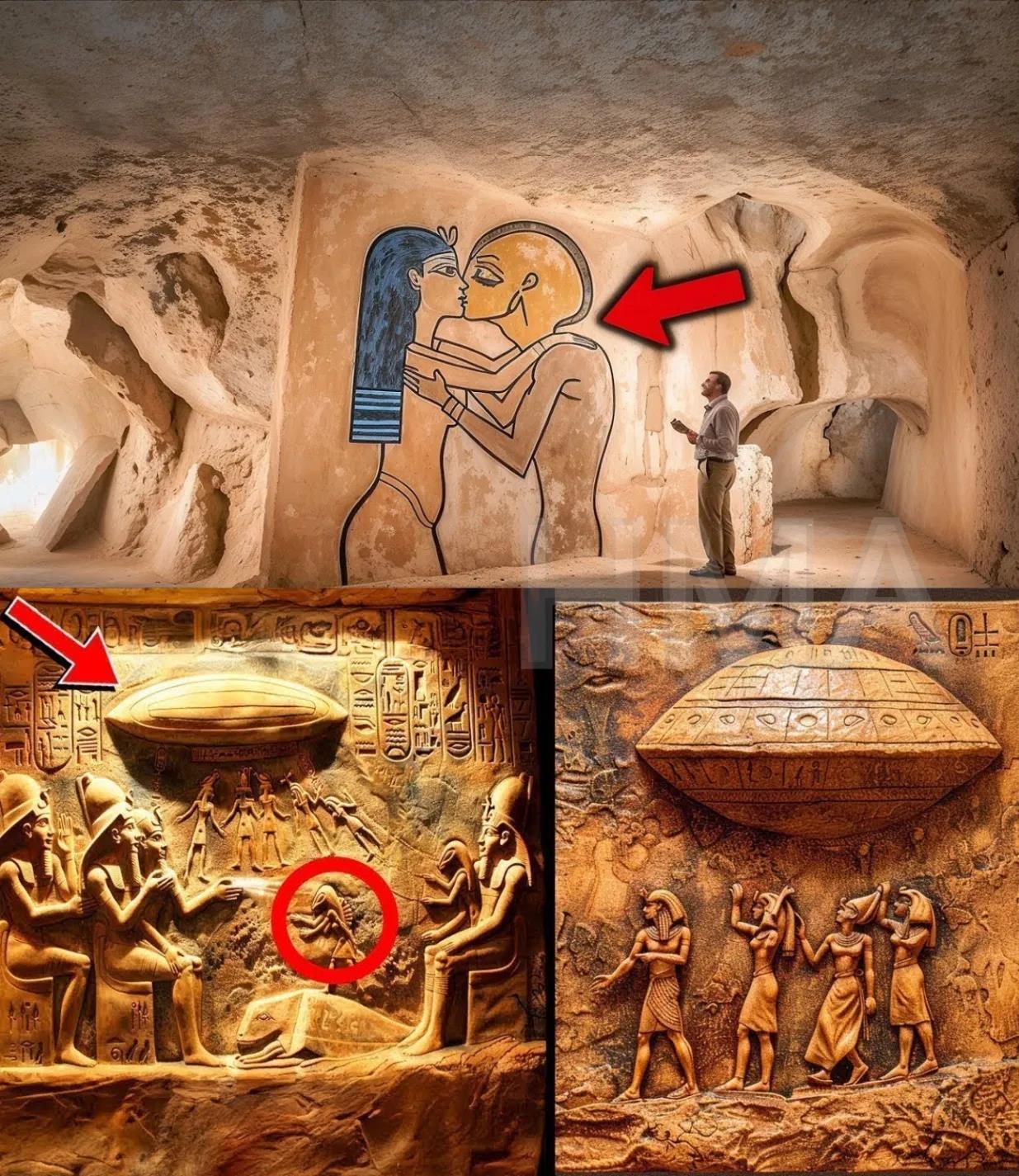
Ancient Technologies Beyond Their Time
Sometimes, the remnants of ancient cultures reveal technologies so sophisticated they seem utterly out of place for their era. These enigmatic artifacts challenge our linear view of historical progress, suggesting pockets of advanced knowledge that defy conventional timelines. How did ancient peoples create such marvels without the tools and scientific understanding we possess today?
One of the most famous examples is the <a href="https://www.nature.com/articles/nature07130" target="blank” rel=”noopener noreferrer”>Antikythera Mechanism, a complex astronomical calculator recovered from a shipwreck off the coast of Greece. Dating back to the 2nd century BCE, this intricate device featured dozens of bronze gears, capable of predicting solar and lunar eclipses and tracking planetary movements with astonishing accuracy. Its complexity was unmatched for over a millennium, making it a true testament to ancient Greek ingenuity and a profound piece of lost knowledge. Another intriguing artifact is the so-called <a href="https://www.smithsonianmag.com/travel/baghdad-battery-100-years-old-still-mystery-180970377/" target="blank” rel=”noopener noreferrer”>Baghdad Battery, discovered in Iraq and believed to be around 2,000 years old. While its exact purpose is still debated, some theories suggest it may have been an ancient galvanic cell used for electroplating or even medical treatment.
Then there’s the enduring mystery of Roman concrete. The ancient Romans built structures like the Pantheon that have stood for millennia, far outlasting modern concrete. Recent research suggests their concrete, particularly for maritime structures, was made with volcanic ash that reacted with seawater to create incredibly durable compounds. This formula, a true piece of lost knowledge, allowed their harbors to strengthen over time, a feat modern engineers are only now beginning to understand and replicate. These instances remind us that innovation isn’t exclusive to any single era; genius can emerge at any point in human history, sometimes leaving behind a legacy that puzzles future generations.

Vanished Languages and Unreadable Scripts
Imagine finding a diary filled with profound thoughts, incredible stories, or vital instructions, but written in a language no one living can understand. This is the challenge faced by scholars when confronted with vanished languages and unreadable scripts. These ancient texts represent potential treasure troves of lost knowledge, offering direct insights into the minds and societies of our ancestors. Yet, without a Rosetta Stone, they remain an unsolved puzzle, teasing us with their impenetrable secrets.
The <a href="https://www.britannica.com/topic/Indus-script" target="blank” rel=”noopener noreferrer”>Indus Valley Script, used by the sophisticated Harappan civilization over 4,000 years ago, is a prime example. Thousands of short inscriptions have been found on seals and pottery, but despite extensive efforts, the script remains undeciphered. Its brevity and lack of a known bilingual text make it one of the most significant linguistic puzzles. Similarly, the <a href="https://www.smithsonianmag.com/smart-news/the-mysterious-rongorongo-script-of-easter-island-180962366/" target="blank” rel=”noopener noreferrer”>Rongorongo script of Easter Island, a system of glyphs carved into wooden tablets, offers another tantalizing glimpse into a unique culture. Only a few dozen such tablets exist, and their meaning continues to elude scholars, representing a direct link to the Rapa Nui people’s lost knowledge.
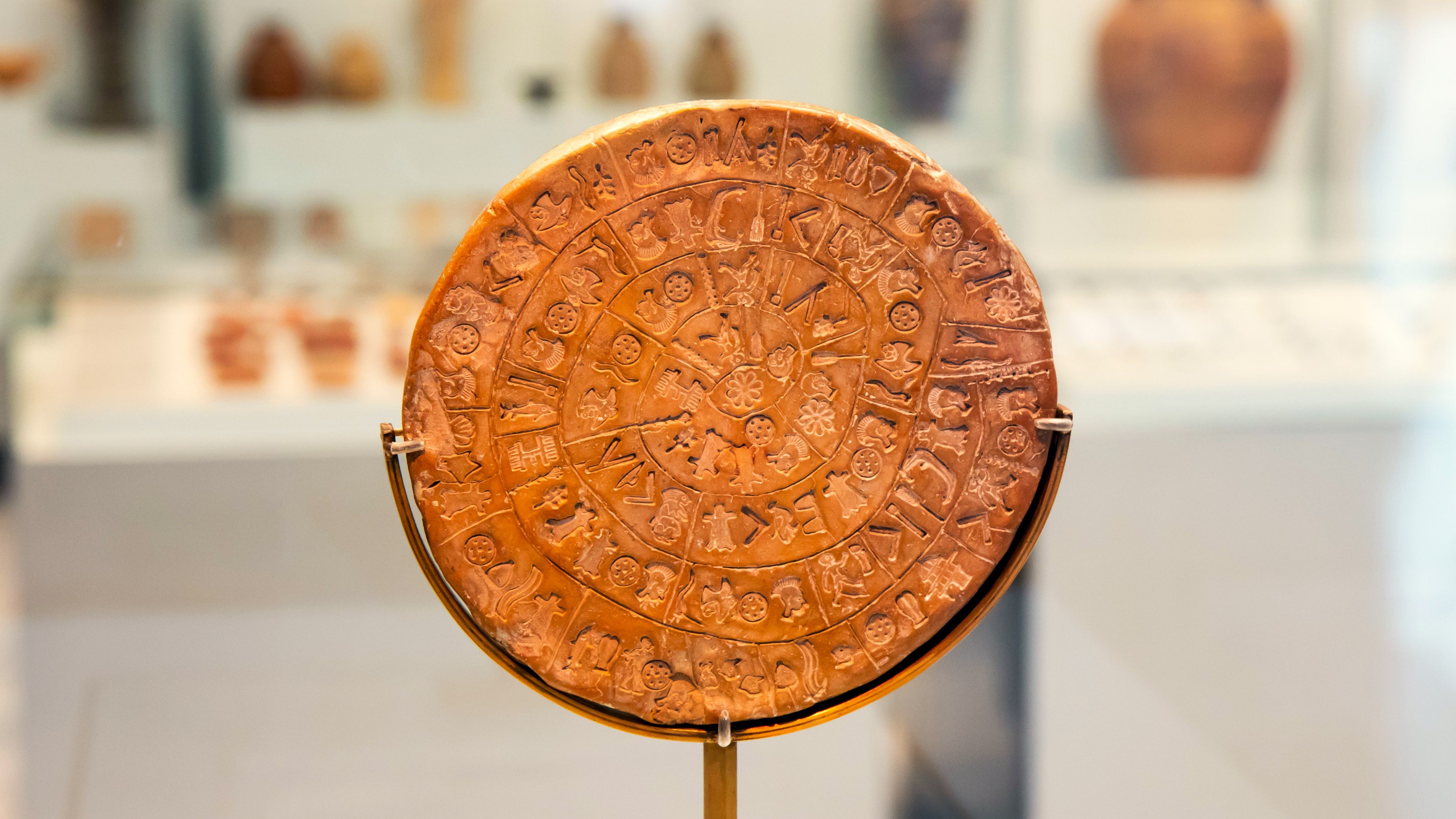
Another captivating mystery is the Phaistos Disc, an enigmatic artifact from Minoan Crete, discovered in 1908. Covered with a spiral of stamped symbols, its unique pictographic script has never been translated, leading to endless speculation about its purpose and the message it conveys. These unreadable scripts are more than just linguistic curiosities; they are gateways to understanding entire belief systems, historical events, and daily lives that are currently locked away, waiting for a key to unlock their profound secrets.
Enigmatic Artifacts: Whispers from the Deep Past
Beyond technologies and scripts, there are objects that simply defy easy categorization or explanation. These enigmatic artifacts are the physical manifestations of ancient mysteries, tangible links to a past we barely comprehend. They are the silent witnesses to forgotten eras, each one a whisper from the deep past, urging us to listen closely and piece together its story. Their very existence poses questions that challenge our understanding of ancient capabilities and motivations.
The Great Pyramid of Giza: A Monument of Unsolved Puzzles
Standing sentinel on the Giza plateau, the Great Pyramid is arguably the most iconic of all ancient mysteries. For millennia, its sheer scale and precision have baffled engineers and historians. How did a civilization, seemingly without advanced machinery, manage to lift and place millions of stone blocks, some weighing upwards of 80 tons, with such incredible accuracy? The alignment of the pyramid to true north is almost perfect, and its internal passages and chambers reveal a sophisticated understanding of geometry and astronomy.
Theories abound, from elaborate ramp systems to internal construction methods, and even more speculative ideas involving lost technologies or external assistance. Yet, no single theory fully explains every aspect of its construction. The Great Pyramid remains a testament to human ingenuity—or perhaps a challenge to our understanding of it. It’s not just a tomb; it’s a colossal, unsolved puzzle etched in stone, continuing to inspire awe and ignite debate about the true capabilities of ancient Egyptians. Explore the engineering marvels of ancient Egypt and delve deeper into the mysteries of their monumental constructions.
The Nazca Lines: Geoglyphs of Grand Scale
Stretching across the arid plains of Peru, the Nazca Lines are a series of massive geoglyphs depicting animals, plants, and geometric shapes, some extending for hundreds of meters. Created by the ancient Nazca culture between 500 BCE and 500 CE, these colossal designs are best viewed from high above, leading to one of the most enduring unsolved puzzles: why were they made, and how were they designed with such precision without the benefit of aerial perspective?
Theories range from astronomical calendars and ritual pathways to water sources and even landing strips for extraterrestrial visitors. While archaeologists have proposed methods involving ropes, stakes, and observation points on nearby hills, the sheer scale and variety of the figures, along with their apparent lack of a single, obvious purpose, keep the mystery alive. The Nazca Lines offer a powerful reminder of how ancient cultures communicated with their environment and perhaps with the cosmos, leaving behind a breathtaking artistic legacy that continues to intrigue us. Read more about the Nazca Lines on National Geographic and uncover the latest research into these enigmatic creations.
The Voynich Manuscript: A Code Unbroken
Among the most peculiar and captivating enigmatic artifacts is the Voynich Manuscript, a medieval codex filled with strange illustrations and an unknown writing system. Discovered in 1912 by Polish book dealer Wilfrid Voynich, this 240-page book is carbon-dated to the early 15th century and has defied decipherment by cryptographers, linguists, and codebreakers for over a century. Its pages depict bizarre plants that don’t match any known species, astronomical diagrams, astrological charts, and naked women bathing in intricate plumbing systems.
The text itself appears to follow linguistic patterns, suggesting it’s not a random jumble of symbols, yet every attempt to translate it into a known language has failed. Is it a lost language, an elaborate hoax, an alchemical treatise, or a medical text written in code? The Voynich Manuscript stands as one of the world’s most famous unsolved puzzles, a silent challenge to our collective intelligence, holding secrets that could revolutionize our understanding of medieval knowledge and belief.
Lost Civilizations and Their Enduring Legacies
Some of the most profound ancient mysteries revolve not around individual artifacts, but entire civilizations that either vanished without a clear trace or left behind legacies that continue to puzzle us. These lost civilizations represent vast repositories of lost knowledge, their stories often pieced together from fragmented archaeological evidence and ancient myths. Their rise and fall offer critical insights into human resilience, adaptation, and vulnerability, urging us to learn from their triumphs and their ultimate disappearances.
Atlantis: The Mythical Continent and its Search
Few ancient mysteries have captured the public imagination quite like Atlantis. First described by the Greek philosopher Plato in his dialogues “Timaeus” and “Critias,” Atlantis was depicted as a technologically advanced, utopian island nation that sank beneath the waves in a single day and night of catastrophic events. For centuries, scholars and adventurers have debated whether Atlantis was a purely philosophical allegory or a real historical place, a lost continent waiting to be rediscovered.
The search for Atlantis has led to countless expeditions and theories, with proposed locations ranging from the Mediterranean and the Atlantic Ocean to the Caribbean and even Antarctica. While no definitive proof of its existence has ever been found, the legend of Atlantis continues to inspire, representing the ultimate lost civilization and a potential treasure trove of advanced ancient technologies and profound wisdom. It serves as a powerful reminder of how ancient myths can intertwine with the human desire for discovery. Dive deeper into the legends of Atlantis and explore the numerous theories about its possible location and fate.
The Maya Civilization: A Sudden Decline and Astronomical Prowess
The Maya civilization, flourishing in Mesoamerica for thousands of years, developed an incredibly sophisticated culture, renowned for its advanced writing system, complex mathematics, and astonishing astronomical observations. Their intricate calendar system, monumental architecture, and vibrant art speak volumes about their intellectual achievements. Yet, around the 9th century CE, many of the great Maya cities in the southern lowlands were mysteriously abandoned, leading to one of history’s most debated unsolved puzzles: the “Maya collapse.”
While no single cause has been identified, theories include prolonged drought, warfare, political instability, and environmental degradation. The sudden decline of such a powerful and intellectually advanced civilization highlights the fragility of even the most sophisticated societies. Despite their decline, the Maya left an enduring legacy of lost knowledge, particularly in their astronomical prowess, which allowed them to predict celestial events with remarkable accuracy. Uncover more about the advanced astronomical knowledge of ancient cultures, including the Maya.
Göbekli Tepe: Rewriting the Story of Civilization
Perhaps one of the most revolutionary archaeological discoveries of recent times is Göbekli Tepe in southeastern Turkey. Dating back to approximately 9600-8200 BCE, this prehistoric site features massive, intricately carved stone pillars arranged in circular enclosures. What makes Göbekli Tepe so astonishing is its age: it predates pottery, metallurgy, and even the invention of agriculture. It was built by hunter-gatherers, challenging the long-held belief that complex monumental architecture and organized religion only emerged after the development of settled agricultural societies.
Göbekli Tepe forces us to rethink the very origins of civilization, suggesting that the desire for communal ritual and monumental construction might have actually preceded agriculture, rather than being a result of it. The lost knowledge encoded in its symbols and the purpose of its construction remain profound ancient mysteries, pushing the boundaries of what we thought possible for our earliest ancestors. It’s a site that continues to unravel the conventional narrative of human development, offering a tantalizing glimpse into a forgotten era. Learn about the latest discoveries at Göbekli Tepe from the German Archaeological Institute.
Deciphering the Clues: Modern Approaches to Ancient Mysteries
While ancient mysteries might seem impenetrable, modern science and technology offer increasingly sophisticated tools to peel back the layers of time. Archaeologists, historians, and scientists are constantly developing new methods to analyze enigmatic artifacts, translate lost languages, and reconstruct the environments of vanished civilizations. The quest to decipher these clues is a multidisciplinary effort, combining cutting-edge technology with meticulous historical research.
Archaeological Breakthroughs and Scientific Analysis
The field of archaeology has been revolutionized by technological advancements. Remote sensing techniques like LiDAR (Light Detection and Ranging) allow researchers to map vast, overgrown landscapes from the air, revealing hidden cities,