
Cracking Ancient Enigmas: Journeying Through Mysteries and Lost Knowledge from the Past
The human story is not just a linear progression of known events; it’s a vast, intricate tapestry woven with threads of forgotten lore, inexplicable artifacts, and monumental structures that defy our understanding. From the moment we first gaze upon the silent stones of Stonehenge to the perplexing precision of the Antikythera Mechanism, ancient enigmas captivate our imaginations, challenging our assumptions about history, technology, and the very capabilities of our ancestors. These unsolved puzzles offer tantalizing glimpses into lost knowledge and civilizations that once flourished, leaving behind cryptic messages for us to decipher.
For centuries, mystery enthusiasts and history lovers alike have been drawn into the deep currents of the past, seeking to unravel the secrets hidden within these ancient riddles. This journey isn’t just about uncovering facts; it’s about connecting with the enduring spirit of human ingenuity, curiosity, and the profound realization that much of our shared heritage remains shrouded in the mists of time.

The Allure of the Unknown: Why Ancient Mysteries Endure
What is it about a perfectly cut stone in an impossible location, or a map depicting lands supposedly undiscovered, that so deeply resonates with us? The allure of ancient mysteries lies in their capacity to challenge our established narratives. We live in an age of unprecedented information, yet these puzzles remind us that our understanding of the past is far from complete. They hint at advanced knowledge, forgotten civilizations, or perhaps even different ways of perceiving the world that existed long before our recorded history began.
This enduring fascination stems from a fundamental human desire to know, to connect with our origins, and to understand the full spectrum of human potential. Each enigmatic artifact or structure serves as a silent question mark, inviting us to step beyond conventional explanations and consider the possibility of deeper, more complex truths. They spark wonder, ignite debate, and fuel the relentless quest for discovery that drives both academic research and individual exploration.

Echoes of Lost Civilizations: Unraveling Forgotten Knowledge
Imagine entire civilizations, perhaps even more advanced than we currently credit them, vanishing almost without a trace, taking their accumulated knowledge with them. This isn’t just the stuff of legend; archaeological findings often suggest a level of sophistication that seems out of place for their supposed era, hinting at a “lost knowledge” that has either been forgotten or deliberately obscured.

Atlantis and Other Mythical Cities
The legend of Atlantis, first recounted by Plato, describes a powerful and technologically advanced civilization that sank beneath the waves. While often dismissed as myth, the story persists, fueling speculation about other highly developed societies that may have existed in prehistory. Could these tales be distant echoes of real places, perhaps wiped out by cataclysmic events, leaving only fragmented memories and puzzling remnants? The very idea challenges us to reconsider the cyclical nature of civilization and the fragility of knowledge.

Advanced Ancient Technologies?
Beyond the myths, there’s tangible evidence suggesting ancient peoples possessed knowledge we often attribute solely to modern science. Astronomical alignments in megalithic structures, precise engineering in construction, and even rudimentary forms of electricity or complex mechanics have been proposed. Was this knowledge developed independently and then lost, or was there a shared global tradition of understanding that predates our current historical timeline? The questions linger, pushing us to look beyond simple explanations.
Enigmatic Artifacts: Whispers from a Distant Past
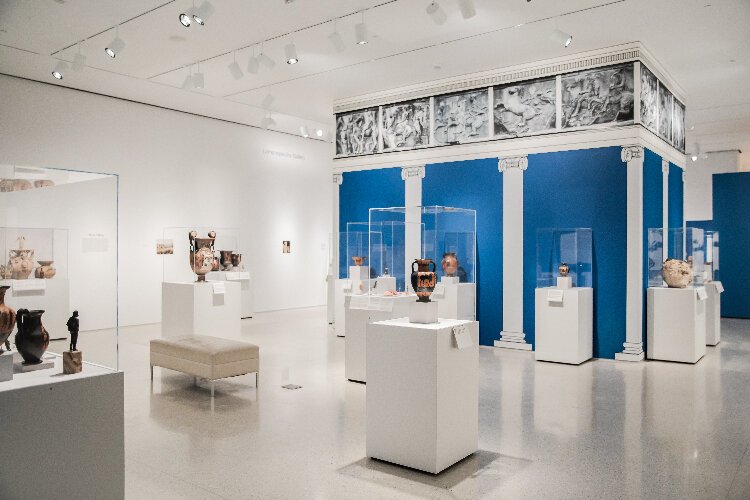
Some of the most compelling ancient mysteries come in the form of objects—artifacts whose existence or complexity challenges our understanding of the time in which they were created. These aren’t just curiosities; they are tangible pieces of the puzzle, demanding re-evaluation of ancient capabilities.
The Antikythera Mechanism
Discovered in a shipwreck off the coast of Greece, the Antikythera Mechanism is perhaps the most astonishing ancient artifact. Dating back to the 2nd century BCE, this complex device is an astronomical calculator, an intricate assembly of bronze gears that could predict celestial positions, eclipses, and even Olympic games cycles. Its sophistication far exceeds anything else known from its period, leading many to call it the world’s first analog computer. How was such precision achieved without modern tools, and was this an isolated genius or a fragment of a lost tradition of advanced mechanics? Its discovery forced historians to revise long-held assumptions about ancient technological capacity.
The Baghdad Battery
Found near Baghdad in 1936, the Baghdad Battery consists of a clay jar, a copper cylinder, and an iron rod. While its exact purpose is debated, some researchers propose it functioned as a galvanic cell, potentially used for electroplating or even early forms of electrotherapy, dating back over 2,000 years. If true, it suggests an understanding of electricity centuries before its conventional discovery.
The Piri Reis Map
This Ottoman map, compiled in 1513 by Admiral Piri Reis, depicts coastlines with astonishing accuracy, including portions of North and South America, and—according to some interpretations—a landmass resembling Antarctica before its official discovery, along with ice-free features that match geological surveys of the continent’s ancient coastline. The map states it was compiled from older, unknown sources. Could it be a copy of a much older map, preserving lost geographical knowledge from an unknown civilization?
Crystal Skulls
Often shrouded in controversy, the crystal skulls are human skull-shaped artifacts made from clear or milky quartz. While many have been debunked as modern forgeries, some, particularly those attributed to Mesoamerican cultures, possess a remarkable level of craftsmanship. The precision required to carve such hard material without modern tools raises questions about the methods and purpose behind their creation.
Architectural Marvels and Engineering Wonders that Defy Explanation
Beyond small artifacts, entire structures around the world stand as colossal question marks, their construction methods and purposes often shrouded in mystery. These megalithic sites push the boundaries of what we believe ancient peoples could achieve.
The Pyramids of Giza
The Great Pyramid of Giza alone consists of over 2 million massive stone blocks, each weighing several tons, fitted with incredible precision. How were these colossal stones quarried, transported, and lifted into place, reaching heights that rival modern skyscrapers, all without the aid of cranes or advanced machinery? Despite numerous theories, a definitive, universally accepted explanation for their construction remains elusive, fueling debates about ancient engineering prowess and perhaps even lost techniques.
Stonehenge
This iconic prehistoric monument in Wiltshire, England, is a marvel of engineering and astronomical alignment. Massive sarsen stones, some weighing up to 50 tons, were transported from quarries over 20 miles away, while smaller bluestones came from Wales, over 150 miles distant. Erecting these stones into a precise circular formation, aligned with solstices and equinoxes, suggests a sophisticated understanding of engineering, astronomy, and social organization that continues to baffle researchers.
Puma Punku
Part of the Tiwanaku site in Bolivia, Puma Punku features astonishingly precise stonework. Massive blocks, some weighing over 100 tons, are carved with intricate, almost machine-like precision, featuring interlocking joints and perfect angles. The material—a hard red sandstone and diorite—is incredibly difficult to work with, even with modern tools. The level of craftsmanship here suggests a technology far beyond what is typically attributed to the ancient Andean cultures.
Sacsayhuamán
High in the Andes near Cusco, Peru, lies Sacsayhuamán, a fortress or ceremonial complex built by the Inca. Its cyclopean walls are constructed from enormous, multi-sided stones, some weighing over 120 tons, fitted together so perfectly that not even a knife blade can pass between them—all without mortar. The sheer scale and precision of this dry-stone masonry continue to astound architects and engineers, leaving us to wonder about the methods and knowledge employed by its builders.
Unsolved Linguistic and Script Puzzles
Language is the bedrock of civilization, yet some ancient scripts and texts remain utterly indecipherable, acting as locked doors to the minds and knowledge of their creators. These linguistic puzzles represent entire bodies of lost wisdom, waiting for their Rosetta Stone.
The Voynich Manuscript
Perhaps the most famous unsolved book in the world, the Voynich Manuscript is an illustrated codex dating to the early 15th century. Its pages are filled with bizarre botanical drawings, astronomical diagrams, alchemical symbols, and human figures, all accompanied by a unique, elegant script that has resisted all attempts at decipherment. Is it a lost language, an elaborate hoax, or a coded message of immense significance? The mystery endures, inviting endless speculation.
Rongorongo of Easter Island
The isolated inhabitants of Easter Island developed a unique system of glyphs known as Rongorongo. Carved on wooden tablets, this script remains undeciphered, despite numerous attempts. It’s one of the few indigenous writing systems developed in isolation, and its meaning could shed light on the island’s enigmatic history, including the collapse of its once-thriving civilization and the mystery of the moai statues. Like other undeciphered scripts, it underscores how much of the past remains locked in language.
The Indus Valley Script
The ancient Indus Valley Civilization, one of the world’s earliest urban cultures, left behind thousands of short inscriptions on seals, pottery, and tablets. Their script, however, remains undeciphered. Without a known bilingual text, like the Rosetta Stone, the language and much of the culture of this vast civilization, which flourished around 2500–1900 BCE, remain largely unknown. Unlocking this script would open a direct window into one of humanity’s most intriguing ancient societies.
Theories and Speculations: Bridging the Gaps
When conventional explanations fall short, human ingenuity turns to theory and speculation. These attempts to bridge the gaps in our knowledge are as varied as the mysteries themselves, ranging from grounded archaeological hypotheses to more far-reaching ideas.
Conventional Archaeological Explanations
Archaeology provides the most rigorous framework for understanding the past, relying on scientific methods and empirical evidence. Archaeologists meticulously study stratigraphy, pottery shards, skeletal remains, and environmental data to piece together ancient lives. While sometimes slow and painstaking, this approach gradually uncovers new insights, often revealing that ancient peoples were far more clever and resourceful than previously imagined, even without “lost technology.”
Catastrophism and Cycles of Civilization
One theory posits that knowledge is lost due to catastrophic events—floods, earthquakes, volcanic eruptions, or even cosmic impacts—that wipe out civilizations and their accumulated wisdom. This idea suggests that humanity has undergone repeated cycles of advancement and collapse, with each “reset” leading to a partial loss of knowledge, only for it to be slowly rediscovered over millennia.
Extraterrestrial Intervention?
A more speculative, yet popular, theory is that some ancient marvels and advanced knowledge can be attributed to extraterrestrial visitors. Proponents of this idea point to depictions of “sky gods” or advanced beings in ancient art and texts, alongside the seemingly impossible feats of engineering, as evidence. While widely dismissed by mainstream science, the “ancient astronaut” theory captures the imagination and offers a dramatic explanation for the unexplained.
Psychic Abilities and Ancient Wisdom
Another intriguing, though less scientific, theory suggests that ancient peoples possessed different cognitive abilities or forms of consciousness, allowing them access to knowledge or means of construction that we no longer understand. This could involve enhanced intuition, telepathy, or a deeper connection to natural forces, enabling feats that appear miraculous to our modern, rational minds.
The Quest Continues: Modern Approaches to Ancient Puzzles
While the mysteries are ancient, the methods for investigating them are constantly evolving. Today’s researchers are armed with an array of advanced technologies and interdisciplinary approaches, bringing us closer than ever to cracking these enigmatic codes.
Advanced Technology in Archaeology
Modern archaeology is increasingly reliant on cutting-edge technology. LiDAR (Light Detection and Ranging), for example, can penetrate dense forest canopies to reveal hidden ancient cities and structures, as seen in the recent discoveries of Maya cities. Ground-penetrating radar (GPR) allows archaeologists to map subsurface features without excavation, while satellite imaging and drone photography provide unprecedented views of vast ancient landscapes. Together, these tools are transforming how we locate, map, and interpret ancient sites.
Interdisciplinary Research
No single field holds all the answers. Today, archaeologists collaborate with linguists, astronomers, geologists, chemists, and computer scientists to tackle complex puzzles. Linguists work on deciphering ancient scripts, astronomers analyze celestial alignments in ancient structures, and geologists identify the origins of building materials. This combined expertise offers a more holistic and robust approach to understanding ancient enigmas.
Citizen Science and Crowdsourcing
The digital age has also opened doors for public participation. Projects involving crowdsourcing have allowed thousands of volunteers to help categorize archaeological images, transcribe ancient texts, or even analyze raw data, accelerating research efforts and engaging a wider audience in the thrill of discovery.
The Enduring Legacy of Enigmas
The journey through ancient enigmas is more than just an academic exercise; it’s a profound exploration of human potential and the vastness of our shared history. These mysteries remind us that knowledge is not static, that history is always being rewritten, and that the past holds countless lessons and wonders yet to be unveiled. They inspire us to think critically, to question assumptions, and to maintain an open mind about what humanity has achieved and what might still be hidden beneath the sands of time.
Every unsolved puzzle is an invitation, a challenge to our intellect and imagination. It’s a testament to the enduring human spirit of inquiry, pushing us to constantly learn, discover, and connect with the profound heritage left by those who came before us.
Ready to test your knowledge and see how many ancient enigmas you can unravel? Delve into ancient enigmas with our interactive quiz and become a part of the ongoing quest for understanding!