
Challenging History: Unearthing Provocative and Controversial Archaeological Finds
Step into the shadowy corners of history, where ancient relics whisper tales that defy our textbooks and challenge everything we thought we knew about the past. Archaeology, often seen as a meticulous science, occasionally unearths discoveries so perplexing and so “out of place” that they spark intense debate, fuel conspiracy theories, and sometimes even lead to accusations of suppressed history. These aren’t just dusty artifacts; they’re potential keys to unlocking a radically different understanding of human civilization, pushing us to question established timelines and the very origins of our ingenuity.

The Allure of “Forbidden Archaeology”
There’s a magnetic pull to the idea of forbidden archaeology—finds that seem to contradict the accepted narrative of human development. Why are we so drawn to these stories? Perhaps it’s the thrill of imagining a past far more advanced or mysterious than we’re taught, or the belief that powerful institutions might deliberately conceal truths that disrupt their worldview. These controversial discoveries often involve objects or structures that appear to be technologically or culturally advanced beyond their supposed age, leading enthusiasts to speculate about lost civilizations, ancient alien visitors, or forgotten eras of human ingenuity. While mainstream archaeology typically seeks to integrate new evidence into existing frameworks, the “forbidden” label implies a deliberate exclusion, appealing directly to those who feel history is often written by the victors—or the powerful.
When Timelines Clash: Out-of-Place Artifacts (OOPArt)
The term “Out-of-Place Artifact,” or OOPArt, perfectly encapsulates the essence of these challenging finds. These are objects that, based on their supposed age or location, shouldn’t exist according to conventional historical or archaeological understanding. They force us to either drastically revise our timelines or find alternative, often less romantic, explanations.

The Antikythera Mechanism: An Ancient Computer?
Imagine divers exploring an ancient shipwreck off the coast of Antikythera, Greece, in 1901, and pulling out what looks like a corroded lump of bronze. Fast forward decades, and painstaking research reveals this lump to be an incredibly complex astronomical calculator, a device of astonishing sophistication featuring dozens of interlocking gears, dials, and inscriptions. Dated to around 200–100 BCE, the Antikythera Mechanism is often described as the world’s first analog computer, capable of predicting eclipses, tracking planetary movements, and even calculating Olympic cycles.
Its sheer complexity shattered the notion that such intricate clockwork technology only emerged in the late Middle Ages. Mainstream archaeology now largely accepts it as a testament to the advanced engineering skills of the ancient Greeks. Yet, for some, its existence still begs the question: how could such technology appear so isolated in time? Was it a singular genius, or evidence of a wider, perhaps forgotten, tradition of advanced mechanics? It challenges us to reconsider the technological capabilities of ancient civilizations, proving that occasionally, the ancients were far more ingenious than we give them credit for.

The Baghdad Battery: A Precursor to Modern Power?
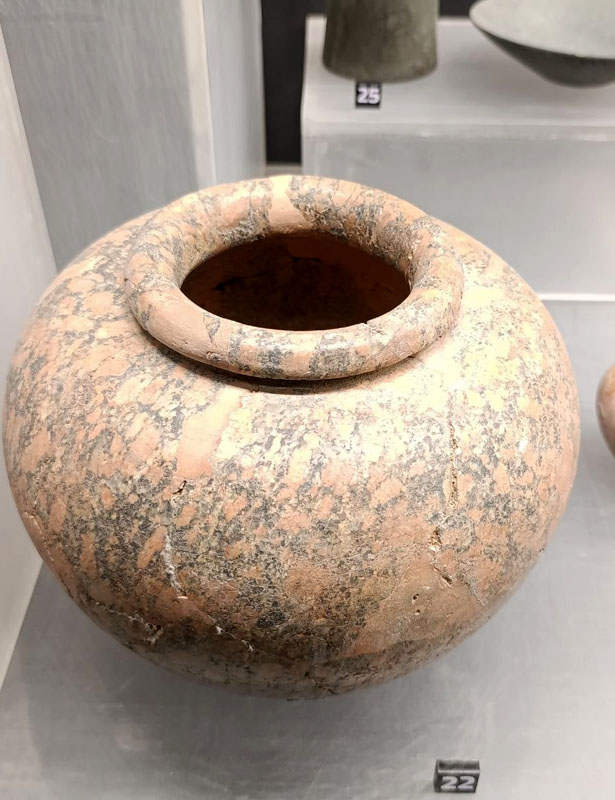
Another perplexing OOPArt is the Baghdad Battery, discovered in Iraq in 1938. This artifact, dating back to the Parthian era (around 250 BCE to 224 CE), consists of a clay jar containing a copper cylinder, which encloses an iron rod. When filled with an acidic electrolyte, like grape juice or vinegar, it could theoretically produce a small electrical current.
The controversial discovery immediately sparked theories: was this an ancient battery, used for electroplating, pain relief, or even cult rituals? If so, it would predate Alessandro Volta’s 1800 battery by over a millennium. While experiments have shown it could generate voltage, mainstream archaeologists are more skeptical. Many suggest these jars were more likely used for storing sacred scrolls, pigments, or even as medical tools for acupuncture, rather than as power sources. The lack of associated electrical equipment or clear evidence of its purpose leaves its true function shrouded in mystery, making it a favorite among those who believe in a suppressed history of ancient technology.

Giants, Lost Civilizations, and Ancient Visitors: Reshaping Human Origins
Some archaeological claims don’t just challenge timelines; they aim to completely rewrite the story of human origins, often venturing into territory that touches on myth and legend.
The Bosnian Pyramids: Natural Formations or Ancient Megastructures?
In 2005, a Bosnian-American businessman named Semir Osmanagić claimed that a cluster of hills near Visoko, Bosnia, were not natural formations but ancient, man-made pyramids, potentially thousands of years older than those in Egypt or Mexico. He named them the “Pyramid of the Sun,” “Pyramid of the Moon,” and “Pyramid of the Dragon,” among others, and initiated archaeological excavations.
Osmanagić’s claims include theories about advanced energy fields, ancient tunnels, and a global network of pyramids. These controversial discoveries immediately captivated the public and conspiracy enthusiasts, promising to revolutionize our understanding of European prehistory. However, mainstream archaeologists, geologists, and scientists have overwhelmingly debunked these theories. Extensive geological surveys have shown the hills to be natural geological formations known as flatirons, composed of stratified layers of conglomerate, clay, and sandstone. The “tunnels” are natural caves, and the “cut blocks” are natural sedimentary rock formations. Despite the scientific consensus, Osmanagić continues his work, attracting volunteers and tourists, keeping the debate alive for those who seek evidence of lost, advanced civilizations in unexpected places.
Yonaguni Monument: Man-Made Structure or Natural Formation?
Off the coast of Yonaguni Island in Japan lies a colossal underwater rock formation, discovered in 1987. It features flat surfaces, sharp angles, terraces, and what appear to be carved steps, leading some, most notably underwater photographer Kihachiro Aratake and geologist Masaaki Kimura, to claim it’s a submerged remnant of an ancient city or monument, possibly dating back 10,000 years.
If the Yonaguni Monument were indeed man-made, it would represent a monumental discovery, pushing back the timeline for monumental architecture in the region by thousands of years and suggesting a highly advanced, lost civilization in East Asia. The structure’s features—its rectangularity, straight edges, and apparent staircases—are strikingly reminiscent of human construction. However, geological experts largely argue that these features are the result of natural geological processes, specifically seismic activity and erosion along fault lines, creating striking but ultimately natural formations. The debate rages on, fueled by the monument’s uncanny resemblance to artificial structures and the tantalizing possibility of a submerged ancient world.
Suppressed History? The Debate Over Established Narratives
Sometimes, an archaeological find doesn’t necessarily contradict all existing timelines, but it forces such a radical re-evaluation of established narratives that it feels like suppressed history—not because it’s hidden, but because it’s so disruptive that it takes time for the academic world to fully accept and integrate it.
Göbekli Tepe: Rewriting the Dawn of Civilization
Perhaps no site has challenged our understanding of early human civilization more profoundly than Göbekli Tepe in southeastern Turkey. Discovered in the mid-1990s and dating back to around 9,600 BCE, this monumental complex of massive carved stone pillars, arranged in circles, predates Stonehenge by 6,000 years and the invention of agriculture by centuries.
Before Göbekli Tepe, the prevailing theory was that complex societies, monumental architecture, and organized religion only arose after the development of agriculture, which allowed for sedentary living and surplus resources. Göbekli Tepe flips this on its head, showing that hunter-gatherer societies were capable of immense communal effort, sophisticated artistry, and complex ritualistic structures. It suggests that the drive for communal worship or gathering might have preceded the agricultural revolution, perhaps even inspiring it. While not a case of forbidden archaeology in the conspiratorial sense, Göbekli Tepe initially met with immense skepticism because it fundamentally overturned a cornerstone of archaeological thought. Its eventual acceptance demonstrates how new, undeniable evidence can indeed rewrite history, even if the process is slow and challenging.
The Acámbaro Figures: Dinosaurs and Humans Coexisting?
In the 1940s, Waldemar Julsrud, a German merchant in Acámbaro, Mexico, claimed to have discovered thousands of clay figurines depicting a startling array of subjects: humans, unknown animals, and most controversially, dinosaurs. These figures, if authentic, would imply that humans coexisted with dinosaurs, throwing a monumental wrench into paleontological and geological timelines.
For creationists and those who believe in suppressed history, the Acámbaro Figures became powerful evidence. However, scientific investigations and subsequent analyses have largely debunked these theories. Radiocarbon dating attempts on some figures yielded inconclusive results or suggested a modern origin. More damningly, the figures were often found in disturbed soil, lacked any archaeological context, and showed no signs of genuine antiquity (e.g., patination or weathering consistent with thousands of years underground). The prevailing consensus among archaeologists is that the figures are a modern hoax, likely created by local villagers to sell to Julsrud, who was known to pay for such finds. Despite this, the allure of ancient humans riding dinosaurs persists in certain circles, highlighting how deeply desired theories can resist scientific refutation.
The Pitfalls of “Debunked Theories” and Misinterpretation
The journey into challenging history is fascinating, but it’s also fraught with peril. The line between genuine scientific inquiry and enthusiastic speculation can blur, especially when dealing with ambiguous evidence. Many controversial discoveries gain traction not from rigorous scientific validation, but from selective interpretation, a desire to believe, or even outright fabrication.
Archaeology is a science built on context, stratigraphy, and corroborating evidence. A single “out-of-place” artifact, no matter how intriguing, usually requires extensive cross-verification before it can rewrite an entire historical epoch. When theories are debunked, it’s often not because of a conspiracy, but because they fail to stand up to the scientific method—consistent testing, peer review, and the accumulation of contradictory evidence. Yet, the romantic notion of a hidden truth often allows these theories to persist, even thrive, outside mainstream academia.
Navigating the Archaeological Minefield: Skepticism vs. Open-Mindedness
So, how do we navigate this exciting yet often contentious landscape? The key lies in balancing healthy skepticism with genuine open-mindedness. It’s crucial to question established narratives, as Göbekli Tepe powerfully demonstrates, but also to demand rigorous evidence for radical claims.
When encountering claims of forbidden archaeology or suppressed history, ask:
- What is the evidence? Is it contextual, reproducible, and verifiable?
- Who is making the claim, and what are their credentials and motivations?
- What do mainstream experts say, and what are their counter-arguments based on?
- Are there simpler, more parsimonious explanations for the phenomena?
The past is a vast, complex tapestry, and our understanding of it is constantly evolving. True breakthroughs come from challenging assumptions with solid evidence, not from clinging to sensational claims without scientific backing.
The Enduring Mystery of Our Past
The allure of challenging history and controversial discoveries isn’t going anywhere. From the technological marvel of the Antikythera Mechanism to the structural enigma of Yonaguni, these finds provoke our curiosity and ignite our imagination. They remind us that history isn’t a static collection of facts, but a dynamic, ongoing investigation—a puzzle with many missing pieces and perhaps a few pieces that don’t quite fit the picture we’ve assembled so far. Whether through meticulous scientific investigation or the passionate pursuit of alternative theories, the quest to understand our ancient past continues to inspire awe, debate, and profound questions about who we are and where we come from.
The past holds countless secrets, and the journey to unearth them is often as controversial as the finds themselves. What do you think about these enigmatic discoveries? Do they hint at a suppressed history, or are they simply misinterpreted anomalies?
Join the debate in the comments below and share your thoughts on these provocative archaeological finds!