
Challenging History: Unearthing Provocative and Controversial Archaeological Finds
What if the history books are incomplete? What if there are archaeological discoveries that simply don’t fit the established narrative, forcing us to question everything we thought we knew about human civilization, ancient technology, and even our own origins? For history buffs and seekers of the unknown alike, the world of “forbidden archaeology” offers a tantalizing glimpse into a past far more complex and mysterious than mainstream science often allows. These controversial discoveries spark fierce debates, ignite passions, and occasionally hint at a “suppressed history” that challenges the very foundations of our understanding.
Join us as we delve into some of the most provocative archaeological finds that continue to baffle experts and fuel the imagination, exploring the claims, the counter-arguments, and the enduring questions that make these sites and artifacts so utterly captivating.
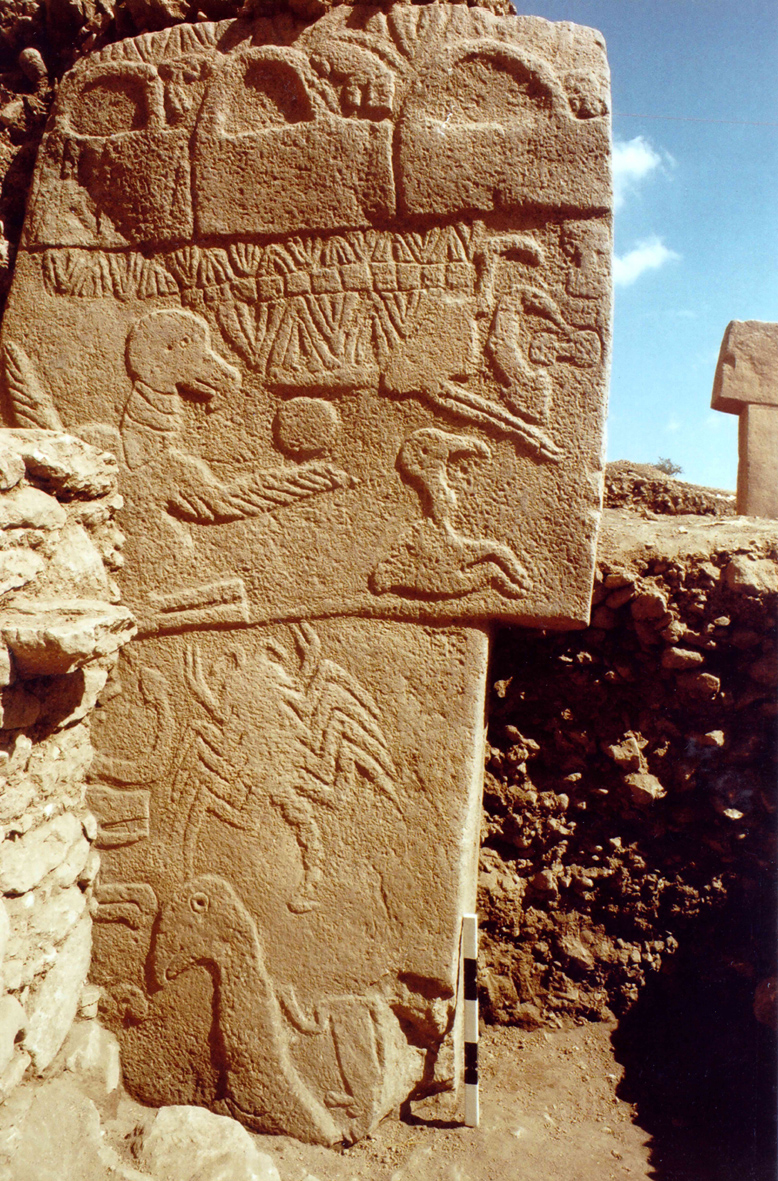
Göbekli Tepe: Rewriting the Dawn of Civilization
Imagine a monumental stone complex, adorned with intricate carvings of animals, built by hunter-gatherers over 11,000 years ago—long before the advent of agriculture, pottery, or even settled villages. This isn’t science fiction; it’s Göbekli Tepe, located in southeastern Turkey, and its discovery has fundamentally reshaped our understanding of early human history.
For decades, the prevailing archaeological theory held that complex societies and monumental architecture only emerged after the development of agriculture, which allowed for settled populations and surplus resources. Göbekli Tepe, however, turns this timeline on its head. Here, massive T-shaped pillars weighing up to 60 tons were meticulously carved and arranged into sophisticated circular enclosures by people who, by all accounts, were still living a nomadic or semi-nomadic lifestyle. This suggests that the desire to build and worship may have been the catalyst for human settlement and agriculture, rather than the other way around.
The sheer scale and sophistication of Göbekli Tepe, predating Stonehenge by over 6,000 years and the Egyptian pyramids by 7,000 years, raises profound questions. How did these pre-agricultural people organize such a massive undertaking? What advanced knowledge or societal structure allowed them to create such an enduring monument? While mainstream archaeology has largely embraced Göbekli Tepe as a game-changer, its full implications—especially regarding the origins of civilization itself—continue to be debated, challenging the very bedrock of established historical narratives.

The Mysteries of OOPArt: Out-of-Place Artifacts
Perhaps nothing fuels the imagination of “forbidden archaeology” enthusiasts more than the category of Out-of-Place Artifacts, or OOPArt. These are objects found in archaeological contexts that seem impossible for their alleged age or location, often suggesting advanced technology, knowledge, or even human presence far earlier than conventional history allows. While many OOPArts have been debunked, their existence continues to spark intense speculation about “suppressed history” and lost civilizations.
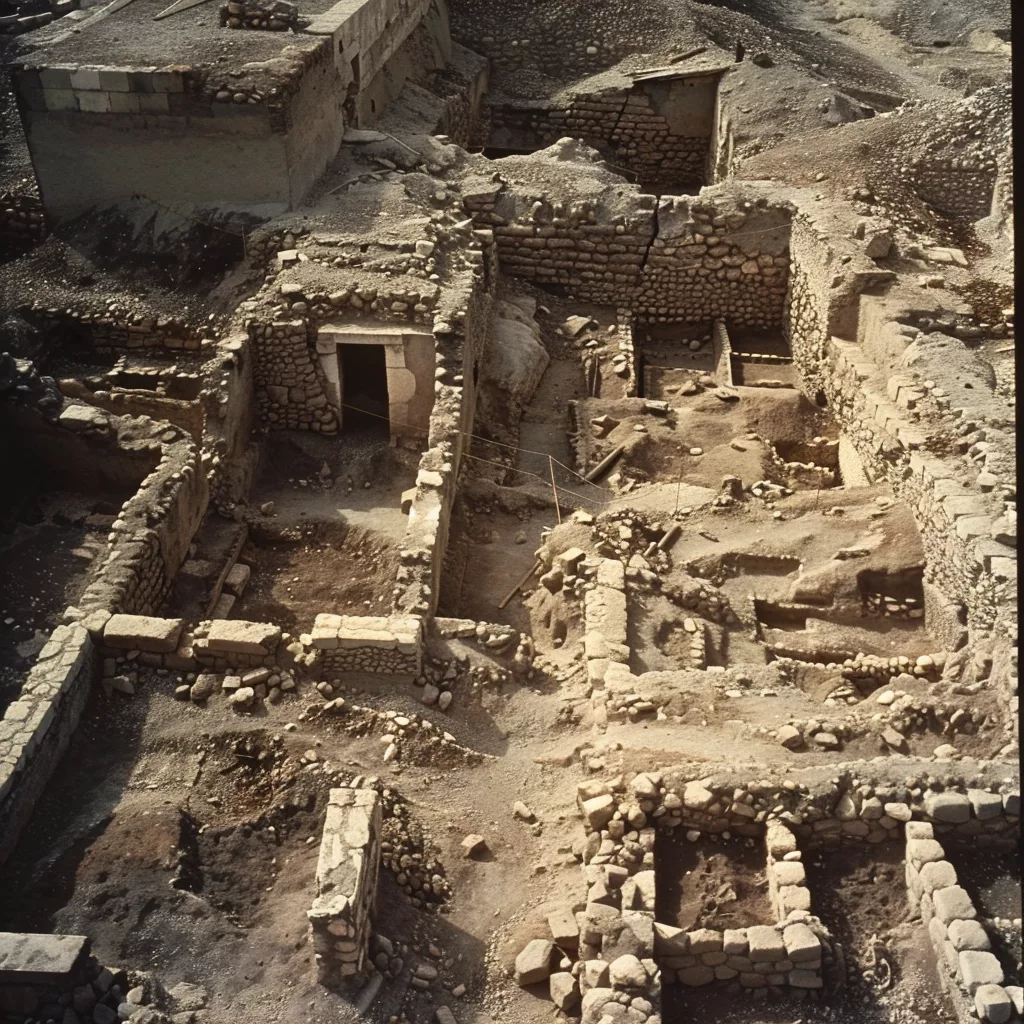
The Ica Stones & Acámbaro Figures: Dinosaurs and Humans Together?
Among the most controversial OOPArts are the Ica Stones of Peru and the Acámbaro figures of Mexico. The Ica Stones are thousands of andesite stones engraved with scenes of humans interacting with dinosaurs, performing advanced surgery, and using telescopes. If authentic, they would shatter our understanding of geological time and human evolution, suggesting a human-dinosaur coexistence millions of years ago. Similarly, the Acámbaro figures are thousands of small ceramic figurines, many portraying dinosaurs and other creatures, found in Mexico in the 1940s.
Why they’re controversial: Both collections, if genuine, would provide undeniable evidence that humans lived alongside dinosaurs, directly contradicting the paleontological record. Proponents argue they are proof of a lost, advanced civilization with knowledge far beyond our current understanding.
Mainstream perspective: Despite the claims, both the Ica Stones and the Acámbaro figures are widely considered archaeological hoaxes by the scientific community. The Ica Stones have been linked to a local farmer who admitted to carving them, and the Acámbaro figures lack proper archaeological provenance and show signs of modern manufacture. Yet, for many, the sheer volume and compelling nature of the imagery keep the debate alive.

The Klerksdorp Spheres: Millions of Years of Machining?
Found in pyrophyllite mines near Klerksdorp, South Africa, these small, metallic spheres are another intriguing OOPArt. Measuring about an inch in diameter, many have perfectly incised grooves around their equator. What makes them truly astonishing is their geological context: they are found in Precambrian rock estimated to be around 2.8 billion years old.
The controversy: How could objects that appear to be artificially manufactured, perhaps even machined, exist in rocks that are billions of years old? This implies an intelligent presence on Earth long before life as we know it evolved, let alone humans.
Scientific explanation: Geologists and mineralogists generally identify the Klerksdorp Spheres as natural concretions, formed by geological processes where minerals accumulate around a nucleus. The grooves are attributed to natural layering within the rock or the result of subsequent geological compression and erosion. While compelling, most scientists view them as fascinating natural curiosities rather than evidence of ancient intelligence.

The Baghdad Battery: Ancient Power Source?
Unearthed near Baghdad in 1936, the “Baghdad Battery” consists of a 5.5-inch clay jar containing a copper cylinder, which encloses an iron rod. The artifact dates back to the Parthian era (around 250 BCE to 224 CE).
The controversy: Some researchers propose that this device was an ancient galvanic cell, capable of producing a small electrical current. If true, it would demonstrate a knowledge of electrochemistry far predating its “official” discovery in the 18th century, suggesting a lost ancient technology.
The debate: While experiments have shown that a replica filled with an electrolyte (like grape juice or vinegar) can indeed generate a small voltage, the true purpose of the Baghdad Battery remains debated. Mainstream archaeologists often suggest it was used for electroplating small objects with precious metals, for medicinal purposes, or perhaps for ritualistic reasons, such as providing a mild electric shock during religious ceremonies. The lack of associated wires or a clear context for its use prevents a definitive conclusion, leaving it a captivating enigma.
Sunken Secrets: Yonaguni Monument and Lost Continents
The allure of lost continents and submerged cities has captivated humanity for centuries, and certain underwater discoveries only amplify these ancient legends, fueling theories of forgotten civilizations and “suppressed history.”
Yonaguni Monument: Japan’s Atlantis?
Off the coast of Yonaguni Island in Japan lies a colossal underwater rock formation that has sparked intense debate since its discovery in the mid-1980s. The Yonaguni Monument appears to consist of massive, geometrically shaped steps, terraces, straight edges, and even what looks like a pyramid-like structure.
The controversy: To proponents, the precise angles, flat surfaces, and distinct steps are unmistakable evidence of a sophisticated, man-made structure, a sunken city from a lost civilization that predates the last Ice Age. If so, it would rewrite the timeline of complex architecture and human settlement in the Pacific.
Skeptics’ view: Geologists argue that the formations are entirely natural, shaped by tectonic activity, erosion, and the unique properties of the sandstone rock. They point to similar naturally occurring geological formations above water in the region. The debate hinges on whether the monument’s apparent symmetry and right angles are coincidental or the deliberate handiwork of an ancient culture. Regardless, the images of the Yonaguni Monument continue to inspire awe and speculation about a hidden past beneath the waves.
Echoes of Atlantis: General Discussion
Finds like Yonaguni inevitably lead back to the legendary lost continent of Atlantis, first described by Plato. While Atlantis itself remains firmly in the realm of myth for most historians, the persistent discovery of underwater anomalies and ruins, coupled with geological evidence of significant sea-level changes, keeps the dream of a lost, advanced civilization alive. These “forbidden archaeology” theories often suggest that such civilizations possessed knowledge and technology far beyond what we attribute to their supposed eras, and that their disappearance left behind only cryptic clues for us to uncover.
Advanced Ancient Knowledge: Piri Reis Map and the Antikythera Mechanism
Some archaeological finds don’t just challenge our timelines; they challenge our assumptions about the knowledge and technology possessed by ancient peoples.
The Piri Reis Map: Antarctica Before Discovery?
The Piri Reis Map is a 16th-century world map compiled by the Ottoman admiral and cartographer Piri Reis. While its authenticity is not disputed, what it depicts has sparked immense controversy. The map shows remarkably accurate coastlines of Africa and South America, but most provocatively, it appears to depict a portion of Antarctica, specifically Queen Maud Land, without ice—a condition that hasn’t existed for at least 6,000 years.
The controversy: How could a 16th-century mapmaker possess knowledge of Antarctica before its official discovery in 1820, let alone its ice-free topography? Proponents of “forbidden archaeology” argue that the map must have been compiled from much older source maps, perhaps originating from a lost, highly advanced civilization with sophisticated cartographic and navigational abilities. Some even suggest these ancient cartographers had the ability to map the Earth from an aerial perspective.
The debate: Skeptics point out that the map is not entirely accurate and contains significant distortions. They suggest the landmass identified as Antarctica could be a speculative southern continent, common in ancient cartography, or a misinterpretation of South America’s coast. However, the uncanny resemblance of some features to ice-free Antarctica continues to make the Piri Reis Map one of the most intriguing pieces of evidence for ancient, suppressed knowledge.
The Antikythera Mechanism: A Computer from Antiquity?
Discovered in a Roman shipwreck off the Greek island of Antikythera in 1901, the Antikythera Mechanism is an ancient Greek device that has redefined our understanding of ancient technology. Initially thought to be a simple clock, further research revealed it to be an extraordinarily complex astronomical calculator, a kind of analog computer.
Why it’s controversial (historically): Its intricate system of interlocking bronze gears, dials, and inscriptions allowed it to predict astronomical positions, eclipses, and even the dates of the Olympic Games with remarkable precision. Its complexity was unparalleled for over a millennium after its creation (around 200–100 BCE), suggesting a level of technological sophistication previously thought impossible for the ancient world.
Mainstream view: Unlike many other controversial finds, the Antikythera Mechanism is now widely accepted and celebrated by mainstream science. It doesn’t necessarily contradict established timelines but rather forces us to upgrade our understanding of ancient Greek ingenuity. It stands as a testament to the fact that advanced knowledge can be lost to history, only to be rediscovered millennia later, making us wonder what other technological marvels might be hidden in the archaeological record.
The Bosnian Pyramids: A Modern Archaeological Battleground
In the heart of Bosnia-Herzegovina, a modern archaeological controversy rages. Since 2005, Dr. Semir Osmanagić, an amateur archaeologist, has claimed that several hills in the Visoko Valley are in fact ancient pyramids, older and larger than the Great Pyramid of Giza. He has named them the “Pyramid of the Sun,” “Pyramid of the Moon,” and “Pyramid of the Dragon,” among others.
The controversy: Osmanagić and his supporters claim to have found evidence of concrete construction, geometrically precise slopes, and even an elaborate underground tunnel system. They propose these structures were built by an advanced civilization thousands of years ago, representing a “suppressed history” that challenges established views of European prehistory. The site attracts volunteers and tourists, eager to participate in what they see as a groundbreaking discovery.
Why it’s widely rejected: The vast majority of professional archaeologists, geologists, and historians have thoroughly debunked these claims. They contend that the “pyramids” are natural geological formations known as flatirons or truncated hills, and the alleged “concrete” is natural conglomerate rock. The “tunnels” are explained as natural caves or old mining shafts. Critics accuse Osmanagić of pseudoscience and damaging legitimate archaeological sites in his pursuit of sensational claims. The Bosnian Pyramids remain a stark example of the clash between popular enthusiasm for “forbidden archaeology” and the rigorous demands of scientific inquiry.
The Human Story: When Evidence Clashes with Dogma
The history of archaeology is replete with examples of initial resistance to groundbreaking discoveries. From the acceptance of deep time and human antiquity to the discovery of Neanderthals and the decipherment of hieroglyphs, new evidence has often been met with skepticism, ridicule, and even outright rejection before eventually being integrated into the scientific consensus.
This dynamic is at the heart of why “forbidden archaeology” and “debunked theories” continue to captivate. For proponents, the very resistance from the academic establishment is