
Ancient Mysteries and Lost Knowledge: Exploring Enigmatic Riddles of the Past
Imagine holding an object so impossibly advanced that it rewrites history — a piece of intricate clockwork buried for two millennia, or a battery that produced electricity a thousand years before Benjamin Franklin. Picture standing before a stone circle whose astronomical alignments rival a modern observatory, yet built by hands that left no blueprints. You are about to step into a world where the line between science and legend blurs, where every artifact is a whisper from a forgotten age, and where some questions simply refuse to be answered.
From the depths of the ocean to arid desert plateaus, ancient mysteries have lured explorers and dreamers for centuries. These are not just stories; they are tangible unsolved puzzles — physical remnants of lost knowledge that challenge our assumptions about what our ancestors knew. In this journey, we’ll wander among enigmatic artifacts, explore civilizations that appeared to leap ahead of their time, and confront the tantalizing possibility that history holds secrets still waiting to be unlocked. Prepare to question everything you thought you knew about the past.

The Endless Allure of the Unexplained
Why do ancient mysteries grip us so tightly? Perhaps it’s the thrill of the hunt — the feeling that beneath the dust of millennia, a truth lies hidden just out of reach. Every year, archaeologists unearth relics that deepen the enigma rather than resolve it. These unsolved puzzles remind us that human history is not a neat timeline but a tapestry riddled with gaps. Our ancestors built wonders with tools we cannot replicate, encoded knowledge into monuments that speak in celestial tongues, and left behind enigmatic artifacts that refuse to fit into the accepted narrative.
The term lost knowledge often surfaces in such discussions. It’s the idea that entire branches of understanding — whether in engineering, astronomy, or medicine — once existed and then vanished, swallowed by catastrophe, conquest, or simply the slow erosion of time. This isn’t mere fantasy. The Great Library of Alexandria burned, taking with it countless scrolls. Cultures like the Indus Valley left a script no one can read. With each discovery, we are forced to ask: how much did they really know, and what have we forgotten?
Enigmatic Artifacts That Defy Explanation
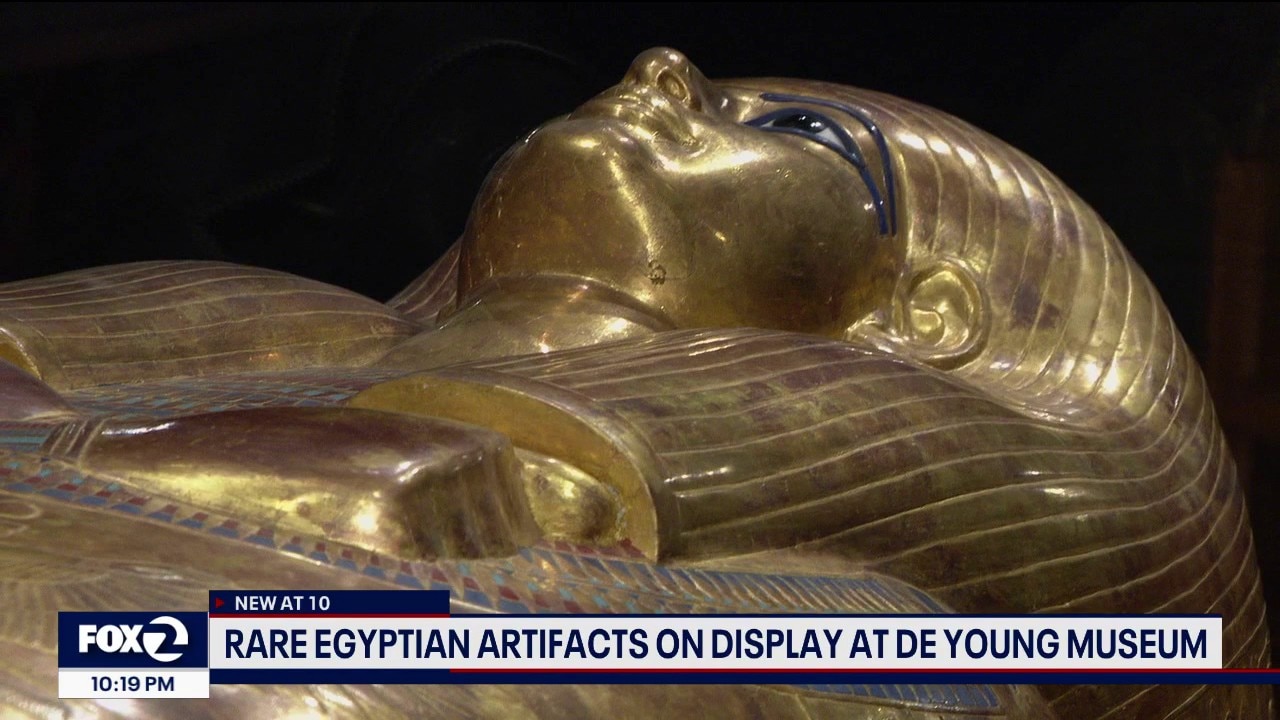
Some objects seem to belong to a different timeline altogether. These enigmatic artifacts sit in museum displays, their placards offering theories rather than facts, daring us to solve their riddles.

The Antikythera Mechanism: A 2,000-Year-Old Computer
In 1901, sponge divers off the Greek island of Antikythera pulled a corroded lump of bronze from a Roman-era shipwreck. Decades later, X-ray imaging revealed its impossible secret: a complex system of at least 30 meshing gears, designed to calculate astronomical positions with staggering precision. The Antikythera Mechanism is often called the world’s first analog computer, yet it predates comparable technology by over a millennium. Who built it? How did such sophisticated knowledge spread? Even today, modern reconstructions struggle to match its compact brilliance. This is lost knowledge in its purest form — a flash of genius that went dark for centuries.
The Baghdad Battery: Electricity in Antiquity?
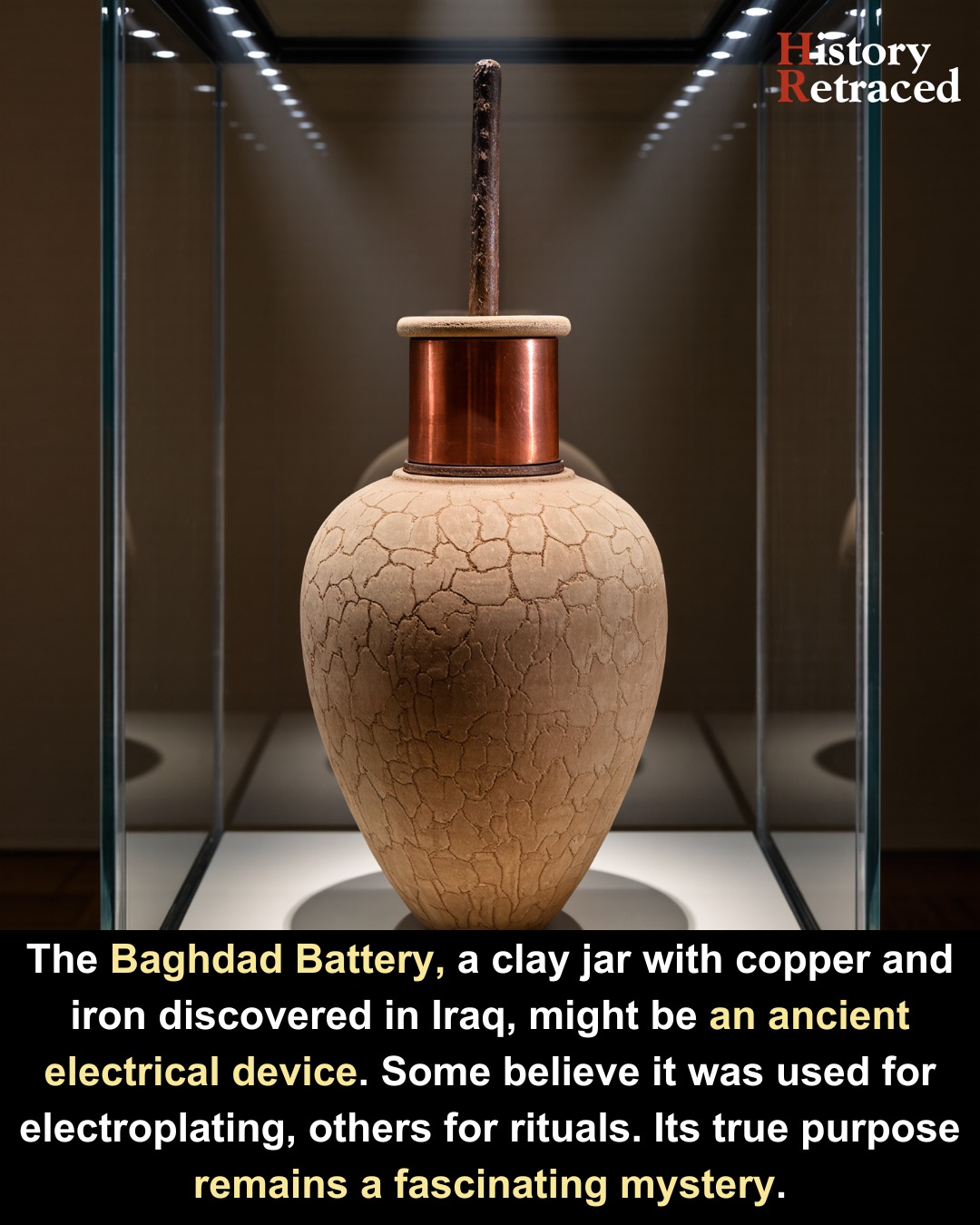
Imagine a clay jar holding a copper cylinder and an iron rod, sealed with asphalt. Found near Baghdad, these objects — dating to the Parthian or Sassanid period (roughly 2,000 years ago) — bear an uncanny resemblance to a primitive galvanic cell. When filled with an acidic liquid like vinegar, they produce a small electric current. But was it a battery? Some suggest it was used for electroplating gold onto silver; others think it served in religious ceremonies, giving worshippers a tingle as a divine sign. The true purpose remains one of the most tantalizing unsolved puzzles, hinting that ancient peoples may have harnessed electricity long before Volta.

The Voynich Manuscript: A Book No One Can Read
No list of ancient mysteries is complete without the Voynich Manuscript. Carbon-dated to the early 15th century, this vellum book is filled with bizarre botanical illustrations, astrological diagrams, and flowing script in an unknown language or code. Despite centuries of effort by the brightest cryptographers — including teams from both World Wars — not a single word has been deciphered. The plants drawn within don’t match any known species. Is it a hoax, an elaborate cipher, or a record of lost knowledge from a hidden tradition? The manuscript sits at Yale’s Beinecke Library, silently guarding its secrets.
The Shroud of Turin and the Piri Reis Map
While the Shroud of Turin grabs headlines for its mysterious image, another artifact challenges our understanding of geography. The Piri Reis map, drawn in 1513 by an Ottoman admiral, depicts the coastlines of South America and Antarctica with an accuracy that should have been impossible. Antarctica’s Queen Maud Land is shown free of ice — a state it hasn’t been in for at least 6,000 years. The map includes notes that Piri Reis compiled it from much older charts, possibly dating back to the lost Library of Alexandria. Such enigmatic artifacts suggest ancient mariners may have mapped the globe long before the Age of Exploration, preserving knowledge that later vanished.
Lost Knowledge: Technologies Ahead of Their Time
The concept of lost knowledge extends beyond single objects to entire fields of expertise that vanished with the societies that nurtured them.
The Sacred Flame That Could Cut Stone
Ancient megalithic sites like Puma Punku in Bolivia and the Great Pyramid of Giza feature stones so precisely cut and fitted that you can’t slip a razor blade between them. Some of these blocks weigh over 100 tons and are sculpted from diorite and andesite — materials so hard that even modern diamond-tipped tools struggle. Yet there are no chisel marks. Incan legend speaks of a “sacred flame” that softened stone, allowing it to be molded like clay. In Peru, strange vitrified surfaces suggest exposure to extreme heat. While mainstream archaeology attributes the work to patience and abrasives, the sheer perfection of the craftsmanship keeps the unsolved puzzles alive. Could a forgotten technique — perhaps sonic levitation or a plant-derived chemical that dissolves minerals — explain the impossible precision?
The Sound Technology of Sacred Sites
Have you ever stood inside a chamber at Newgrange in Ireland or the Hal Saflieni Hypogeum in Malta and felt sound resonate strangely in your bones? Archaeoacoustics is a growing field that examines how ancient builders engineered spaces for specific acoustic effects. At Chavín de Huántar in Peru, underground galleries amplify the roar of water to mimic a jaguar’s growl, altering human consciousness. In Malta’s Oracle Room, a low male voice can reverberate through the entire complex, while a female voice gets swallowed. These were not accidents. The lost knowledge of manipulating sound for ritual or communication hints at a sophisticated understanding of physics that our textbooks barely acknowledge.
Herbal Medicines and the Wisdom of the Ancients
Modern pharmacology often rediscovers what ancient healers knew. The 60,000-year-old burial of a Neanderthal in Shanidar Cave, Iraq, contained pollen from yarrow, cornflower, and other plants still used in herbal medicine. In the Amazon, shamans combine MAO-inhibiting vines with DMT-containing leaves to create ayahuasca — a biochemical synergy that science decoded only recently. Much of this plant wisdom was transmitted orally; when colonization wiped out indigenous cultures, countless remedies disappeared. This is perhaps the most poignant form of lost knowledge: not just forgotten technology, but forgotten ways of healing that might have saved lives.
Unsolved Puzzles Written on the Earth Itself
Some of the most profound ancient mysteries are not housed in museums — they are carved into the planet. These geo-glyphs and megalithic arrangements beg the question: what was so important that entire landscapes were transformed to express it?
The Nazca Lines: Messages for the Sky?
Etched into the arid Peruvian desert, the Nazca Lines form over 800 straight lines, 300 geometric figures, and 70 animal and plant designs — some spanning 1,200 feet. Their true scale can only be appreciated from the air. Why would a pre-Columbian culture create art they could never see? Theories range from astronomical calendars and water cult rituals to alien runways (a notion that frustrates serious scholars). The lines were made by removing reddish pebbles to reveal lighter soil beneath, yet the precision over such vast distances, without aerial observation, is an unsolved puzzle. Who were they communicating with? And how did the Nazca preserve the designs so flawlessly for 2,000 years?
Stonehenge and the Megalithic Yard
Stonehenge stands as the ultimate icon of ancient mysteries. The massive sarsen stones were transported from Marlborough Downs, 20 miles away, while the smaller bluestones came from the Preseli Hills in Wales — 150 miles distant. But beyond the logistics, the monument encodes advanced astronomy. The station stones mark the moon’s 18.6-year nodal cycle, and the horseshoe aligns with the summer solstice sunrise. Some researchers propose that megalithic builders across Europe used a standard unit of measurement — the “megalithic yard” of 2.72 feet — derived from pendulums and astronomical constants. If true, it implies a continent-wide network sharing lost knowledge of geometry and the cosmos millennia before Newton.
The Great Pyramid’s Electromagnetic Secret?
The Great Pyramid of Giza is more than a tomb (and may not be a tomb at all). Recent research suggests its chambers and limestone casing could concentrate electromagnetic energy. A 2018 study found that in the radio frequency range, the pyramid focuses energy into its internal chambers and the substrate below. Was this intentional — a power plant of some kind, or a means to enhance spiritual experiences? While the debate rages, the precision of the pyramid’s alignment to true north (within 0.05 degrees) and its incorporation of π and the golden ratio point to a level of lost knowledge that mainstream history hesitates to fully embrace.
The Search for Answers: Science Meets Mystery
Today, cutting-edge technology is peeling back some of the layers of these ancient mysteries, but often the answers only lead to deeper questions.
- LiDAR scanning has revealed entire cities beneath the Amazon and Cambodian jungles, showing that civilizations like the Maya were far more populous and interconnected than we thought. Yet their sudden collapse remains an unsolved puzzle.
- DNA analysis of the Paracas elongated skulls in Peru initially suggested they were not human, but later studies confirmed they are Homo sapiens — with cranial deformation practices that altered the skull shape. Why did cultures around the world independently practice this painful tradition? The meaning is lost.
- Neutrino tomography of the Great Pyramid found an enormous, hidden void above the Grand Gallery, now called the Big Void. Its purpose is unknown, fueling speculation that even more secrets lie sealed within.
For every revelation, a new enigmatic artifact emerges from the sand. A hammer encased in 400-million-year-old rock (the London Hammer), a fossilized human handprint in limestone millions of years old, a 300-million-year-old screw preserved in a meteorite — all challenge the timeline of human existence. These out-of-place artifacts (OOPArts) are often dismissed as misinterpretations, yet they persist as stubborn unsolved puzzles, suggesting that our planet has witnessed cycles of civilization long before recorded time.
Frequently Asked Questions About Ancient Mysteries
What is the most mysterious artifact ever found?
The Antikythera Mechanism is widely considered the most baffling due to its technological sophistication. However, the Voynich Manuscript remains equally mysterious because no one has cracked its code. The title of “most mysterious” is subjective and depends on whether you favor technical or linguistic puzzles.
How do mainstream archaeologists explain these anomalies?
Archaeologists generally emphasize gradual technological development and cultural diffusion, explaining advanced artifacts as the pinnacle of known ancient skills or as accumulation errors in dating. They often caution against “ancient astronaut” or lost super-civilization theories, noting that extraordinary claims require extraordinary evidence.
Is there evidence that ancient people had electricity?
The Baghdad Battery offers a compelling case. While its low current could not power machines, it might have been used for electroplating or therapeutic shock. No definitive proof exists for a widespread electrical grid, but the concept that electricity could be generated is certainly plausible.
Why are the Nazca Lines so important?
They demonstrate that monumental art can serve as a form of celestial communication, possibly tied to water and fertility rituals. The precision of their layout, visible only from above, pushes us to reconsider the capabilities of pre-Columbian peoples and their relationship with the sky.
Can I visit these sites?
Many of the locations mentioned — Stonehenge, the Giza Plateau, the Nazca Lines — are open to the public, though access to some areas may be restricted to protect the artifacts. Museums like the National Archaeological Museum in Athens (home to the Antikythera Mechanism) and the British Museum offer up-close views. Always check current travel advisories and respect preservation guidelines.
The Unending Quest for Lost Knowledge
What draws us back, again and again, to ancient mysteries? Perhaps it’s a deep-seated recognition that we are not the first to walk this earth with intelligence and ambition. The evidence of lost knowledge is a humbling reminder that progress is not linear — that whole civilizations can reach dazzling heights and then dissolve into legend. Each enigmatic artifact is an invitation to become a detective, to piece together a story from fragments. Every unsolved puzzle whispers that there is still magic left in the world, waiting to be uncovered by the curious, the skeptical, and the brave.
You don’t need a degree in archaeology to join the search. Every time you read about the Voynich Manuscript’s cipher or watch a documentary on the Pyramids, you participate in the collective effort to reclaim what was lost. The past is not dead — it is simply sleeping, and it rewards those who pay attention.
Delve into the Enigmas of Ancient Civilizations with Our Interactive Quiz
Now it’s your turn to step into the role of time detective. How well do you really know the world’s greatest ancient mysteries? Can you identify the Antikythera Mechanism’s gears, decipher clues about the Nazca Lines, or separate fact from fiction about the Baghdad Battery? Take our interactive quiz and test your knowledge against fellow history lovers. Share your results, challenge your friends, and see if you have what it takes to unravel the riddles that have baffled experts for generations. The journey into the unknown starts with a single question — are you ready to answer it?