Ancient Mysteries and Lost Knowledge: Exploring Enigmatic Riddles of the Past
What if everything we think we know about ancient history is just the shimmering surface of a far deeper, darker ocean? Across every continent, beneath desert sands, jungle canopies, and even the waves, enigmatic artifacts and unsolved puzzles whisper of lost knowledge—secrets that our ancestors took to their graves, or perhaps left behind deliberately, encoded in stone and legend. These are not just footnotes in dusty textbooks; they are invitations. Each peculiar carving, unreadable script, and impossible monolith tugs at the edge of our understanding, daring us to look closer. In this journey, we’ll trace the outlines of what we can’t explain, wander through the fog of speculation, and maybe, just maybe, touch the fringe of truths that have been waiting millennia to be found.

Monumental Mysteries: Enigmatic Artifacts That Defy Explanation
Some ancient mysteries have the audacity to be enormous—so large, so precisely crafted, that they seem to mock our modern assumptions about what early civilizations could achieve. These structures don’t just sit in landscapes; they dominate them, radiating questions that no amount of scholarly consensus can entirely silence.
The Great Pyramid of Giza: Precision Engineered or Cosmic Blueprint?
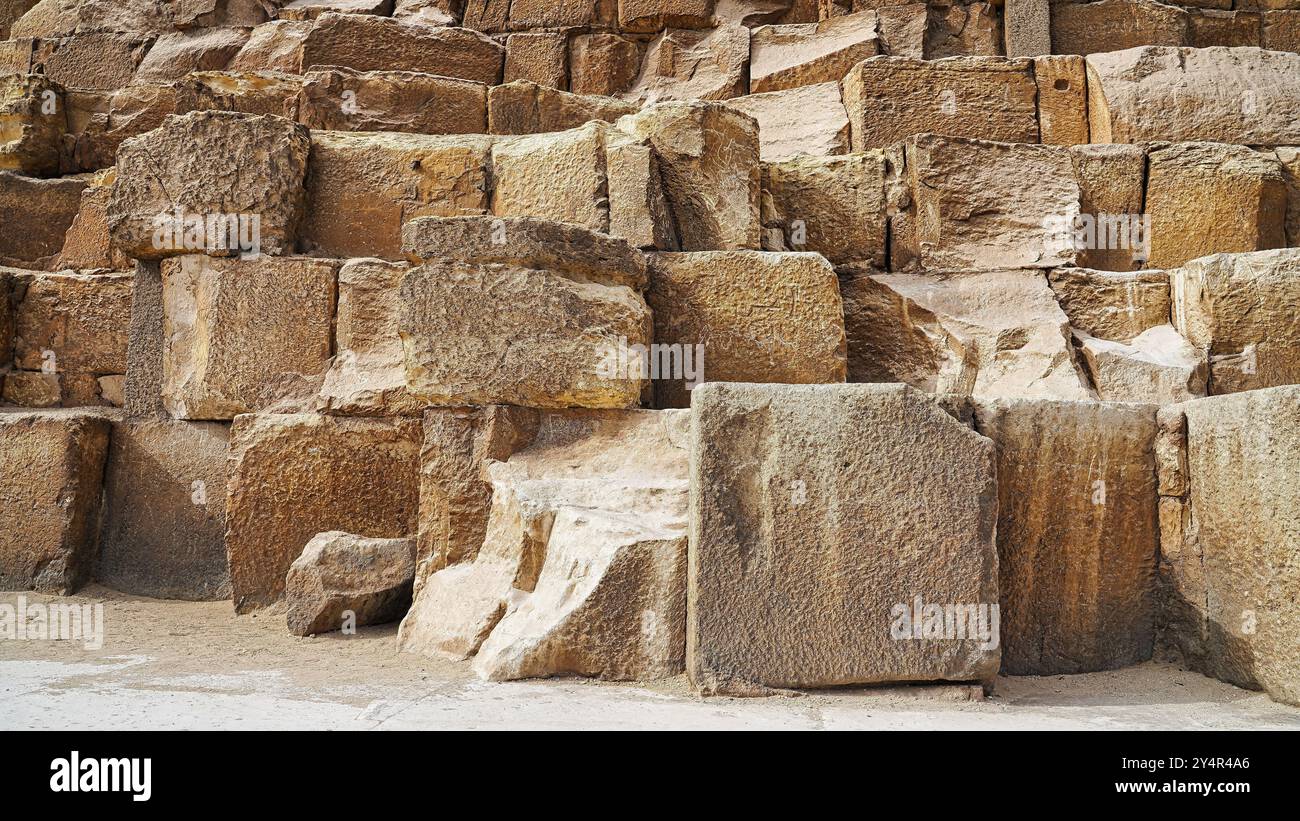
Standing on the Giza Plateau, the Great Pyramid is far more than a tomb. It’s a mathematical declaration. For centuries, we accepted the narrative that thousands of laborers with copper tools and ramps built this 6-million-ton monument in about twenty years. But a casual glance at the numbers makes that story unravel. The pyramid’s alignment to true north is more accurate than any building constructed today without GPS, off by a mere 3/60th of a degree. Its sides form nearly perfect squares, and its original casing stones were cut with such precision that the gap between them is often thinner than a human hair. How? Why?
Real-world mysteries multiply when you consider its placement. The Great Pyramid sits at the exact center of Earth’s landmass, and its height to base perimeter ratio encodes pi, a mathematical constant supposedly discovered by the Greeks centuries later. Are these coincidences, or fragments of lost knowledge passed down from an even older, forgotten source? The deeper you dig, the more the pyramid starts to feel less like a monument to a pharaoh and more like a message—written in a language of numbers we’re only beginning to read.
Stonehenge: Celestial Calendar or Portal to Another Realm?
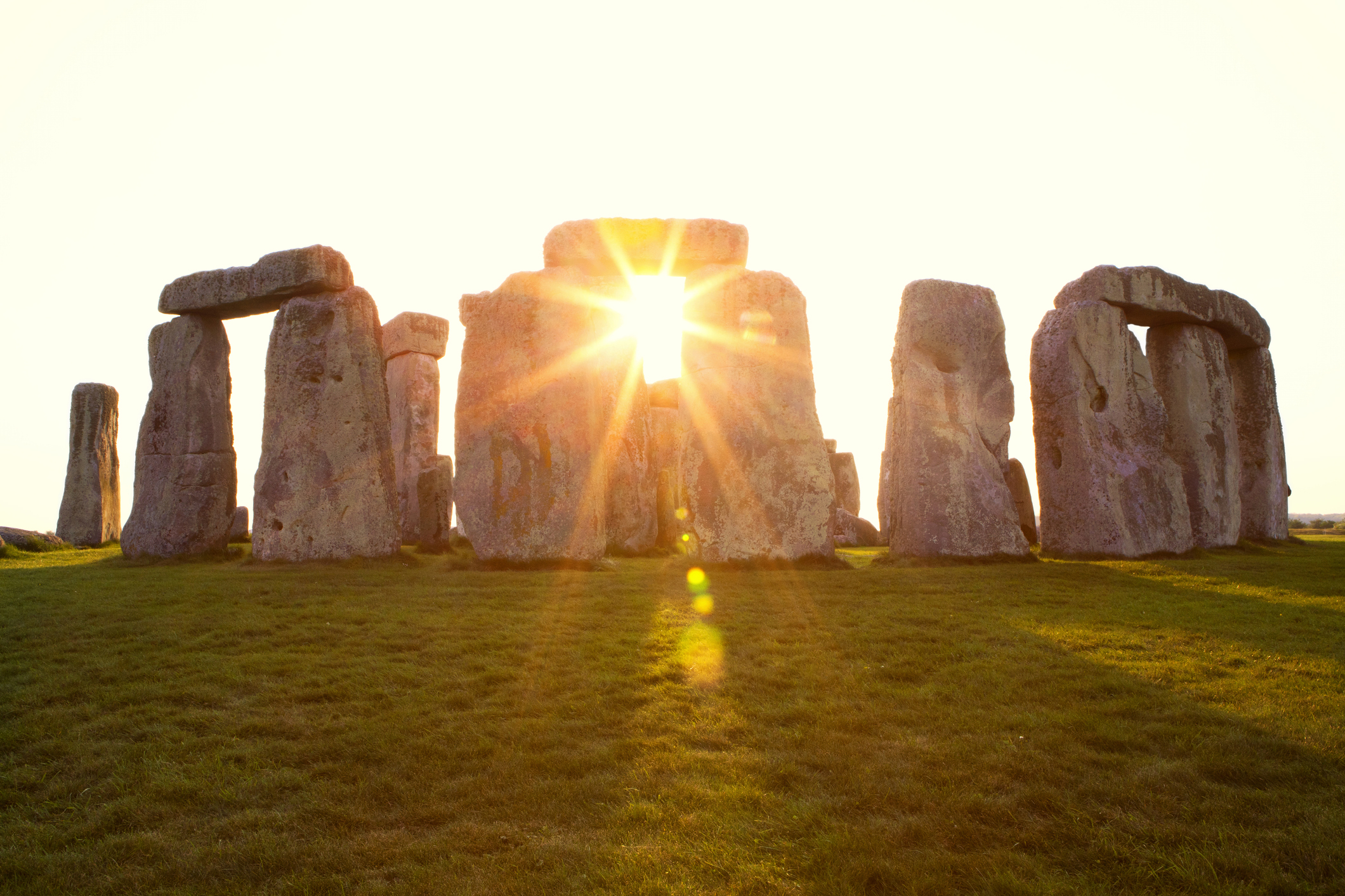
On the windswept Salisbury Plain, Stonehenge raises its bluestones and sarsens like a ancient question mark against the sky. For centuries, we’ve known it marks the solstices with breathtaking accuracy, yet its full purpose remains an unsolved puzzle. The smaller bluestones, weighing up to four tons, were somehow transported from the Preseli Hills in Wales—over 150 miles away—thousands of years before the wheel arrived in Britain. How did they move them? Why did they choose that specific ring layout, which mirrors the proportions of the solar system’s orbital distances?
Some theories drift into the mystical: was Stonehenge a healing center, a place where people traveled from across ancient Europe to be cured by the stones’ supposed powers? Or did it serve as a portal, a thin point between worlds where the living could commune with ancestors? The fact that its construction spanned millennia, continually rebuilt and reshaped, suggests it held a significance so profound that it endured across countless generations—a lost knowledge of the landscape and cosmos we can only intuit today.

Puma Punku: The Impossible Ancient Technology
High in the Bolivian Andes, near Lake Titicaca, lies one of the most confounding archaeological sites on Earth. Puma Punku was once part of a sprawling ceremonial complex, but what remains is a scattered jigsaw of precision-cut stone blocks unlike anything else from the ancient world. The blocks are made of diorite, a stone so hard it can only be cut with diamond-tipped tools today. And yet the builders carved perfectly straight grooves, 90-degree angles with razor-sharp edges, and intricate interlocking shapes that seem designed for assembly without mortar—like a colossal stone Lego set.
Mainstream archaeology attributes this to the Tiwanaku culture around 500–600 AD using simple stone tools. But no similar tool marks have been found, and no nearby quarries show how these massive blocks were moved. The precision hints at machining of a kind we’d expect from a laser-guided factory, not a pre-Columbian society. This enigmatic artifact collection forces a dizzying question: what lost knowledge of stonecraft—or possibly even lost technology—did these builders possess, and where did it go?

Cryptic Codes and Lost Knowledge Hidden in Plain Sight
Not all ancient mysteries are forged in immovable rock. Some are portable, their enigmas compressed into objects small enough to hold in your hand but large enough to hold entire civilizations captive with their silence. These are the cryptic codes—manuscripts, mechanisms, and discs—that seem to contain lost knowledge we have yet to crack.
The Voynich Manuscript: The Unbreakable Code of the Unknown Language
Imagine a book written in a script no one on Earth can read, filled with drawings of plants that have never existed, astronomical diagrams that don’t match our skies, and naked women bathing in elaborate green pools. That’s the Voynich Manuscript, a 240-page volume carbon-dated to the early 15th century but likely copied from a much older source. Named after the book dealer who rediscovered it in 1912, the manuscript has defied the world’s best cryptographers, including WWII codebreakers and modern AI algorithms. The text flows naturally—it has the statistical signatures of a real language, not a hoax—yet it matches no known linguistic family.
What could it be? Some posit it’s a pharmacopoeia of forgotten herbal knowledge, the plants drawn with deliberate surrealism to protect trade secrets. Others whisper of an alchemical treatise, a guide to transforming the soul or matter itself. The most haunting possibility: the Voynich Manuscript is a repository of lost knowledge written in a deliberately invented language, its truth locked away forever by an author who didn’t want it found. Holding a facsimile, you can’t shake the feeling that the pages are breathing, waiting for the right eyes to blink and understand.
The Antikythera Mechanism: A 2,000-Year-Old Computer That Shouldn’t Exist
In 1901, sponge divers off the coast of Antikythera, a Greek island, pulled up a corroded lump of bronze that would rewrite history. It took decades of X-ray and CT scanning to reveal what was inside: a sophisticated clockwork device of at least 30 interlocking gears, designed to predict celestial events, eclipses, and even the four-year cycle of the Olympic Games. Built around 100 BC, the Antikythera Mechanism was a portable planetarium—an analog computer more advanced than anything Europe would produce for another 1,500 years.
The technology behind its differential gear system apparently vanished from the historical record after the mechanism’s shipwreck. Was it a one-off invention by some Archimedes-like genius? Or does it hint at a tradition of mechanical computing that was common yet lost to the creeping destruction of time? This single enigmatic artifact proves that our timeline of technological progress is dangerously incomplete. How many other anti-antikytheras lie buried under the Mediterranean, their secrets still coiled in rust?
The Phaistos Disc: A Bronze Age Mystery Waiting to Be Deciphered
The small, fired clay disc discovered in the Minoan palace of Phaistos, Crete, is a love letter from the unknown. Both sides are stamped with 241 pictorial symbols arranged in a spiral—human figures, fish, helmets, axes, and more. Created around 1700 BC, the symbols were pressed into the wet clay using movable type, the earliest known example of printing. But the language is utterly unreadable, and the disc exists in a vacuum: no other artifact bearing the same script has ever been found. Is it a sacred hymn, a list of market goods, a board game, or a sophisticated hoax? Each theory has believers, but no consensus. The Phaistos Disc embodies the frustration and thrill of unsolved puzzles: you can hold it in your mind, turn it, but never quite hear it speak.
Unsolved Puzzles: The Mysterious Disappearances and Elusive Civilizations
Sometimes the most haunting ancient mysteries aren’t about objects at all—they’re about people. Whole civilizations that dissolved into the jungle, colonies that evaporated into thin air, and legendary lands that might have been more than legend. These disappearances stretch from history into myth, reminding us that lost knowledge can be the echo of a silenced voice.
The Maya: A Brilliant Civilization That Vanished Overnight?
The Classic Maya civilization, at its peak around 800 AD, was a flourishing mosaic of city-states with advanced mathematics, elaborate calendar systems, and towering pyramid-temples that scratched the sky. Then, within a few generations, it collapsed. The grand ceremonial centers of the southern lowlands—Tikal, Copán, Palenque—were reclaimed by the jungle, their populations dispersed. For decades, the standard explanation was a perfect storm of drought, overpopulation, and warfare. But recent studies show that many cities were not suddenly abandoned; some maintained significant populations, and the drought theory doesn’t explain why certain regions persisted while others failed. There’s a persistent, tantalizing hole in the narrative. Where did the knowledge of their hieroglyphic writing and astronomical observation go? Some Maya oral traditions speak of retreating into a deeper spiritual state, of moving knowledge “inside” when the outside world became too hostile. Was this an ecological collapse, or a conscious choice to hide their lost knowledge from an approaching age of darkness?
Roanoke Colony: The Lost Settlement with One Cryptic Clue
In 1587, over 115 English settlers established a colony on Roanoke Island, off the coast of present-day North Carolina. When supply ships returned three years later, the settlement was intact but perfectly empty. No bodies, no signs of struggle, just abandoned homes and, carved into a post, the word “CROATOAN”—the name of a nearby island and its friendly indigenous tribe. The colonists were never seen again. That single word has become an unsolved puzzle that consumes historians. Did the settlers integrate with the Native Americans, leaving no archaeological trace? Were they massacred after assimilation? Some conspiracy theories propose they were spirited away by unknown forces, pointing to later indigenous accounts of grey-eyed, light-skinned people living in isolated communities. The Roanoke mystery endures because it speaks to a deeper fear: that losing knowledge isn’t always an ancient event; sometimes it’s a message we can read but not understand.
Atlantis: Myth or Memory of a Lost World?
No discussion of lost knowledge is complete without Atlantis, the story Plato told in his dialogues around 360 BC—a highly advanced island civilization that “in a single day and night of misfortune” sank beneath the sea. For centuries, Atlantis was dismissed as pure fable, a moral allegory about the hubris of power. But the specifics are eerily precise: located beyond the Pillars of Hercules (the Strait of Gibraltar), larger than Libya and Asia Minor combined, with concentric rings of land and water. Modern geological discoveries have revealed that the eye of the Sahara (the Richat Structure) mirrors Plato’s dimensions to an uncanny degree. Sundaland, submerged off Southeast Asia, fits other descriptions. Are these just imaginative pattern-matching, or are we remembering a real event—a catastrophic flooding at the end of the last Ice Age that obliterated a culture of forgotten sophistication? The enduring power of Atlantis lies in its tantalizing possibility: that we’ve done this all before, and lost knowledge isn’t a gradual decay but a sudden, terrifying reset.
The Quest Continues: Why These Enigmas Still Captivate Us
You might wonder, after floating through so many unanswered questions, why we’re drawn to them at all. It’s more than curiosity. Unsolved puzzles act as mirrors, reflecting our deepest hopes and anxieties. The search for lost knowledge is really the search for ourselves—for the reassurance that we aren’t merely an isolated spike on the graph of progress, but part of a long, complex conversation across time. Each enigmatic artifact is a thread. Pull it, and you might unravel the very fabric of what we call history.
And yet, the practical side of these mysteries is equally alluring. The Antikythera Mechanism’s technology, once rediscovered, could lead to innovations in miniature mechanics. Understanding the Pyramids’ construction might revolutionize architecture. Deciphering the Voynich Manuscript could open a door to forgotten medicine or philosophy. The past, in other words, isn’t just a collection of ghost stories; it’s a library we’ve misplaced the key to—and every locked door we find reminds us how much more wisdom is waiting.
But here’s the secret: each of us who falls into these rabbit holes becomes part of the story. Your perspective might be the one that notices a pattern no expert has seen, or asks a question that cracks a code. We’re all invited to the table of enigma.
So now it’s your turn to step into the circle of seekers. Think you’ve absorbed the essence of these ancient secrets? Know which mystery calls to you most? Delve into the enigmas of ancient civilizations with our interactive quiz to discover which lost knowledge aligns with your inner historian—and whether you’d be the one to solve the puzzle or the one trapped in it. The sands are shifting, and the past is listening. Are you ready to hear what it says?
—
Publication Notes (for the editor/webmaster):
Meta Description:
Step into the shadows of history with our deep dive into ancient mysteries and lost knowledge. From the Great Pyramid to the Voynich Manuscript, uncover enigmatic artifacts and unsolved puzzles that still baffle experts. Take our interactive quiz to test your mystery IQ.
Internal Link Suggestions:
- Anchor text: “interactive quiz” → link to /quizzes/ancient-mysteries
- Anchor text: “the Great Pyramid’s construction” → link to a dedicated article on Egyptian engineering theories
- Anchor text: “ancient civilizations” → link to category page /ancient-civilizations
- For Antikythera Mechanism: https://www.scientificamerican.com/article/ancient-greek-computer/
- For Roanoke: https://www.smithsonianmag.com/history/mystery-roanoke-endures-yet-another-cruel-turn-180969702/
- For Voynich: https://beinecke.library.yale.edu/collections/highlights/voynich-manuscript
- Main header image: “Ancient stone ruins veiled in mist, evoking unsolved puzzles of history”
- Great Pyramid: “Precision-cut blocks of the Great Pyramid, a monument to lost knowledge”
- Stonehenge at sunset: “Stonehenge’s enigmatic ring stands as an ancient mystery in the landscape”
- Puma Punku blocks: “Interlocking diorite stones at Puma Punku, an enigmatic artifact of unknown technology”
- Voynich page: “Folio from the Voynich Manuscript showing cryptic script and unidentifiable plants”
- Antikythera mechanism: “Reconstructed Antikythera mechanism, a 2,000-year-old analog computer”
- Roanoke carving: “Reenactment of the CROATOAN carving, a classic unsolved puzzle”
- Suggested X/Twitter text: “They built impossible structures, wrote in unreadable codes, and vanished without a trace. Journey into ancient mysteries and see which enigma matches your soul. Take the quiz: [URL]”
- Suggested Facebook/LinkedIn text: “Ever wondered how the Great Pyramid was built with laser precision 4,500 years ago, or why an entire colony disappeared leaving only a single word? Our new article explores the most haunting ancient mysteries and lost knowledge. Plus, test your instincts with our interactive quiz to find your place in the puzzle. Read now: [URL]”
External Link Suggestions (authoritative sources, open in new tab):
Image Alt Text Suggestions:
Social Sharing Optimization:
Schema Markup Recommendation:
Use Article schema with properties: headline, description, datePublished, author (if applicable), and image. Consider also FAQ schema for an embedded Q&A (e.g., “What is the most mysterious ancient artifact?”) to target featured snippets.