
Ancient Mysteries and Lost Knowledge: Exploring Enigmatic Riddles of the Past
Close your eyes for a moment and imagine standing before a colossal stone monument, its purpose lost to time, its creators long vanished. You run your fingers over weathered carvings that no living scholar can fully decode. That shiver of excitement, that mix of awe and curiosity—it’s something humanity has felt for millennia. Why? Because we are drawn to the unknown like moths to a flame. Ancient mysteries and lost knowledge represent the ultimate intellectual puzzle, whispering of civilizations that may have understood the universe in ways we are only beginning to rediscover.
From inexplicable technological wonders to cryptic manuscripts that defy translation, the past is littered with clues that refuse to add up. These aren’t just dusty relics in a museum; they are unsolved puzzles that challenge our understanding of history itself. Were our ancestors far more advanced than we give them credit for? Did they possess knowledge that was deliberately hidden, or catastrophically lost? In this journey, we’ll explore some of the most tantalizing enigmatic artifacts and persistent riddles that still keep archaeologists, historians, and mystery enthusiasts up at night. So, grab your metaphorical fedora and whip, because we’re about to dig deep into the sands of time.

The Giza Plateau: Beyond the Tombs
You’ve seen the photographs—the three iconic pyramids piercing the Egyptian skyline, a testament to ambition and engineering. But if you think they’re just royal tombs, you might want to sit down. The Great Pyramid of Giza is an ancient mystery so profound that each new discovery only deepens the enigma. Its construction precision is mind-boggling. The base is level to within a fraction of an inch, and its sides are aligned to true north with an accuracy that rivals modern constructions. How did a civilization supposedly lacking the wheel and advanced mathematics achieve this? Mainstream theories point to ramps and manpower, but the exact methods remain tantalizingly elusive.
Then there are the hidden chambers. In 2017, scientists using muon radiography detected a massive void above the Grand Gallery, a space nobody has entered for thousands of years. What’s inside? A burial chamber for a forgotten pharaoh? A repository of lost knowledge deliberately sealed away? The pyramid’s geometric relationship with the speed of light, the golden ratio, and even star constellations has fueled speculation that it was never a tomb at all, but a machine—perhaps an energy generator or a cosmic marker. The truth is, we simply don’t know. And that void waits, silent and patient.

The Antikythera Mechanism: The World’s First Computer?
Picture this: It’s 1901, and sponge divers off the Greek island of Antikythera stumble upon a shipwreck. Among the statues and pottery, they retrieve a corroded lump of bronze and wood. At first glance, it’s unremarkable. But decades later, X-ray imaging reveals its secret—it’s an intricate assembly of gears, dials, and inscriptions. The Antikythera Mechanism is an unsolved puzzle of ancient technology that rewrites the history of computing.
Built around 100 BCE, this device could predict astronomical positions, lunar phases, eclipses, and even the cycles of the Olympic Games with astonishing accuracy. It had over 30 meshing bronze gears, a level of sophistication not seen again until the 14th century. Who built it? The most likely candidate is Archimedes or a school inspired by his work, but no written records describe such a device. Its existence implies a tradition of mechanical engineering that was completely lost. What other inventions might have vanished beneath the waves or crumbled into dust, leaving no trace? The mechanism whispers of a parallel intellectual world—one where clockwork computers might have been as common as abacuses. Imagine how different history would be if that knowledge hadn’t been lost to the sea.
Lines in the Desert: The Nazca Enigma
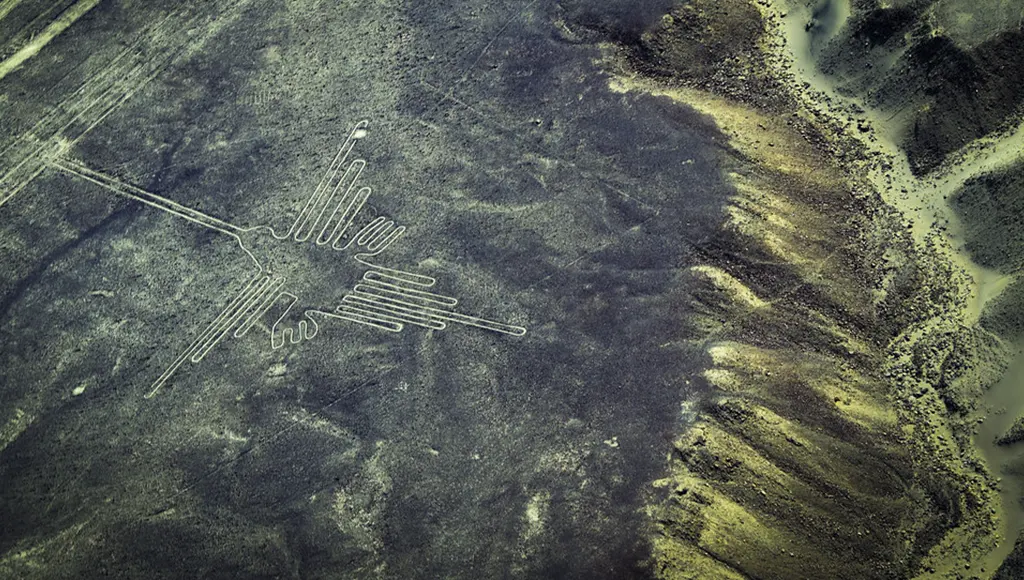
Hundreds of feet in the air, a hummingbird stretches its wings across the arid Peruvian desert. Nearby, a spider, a monkey, and a strange humanoid figure with bulbous eyes gaze skyward. The Nazca Lines are among the most perplexing ancient mysteries, enigmatic artifacts drawn on a colossal scale that can only be fully appreciated from the sky. But here’s the catch: the Nazca culture (200 BCE–600 CE) had no flying machines. So why create images that only gods—or modern aircraft passengers—could see?
Theories abound: astronomical calendars, ritual pathways for ceremonies invoking water fertility, or even landing strips for ancient astronauts. The precision of the lines is staggering; straight lines stretch for miles without deviation, created by simply removing reddish surface pebbles to reveal lighter soil beneath. The ground is so stable that these delicate designs have survived centuries. But the “why” remains a siren call for the curious. Some researchers suggest the lines are a labyrinthine spiritual journey, meant to be walked by shamans in trance states. Others find alignments with solstices and constellations, hinting at a profound lost knowledge of celestial mechanics. Whatever their purpose, each line is a riddle carved into the earth, challenging us to look beyond the obvious.
The Voynich Manuscript: A Codex No One Can Read
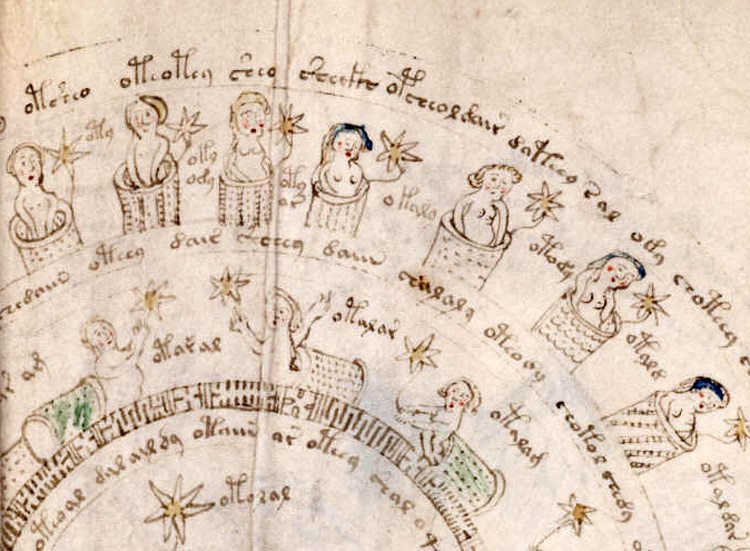
If you’ve ever fantasized about stumbling upon a book of secret knowledge, the Voynich Manuscript is the real-life equivalent—and it’s utterly maddening. Named after the Polish book dealer who purchased it in 1912, this 15th-century codex is written in a completely unknown script, paired with bizarre illustrations of nonexistent plants, astronomical diagrams, and nude women bathing in green pools. It is the ultimate unsolved puzzle for cryptographers and linguists.
World War II codebreakers, including teams that cracked the Enigma machine, failed to decipher a single word. Is it a hoax, an elaborate medieval prank designed to dupe a wealthy collector? If so, the text follows patterns consistent with a real language, and the vellum has been carbon-dated, so it’s authentically old. Could it be a constructed philosophical language, a cipher for alchemical secrets, or a herbal guide from a lost civilization? The manuscript’s refusal to yield its secrets makes it a mirror for our own curiosities. Some believe it contains the lost knowledge of a persecuted gnostic sect; others think it’s a deeply personal work of art whose meaning died with its author. The pages beckon, but the story remains locked away, waiting for the right mind to find the key. Maybe that mind could be yours.
Monolithic Marvels: Baalbek and the Weight of the Impossible
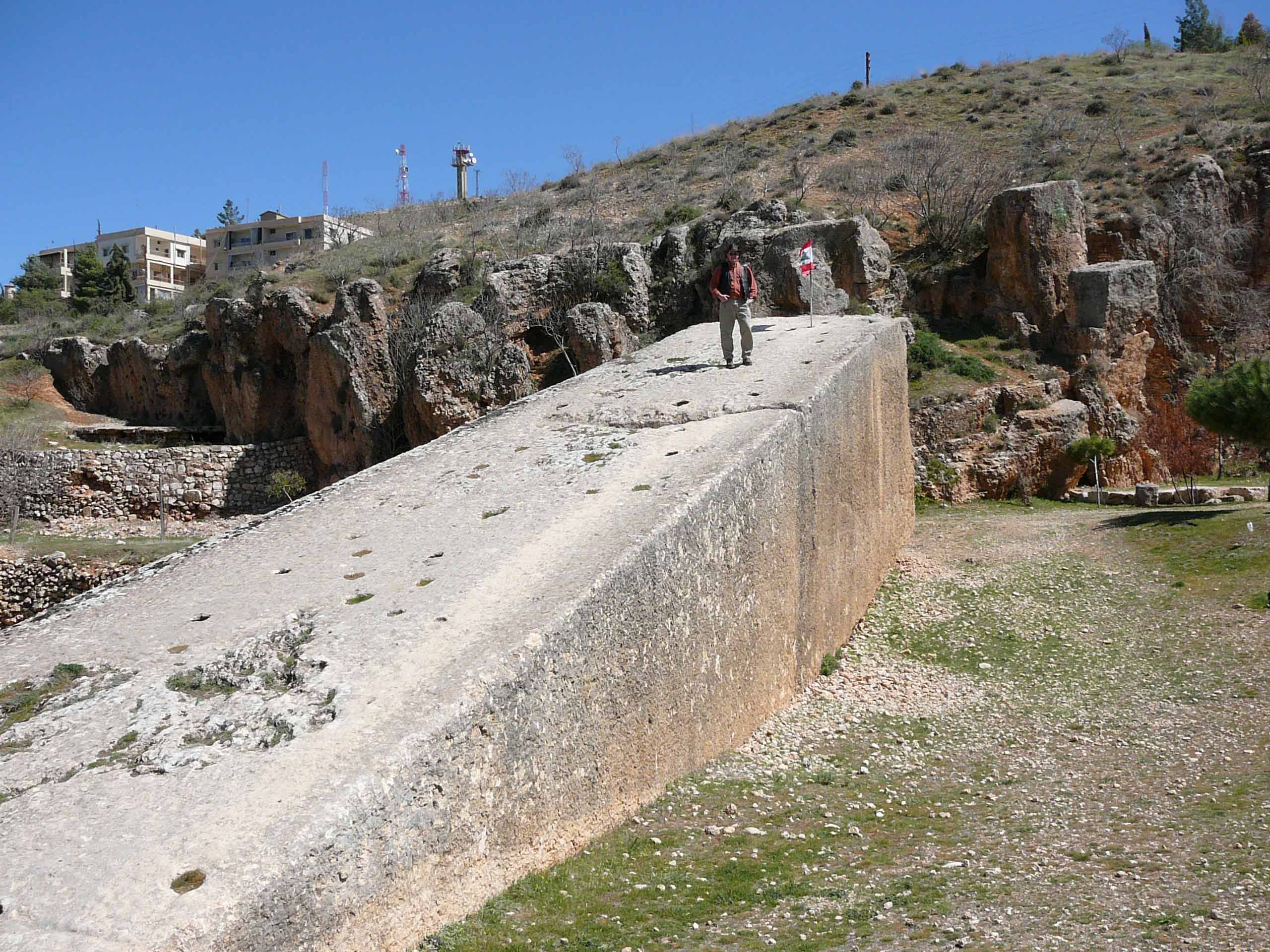
Stroll through the ruins of Baalbek in Lebanon and you’ll be forgiven for thinking giants once walked the earth. The Roman temples of Jupiter and Bacchus are impressive enough, but it’s the platform beneath them—the Trilithon—that defies logic. Three limestone blocks, each weighing an estimated 800 tons, are fitted together so tightly that not even a sheet of paper can slide between them. Nearby, a quarry holds an even larger monolith, known as the Stone of the Pregnant Woman, clocking in at around 1,000 tons. These are ancient mysteries that put modern cranes to shame.
The Romans, for all their engineering prowess, never moved blocks this massive elsewhere. So who laid them, and with what technology? The platform dates back to a pre-Roman era, possibly to the Phoenicians or an unknown earlier culture. Local legends whisper of a lost race of giants or gods who built the foundation for a celestial reason. More grounded theories suggest a system of capstans and massive manpower, but no contemporary accounts survive. The sheer scale of these stones forces us to question the linear narrative of technological progress. What if there were ancient techniques for manipulating weight and stone that we’ve never rediscovered? Baalbek stands as a silent challenge to our assumptions, its stones humming with a frequency of forgotten science.
Cartographic Conundrums: Maps of a World Not Yet Discovered
Flip through a copy of the Piri Reis map, compiled in 1513 by an Ottoman admiral, and your eyes will be drawn to an impossible detail: the coastline of Antarctica without its ice sheet. This enigmatic artifact suggests that someone mapped the continent millennia before its official discovery in 1820. The map’s creator himself noted that he used source charts from much older civilizations, including ones dating back to the era of Alexander the Great. How could ancient mariners have charted a landmass that was supposedly invisible beneath a mile of ice?
Geologists confirm that parts of Antarctica were ice-free around 6,000 BCE, so if the map is genuine, it points to a source of lost knowledge predating all known civilizations. Mainstream skeptics argue the resemblance is coincidental—that the bottom edge depicts a distorted South America. But the map also accurately shows the Andean mountain ranges and rivers that flow from the Sahara, rivers that dried up thousands of years ago. Other maps, like the Orontius Finaeus map of 1531, also eerily depict an ice-free Antarctica. The implications are staggering: a seafaring culture with global reach existed deep in the past and left their navigational secrets to be lost and dimly remembered. The Piri Reis map is a postcard from a forgotten world, urging us to reconsider how much we truly know.
The Lost Hall of Records: A Chamber of Secrets Under the Sphinx?
No discussion of ancient mysteries is complete without invoking the Sphinx and its rumored hidden chamber. The Great Sphinx of Giza, with its eroded body and leonine gaze, is far older than mainstream Egyptology admits—or so a growing chorus of researchers claims. Geological evidence shows water erosion on the enclosure walls, meaning it witnessed heavy rainfall that last occurred in Egypt around 10,000 BCE. This pushes its construction back to a time when, according to conventional wisdom, humanity was barely scratching the ground. And just beneath its paws, legends say, lies a Hall of Records containing the annals of Atlantis or the lost knowledge of a pre-flood civilization.
Edgar Cayce, the American psychic, prophesied that a vast library would be found there, filled with scrolls of ancient wisdom. While his predictions are treated skeptically, ground-penetrating radar has indeed revealed cavities and tunnels under the Sphinx. Excavations have been blocked by Egyptian authorities, adding fuel to the fire of conspiracy. Are they protecting a priceless treasure, or guarding a truth that would shatter the historical timeline? The air around the Sphinx is thick with intrigue; every sandstorm reveals or conceals new clues. The lion-man looks out across the millennia, keeper of secrets we are not yet permitted to know.
Easter Island’s Silent Sentinels: The Moai’s Hidden Bodies
You know the heads—nearly a thousand stern faces carved from volcanic tuff, scattered across a remote Pacific island. But did you know they have bodies? Excavations have revealed that the iconic Easter Island Moai are complete torsos buried up to their shoulders, adorned with intricate petroglyphs. These enigmatic artifacts hold the key to understanding a civilization that collapsed in a mysterious ecocide. Yet the greater puzzle remains: how did the Rapa Nui people transport these multi-ton giants from the quarry at Rano Raraku to their coastal platforms without wheels or draft animals?
Local oral tradition insists the moai “walked” to their positions. When researchers tested this, they found that rocking the statues back and forth with ropes could indeed inch them forward, making the story a precise metaphor for an actual technique. But why were they erected? The statues were more than effigies; they were repositories of mana, spiritual power, meant to watch over and protect communities. As resources dwindled and the society fractured, the statues were toppled in tribal warfare. The moai now stand as a haunting lesson in environmental stewardship—and an unsolved puzzle of logistics. They whisper of a people who poured their soul into stone, knowing full well the fragility of their paradise.
The Baghdad Battery: Electrifying the Ancient World?
In 1938, a German archaeologist uncovered something in the cellar of a Parthian site near Baghdad that still polarizes historians: a clay jar housing a copper cylinder and an iron rod, sealed with asphalt. If you replicate it and add an acidic agent like grape juice or vinegar, it produces a small electric current. The Baghdad Battery forces us to ask whether ancient civilizations dabbled in electricity nearly two millennia before Volta.
Skeptics argue it was merely a storage vessel for sacred scrolls, with the corrosion patterns being incidental. But the arrangement is suspiciously perfect for a galvanic cell. If it was a battery, what could it have powered? No lightbulbs have been found (despite controversial claims about the Dendera light), but small shocks might have been used for therapeutic purposes or to electroplate precious metals onto jewelry (though no electroplated artifacts from that region have been confirmed). The battery remains an orphan technology—an isolated spark of ingenuity that, if understood, might have accelerated the electric age by two thousand years. It’s a tantalizing reminder that innovation is not always linear; sometimes a brilliant idea is born, flickers, and dies for lack of context. The Baghdad Battery is a volt of lost knowledge, a jolt to our complacency about the timeline of discovery.
Echoes of a Forgotten World: What Binds These Mysteries?
As we’ve journeyed from the pyramids to the Pacific, a common thread emerges: ancient mysteries and lost knowledge are not just academic trivia; they are invitations to rethink our place in the cosmic story. Each enigmatic artifact, each unsolved puzzle, challenges the tidy narrative of a linear progression from primitive to civilized. Instead, they suggest cycles of learning and forgetting, of rising and falling civilizations, of secret wisdom passed down in coded forms. Whether you subscribe to ancient astronaut theories, Atlantis legends, or simply admire the ingenuity of our ancestors, the allure is the same—there is more to the past than we can ever prove.
So where do we go from here? The next time you see a documentary on the Great Pyramid or stumble upon a video about the Voynich Manuscript, you’re not just indulging in a diversion; you’re part of a grand detective story. And the best part? The case is far from closed. New discoveries happen every year: a laser scan of a jungle reveals a hidden city; a deep-sea robot stumbles upon a ruin in waters previously considered empty. The lost knowledge may not be entirely lost—it might be waiting, patient and silent, for the right questions to unlock it.
Feeling the thrill of the unknown? Delve into the enigmas of ancient civilizations with our interactive quiz, and see if you have what