
Unveiling Hidden Empires: How Modern Archaeology Is Rewriting the Story of Ancient Civilizations
For centuries, the story of human history has been told through the grand narratives of well-known ancient civilizations such as the Romans, Egyptians, and Maya. Yet beneath jungles, deserts, and even oceans, countless other “hidden empires” lie waiting to be discovered, challenging established timelines and expanding our understanding of human ingenuity. Modern archaeology, armed with cutting-edge technology, is no longer just digging for relics; it is revealing entire lost cities and cultures, fundamentally transforming how we perceive the ancient world.
This is not merely about finding new ruins. It is about uncovering the sophisticated societies, vast urban networks, and complex belief systems of civilizations we barely knew existed. From forgotten jungle metropolises to submerged ports, these archaeological discoveries are painting a much richer, more intricate picture of our collective past, proving that the world still holds secrets capable of rewriting history.

The Evolution of Discovery: Beyond the Shovel and Trowel
Archaeology has always been a quest for understanding, a meticulous puzzle-solving endeavor. For generations, the iconic image of an archaeologist has been someone with a trowel, a brush, and a keen eye, carefully excavating layers of earth. This traditional approach, while foundational, is inherently slow, labor-intensive, and limited by what is visible or easily accessible. Vast swathes of the planet—particularly dense jungles, remote mountains, and deep underwater environments—remained impenetrable mysteries.
However, the twenty-first century has ushered in a revolution in archaeological methods. The advent of advanced remote sensing technologies, sophisticated data analysis, and interdisciplinary scientific approaches has transformed the field. Modern archaeology now operates on a scale previously unimaginable, allowing researchers to survey immense landscapes, peer beneath dense vegetation, and even map the seafloor with unprecedented detail. This shift from purely terrestrial excavation to multifaceted scientific exploration is what is enabling the incredible unveiling of hidden empires around the globe.

Eyes in the Sky: Remote Sensing and Its Revelations
One of the most significant breakthroughs in modern archaeology comes from above. Remote sensing technologies, often deployed from aircraft or satellites, allow archaeologists to “see” what is hidden from the human eye on the ground. These tools provide non-invasive, large-scale surveys that identify anomalies and patterns indicative of ancient human activity, guiding excavators to promising sites and revealing the true extent of past civilizations.

Lidar: Peering Through the Canopy
Perhaps the most game-changing remote sensing technology for archaeology is Lidar (Light Detection and Ranging). Lidar uses pulsed laser light to measure distances, creating highly detailed 3D maps of surfaces. Crucially, Lidar can penetrate dense forest canopies, effectively “seeing through” the trees to map the ground below. This capability has been revolutionary for discovering hidden empires in overgrown regions.
One of Lidar’s most stunning successes came in Cambodia with the rediscovery of Mahendraparvata. For decades, archaeologists knew of the Angkor Wat complex, a monumental testament to the Khmer Empire. But Lidar scans of the surrounding Phnom Kulen mountain range revealed an entire sprawling city, Mahendraparvata, predating Angkor Wat by several centuries. This hidden empire was not a small settlement but a sophisticated urban center with an intricate network of roads, temples, and hydraulic systems, indicating a much earlier and more extensive phase of Khmer civilization than previously understood. It suggested that the Khmer urban landscape was far vaster and more complex than what was visible from the ground, challenging long-held assumptions about the region’s development.
Similarly, Lidar played a pivotal role in the ongoing exploration of La Mosquitia in Honduras, often referred to as the “Lost City of the Monkey God” or Ciudad Blanca. This legendary city, rumored for centuries, was finally located thanks to Lidar scans that revealed extensive plazas, earthworks, and even a pyramid beneath the impenetrable rainforest. The discovery hints at a previously unknown Mesoamerican culture, offering tantalizing clues about a hidden empire that thrived in one of the world’s most challenging environments. These finds underscore how Lidar is not just locating individual structures but revealing entire urban footprints.
Satellite Imagery and Ground-Penetrating Radar (GPR)
While Lidar excels in forested areas, other remote sensing techniques provide complementary insights. High-resolution satellite imagery allows archaeologists to survey vast, open landscapes for subtle traces of ancient human activity. These can include faint outlines of irrigation canals, ancient field systems, buried roads, or even variations in vegetation growth that indicate underlying structures. By analyzing spectral differences and subtle topographical changes over huge areas, satellite archaeology can pinpoint potential sites for further investigation, especially in arid or agricultural regions. For instance, satellite imagery has been instrumental in tracing the extensive road networks and ancient settlements of the Roman Empire across Europe and North Africa, revealing the true scale of their infrastructure.
Ground-Penetrating Radar (GPR), on the other hand, works by sending radar pulses into the ground and measuring the reflections. Different materials and disturbances beneath the surface create distinct signatures, allowing archaeologists to map buried walls, foundations, tombs, and other features without disturbing the soil. GPR has been invaluable for mapping the subsurface layout of known sites, such as Pompeii, revealing previously unknown buildings and streets. More importantly, it helps identify entirely new structures within suspected areas, helping to delineate the full extent of ancient settlements that are barely visible on the surface.
Magnetometry and Electrical Resistivity
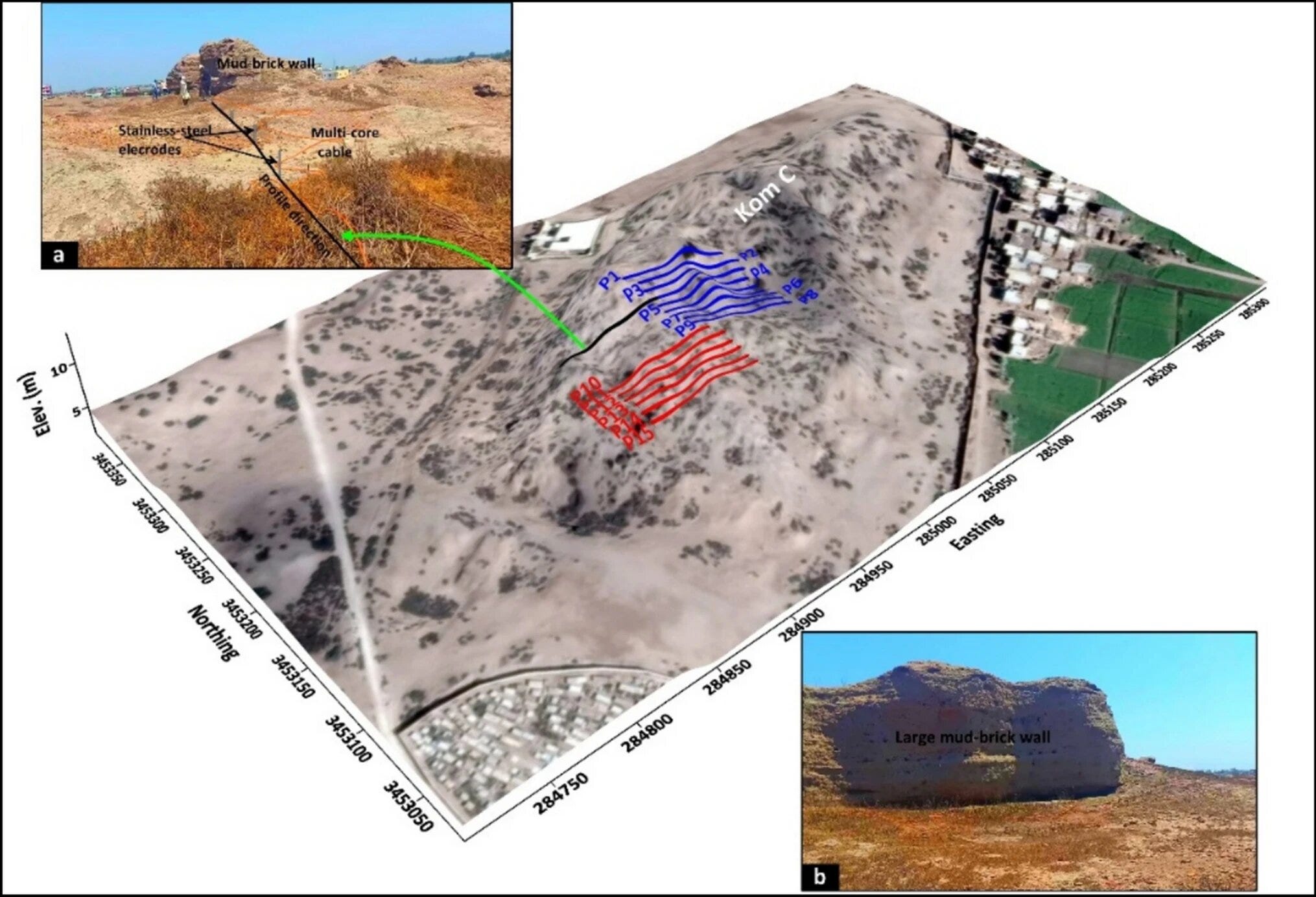
Rounding out the suite of subsurface detection tools are magnetometry and electrical resistivity. Magnetometers detect subtle variations in the Earth’s magnetic field, which can be caused by human activity. Features such as kilns, hearths, ditches filled with organic material, or even burned structures leave magnetic “signatures” that are distinct from the surrounding soil. This makes magnetometry excellent for identifying the footprint of ancient settlements, industrial areas, or burial grounds.
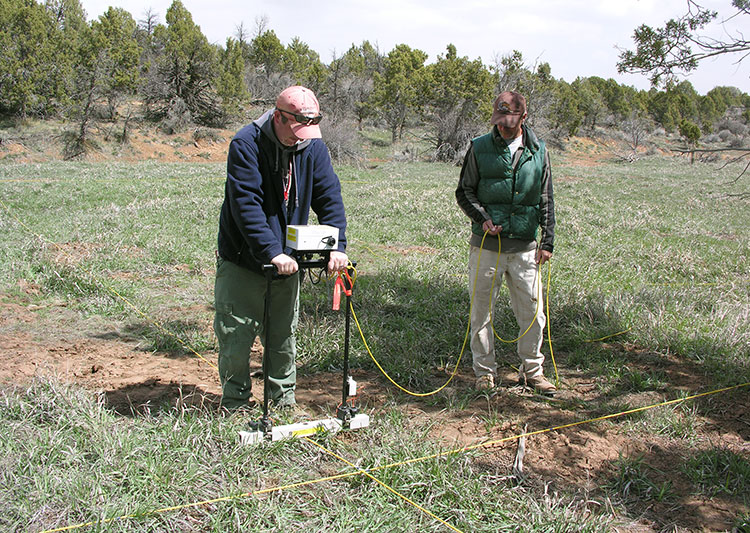
Electrical resistivity surveys measure the ground’s resistance to an electrical current. Features such as buried stone walls, which show high resistance, or filled-in ditches, which show low resistance due to moist soil, create anomalies that can be mapped. Both magnetometry and resistivity surveys are particularly effective for outlining the layout of non-metallic structures and identifying areas of concentrated human activity, providing detailed maps of hidden architectural remains that might otherwise go unnoticed. These techniques have been crucial in locating numerous Iron Age and Roman settlements across Europe, revealing the complex patterns of ancient life beneath seemingly empty fields.
Underwater Worlds: Subaquatic Archaeology’s Deep Dives
Not all hidden empires lie beneath solid ground. A significant portion of human history is submerged, lost to rising sea levels, tsunamis, or seismic activity. Subaquatic archaeology, using advanced sonar, remotely operated vehicles (ROVs), and specialized diving equipment, is now systematically exploring these watery graves, bringing incredible ancient worlds back into the light.
The Black Sea Anomaly: Ancient Landscapes Revealed
One of the most fascinating areas of research involves the Black Sea. Geologists and archaeologists have long theorized that as sea levels rose after the last Ice Age, vast coastal areas—including fertile plains and early human settlements—were submerged. Modern sonar mapping and core sampling in the Black Sea have begun to reveal ancient shorelines, riverbeds, and even evidence of human habitation far beneath the current surface. While not yet yielding a fully realized hidden empire, these discoveries paint a compelling picture of a now-submerged landscape that was once home to early agricultural communities. The potential for finding entire lost settlements from a time when the Black Sea was a freshwater lake is immense, offering a glimpse into human adaptation to radical environmental change.
Alexandria’s Sunken Palaces and Cities
The waters off the coast of Alexandria, Egypt, have long been known to conceal parts of the ancient city, including Cleopatra’s palace complex. However, modern subaquatic archaeology, employing sophisticated mapping and recovery techniques, has revealed the astonishing scale of these submerged ruins. This is not just a few scattered artifacts; it is vast sections of royal quarters, temples, and port facilities that slid into the sea due to earthquakes and subsidence. While Alexandria itself was a well-known city, the extent of its sunken grandeur, brought to life through meticulous underwater excavation, reveals a much richer and more complete picture of its Hellenistic and Roman glory.
Even more spectacular are the discoveries of the ancient cities of Thonis-Heracleion and Canopus, located in the Bay of Aboukir near Alexandria. These two major port cities, once thriving centers of trade and religious pilgrimage, mysteriously sank into the Mediterranean over a thousand years ago. For centuries, they were mere legends. Through systematic underwater surveys, archaeologists have located and meticulously excavated their remains, revealing monumental temples, colossal statues, gold coins, and countless artifacts that paint a vivid picture of daily life, trade, and worship. These are truly hidden cities of the ancient Egyptian empire, now unveiled, offering unprecedented insights into a pivotal period of Mediterranean history.
Re-examining the Known: New Insights into Established Civilizations
Modern archaeology is not solely about discovering entirely new civilizations. It is also about re-evaluating and expanding our understanding of well-known ancient empires by revealing previously unseen aspects of their societies, infrastructure, and environmental impact.
The Maya: More Than Just Pyramids
For decades, the traditional view of the ancient Maya portrayed them as living in dispersed city-states, with dense jungle between ceremonial centers. The “collapse” narrative often focused on unsustainable practices leading to their decline. However, Lidar technology has dramatically reshaped this understanding. Scans of the Maya lowlands in Guatemala, Belize, and Mexico have unveiled an astonishingly vast and interconnected network of cities, towns, agricultural fields, and intricate hydraulic systems.
What Lidar showed was not isolated pockets of population but a sprawling, densely populated landscape with millions more people than previously estimated. Archaeologists have discovered extensive causeways connecting settlements, massive terraced farms, sophisticated irrigation canals, and defensive fortifications, all hidden beneath the jungle canopy. This suggests a far more complex, integrated, and resilient civilization than previously imagined, challenging the notion of a simple “collapse” and instead pointing to a dynamic, long-lived society that mastered its environment on an epic scale. The Maya were not just pyramid builders; they were master landscape engineers.
The Roman Empire: Unseen Infrastructure and Everyday Life
The Roman Empire is arguably one of the most studied ancient civilizations. We know their cities, their roads, their legions. Yet even here, modern archaeology is revealing hidden layers. Beyond the grand monuments and major urban centers, techniques such as aerial photography, GPR, and magnetometry are uncovering the vast, mundane infrastructure that truly sustained the empire.
Archaeologists are mapping previously unknown networks of smaller roads, tracing the outlines of thousands of rural villas, farms, and small settlements that formed the backbone of the Roman economy. They are discovering the intricate water management systems, kilns, workshops, and burial grounds that supported daily life for millions of ordinary Romans. These discoveries paint a picture of an empire that was not just about emperors and legions but about a vast, interconnected web of communities, agriculture, and local economies, often invisible from the surface. This deeper understanding of the “everyday” Roman Empire offers a more complete and nuanced view of its longevity and influence, deepening our appreciation for the engineering and administrative systems that held the empire together.
Deciphering the Past: Genetic and Bioarchaeological Breakthroughs
The unveiling of hidden empires is not limited to physical structures. Modern archaeology increasingly incorporates scientific methods to understand the people themselves—their origins, migrations, health, and social structures. Genetic and bioarchaeological breakthroughs are allowing us to reconstruct ancient lives in unprecedented detail.
The analysis of ancient DNA (aDNA) from human remains has revolutionized our understanding of population movements, genetic relationships between ancient groups, and the spread of diseases. For example, aDNA studies have helped clarify the origins of various populations in ancient Egypt, tracing migration patterns across Africa and the Middle East. While not discovering an “empire” in the traditional sense, genetics has revealed entirely hidden human lineages, such as the Denisovans, an extinct group of archaic humans known almost entirely from their DNA, indicating a much richer and more complex human family tree than once thought.
Similarly, isotopic analysis of teeth and bones can reveal diets, geographical origins, and even migration patterns of individuals throughout their lives. By studying the chemical signatures left in human remains, archaeologists can reconstruct what people ate, where they grew up, and whether they moved during their lifetime. This provides invaluable personal narratives within the broader sweep of ancient civilizations, offering a more intimate glimpse into the lives of those who built these hidden empires.
Ethical Considerations and the Future of Discovery
With great power comes great responsibility. The ability of modern archaeology to uncover vast amounts of information also brings significant ethical considerations. The preservation of newly discovered sites is paramount, especially in fragile environments such as rainforests or underwater settings. Collaboration with Indigenous communities is crucial, ensuring that discoveries are handled with respect for cultural heritage and that local perspectives are integrated into research and interpretation.
The future of modern archaeology promises even more astonishing revelations. The continued refinement of Lidar, GPR, and sonar technologies, coupled with advancements in artificial intelligence for data processing and predictive modeling, will undoubtedly lead to the discovery of countless more hidden empires. Imagine AI algorithms sifting through satellite data to identify subtle patterns invisible to the human eye, or robotic submersibles exploring the deepest ocean trenches for signs of ancient human activity. The sheer scale of what remains undiscovered, particularly in less explored regions of the world, suggests that our understanding of ancient civilizations is still very much in its infancy.
Conclusion
The quest to unveil hidden empires is more vibrant and successful than ever before. Modern archaeology, powered by an arsenal of advanced technologies and interdisciplinary science, is systematically peeling back the layers of time, revealing a human past far richer, more complex, and more extensive than we ever dared to imagine. From the jungle-shrouded cities of the Maya and Khmer to the submerged metropolises of ancient Egypt, each new discovery challenges old assumptions and compels us to rewrite the history books.
These hidden empires remind us that history is not a static collection of facts but a dynamic, evolving narrative constantly being enriched by the tireless work of archaeologists. Countless stories remain to be told, civilizations remain to be recognized, and human achievements remain to be celebrated. The journey of discovery is far from over, and every new finding illuminates another facet of our shared human story.