
Challenging History: Unearthing Provocative and Controversial Archaeological Finds
Our understanding of human history is constantly evolving, shaped by the patient work of archaeologists, historians, and scientists. Yet lurking in the shadows of accepted narratives are discoveries that defy easy explanation, sparking heated debates and fueling the imaginations of those who believe there is more to our past than meets the eye. These “forbidden archaeology” finds challenge established timelines, hint at forgotten civilizations, and sometimes even suggest advanced knowledge that should not have existed in ancient times. They prompt questions about suppressed history and the nature of proof itself.
From enigmatic underwater cities to alleged ancient power sources, these controversial discoveries often sit at the fringes of mainstream academia, captivating history buffs and conspiracy theory enthusiasts alike. They force us to confront the limits of our current knowledge and consider whether some chapters of humanity’s story are yet to be truly written—or perhaps, unwritten.

Why Do Some Discoveries Spark Such Intense Controversy?
Archaeology is often seen as a meticulous, objective science, but it is also a field deeply intertwined with interpretation, paradigm shifts, and sometimes the sheer force of human belief. When a find emerges that does not fit neatly into the established narrative—a narrative built on decades or even centuries of research—it inevitably creates friction.
The controversy often stems from several key areas:
- Challenging Established Timelines: Many provocative finds suggest human activity or advanced cultures far earlier than conventional archaeology allows, directly conflicting with accepted chronologies of human migration and technological development.
- Ambiguous Evidence: Some sites present evidence that can be interpreted in multiple ways. Is it a natural formation or a man-made structure? Is that tool a deliberate creation or a coincidental rock? The lack of definitive, universally accepted proof often leaves room for alternative theories.
- Academic Conservatism vs. Open-Mindedness: Mainstream archaeology, by its nature, demands rigorous peer review and irrefutable evidence. This scientific conservatism is essential for maintaining credibility, but it can sometimes be perceived as resistance to new ideas, especially when those ideas overturn long-held beliefs.
- The Lure of the Unknown: For many, the idea of a “suppressed history” or “forbidden archaeology” is inherently exciting. It appeals to a sense of mystery and the romantic notion that there are grand secrets waiting to be uncovered, often feeding into broader conspiracy theories.
- Arguments for Man-Made: Proponents, most notably marine geologist Masaaki Kimura, argue that the sheer regularity of the features—straight edges, right angles, carved steps, and even what looks like a relief sculpture of an animal—points overwhelmingly to human intervention. They suggest it could be the remnant of a lost civilization, possibly submerged by seismic activity thousands of years ago, when sea levels were much lower. If man-made, its estimated age—potentially over 10,000 years old—would drastically rewrite the history of advanced civilization in the region.
- Arguments for Natural Formation: Mainstream geologists generally contend that Yonaguni is a spectacular example of natural erosion. They point to the fact that sandstone naturally fractures along straight lines and that tectonic activity in the region could create such geometric formations over time. They argue that what appear to be steps or carvings are simply the result of natural weathering processes on a specific type of rock.
- Claims of Advanced Construction: Proponents point to alleged perfectly cut blocks, geometrically precise slopes, and the discovery of what they identify as ancient concrete, arguing these cannot be natural formations. They also highlight energy anomalies detected around the hills.
- Mainstream Rejection: The vast majority of professional archaeologists, geologists, and historians have vehemently rejected Osmanagić’s claims. They argue that the “pyramids” are natural geological formations known as “flatirons” or “hogbacks,” common in the region. The “concrete blocks” are explained as natural conglomerates and breccias, and the “tunnels” as natural caves. Critics accuse the project of pseudoarchaeology, lacking scientific rigor, and causing damage to genuine medieval archaeological sites in the area.
- Arguments for a Battery: Proponents point to the components—copper, iron, and an enclosed container—as a clear parallel to modern galvanic cells. They hypothesize that ancient peoples might have used these devices for electroplating metals, for medical treatments involving mild electric shocks, or even for rudimentary religious rituals involving static electricity. The idea challenges the conventional timeline of electrical knowledge.
- Arguments Against a Battery: Mainstream archaeologists and scientists are largely skeptical. They argue that there is no textual evidence from the Parthian period describing the use of electricity or electroplating. A more widely accepted theory is that the jar was used for storing sacred scrolls, with the metal components serving to hold the scrolls in place or perhaps as part of a ritualistic object. Other theories suggest it might have been a container for pigments or medicines. While it could theoretically produce a small current, there is no direct evidence it did or was intended to.
- Geological Anachronisms: Other OOPArts are problematic due to their geological context. Stories of a hammer encased in ancient rock formations or metallic spheres discovered in coal seams purport to show human-made objects existing millions of years before humans were thought to exist. Many of these have been debunked as natural concretions, geological anomalies, or misinterpretations.
- The Problem of “Debunked Theories”: It is crucial to acknowledge that many alleged OOPArts, while fascinating, have been rigorously investigated and subsequently debunked as hoaxes, misinterpretations, or natural formations. Examples include the Acámbaro figures—clay figurines depicting dinosaurs alongside humans, proven to be modern forgeries—and the crystal skulls, claimed to be ancient Mesoamerican artifacts but shown to be 19th-century forgeries. These instances underscore the importance of scientific scrutiny and the need to distinguish genuine anomalies from well-meaning errors or deliberate fabrications.
- The Monte Verde Breakthrough: One of the most significant pre-Clovis sites is Monte Verde in Chile, discovered by Tom Dillehay. Radiocarbon dating of organic materials at the site indicated human occupation around 14,500 years ago, pushing back the timeline by over 1,000 years. After decades of meticulous research and peer review, Monte Verde is now widely accepted by mainstream archaeologists as a legitimate pre-Clovis site, demonstrating how initially controversial discoveries can eventually shift scientific paradigms.
- Even Earlier Claims: More recently, sites like the Cerutti Mastodon site in California suggest human activity dating back 130,000 years, based on alleged stone tools and bone modifications. While highly controversial and still debated, such claims, along with discoveries in Mexico and other parts of North and South America, continue to push the boundaries of when and how humans first populated the continents. These finds suggest multiple waves of migration, possibly by sea, long before the Beringian land bridge was viable.
- Stimulating Research: They force archaeologists and scientists to re-examine existing evidence, develop new dating techniques, and explore alternative hypotheses.
- Encouraging Critical Thinking: For the public, engaging with these debates encourages critical analysis of evidence, skepticism toward unsubstantiated claims, and an appreciation for the scientific method.
- Expanding Our Imagination: Even if some theories prove incorrect, they open our minds to the vast possibilities of human history and the potential for civilizations or technologies we have not yet fully comprehended.
Understanding these dynamics is crucial to navigating the world of controversial archaeological finds, where the line between groundbreaking discovery and well-intentioned misinterpretation can often be blurred.
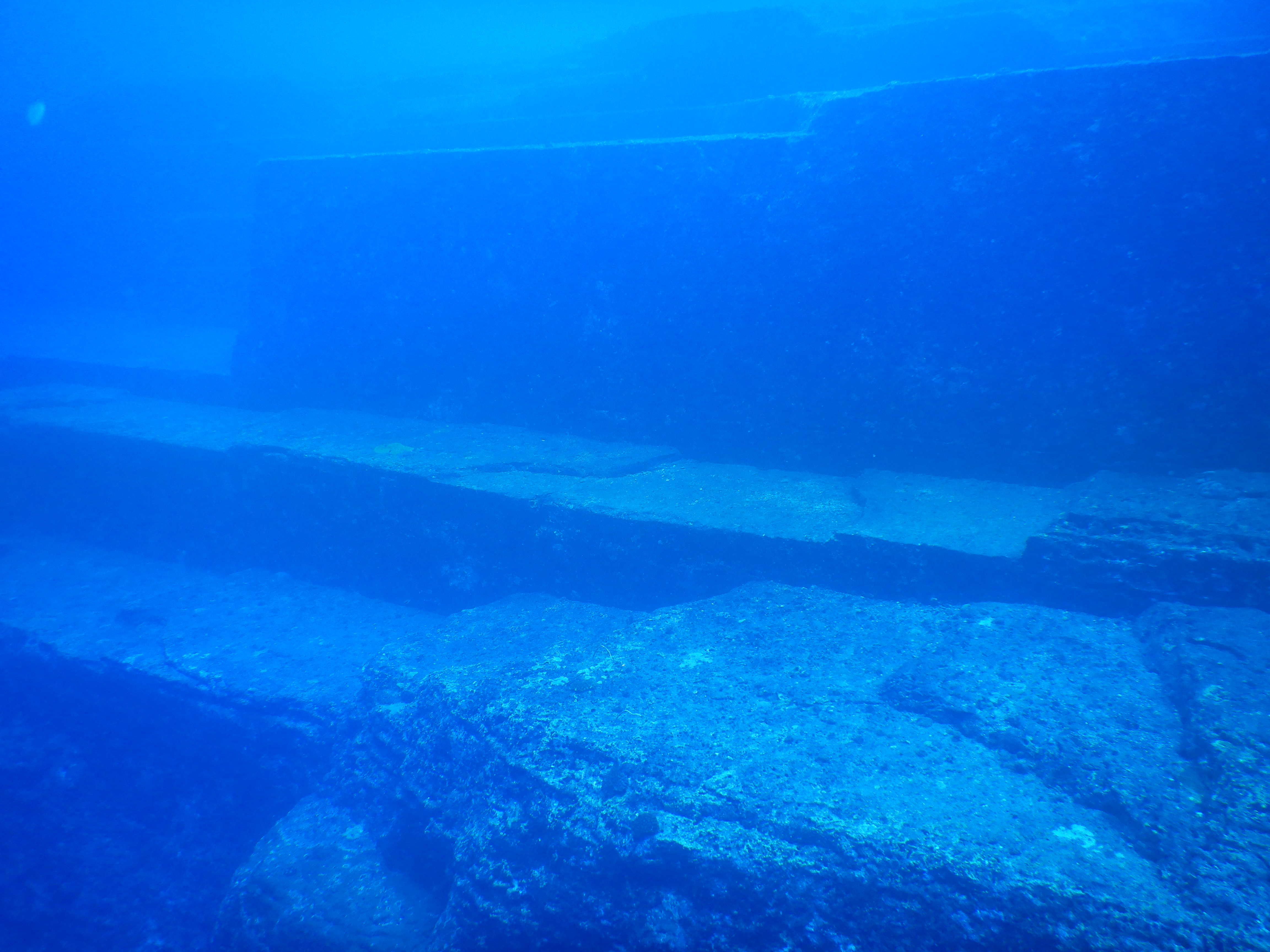
The Enigma of Yonaguni: An Underwater Monument or Nature’s Art?
Off the coast of Yonaguni Island in Japan lies one of the most compelling and hotly debated underwater structures in the world: the Yonaguni Monument. Discovered in 1986 by a local diver, this massive sandstone formation features sharp angles, flat surfaces, terraces, and what appear to be steps, leading many to believe it is a colossal ancient ruin.

What Makes Yonaguni So Provocative?
The primary contention surrounding Yonaguni is whether it is a natural geological formation or a man-made structure.
The debate continues, with no definitive consensus. The Yonaguni Monument stands as a powerful symbol of “forbidden archaeology,” a testament to structures that challenge our understanding of ancient human capabilities and the true age of complex societies.

The Bosnian Pyramids: Europe’s Oldest Structures or a Natural Hill?
In 2005, a claim emerged from Visoko, Bosnia, that sent shockwaves through the archaeological community: a series of hills, previously considered natural, were in fact ancient, man-made pyramids. Spearheaded by Semir Osmanagić, an amateur archaeologist, the “Bosnian Pyramids” project quickly gained international attention, becoming one of the most controversial discoveries of the 21st century.
Why Are These “Pyramids” So Contentious?
Osmanagić and his supporters claim that the hills, particularly the “Pyramid of the Sun” and “Pyramid of the Moon,” are covered with man-made concrete blocks, contain internal tunnels, and are astronomically aligned. They propose that these structures are significantly older than the Egyptian pyramids, potentially dating back tens of thousands of years, suggesting a lost, advanced European civilization.
Despite widespread scientific debunking, the Bosnian Pyramids remain a powerful draw for tourists and proponents of alternative history, encapsulating the struggle between established scientific consensus and the allure of “suppressed history.”
The Baghdad Battery: An Ancient Power Source or a Storage Jar?
Discovered in 1936 near Baghdad, Iraq, the “Baghdad Battery” is an artifact dating back to the Parthian era—around 250 BC to AD 224—that has fascinated and puzzled researchers for decades. It consists of a clay jar, a copper cylinder, and an iron rod, leading some to speculate it was an ancient electrical battery.
Was Ancient Mesopotamia Electrified?
The theory that the Baghdad Battery was an ancient voltaic cell was first proposed by German Egyptologist Wilhelm König in 1938. He suggested that if the jar were filled with an acidic electrolyte, such as grape juice or vinegar, it could have generated a small electrical current.
The Baghdad Battery remains a captivating “out-of-place artifact” (OOPArt), highlighting the possibilities of forgotten ancient technologies and prompting us to question how much we truly know about the practical ingenuity of past civilizations.
Beyond the Official Story: The Concept of Out-of-Place Artifacts (OOPArts)
The Baghdad Battery is just one example of a broader category of controversial discoveries known as Out-of-Place Artifacts, or OOPArts. These are objects found in archaeological contexts that seem to contradict the known scientific and historical timeline of human development. They often appear to possess advanced technology, artistic sophistication, or material compositions that do not fit the era in which they were supposedly created.
What Makes an OOPArt “Out of Place”?
* Technological Anachronisms: Like the Baghdad Battery, some OOPArts suggest a level of technological understanding far beyond what is attributed to their supposed creators. Another famous example, though now largely understood, is the Antikythera Mechanism, an ancient Greek analog computer discovered in a shipwreck that modeled astronomical positions with astonishing complexity. While initially baffling, further research revealed it to be a sophisticated, albeit singular, example of Hellenistic engineering, challenging previous assumptions about ancient Greek mechanical prowess.
The allure of OOPArts lies in their potential to radically reshape our understanding of history, but their controversial nature also demands a healthy skepticism and a commitment to rigorous scientific methodology.
Pre-Clovis Americas: Rewriting the Story of Human Migration
For much of the 20th century, the “Clovis First” theory dominated North American archaeology. This theory posited that the Clovis people, identified by their distinctive fluted projectile points, were the first humans to arrive in the Americas around 13,000 years ago, crossing the Bering land bridge. However, a growing body of “forbidden archaeology” in the form of pre-Clovis sites has dramatically challenged this long-held belief.
How Did Ancient Migrations Become Controversial?
The idea that humans arrived in the Americas significantly earlier than 13,000 years ago was initially met with fierce resistance from the archaeological establishment. Each new claim of a pre-Clovis site faced intense scrutiny and often outright dismissal.
The pre-Clovis debate illustrates a crucial aspect of challenging history: scientific understanding is not static. What is considered “controversial” today may become accepted fact tomorrow, provided the evidence is robust enough to withstand the most rigorous scientific examination.
The Ongoing Debate: Why Does It Matter?
The fascination with challenging archaeological finds is not just about uncovering ancient mysteries; it is about our collective understanding of who we are and where we come from. These controversial discoveries, whether ultimately accepted or debunked, serve several vital purposes:
The tension between established narratives and provocative new evidence is a healthy part of scientific progress. It reminds us that history is not a static set of facts but an ongoing investigation, full of surprises and unanswered questions. The most captivating stories are often those still being written—or perhaps those waiting to be unearthed.
The world of archaeology is far richer and more complex than any single narrative can convey. While some finds remain firmly in the realm of “forbidden archaeology” or “debunked theories,” others nudge the boundaries of our knowledge, forcing us to reconsider the incredible ingenuity and unknown chapters of our ancient past.
Join the debate in our community forum and share your thoughts