
Hidden Empires: Unveiling Forgotten Civilizations Through Modern Archaeology
What if the greatest cities ever built are not on any map? What if entire empires—complete with markets, temples, and kings—once thrived and then vanished, leaving only whispers in the soil? For centuries, such questions seemed like the stuff of legend. But today, thanks to an explosion of modern archaeology, the hidden empires of our past are rising from the earth and the sea. We’re not just finding dusty ruins; we’re reconstructing vibrant worlds that history forgot.
If you’re a history enthusiast or an archaeology buff, you’re in for a treat. In the next few minutes, we’ll travel from the oldest city in the Americas to a temple that predates agriculture, from a desert civilization that carved cities into cliffs to an African superpower that minted its own coins. And we’ll see how cutting-edge technology—LiDAR, satellite imaging, underwater drones, and ancient DNA—is rewriting the story of humanity. Ready to uncover what’s been hiding in plain sight? Let’s dig in.

The Allure of Lost Civilizations
There’s a reason we’re drawn to lost civilizations. They promise mystery, adventure, and the humbling insight that no empire—no matter how grand—is permanent. Think of Atlantis, El Dorado, or Shangri-La. But while those are myths, the real world is full of civilizations that truly disappeared from historical record, only to be rediscovered through painstaking archaeological discoveries.
The concept of “lost” is tricky. In most cases, these societies weren’t lost to their own people; they were lost to the dominant historical narrative. When Rome fell, European history focused on its successor states. When the Maya abandoned their great cities, the jungle swallowed them. And when sea levels rose, coastal cities sank. The result? Entire ancient civilizations became forgotten—until now.
Modern archaeology isn’t just about uncovering bones and pottery. It’s about using every tool at our disposal to listen to the stories soil wants to tell. And what we’re hearing is astonishing: the past is far more complex, connected, and innovative than we ever imagined.

Rewriting History: Major Archaeological Discoveries of Hidden Empires
Let’s look at a few of the most breathtaking archaeological discoveries that have brought hidden empires back into the light. These aren’t obscure footnotes; they’re game-changers.

Caral: The Oldest City in the Americas
When you think of ancient American civilizations, the Maya, Aztec, and Inca likely come to mind. But Caral, located in the Supe Valley of Peru, predates them all by millennia. First excavated in the 1990s by archaeologist Ruth Shady, Caral flourished around 3000 BCE—making it contemporary with ancient Egypt and Mesopotamia.
What makes Caral remarkable isn’t just its age. It’s the sophistication: monumental pyramids, sunken plazas, residential districts, and a complex irrigation system. Yet Caral shows no signs of warfare—no defensive walls, no weapons caches. This was a peaceful, trade-based society that thrived for over a thousand years. Hidden empires like Caral challenge our assumptions that early complex societies required violence to form.
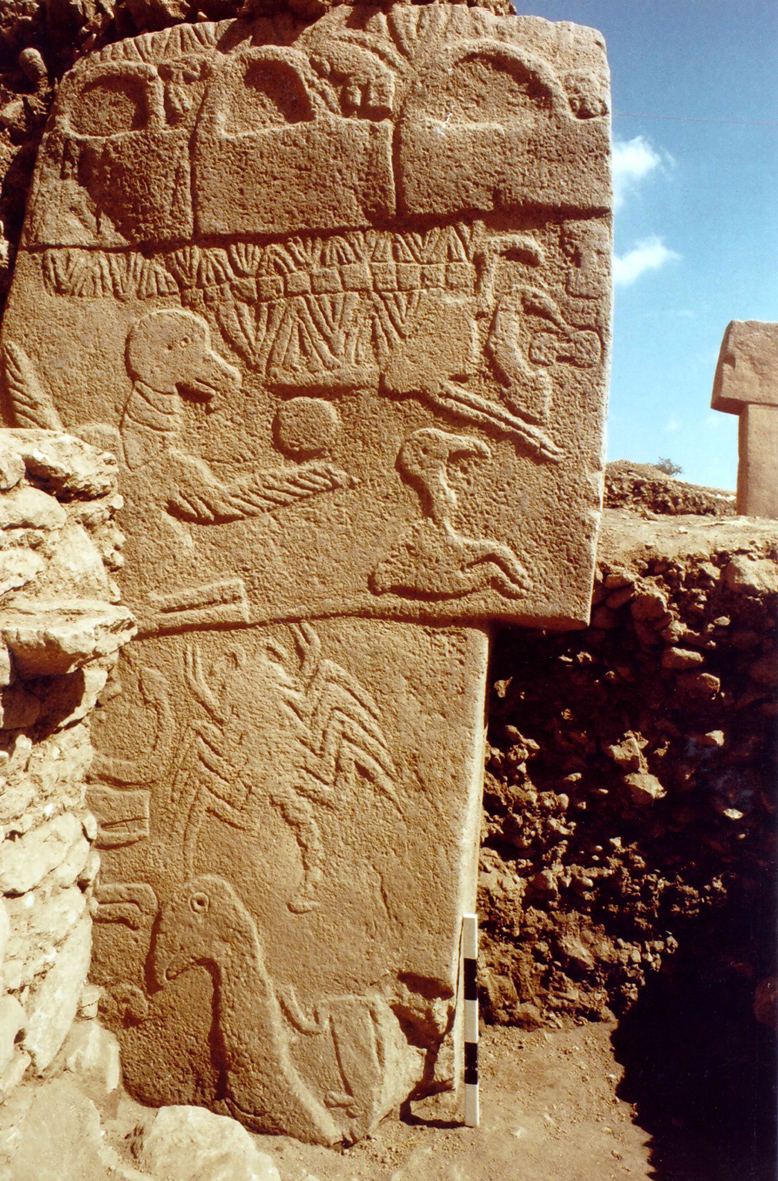
Göbekli Tepe: A Temple Before Agriculture?
In southeastern Turkey, on a hill that’s been used as farmland for centuries, lies a site that has shattered timelines. Göbekli Tepe, first noted in the 1960s but seriously excavated only since the 1990s, dates back nearly 12,000 years—around 9600 BCE. That’s before the invention of pottery, metal tools, writing, or even the wheel. And crucially, it predates the rise of agriculture.
The site consists of massive T-shaped limestone pillars, some up to 18 feet tall, arranged in circles and carved with intricate animal reliefs. The scale of the construction—requiring hundreds of people working together—suggests organized religion or social gatherings existed long before settled farming. As archaeologist Klaus Schmidt, who led excavations until his death in 2014, once said: “First came the temple, then the city.” This flips the traditional narrative that agriculture led to settled life, which then led to religion. At Göbekli Tepe, people built a monument first, and perhaps farming followed.
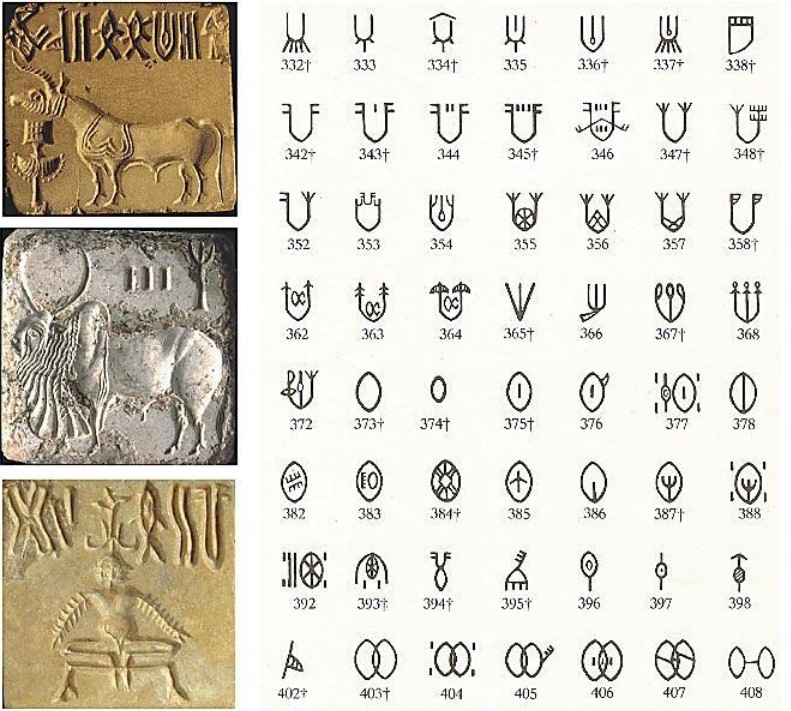
The Indus Valley Civilization: A Script Still Undeciphered
Stretching across modern-day Pakistan and northwest India, the Indus Valley Civilization (2600–1900 BCE) was one of the three great early civilizations, alongside Egypt and Mesopotamia. Yet for centuries it was unknown to Western historians. Rediscovered in the 1920s through excavations at Harappa and Mohenjo-daro, the Indus people built cities with advanced sanitation, grid patterns, and uniform brick sizes. They had a sophisticated system of weights and measures and traded with Mesopotamia.
But here’s the kicker: their script remains undeciphered. Unlike Egyptian hieroglyphs (cracked via the Rosetta Stone) or Mesopotamian cuneiform (decoded in the 19th century), the Indus script has no bilingual inscription. This means we know a lot about how Indus cities were built but almost nothing about their politics, religion, or daily thoughts. It remains one of archaeology’s greatest riddles—a hidden empire hiding in plain sight.
The Nabataeans: Masters of the Desert
Petra, in modern Jordan, is famous for its rock-cut architecture—the Treasury, the Monastery, the tombs. But the civilization that built it, the Nabataeans, is often overlooked. Originating as nomadic Arab traders, the Nabataeans controlled the incense and spice routes from Arabia to the Mediterranean from around the 4th century BCE. They built a capital city in a desert canyon, engineered an elaborate water-management system with dams, cisterns, and aqueducts, and accumulated immense wealth.
The Nabataeans were annexed by Rome in 106 CE and gradually assimilated, but their engineering genius remains. Modern archaeologists have used ground-penetrating radar and remote sensing to map hidden water channels beneath Petra’s streets, revealing a city far larger and more complex than the facades suggest. Their story shows how an empire can be powerful not through conquest but through commerce and control of resources.
Aksum: Africa’s Forgotten Superpower
In the highlands of Ethiopia, the Kingdom of Aksum (100–940 CE) was once one of the world’s great powers. It minted its own currency, built towering granite obelisks (some over 100 feet tall), and adopted Christianity as a state religion in the 4th century—making it one of the first Christian empires. Aksum traded with Rome, India, and China, and its port of Adulis was a cosmopolitan hub.
Yet Aksum faded from Western historical memory after the rise of Islam shifted trade routes. Local memory persisted, but European colonial narratives largely ignored it. Today, archaeologists working at Aksum and surrounding sites are uncovering palaces, tombs, and inscriptions that confirm its central role in ancient global trade. Lost civilizations like Aksum remind us that history is not just a European story.
The Technology Powering Modern Archaeology
What’s making these discoveries possible now? A suite of technologies that would have seemed like science fiction a generation ago. Here are the game-changers:
- LiDAR (Light Detection and Ranging): Mounted on drones or aircraft, LiDAR fires millions of laser pulses at the ground per second. The laser penetrates vegetation and bounces back, creating a high-resolution map of the terrain below. In jungle environments, LiDAR has revealed entire cities hidden under canopy.
- Satellite Imagery: Multispectral and thermal imaging from space can detect subtle differences in soil moisture, vegetation health, and surface temperature that indicate buried structures. This is how space archaeologist Sarah Parcak has located thousands of potential sites in Egypt’s Nile Delta.
- Ground-Penetrating Radar (GPR): Unlike LiDAR, GPR sends radar waves into the ground and measures reflections from buried objects or structures. This allows archaeologists to map walls, floors, and even voids without digging.
- Underwater Drones and Sonar: For submerged sites, autonomous underwater vehicles (AUVs) equipped with side-scan sonar and high-resolution cameras can map ruins on the seafloor with centimeter precision.
- Ancient DNA (aDNA): By extracting DNA from bones, teeth, and even soil, scientists can trace migration patterns, family relationships, and population changes. This has reshaped our understanding of who built certain civilizations and what happened to them.
- Isotope Analysis: By measuring the ratios of strontium, oxygen, and carbon isotopes in human remains, researchers can determine where individuals grew up, what they ate, and how they moved. This reveals trade networks and social structures.
- Artificial Intelligence: Machine learning algorithms can scan massive datasets—thousands of satellite images, millions of pottery shards—to identify patterns humans might miss. AI is also being used to reconstruct fragmented inscriptions.
- Natural disasters: Earthquakes, volcanic eruptions, tsunamis, and floods destroyed cities and displaced populations. Thonis-Heracleion and Pompeii are prime examples.
- Climate change: Prolonged droughts or shifting rainfall patterns made agriculture impossible. The Maya and the Ancestral Puebloans (Anasazi) of the American Southwest likely faced such challenges.
- Environmental degradation: Deforestation, soil erosion, and over-farming could undermine an empire’s resource base. The decline of the Khmer Empire at Angkor is linked to a complex water management system that became unsustainable.
- Conquest and assimilation: Empires like the Nabataeans were absorbed by larger powers, their distinct culture gradually dissolving.
- Rise of successors: New cities were built directly on top of old ones. In many Middle Eastern tells (artificial mounds), layers of cities stack up like a layer cake.
- Deep-sea exploration: Advances in autonomous underwater vehicles and pressure-resistant robotics will open up continental shelves and abyssal plains where human settlements may have existed during lower sea levels.
- Jungle and rainforest mapping: LiDAR surveys are expanding across the Amazon, Congo Basin, and Southeast Asia. Already, researchers have found geoglyphs and urban clusters in the Bolivian Amazon that suggest a “lost” civilization of up to a million people.
- Space archaeology: Satellite constellations are getting smaller and cheaper, allowing for global coverage at high resolution. Citizen scientists are already helping analyze images through platforms like GlobalXplorer.
- AI and big data: Machine learning will sift through millions of images, texts, and artifacts to identify patterns no human could see. This could crack the Indus script or reveal trade networks spanning continents.
- Non-invasive excavation: As ethical concerns about destructive digging grow, archaeologists are turning to virtual reconstruction using CT scans, photogrammetry, and 3D modeling. We may soon be able to explore a hidden empire without moving a single shard.
These tools aren’t just speeding up discovery; they’re enabling a new kind of archaeology—less destructive, more comprehensive, and capable of seeing entire landscapes rather than isolated sites.
Case Study: The Maya – A Civilization Transformed by LiDAR
No ancient civilization has benefited more from modern technology than the Maya. For over a century, archaeologists believed the Maya lowlands of Guatemala and Mexico were sparsely populated, with small, disconnected city-states separated by jungle. That view was shattered in 2018 when a team using LiDAR surveyed 2,100 square kilometers of the Maya Biosphere Reserve in Guatemala.
The results? They found over 60,000 previously unknown structures, including houses, palaces, elevated highways, and defensive fortifications. The LiDAR data revealed a continuous urban and agricultural landscape, supporting a population of 10–15 million people at its peak—far more than previously estimated. The Maya had reshaped their environment with terraces, canals, and raised fields, essentially building a sprawling low-density urban network.
This discovery didn’t just change numbers; it changed interpretations. The Maya collapse around 900 CE has long been attributed to a single cause—drought, warfare, or overpopulation. But the LiDAR evidence suggests a more complex story: the Maya modified their landscape so extensively that they may have made themselves vulnerable to environmental stresses. As archaeologist Thomas Garrison put it, the Maya “weren’t living in harmony with nature; they were engineering it—and that may have backfired.”
The Maya are no longer a lost civilization in the traditional sense. They are a civilization whose true scale and sophistication we are only now beginning to grasp. And it’s happening across the globe.
Underwater Archaeology: Lost Cities Beneath the Waves
Some hidden empires aren’t buried under soil—they’re submerged under water. Rising sea levels, earthquakes, and tsunamis have swallowed entire cities. Thanks to modern underwater archaeology, we’re finally bringing them back.
Thonis-Heracleion was a major Egyptian port at the mouth of the Nile, mentioned in ancient Greek texts but thought to be a legend. In 2000, underwater archaeologist Franck Goddio and his team discovered its ruins in Aboukir Bay, 6.5 kilometers off the coast. They found temples, statues, ships, and inscribed steles—evidence of a bustling trade hub that sank due to a combination of earthquakes and soil liquefaction around 800 CE.
Pavlopetri in Greece, discovered in 1967 and re-surveyed in 2009, is the oldest known submerged city in the world, dating back to 3000 BCE. Its streets, buildings, and courtyards lie intact on the seabed, offering a time capsule of Bronze Age urban planning.
And Dwarka, off the coast of Gujarat, India, is a site steeped in myth. Hindu texts describe a magnificent city built by Lord Krishna, later swallowed by the sea. Marine archaeologists have found sandstone walls, anchors, and pottery fragments underwater, dating to around 1500 BCE—suggesting that a real urban center may have inspired the legend.
These discoveries show that hidden empires aren’t just on land. The ocean covers 70% of the planet, and archaeologists estimate that only a tiny fraction of underwater sites have been mapped. The next great discovery could be just below the surface.
Why These Empires Were “Hidden” in Plain Sight
You might wonder: how can an entire empire be “lost”? The truth is, they rarely vanished overnight. More often, they faded or transformed.
The term “lost civilization” is thus a bit misleading. These societies didn’t disappear; they changed, moved, or were absorbed. What was lost was our knowledge of them—a gap that modern archaeology is now filling.
The Human Story: What We Learn from Forgotten Civilizations
Why does any of this matter? Beyond the thrill of discovery, these hidden empires carry lessons for us today.
Take sustainability. The Maya over-engineered their landscape; the Khmer built a massive irrigation system that eventually silted up; the inhabitants of Easter Island (Rapa Nui) may have deforested their island to move statues, contributing to ecological collapse. These are cautionary tales.
But other civilizations offer hopeful models. Caral thrived for a millennium without war. The Indus cities had sophisticated sanitation and waste management—systems many modern cities still lack. The Nabataeans turned a desert into a garden through careful water conservation.
Ancient civilizations also remind us of human resilience. When sea levels rose after the last Ice Age, coastal communities migrated inland, adapted, and built anew. When the Roman Empire fell, its knowledge wasn’t lost—it was preserved, transformed, and later rediscovered in the Islamic world and the Renaissance.
As archaeologist Dr. Monica L. Smith writes, “The past is not a foreign country; it is a mirror.” By studying how past societies responded to challenges, we gain perspective on our own—climate change, urbanization, inequality, and technological disruption. The hidden empires of yesterday are, in many ways, guides for navigating tomorrow.
The Future of Discovery: What’s Next?
If the last two decades have been a golden age of archaeological discoveries, the next two promise even more. Here’s what’s on the horizon:
The next hidden empire may already be waiting—under a parking lot in Turkey, beneath a coral reef in Indonesia, or hidden in a satellite image of the Sahara. The tools are sharper than ever. The only limit is our curiosity.
Frequently Asked Questions
What is the most recently discovered lost civilization?
While “lost civilization” is subjective, the Amazonian “geoglyph” civilization—revealed through deforestation and satellite imagery in the 2010s—is arguably one of the most recent major discoveries. Researchers have found hundreds of geometric earthworks, roads, and settlements that suggest a large, organized society in the pre-Columbian Amazon.
How does LiDAR work in archaeology?
LiDAR (Light Detection and Ranging) sends out rapid laser pulses and measures how long they take to bounce back. Mounted on a plane or drone, it can scan the ground beneath dense vegetation, creating a detailed topographical map. Archaeologists use this to spot building foundations, walls, and roads that are invisible from the air or even on foot.
Are there still lost civilizations to be found?
Absolutely. Large areas of the Amazon, Congo, Southeast Asian jungles, and shallow ocean shelves remain unexplored. Each year brings new discoveries—new geoglyphs, new sunken cities, new inscriptions. The pace of discovery is accelerating, not slowing down.
What can ancient civilizations teach us about climate change?
Ancient societies faced climate