
Hidden Empires: Unveiling Forgotten Civilizations Through Modern Archaeology
Introduction: The Earth Is Still Keeping Secrets
What if we told you that beneath the dense canopy of the Guatemalan rainforest, under the sands of the Sahara, and hidden within the depths of the Amazon, entire empires are waiting to tell their stories? These aren’t plotlines from an adventure novel—they’re real archaeological discoveries unfolding right now. In fact, experts estimate that we’ve discovered less than 10% of the archaeological sites on Earth. That means nine out of every ten ancient settlements, ceremonial centers, and forgotten cities are still buried, awaiting their moment to rewrite history.
The study of hidden empires—sophisticated civilizations that vanished from historical records only to be rediscovered centuries or millennia later—has entered a golden age. Thanks to modern archaeology, what once took generations of painstaking excavation now happens in a single afternoon with a drone flyover. In this article, we’ll journey through the technological revolution transforming how we uncover ancient civilizations, explore remarkable lost civilizations that have emerged from obscurity, and discover why these findings matter not just for history buffs, but for understanding our own future. The past, as it turns out, is far from finished with us.

What Exactly Is a Hidden Empire?
Before we dive into the discoveries themselves, let’s define what makes an empire “hidden.” A hidden empire isn’t simply an ancient settlement—it’s a sophisticated, organized society that exerted significant influence over its region, developed complex systems of governance and trade, and then disappeared from the historical record. These aren’t villages that quietly faded away; they’re sprawling urban centers and regional powers that once commanded vast territories.
Consider the difference between finding a single Roman villa and uncovering an entire pre-Roman civilization that nobody knew existed. The latter completely transforms our understanding of history. That’s the power of hidden empires—they don’t just add to the historical narrative; they force us to rewrite it. Many of these civilizations were deliberately erased by conquering powers, abandoned due to environmental catastrophe, or simply lost when oral traditions were severed by disease and displacement.
Modern archaeologists now recognize that the “empty” places on ancient maps weren’t actually empty at all. The Amazon rainforest, once dismissed as a “counterfeit paradise” incapable of supporting complex societies, has revealed evidence of massive urban networks. The Sahara, imagined as an eternal desert, conceals the remnants of lush landscapes and thriving trade hubs. Our ancestors were far more sophisticated, mobile, and interconnected than we gave them credit for—and we’re only now catching up to their legacy.

The Technological Revolution: How Modern Archaeology Is Changing Everything
If you haven’t followed archaeology since your high school textbook days, you might picture archaeologists as people with trowels and brushes, carefully dusting off pottery shards under the hot sun. While that classic image still holds true for excavation work, modern archaeology has undergone a technological transformation that would have seemed like science fiction just thirty years ago. These tools don’t just speed up discovery—they fundamentally change what it’s possible to find.

LiDAR: Seeing Through the Jungle
Light Detection and Ranging (LiDAR) technology has arguably been the single most revolutionary tool in twenty-first-century archaeology. By mounting laser scanners on aircraft and drones, researchers can fire millions of laser pulses toward the ground. These pulses penetrate gaps in vegetation canopies, bounce back, and create incredibly detailed three-dimensional maps of the terrain below. In essence, LiDAR allows archaeologists to “strip away” entire forests digitally and reveal the ground surface underneath.
The results have been staggering. In 2018, researchers using LiDAR in Guatemala’s Petén region announced the discovery of over 60,000 previously unknown Maya structures hidden beneath the jungle canopy. These included houses, palaces, elevated highways, and sophisticated irrigation systems—evidence suggesting that the Maya lowlands supported a population of 10 to 15 million people at their peak. The ancient Maya civilization, it turns out, was far larger and more densely populated than anyone imagined.
What makes LiDAR particularly valuable is its ability to reveal patterns. Individual structures might go unnoticed in aerial photographs, but when LiDAR reveals thousands of connected features—roads linking settlements, agricultural terraces spreading across hillsides, defensive walls encircling urban cores—the true scale of a civilization emerges. We’re not finding isolated monuments anymore; we’re mapping entire lost empires.

Ground-Penetrating Radar and Magnetometry: Peering Beneath the Surface
While LiDAR excels at revealing surface features obscured by vegetation, ground-penetrating radar (GPR) and magnetometry allow archaeologists to see what lies buried underground without ever lifting a shovel. GPR works by sending electromagnetic pulses into the soil and measuring how they bounce back, revealing buried walls, chambers, and even organic materials. Magnetometry, on the other hand, detects subtle variations in the Earth’s magnetic field caused by human activity—everything from fired clay hearths to iron artifacts.
These technologies have proven invaluable at sites like Çatalhöyük in Turkey, one of the world’s oldest known urban settlements. Through systematic GPR surveys, researchers have mapped entire neighborhoods without disturbing the delicate remains beneath modern development. Similarly, magnetometry surveys at sites across Europe have revealed buried Roman towns, Viking longhouses, and Iron Age fortifications with remarkable precision. The ground itself has become a document we can now read without opening.
Satellite Imagery: Archaeology from Space
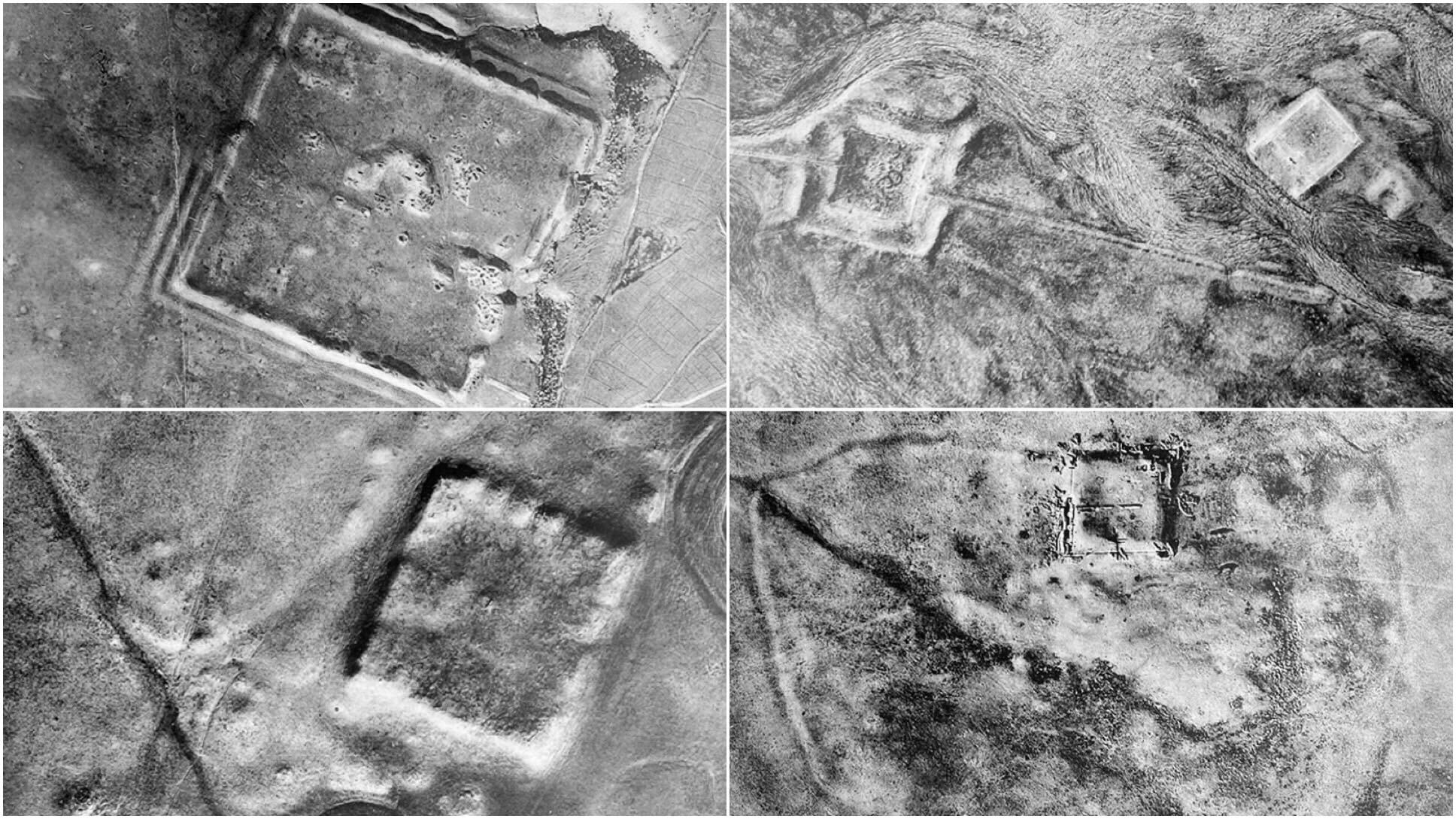
Perhaps the most democratized tool in modern archaeology is satellite imagery. High-resolution commercial satellites now capture images detailed enough to reveal individual building foundations, road networks, and even looting pits. Combined with multispectral analysis—which detects subtle differences in vegetation growth caused by buried structures—satellite archaeology has opened up remote, dangerous, or politically inaccessible regions to systematic study.
Dr. Sarah Parcak, a pioneer in the field often called “space archaeology,” has used satellite imagery to identify thousands of potential archaeological sites across Egypt, including lost pyramids and entire settlements that had faded into the desert landscape. Her work demonstrates that even the most studied regions of the ancient world still hold secrets visible only from orbit. When we pull back far enough, patterns emerge that are invisible from the ground—ancient trade routes, settlement hierarchies, and territorial boundaries that reveal how empires were organized.
Remarkable Archaeological Discoveries Reshaping History
Technology means nothing without results, and the results from recent decades have been nothing short of breathtaking. Let’s explore some of the most significant hidden empires that modern archaeology has brought to light.
1. The Amazonian Civilization: A Pre-Columbian Metropolis
For centuries, the prevailing narrative held that the Amazon rainforest was a pristine wilderness, sparsely populated by small, nomadic tribes. This assumption wasn’t just wrong—it was spectacularly wrong. Archaeological discoveries over the past two decades have revealed that the Amazon was once home to sophisticated, large-scale civilizations that built cities, engineered landscapes, and managed the forest as a vast, productive agricultural system.
In the Brazilian state of Acre, researchers have documented hundreds of massive geometric earthworks known as geoglyphs, created by pre-Columbian peoples between 1,000 and 2,000 years ago. These structures—giant circles, squares, and lines visible only from above—served ceremonial and possibly astronomical purposes. More dramatically, excavations in the Upper Xingu region of Brazil have revealed evidence of large, planned settlements connected by broad roads, arranged in patterns that suggest complex political organization.
The implications are profound. The Amazon wasn’t a barrier to civilization; it was a cradle of it. An estimated 8 to 10 million people may have lived in the Amazon basin before European contact, managing the forest through sophisticated agroforestry techniques that we’re only now beginning to understand. The “lost cities” of the Amazon aren’t just archaeological curiosities—they hold lessons for sustainable land management that could inform modern conservation efforts.
2. The Kingdom of Aksum: Africa’s Forgotten Superpower
Ask most people to name the great empires of the ancient world, and you’ll hear Rome, Greece, Egypt, maybe Persia or China. Rarely does anyone mention Aksum—yet this East African kingdom, centered in modern-day Ethiopia and Eritrea, was once ranked among the world’s most powerful states. The Persian prophet Mani, writing in the third century CE, listed Aksum alongside Rome, Persia, and China as one of the four great powers of the world.
Modern archaeological discoveries have gradually restored Aksum to its rightful place in world history. Excavations at the ancient capital have revealed monumental architecture, sophisticated coinage systems, and evidence of far-reaching trade networks connecting Africa to India, Arabia, and the Mediterranean. Aksumite coins, minted in gold, silver, and bronze, demonstrate a level of economic sophistication that rivaled contemporary empires.
The kingdom’s most famous monuments—the towering stelae of Aksum, some reaching over 100 feet in height—represent some of the largest single pieces of stone ever quarried and erected by human hands. Recent LiDAR surveys and systematic excavations have revealed that the city of Aksum was far larger than previously believed, with extensive suburbs, industrial zones, and agricultural hinterlands extending for miles around the ceremonial center. Here was an African empire that traded with distant lands, adopted Christianity before most of Europe, and created a distinctive architectural tradition that continues to inspire Ethiopian builders today.