
Cracking Ancient Enigmas: Unveiling Mysteries and Lost Knowledge from Humanity’s Past
From the silent, colossal stones of ancient monuments to the cryptic symbols etched into forgotten scrolls, humanity’s past is a rich tapestry woven with threads of the known and the profoundly unknown. These ancient enigmas — the lost knowledge, the enigmatic artifacts, and the unsolved puzzles — aren’t just historical footnotes; they are compelling invitations to explore the boundaries of our understanding, challenging us to rethink what we believe about human capabilities and the civilizations that came before us. They captivate our imaginations, stirring a primal curiosity about who we are, where we came from, and what secrets still lie buried beneath the sands of time.

The Allure of the Unknown: Why Ancient Mysteries Endure
There’s something inherently thrilling about a mystery, especially one that has baffled generations. Ancient enigmas tap into our deepest desires to understand our origins, to fill the gaping holes in historical records, and to connect with the minds of those who lived millennia ago. These aren’t just dry academic questions; they are living puzzles that speak to the ingenuity, wisdom, and perhaps even the folly of our ancestors. They offer a sense of wonder, a humbling reminder that despite our technological advancements, much of the past remains stubbornly out of reach, shrouded in the mists of time. This enduring allure stems from a fundamental human drive to explore, to discover, and to piece together the fragments of a grand, unfinished story.

Echoes of Lost Civilizations: Whispers of Advanced Knowledge
Imagine entire civilizations, once thriving and innovative, whose profound understanding of the world has vanished, leaving behind only tantalizing clues. Many ancient mysteries revolve around the idea that certain cultures possessed knowledge, particularly in engineering, astronomy, and mathematics, that seems impossibly advanced for their era. Were these isolated flashes of genius, or did entire bodies of knowledge simply get lost to history, perhaps through cataclysms, conquests, or the simple decay of time?
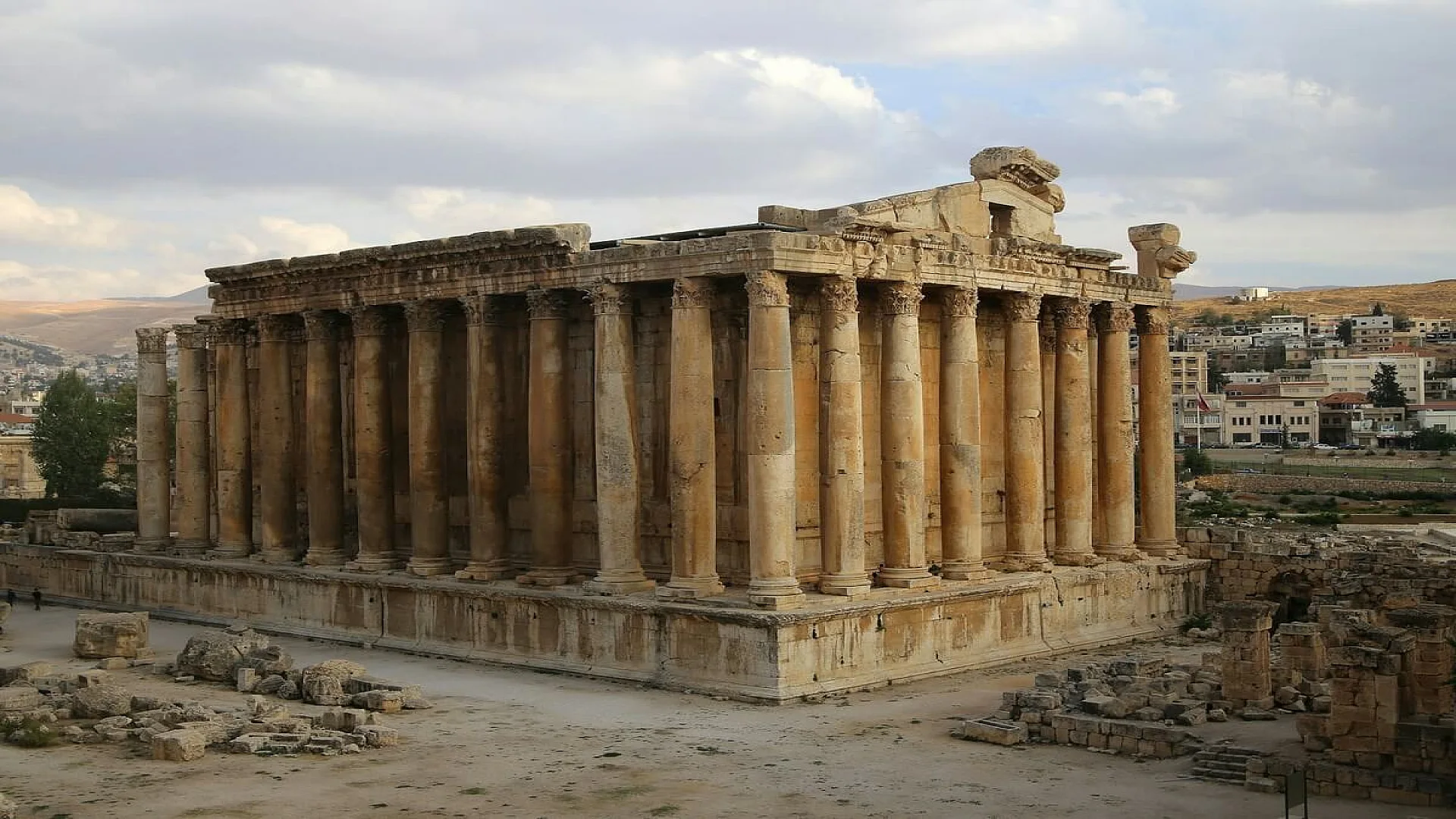
Engineering Marvels Beyond Their Time
Some structures from antiquity stand as monumental questions, defying easy explanations for their construction and precision.
- The Great Pyramids of Giza, Egypt: How did the ancient Egyptians, without modern machinery, quarry, transport, and precisely place millions of massive stone blocks, some weighing many tons, to create structures aligned with incredible astronomical accuracy? The sheer scale and architectural precision continue to astound engineers and archaeologists alike, leading to theories ranging from sophisticated ramps and levers to more unconventional ideas involving lost technologies.
- Machu Picchu, Peru: Perched high in the Andes, this Inca citadel showcases an astonishing level of dry stone masonry. Stones are cut so perfectly that they fit together without mortar, able to withstand centuries of earthquakes. The exact methods used to shape and move these colossal stones up such challenging terrain, as well as the city’s precise astronomical alignments, remain a testament to a lost mastery of engineering and urban planning.
- Stonehenge, England: This prehistoric monument of massive sarsen and bluestones, arranged in concentric circles, has puzzled scholars for centuries. Its precise astronomical alignments suggest a sophisticated understanding of celestial cycles, but its true purpose – a temple, an observatory, a burial ground – and the methods by which the gigantic stones were transported hundreds of miles and erected, are still debated.
- Puma Punku, Bolivia: Near the ancient city of Tiahuanaco, the ruins of Puma Punku feature incredibly intricate stonework. Massive blocks of diorite, one of the hardest stones on Earth, are carved with such precision that they seem to have been cut with laser-like tools. H-shaped blocks, interlocking joints, and perfectly planar surfaces suggest a level of engineering skill that appears far beyond the known capabilities of the civilization believed to have built it.
- The Mayan Calendar System: Far more complex than a simple dating system, the Maya developed a series of interconnected calendars (the Tzolkin, Haab’, and Long Count) that tracked celestial cycles with astonishing accuracy, predicting eclipses and planetary movements. This intricate system speaks to a deep, sustained observation of the heavens and advanced mathematical concepts.
- The Antikythera Mechanism, Greece: Discovered in a shipwreck off the coast of Greece, this intricate bronze device, dating back to the 2nd century BCE, is often referred to as the world’s first analog computer. It was designed to predict astronomical positions and eclipses decades in advance, demonstrating a level of mechanical sophistication and astronomical knowledge not seen again for over a millennium. Its existence implies a lost tradition of complex engineering in ancient Greece.
- The Nazca Lines, Peru: Etched into the arid plateau of Peru, these colossal geoglyphs depict animals, geometric shapes, and human-like figures on a scale so vast they can only be fully appreciated from the air. Their purpose remains a mystery, with theories ranging from astronomical calendars and ritual pathways to messages for deities or even extraterrestrial visitors. The sheer effort and precision required to create such massive, enduring artworks without an aerial perspective are truly remarkable.

Astronomical Acuity and Cosmic Calendars
Beyond grand constructions, some ancient cultures demonstrated an uncanny understanding of the cosmos, suggesting a level of astronomical observation and mathematical prowess that continues to impress.

Enigmatic Artifacts: Objects That Defy Explanation
Sometimes, it’s not a grand structure, but a single object that holds the key to a forgotten world. These enigmatic artifacts, often found out of place or possessing features that perplex modern experts, challenge our timelines and understanding of ancient technologies.
The Voynich Manuscript: An Unreadable Tome
Perhaps the most famous unsolved book in the world, the Voynich Manuscript is a medieval codex filled with strange illustrations of plants, astrological diagrams, and human figures, all accompanied by a unique, undeciphered script. Despite intense efforts by cryptographers, linguists, and computer scientists for over a century, no one has been able to read a single word. Is it a lost language, a complex cipher, an elaborate hoax, or perhaps a window into a forgotten system of knowledge? Its contents remain a tantalizing secret, a stubborn refusal to yield its meaning.
The Baghdad Battery: An Out-of-Place Artifact?
Discovered near Baghdad in 1936, this artifact consists of a clay jar containing a copper cylinder, an iron rod, and traces of an acidic agent. Dating back to the Parthian era (250 BCE – 224 CE), it strikingly resembles a galvanic cell, capable of producing a small electric current. If it was indeed used as a battery, perhaps for electroplating small objects or for medicinal purposes, it would imply a knowledge of electricity far predating its “discovery” in the modern era. While its exact function is debated, its potential as an ancient power source is an intriguing proposition.
The Dropa Stones: A Controversial Extraterrestrial Connection
The Dropa stones are a series of supposedly ancient stone discs found in a cave system in the Himalayas in 1938. Each disc is said to have a spiral groove etched into its surface, accompanied by tiny hieroglyphs. Controversial claims suggest these hieroglyphs tell the story of an alien race, the “Dropa,” who crash-landed on Earth thousands of years ago. While largely dismissed by mainstream archaeology as a hoax or misinterpretation, the legend of the Dropa stones continues to fuel discussions about extraterrestrial contact and lost histories.
Crystal Skulls: Mesoamerican Masterpieces or Modern Fakes?
These human-sized skulls, meticulously carved from quartz crystal, have long been associated with ancient Mesoamerican civilizations like the Maya and Aztecs, credited with mystical powers and profound ancient wisdom. However, scientific analysis using electron microscopy has shown that many famous crystal skulls exhibit tool marks consistent with modern lapidary equipment, rather than ancient techniques. This raises questions about their true origin, the motivations behind their creation, and whether any truly ancient crystal skulls exist, still waiting to be authenticated.
Unsolved Puzzles: Lingering Questions from Antiquity
Beyond specific objects or structures, there are broader historical questions that continue to confound us, entire narratives that seem to have vanished, leaving behind only fragments and conjecture.
The Disappearance of the Maya Civilization
The Classic Maya civilization, renowned for its sophisticated writing, art, architecture, and astronomical systems, experienced a dramatic decline in the southern lowlands between the 8th and 9th centuries CE. Major cities were abandoned, and monumental construction ceased. What led to this “collapse”? Theories abound, including prolonged droughts, endemic warfare, environmental degradation, disease, and political instability. It’s likely a combination of factors, but the precise sequence and interplay of these events remain a complex and debated puzzle, reminding us of the fragility of even the most advanced societies.
Atlantis: Myth, Legend, or Lost Continent?
The tale of Atlantis, a technologically advanced island civilization that sank beneath the waves in a single day and night, comes to us from the Greek philosopher Plato. For centuries, scholars, explorers, and dreamers have sought to find evidence of this lost continent. Is Atlantis merely a philosophical allegory, a cautionary tale about hubris, or does it contain a kernel of truth? Geological and archaeological theories have pointed to various locations, from the Canary Islands to the sunken city of Thera (Santorini) in the Aegean Sea, which suffered a massive volcanic eruption around 1600 BCE. The search for Atlantis continues to symbolize humanity’s enduring fascination with lost worlds and forgotten histories.
The Riddle of the Sphinx’s Age and Purpose
The Great Sphinx of Giza, with its lion’s body and human head, is one of the most iconic and mysterious monuments in the world. Traditionally attributed to Pharaoh Khafre around 2500 BCE, some geological evidence suggests it might be far older. The erosion patterns on the Sphinx’s body, particularly those on the enclosure walls, have been argued by some geologists to be consistent with prolonged water erosion, not wind and sand, implying it predates the desertification of the region,