
Cracking Ancient Enigmas: Unraveling the Mysteries and Lost Knowledge of Our Past
From towering stone monuments built with impossible precision to undecipherable texts and forgotten technologies, ancient enigmas have captivated humanity for millennia. These profound puzzles offer glimpses into lost knowledge and challenge our understanding of what our ancestors were capable of, sparking endless fascination among history lovers and mystery enthusiasts alike. Join us as we explore some of the most enduring unsolved puzzles, delve into the secrets of enigmatic artifacts, and ponder the forgotten wisdom that might lie buried beneath the sands of time.

The Allure of the Unknown: Why Ancient Mysteries Captivate Us
There’s something inherently thrilling about a mystery, especially one that stretches back thousands of years. The past isn’t a static, fully understood landscape; it’s a vast, often shadowy realm filled with gaps in our knowledge. When we encounter ancient mysteries, we’re not just looking at old stones or faded texts; we’re peering into the minds of people long gone, trying to decipher their intentions, their beliefs, and their incredible achievements. This quest for lost knowledge ignites our curiosity, challenges our assumptions, and reminds us that the human story is far richer and more complex than we often imagine. It’s a journey into the heart of the unknown, promising revelations that could rewrite history as we know it.

Echoes of Advanced Civilizations: Lost Knowledge and Forgotten Technologies
Imagine a world where our ancestors possessed scientific or engineering prowess that we are only now beginning to understand, or perhaps have yet to fully rediscover. The evidence, though often fragmented, suggests that many ancient civilizations harbored sophisticated knowledge that went far beyond what we typically credit them with. These glimpses of forgotten technologies hint at a past where innovation may have taken different, equally impressive paths.
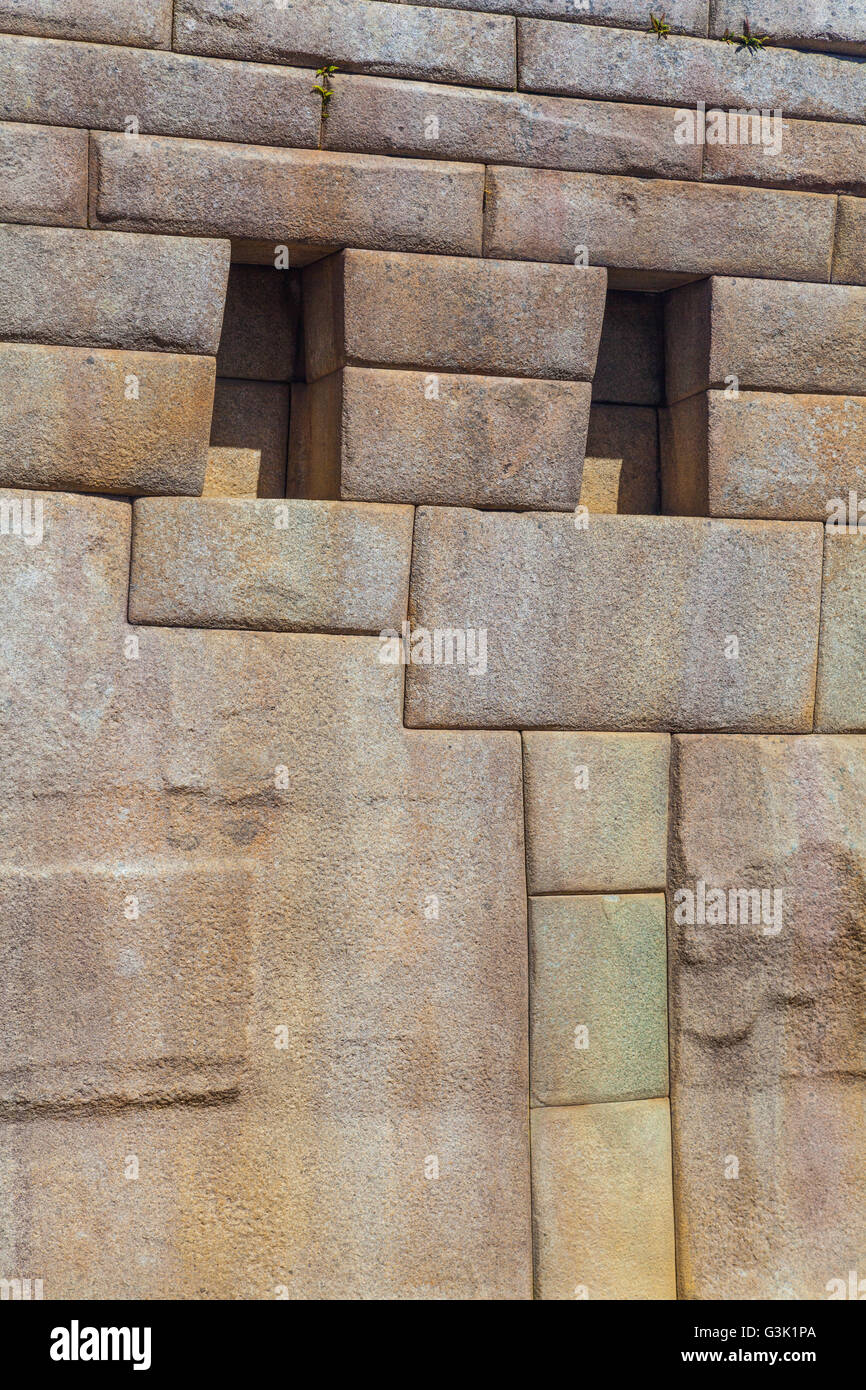
Beyond Simple Tools: Evidence of Sophisticated Engineering
When we look at structures like the Great Pyramid of Giza, the precision of its construction, the sheer scale of the stones, and their alignment with astronomical phenomena defy simple explanations. How were these massive blocks quarried, transported, and lifted into place without modern machinery? Similar questions arise from the intricate stonework of Machu Picchu or the perfectly interlocking walls of Sacsayhuamán, where massive stones fit together so precisely that a knife blade cannot be inserted between them. These feats of engineering suggest a profound understanding of physics, mechanics, and logistics that remains an unsolved puzzle.
Perhaps one of the most compelling pieces of evidence for ancient technological sophistication is the Antikythera Mechanism. Discovered in a shipwreck off the coast of Greece, this intricate device, dating back to the 2nd century BCE, is often described as the world’s first analog computer. Composed of dozens of precisely cut bronze gears, it could track celestial movements, predict eclipses, and even calculate the dates of ancient Olympic games. Its complexity wasn’t matched again until the development of mechanical clocks in the 14th century CE, hinting at a lost tradition of precision mechanics.
Then there’s the enduring mystery of Roman concrete, a material so durable that many ancient Roman structures, like the Pantheon, still stand proudly today, often outlasting modern concrete. Research suggests the Romans used a specific mix of volcanic ash, lime, and seawater, creating a material that actually grew stronger and more resistant to cracking over time, especially in marine environments. This “self-healing” property is a form of lost knowledge that modern engineers are actively trying to replicate.

Astronomical Prowess and Calendar Systems
Many ancient cultures demonstrated an astonishing grasp of astronomy, far beyond simple stargazing. The Maya, for example, developed an incredibly complex and accurate calendar system, the Long Count, which could track time over vast periods and predicted celestial events with remarkable precision. Their astronomical observatories, like those at Chichén Itzá, were meticulously aligned to solstices, equinoxes, and the cycles of Venus.
Similarly, sites like Göbekli Tepe in modern-day Turkey, dating back over 11,000 years, feature massive stone pillars carved with intricate animal reliefs and arranged in circles. Recent studies suggest these arrangements might have served as early astronomical observatories, tracking constellations and potentially even comets, long before the advent of agriculture or settled societies. This challenges our understanding of when and how complex astronomical knowledge first emerged. The precision of the Nazca Lines in Peru, massive geoglyphs etched into the desert floor, also points to a civilization with a deep understanding of geometry and perhaps a means of surveying on a grand scale, the purpose of which remains an enduring mystery.

Enigmatic Artifacts: Objects That Defy Explanation
Sometimes, the most profound ancient mysteries come in small packages – physical objects that refuse to conform to our historical timelines or current understanding. These enigmatic artifacts challenge archaeologists and historians, forcing us to reconsider the boundaries of ancient human capabilities.
The Voynich Manuscript: An Unreadable Tome
Perhaps the most famous unsolved puzzle in the world of texts, the Voynich Manuscript is a medieval codex filled with strange illustrations and written in an entirely unknown script. Discovered in 1912 by rare book dealer Wilfrid Voynich, this 240-page book has baffled cryptographers, linguists, and historians for over a century. Its pages depict bizarre plants that don’t exist in nature, astronomical diagrams, mysterious bathing women, and what appear to be pharmaceutical recipes.
Despite countless attempts, no one has ever successfully deciphered a single word, leading to theories ranging from an elaborate hoax to a lost language, an ancient code, or even extraterrestrial communication. The manuscript’s origins are debated, but carbon dating places it in the early 15th century. It remains a testament to lost knowledge, a book that holds secrets we simply cannot unlock.
Crystal Skulls: Myth or Masterpiece?
The crystal skulls are another category of enigmatic artifacts that have fueled much debate. Crafted from clear or milky quartz, these human skull-shaped carvings vary in size and quality. While some proponents claim certain skulls possess ancient origins, possibly from pre-Columbian Mesoamerican civilizations or even from Atlantis, and attribute them with mystical powers or advanced alien technology, scientific analysis tells a different story.
Many of the most famous “ancient” crystal skulls, including the British Museum’s skull and the famous Mitchell-Hedges skull, have been meticulously examined by scientists, who determined they were likely carved using rotary tools developed in the 19th century or later. While this debunked their ancient origins, the allure of these objects, their striking appearance, and the persistent myths surrounding them ensure their place in the pantheon of intriguing historical curiosities.
The Dropa Stones: A Controversial Legacy
In 1938, during an archaeological expedition in the Bayan Har Mountains of China, Professor Chi Pu Tei allegedly discovered caves containing peculiar stone discs, later dubbed the Dropa Stones. These 12,000-year-old discs, about a foot in diameter, were said to have grooves spiraling from a central hole, covered in tiny hieroglyphs that told a story of extraterrestrial beings, the “Dropa,” who crash-landed on Earth thousands of years ago.
The story of the Dropa Stones is highly controversial. While some claim to have seen and even translated the discs, others dismiss them as a hoax or a misunderstanding. There is no definitive proof of their existence outside of anecdotal accounts and photographic evidence that is often debated. Yet, the tale of the Dropa Stones persists as a captivating example of how ancient enigmas can blend history, mythology, and the tantalizing possibility of contact with the unknown.
Baghdad Battery: Ancient Power Source?
The Baghdad Battery, also known as the Parthian Battery, is an enigmatic artifact discovered near Baghdad in 1936. Dating back to the Parthian era (around 250 BCE to 224 CE), it consists of a 5.5-inch terracotta jar containing a copper cylinder, which encloses an iron rod. When filled with an electrolyte like grape juice or vinegar, this assembly could have produced a small electrical current, making it a potential galvanic cell.
While its true purpose remains an unsolved puzzle, theories range from electroplating precious metals (a technique not widely recognized for that period) to therapeutic pain relief or even ritualistic practices. If it was indeed a battery, it represents a remarkable piece of lost knowledge, hinting at an understanding of electricity far earlier than commonly believed.
Unsolved Puzzles in Stone and Land: Monumental Mysteries
Some of the most awe-inspiring ancient mysteries are etched into the landscape itself, massive structures and markings that stand as silent testaments to forgotten purposes and incredible effort. These monumental enigmas challenge us to comprehend the motivations and methods of their creators.
The Great Pyramid of Giza: Precision Beyond Belief
The Great Pyramid of Giza, the last remaining wonder of the ancient world, continues to be a source of profound mystery. Built for Pharaoh Khufu around 2580–2560 BCE, its construction involved moving millions of massive stone blocks, some weighing many tons, and placing them with an astonishing level of precision. The pyramid is almost perfectly aligned with true north, and its sides are oriented to the cardinal points with incredible accuracy.
How was such a monumental task accomplished without modern tools? Theories range from complex ramp systems and levers to more speculative ideas involving lost technologies or even extraterrestrial assistance. The purpose of the pyramid itself, beyond serving as a pharaoh’s tomb, also sparks debate, with some suggesting it had astronomical, energetic, or even prophetic functions. It remains the ultimate ancient enigma, a symbol of human ambition and an unsolved puzzle that continues to inspire.
Stonehenge: A Megalithic Calendar or Temple?
Standing on the Salisbury Plain in England, Stonehenge is one of the world’s most recognizable prehistoric monuments. Erected between 3000 and 2000 BCE, this circular arrangement of massive sarsen and bluestones has puzzled researchers for centuries. Its precise alignments with the solstices and equinoxes strongly suggest an astronomical purpose, possibly serving as a giant calendar or an observatory.
But what was its primary function? Was it a sacred temple for sun worship, a burial ground, a healing center, or a site for astronomical prediction? The logistics of transporting the bluestones from over 150 miles away and lifting the enormous sarsens into place also present a monumental challenge. Stonehenge is a powerful reminder of our ancestors’ ingenuity and their deep connection to the cosmos, an unsolved puzzle whose true meaning may forever remain just out of reach.
Nazca Lines: Messages to the Heavens?
Stretching across the arid plains of Peru, the Nazca Lines are a series of colossal geoglyphs etched into the desert floor by the ancient Nazca culture between 500 BCE and 500 CE. These intricate designs depict animals like hummingbirds, monkeys, spiders, and condors, as well as geometric shapes and straight lines, some stretching for miles. Visible only from a great height, their sheer scale and precision are astounding.
The enduring mystery of the Nazca Lines lies in their purpose. Were they astronomical observatories, part of a vast ritualistic landscape, markers for water sources, or perhaps messages intended for deities in the sky? The methods used to create such massive, accurate designs without the benefit of aerial perspective also remain a source of wonder and speculation. They are truly enigmatic artifacts etched into the very earth.
Easter Island Moai: How Were They Moved?
The remote island of Rapa Nui, better known as Easter Island, is famous for its nearly 1,000 colossal stone statues, the Moai. Carved by the Rapa Nui people between 1250 and 1500 CE, these massive heads and torsos, some weighing over 75 tons, stand guard across the island, many positioned on ceremonial platforms called ahu.
The biggest unsolved puzzle surrounding the Moai is how the ancient islanders managed to quarry, transport, and erect these monumental statues across rugged terrain using only primitive tools. Oral traditions speak of the statues “walking” to their platforms. While various theories propose the use of ropes, rollers, or even a rocking motion technique, none fully explain the scale of the undertaking by a relatively small, isolated population. The mystery of the Moai is intertwined with the tragic story of the Rapa Nui civilization’s decline, a stark reminder of lost knowledge and environmental challenges.
Lost Cities and Vanished Civilizations: Whispers of Forgotten Worlds
Beyond individual artifacts or monuments, some of the most profound ancient mysteries involve entire civilizations that vanished, leaving behind whispers of their existence and tantalizing clues to their lost knowledge.
Atlantis: The Ultimate Lost City?
No discussion of lost cities is complete without mentioning Atlantis. First described by Plato in his dialogues Timaeus and Critias around 360