
Cracking Ancient Enigmas: Exploring Mysteries and Lost Knowledge from the Past
The human story is filled with gaps, whispers of forgotten eras, and tantalizing hints of knowledge lost to the sands of time. From colossal structures that defy ancient engineering capabilities to texts written in scripts no one can decipher, ancient mysteries beckon us with profound questions. These unsolved puzzles challenge our understanding of history, ignite our imaginations, and remind us how much we still have to learn about the civilizations that came before us. This article delves into some of the most captivating enigmatic artifacts and lost knowledge from the past, inviting you to explore the secrets that continue to elude us.

The Allure of the Unexplained: Why Ancient Mysteries Captivate Us
There is something inherently thrilling about the unknown, especially when it is wrapped in the mystique of antiquity. Perhaps it is the humbling realization that ancient peoples, often perceived as primitive, achieved feats that still astound modern engineers and thinkers. Or maybe it is the romance of imagining entire civilizations, with their unique wisdom and innovations, vanishing from the historical record and leaving behind only tantalizing clues. This fascination is not just about solving a puzzle; it is about connecting with a deeper human story, one that spans millennia and hints at profound truths about our origins and potential. We crave the thrill of discovery, the possibility that a hidden chamber or an unearthed artifact could rewrite everything we thought we knew.
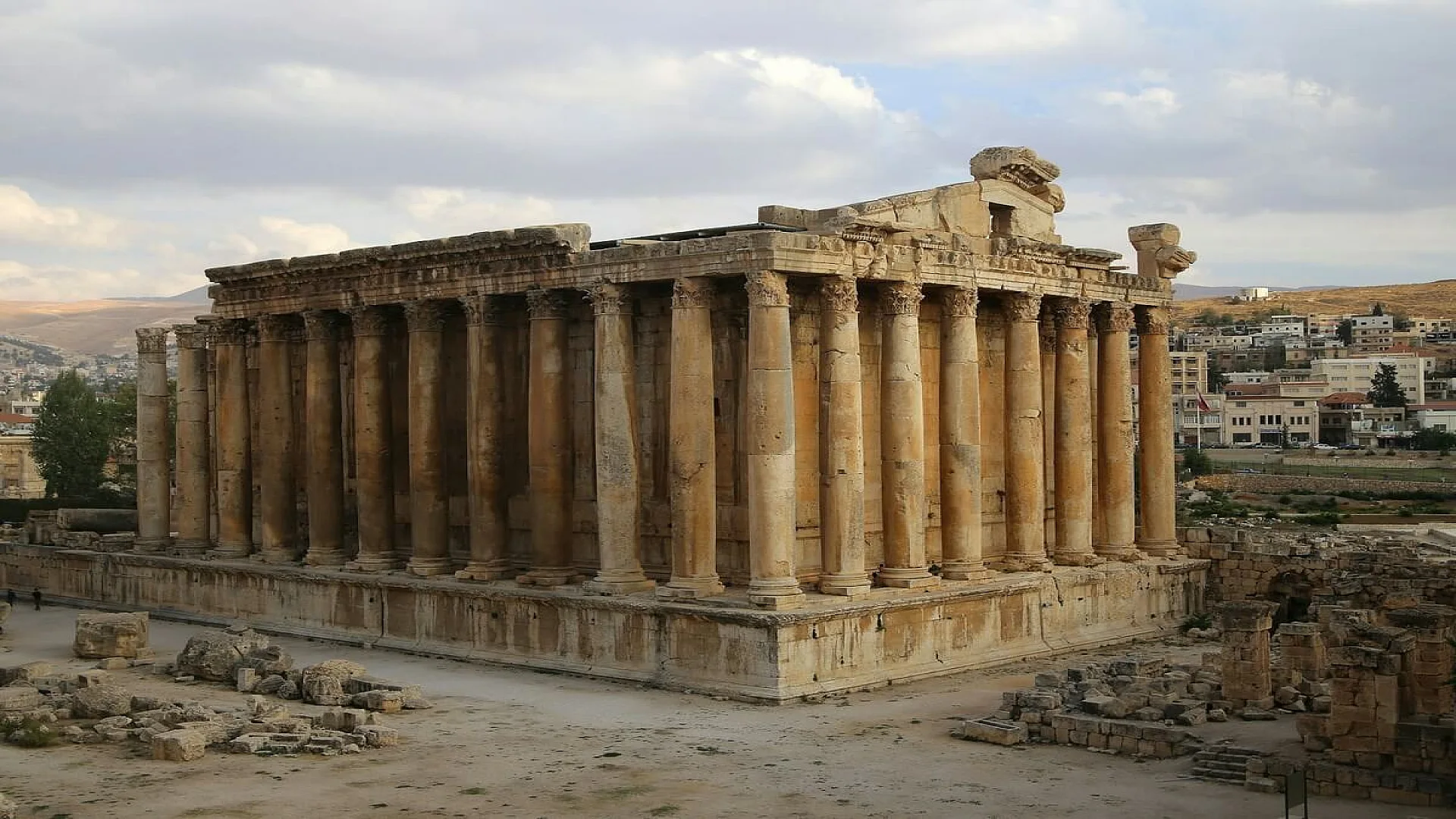
Echoes of Advanced Civilizations: Engineering Marvels Beyond Their Time
One of the most compelling aspects of ancient mysteries lies in the sheer scale and precision of structures built thousands of years ago. How did societies without modern tools manage to move colossal stones, align buildings with celestial bodies, or carve intricate patterns into the hardest materials? These questions lead us to ponder whether some form of lost knowledge or even unknown technologies were at play.

The Pyramids of Giza: Precision and Power
The Great Pyramid of Giza stands as a testament to ancient Egyptian ingenuity, a monumental achievement that continues to baffle experts. Built over 4,500 years ago, it was the tallest man-made structure for more than 3,800 years. The sheer logistics of moving millions of massive stone blocks, some weighing upward of 80 tons, into precise position remains a subject of intense debate. How were these blocks lifted to such heights? What methods allowed for such incredibly tight tolerances between stones, often leaving gaps of less than a millimeter?
Beyond the construction, the pyramids exhibit extraordinary astronomical alignment. The Great Pyramid is oriented with incredible accuracy to true north, and its internal passages align with specific stars. Was this purely for religious significance, or does it hint at a sophisticated understanding of cosmology and engineering that we are still struggling to fully grasp? The purpose of certain chambers, such as the King’s Chamber and the Queen’s Chamber, and the enigmatic shafts leading from them still spark endless theories, from burial sites to power generators.

Stonehenge: A Megalithic Calendar or Sacred Site?
In the rolling plains of Wiltshire, England, stands another colossal enigmatic artifact: Stonehenge. This prehistoric monument, built between 3000 and 2000 BC, consists of massive sarsen stones and smaller bluestones, some transported from over 150 miles away. Its purpose has been debated for centuries. Was it a temple for sun worship, a giant calendar, a burial ground, or a healing center?
What truly mystifies researchers is the precision of its astronomical alignments. On the summer solstice, the sun rises directly over the Heel Stone, casting its first rays into the heart of the monument. Similar alignments mark the winter solstice. This suggests a profound understanding of celestial mechanics by its builders, a form of lost knowledge that allowed them to predict and mark significant annual events. The effort required to quarry, transport, and erect these multi-ton stones, often using only primitive tools, speaks to an organizational and engineering prowess that remains deeply impressive.

Puma Punku: Unfathomable Stonework
High in the Bolivian Andes, near the ancient city of Tiahuanaco, lies Puma Punku, a complex of ruins featuring some of the most mind-boggling stonework ever discovered. What makes Puma Punku unique are the incredibly precise, almost machine-like cuts and interlocking designs found in its massive blocks, some weighing over 100 tons. These H-blocks and other intricately shaped stones fit together like a giant, complex puzzle without the use of mortar.
The cuts are so precise, with perfectly flat surfaces and sharp internal angles, that they appear to have been made with tools far more advanced than anything attributed to the Tiwanaku people, who flourished around 500–1000 AD. Some theories suggest the use of unknown technologies, perhaps even diamond-tipped drills or ultrasonic cutting. The exact methods used to quarry, transport, and shape these stones, along with the purpose of the site itself, remain among the most compelling unsolved puzzles of ancient South America.
Lost Knowledge: Whispers of Forgotten Wisdom
Beyond monumental structures, the past holds tantalizing hints of intellectual and scientific achievements that have been lost to us. Entire libraries, advanced medical practices, and complex technologies vanished, leaving us to wonder what else humanity once knew.
The Library of Alexandria: A Beacon Extinguished
Perhaps no loss of lost knowledge is more poignant than the destruction of the Library of Alexandria. Founded in the 3rd century BC in Egypt, it was once the greatest repository of human wisdom, housing hundreds of thousands, if not millions, of scrolls containing everything from philosophy and mathematics to medicine and astronomy. Scholars from across the ancient world flocked to its halls, conducting research, debating ideas, and making groundbreaking discoveries.
The exact circumstances of its demise are debated, with various accounts pointing to multiple fires and periods of decline over several centuries. Regardless of the specific events, the loss was catastrophic. Imagine the scientific treatises, historical records, literary masterpieces, and technological insights that were incinerated or simply vanished. The burning of Alexandria represents a void in our understanding of the ancient world, a lost knowledge that could have accelerated scientific progress by centuries.
Ancient Medicine and Healing Arts
While modern medicine has made incredible strides, ancient civilizations often possessed a sophisticated understanding of the human body and healing that we are only now beginning to appreciate. Egyptian physicians, for example, performed complex surgeries, including brain surgery, and had an extensive pharmacopoeia of herbal remedies. The Ebers Papyrus, dating back to 1550 BC, details hundreds of remedies for various ailments.
Similarly, traditional Chinese medicine, Ayurveda from India, and Mayan healing practices utilized intricate knowledge of plants, acupuncture points, and holistic approaches to health. Some ancient surgical tools discovered are surprisingly delicate and precise. While not all ancient medical practices were effective, the sheer depth of observation and experimentation suggests a level of lost knowledge in pharmacology, anatomy, and surgical techniques that often gets overlooked in narratives of ancient primitivism.
The Antikythera Mechanism: A Celestial Calculator
Discovered in a shipwreck off the coast of the Greek island of Antikythera in 1901, this enigmatic artifact is often called the world’s first analog computer. Dating back to the 2nd century BC, the Antikythera Mechanism is an intricate device made of bronze gears and dials, designed to predict astronomical positions and eclipses for decades in advance. It could track the movements of the sun, moon, and visible planets, and even predict Olympic Games cycles.
The complexity of its gearing system, with differential gears and an astonishing level of precision, far surpasses anything known to have existed for another thousand years. Its discovery revolutionized our understanding of ancient Greek technology and scientific capability, proving that they possessed a level of mechanical engineering sophistication previously attributed to the Renaissance or later. The Antikythera Mechanism is a powerful reminder of lost knowledge and the potential for ancient civilizations to have achieved technological marvels we are only just beginning to uncover.
Enigmatic Artifacts: Objects That Defy Explanation
Sometimes, history leaves us with physical objects that simply do not fit into our established timelines or understandings. These enigmatic artifacts spark endless speculation, challenging conventional narratives and opening doors to alternative theories.
The Voynich Manuscript: An Unreadable Tome
Among the most famous unsolved puzzles is the Voynich Manuscript, a medieval codex filled with beautiful illustrations of unknown plants, astronomical diagrams, and bizarre human figures, all accompanied by a script that no one has ever been able to decipher. Discovered in 1912 by antiquarian Wilfrid Voynich, the manuscript dates back to the early 15th century.
Despite extensive efforts by cryptographers, linguists, and computer scientists, the Voynich Manuscript remains stubbornly unreadable. Is it a lost language, a sophisticated cipher, an elaborate hoax, or perhaps a coded message from a secret society? Its contents hint at forgotten botanical knowledge, alchemical secrets, or even extraterrestrial contact, making it one of the most intriguing enigmatic artifacts in the world. The mystery surrounding its purpose and meaning continues to fuel research and fascination.
The Baghdad Battery: An Ancient Power Source?
Unearthed near Baghdad in 1936, the Baghdad Battery consists of a clay jar containing a copper cylinder, an iron rod, and traces of an acidic agent. Dating back to the Parthian era, around 250 BC to AD 224, its resemblance to a galvanic cell capable of producing a small electric current has led to intense debate. Was this an ancient battery?
If so, what was its purpose? Theories range from electroplating precious metals and providing mild pain relief to being used in religious rituals to generate a shock effect. While some argue it was simply a storage vessel, the striking similarity to modern battery components suggests a potential lost knowledge of electricity thousands of years before its discovery in the modern era. This enigmatic artifact forces us to reconsider the technological capabilities of ancient civilizations.
The Nazca Lines: Geoglyphs from the Gods?
Stretching across the arid plains of Peru, the Nazca Lines are massive geoglyphs etched into the desert floor by the ancient Nazca culture between 500 BC and 500 AD. These incredible drawings depict animals such as hummingbirds, monkeys, and spiders, as well as geometric shapes and straight lines, some extending for miles. What makes them so mysterious is their sheer scale and the fact that they can only be fully appreciated from an aerial perspective.
How did the Nazca people, without the ability to fly, design and execute such enormous and precise drawings? Theories range from astronomical calendars and ritual pathways to landing strips for extraterrestrial visitors. The purpose of these enigmatic artifacts remains an unsolved puzzle, prompting questions about the Nazca’s spiritual beliefs, their understanding of geometry, and their methods for achieving such monumental works of art without a bird’s-eye view.
Unsolved Puzzles: Challenging Our Understanding of History
Beyond specific objects or structures, entire historical narratives remain incomplete, leaving us with fundamental questions about how and why certain events unfolded.
The Disappearance of the Maya Civilization
The Classic Maya civilization, which flourished in Mesoamerica from around 250 to 900 AD, developed a sophisticated writing system, advanced mathematics, intricate calendars, and stunning architecture. Yet, around the 9th century, many of their great cities in the southern lowlands were mysteriously abandoned, their complex society seemingly collapsing.
What caused this dramatic decline? Theories abound, including prolonged drought and climate change, endemic warfare between city-states, overpopulation leading to resource depletion, or disease. It is likely that a combination of these factors played a role, but the precise sequence of events and the full reasons behind such a widespread