
Challenging History: Unearthing Provocative and Controversial Archaeological Finds
Imagine a world where everything you thought you knew about human history was wrong. A world where ancient civilizations possessed technologies we can barely comprehend, where giants roamed the earth, or where our origins are far more mysterious than textbooks suggest. This isn’t just the stuff of science fiction; it’s the tantalizing promise of what some call “forbidden archaeology”—a realm of controversial discoveries that challenge the very foundations of accepted historical narratives. While mainstream archaeology often dismisses these finds as anomalies, misinterpretations, or even hoaxes, a passionate community of history buffs and conspiracy theory enthusiasts finds them utterly compelling, believing they represent a suppressed history waiting to be unearthed.
Archaeological finds become controversial when they directly conflict with established scientific consensus, whether concerning the timeline of human civilization, the capabilities of ancient cultures, or the very origins of our species. These discoveries often spark heated debates between conventional scholars, who demand rigorous evidence and peer review, and alternative theorists, who see institutional skepticism as a deliberate attempt to maintain a comfortable, albeit incomplete, version of the past. The allure lies in the potential for these artifacts to rewrite our understanding of antiquity, pushing the boundaries of what we believe was possible millennia ago.

What Makes an Archaeological Find So “Controversial”?
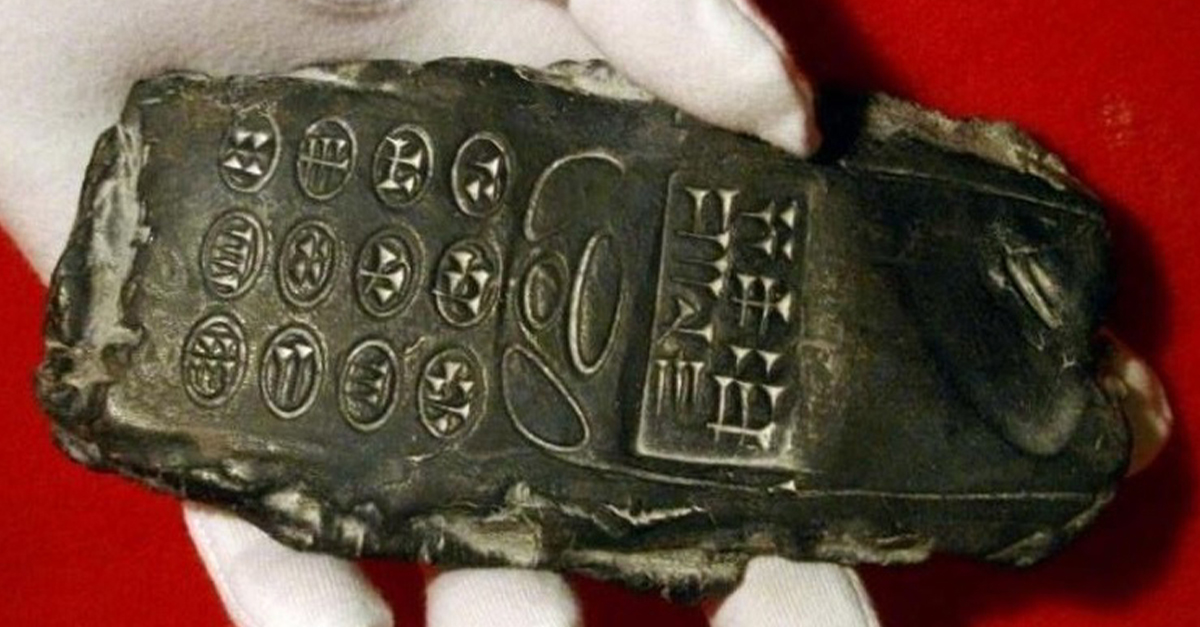
At its heart, archaeology is about piecing together the human story from fragments left behind. But what happens when those fragments don’t fit the established narrative? A find becomes controversial when it presents an “out-of-place artifact” (OOPArt)—an object that, based on its complexity, material, or location, seems to defy the known technological and cultural capabilities of the period it was found in.
These discoveries often force us to ask uncomfortable questions: Did ancient people possess advanced knowledge we’ve forgotten? Were there lost civilizations far more sophisticated than we imagine? Or are we simply misinterpreting the evidence through a modern lens? Mainstream archaeology operates on a foundation of rigorous methodology, peer review, and the principle of parsimony (the simplest explanation is usually the best). This often puts it at odds with more speculative interpretations that embrace radical alternatives, leading to accusations of debunked theories being perpetuated, or conversely, valid challenges being ignored.
The Puzzle of Out-of-Place Artifacts (OOPArt)
The term “OOPArt” perfectly captures the essence of these perplexing objects. They are items that seem to have fallen through a crack in time, appearing long before they should have existed.

The Antikythera Mechanism: A Glimpse into Ancient Ingenuity
One of the most famous and widely accepted OOPArts is the Antikythera Mechanism. Discovered in a Roman shipwreck off the coast of Greece in 1901, this intricate device, dating back to around 100–200 BCE, initially puzzled researchers. It looks like a complex clockwork mechanism, complete with dozens of meshing bronze gears.
After decades of study, scientists realized it was an astonishingly sophisticated astronomical calculator. It could predict eclipses, track the movements of the moon and planets, and even indicate the dates of the Olympic Games. Its complexity was unparalleled for its time, resembling clockwork technology not seen again until the 14th century CE. While now fully accepted by mainstream archaeology, its initial discovery was certainly controversial, as it shattered preconceived notions about the technological capabilities of the ancient Greeks. It stands as a testament to the fact that ancient peoples were often far more advanced than we give them credit for.

The Baghdad Battery: An Ancient Power Source?
Found near Baghdad in 1936, the Baghdad Battery consists of a roughly 5-inch clay jar containing a copper cylinder, which encloses an iron rod. When discovered, it was dated to the Parthian era (around 250 BCE to 224 CE). The prevailing theory among some researchers, most notably German archaeologist Wilhelm König, was that these artifacts were ancient electrical cells. If filled with an electrolyte like grape juice or vinegar, they could have produced a small electric current.
While the “battery” theory is captivating, many mainstream archaeologists remain skeptical. They point out that no ancient texts describe the use of electricity, nor have any electrical appliances been found. Alternative theories suggest the jars were used for storing scrolls, as ritualistic objects, or perhaps for electroplating small items with precious metals—a technique that some argue was known in Mesopotamia. The lack of definitive evidence for their electrical use keeps the Baghdad Battery firmly in the realm of intriguing possibility rather than established fact, making it a classic controversial discovery.

The Klerksdorp Spheres: Natural Formations or Machined Objects?
Deep within the pyrophyllite mines of Klerksdorp, South Africa, miners have unearthed thousands of small, metallic spheres, some etched with parallel grooves. These Klerksdorp Spheres are often presented as evidence of ancient, intelligent beings or advanced technology. Dating back approximately 2.8 billion years, their perfect spherical shape and distinct grooves seem, to some, too precise to be natural.
However, geologists largely classify them as concretions—natural geological formations. Concretions are masses of mineral matter that form within sedimentary rock, often acquiring spherical shapes as they grow around a central nucleus. The grooves, they argue, are likely the result of layers of the original material or subsequent geological processes. Despite scientific explanations, the almost uncanny regularity of some of these spheres continues to fuel speculation among those who see them as undeniable proof of forbidden archaeology.
Giants, Lost Civilizations, and Anomalous Skeletons
Beyond individual artifacts, some archaeological claims challenge our understanding of human evolution, the timeline of civilization, and even the very existence of mythical beings.
Giant Skeletons and the Smithsonian Myth
Tales of ancient giants populate the folklore of cultures worldwide. In the United States, these legends often intersect with claims of massive skeletons being unearthed, only to be allegedly confiscated and suppressed history by institutions like the Smithsonian. Stories abound of giant human remains, sometimes 7 to 12 feet tall, found in mounds across North America in the 19th and early 20th centuries.
The truth is, while some exceptionally large human remains have been found (often due to genetic conditions like gigantism or simply robust individuals), the vast majority of “giant skeleton” claims are either exaggerations, misidentifications of animal bones, or outright hoaxes. The “Smithsonian conspiracy” often stems from a general distrust of mainstream science combined with a longing for a more epic past. While the Smithsonian does collect and curate archaeological finds, there’s no credible evidence they have ever actively suppressed a trove of giant human remains. These stories, however, persist, becoming a potent symbol for those who believe official narratives are hiding inconvenient truths.
Göbekli Tepe: Rewriting the Dawn of Civilization
Not all “challenging history” comes from the fringes. Sometimes, mainstream archaeology itself unearths discoveries so profound they force a complete re-evaluation of our past. Göbekli Tepe, located in southeastern Turkey, is one such site. Dated to around 9600 BCE, it predates Stonehenge by some 6,000 years and the invention of pottery, metallurgy, and even agriculture.
This monumental complex consists of massive carved stone pillars, some weighing up to 20 tons, arranged in circular enclosures. The intricate animal carvings on these pillars demonstrate sophisticated artistic and engineering skills. What makes Göbekli Tepe so revolutionary is that it was built by hunter-gatherers. Conventional archaeological theory held that complex social structures, monumental architecture, and organized religion only emerged after the development of agriculture, which allowed for settled communities and surplus food. Göbekli Tepe turns this assumption on its head, suggesting that complex ritual sites might have preceded agriculture, perhaps even inspiring its development as a means to feed the large groups needed for construction. This site isn’t “forbidden”; it’s a testament to how actual controversial discoveries can fundamentally reshape our understanding of human origins.
Yonaguni Monument: Natural Formation or Submerged City?
Off the coast of Yonaguni Island in Japan lies a colossal underwater rock formation that has fueled intense debate. Discovered in 1986, the Yonaguni Monument features flat terraces, right angles, straight edges, and what appear to be carved steps, leading some to believe it is the remains of an ancient, submerged city, possibly dating back over 10,000 years.
Proponents of its artificiality point to its seemingly deliberate design, arguing that natural geological processes alone couldn’t create such precise, geometric forms. They often cite the presence of what look like roads, stairs, and even carvings. However, most geologists and marine archaeologists contend that the formation is entirely natural. They explain that the specific type of sandstone in the region, combined with tectonic activity and erosion from currents, can create remarkably regular and angular features. They also note the absence of any tools, pottery, or other artifacts typically found at archaeological sites. This ongoing debate perfectly encapsulates the tension between those who see patterns of intelligence and those who attribute them to nature, making it a truly controversial discovery.
Suppressed History and the “Forbidden Archaeology” Narrative
The idea of suppressed history is a powerful one, often suggesting a deliberate cover-up by an establishment unwilling to accept paradigm-shifting truths. This narrative is especially prevalent among those who champion forbidden archaeology.
The Role of Mainstream Academia: Gatekeepers or Guardians?
Why might mainstream academia seem resistant to these radical new theories? It’s not necessarily a conspiracy, but rather a commitment to the scientific method. Archaeology, like any science, relies on rigorous evidence, peer review, and verifiable data.