
History isn’t always a neat, linear story. Sometimes, an artifact surfaces from the dust of ages that doesn’t just fill a gap in our knowledge – it blows a hole through our entire understanding of the past. These are the finds that ignite fierce debates, challenge established timelines, and sometimes even lead to accusations of “forbidden archaeology” or “suppressed history.” For history buffs and those who love to ponder what lies beyond the official narrative, these controversial discoveries offer a thrilling glimpse into a past far stranger and more complex than we’ve been taught.
Archaeological finds become truly “controversial” when they present anomalies that clash with prevailing historical or scientific paradigms. This could be an “out-of-place artifact” (OOPArt) that seems technologically impossible for its era, evidence suggesting advanced civilizations existed far earlier than currently accepted, or structures that defy conventional explanation. Such discoveries force us to question everything we thought we knew, often leading to impassioned arguments between mainstream academics and those who champion alternative interpretations, sometimes even hinting at “debunked theories” that refuse to die.
What Makes an Archaeological Find So Divisive?
The very nature of archaeology is about piecing together the past from fragments. When those fragments don’t fit the existing puzzle, it creates tension. A find can be controversial for several reasons:
- Anachronism: The artifact appears far too advanced for its supposed time period, suggesting a lost technology or an earlier, more sophisticated civilization.
- Challenging Established Timelines: Evidence that pushes back the dates for key human achievements, like the development of agriculture, monumental architecture, or complex social structures, by thousands of years.
- Unusual Interpretations: When the purpose or origin of a site or object is highly ambiguous, leading to wildly different theories, some of which venture into speculative or even fantastical realms.
- Lack of Consensus: When experts cannot agree on the authenticity, dating, or meaning of a discovery, leaving room for alternative explanations to flourish.
- “Suppression” Narratives: The idea, often fueled by conspiracy theories, that mainstream archaeology or powerful institutions are deliberately ignoring, discrediting, or hiding certain finds that would rewrite history.
- Primary Sources: Always seek out original archaeological reports, scientific papers, and direct evidence rather than relying solely on secondary interpretations or sensationalized accounts.
- Scientific Methodology: Understand how archaeologists and scientists date artifacts, analyze materials, and interpret sites. Look for peer-reviewed studies and consensus among experts. [Internal Link: Understanding archaeological methods]
- Falsifiability: Can the claim be tested? What evidence would prove it wrong? Pseudoscience often presents claims that are untestable or unfalsifiable.
- Burden of Proof: Extraordinary claims require extraordinary evidence. The responsibility to prove a radical new theory rests with its proponents.
- Confirmation Bias: Be aware of the human tendency to seek out and interpret information in a way that confirms existing beliefs.
Let’s dive into some of the most provocative and fiercely debated archaeological finds that continue to spark controversy and fuel the imagination.

The Antikythera Mechanism: A Glimpse into Ancient Computing
Imagine pulling a corroded bronze device from a shipwreck, only to discover it’s an incredibly complex astronomical calculator, capable of predicting eclipses and planetary movements with astonishing accuracy. That’s exactly what happened in 1901 when sponge divers found the Antikythera Mechanism off the coast of a Greek island. Dated to around 150-100 BCE, this intricate device with dozens of meshing gears is often called the world’s first analog computer.
What makes it so controversial? Its sheer sophistication. Nothing remotely comparable was known to exist for another thousand years. This single artifact forces us to completely re-evaluate the technological capabilities of the ancient Greeks, suggesting a level of engineering and astronomical knowledge far beyond what was previously assumed. Was it a unique invention, or just the lone survivor of a more technologically advanced period whose other creations have been lost to time? The debate continues to fascinate.
The Piri Reis Map: Antarctica Before It Was “Discovered”?
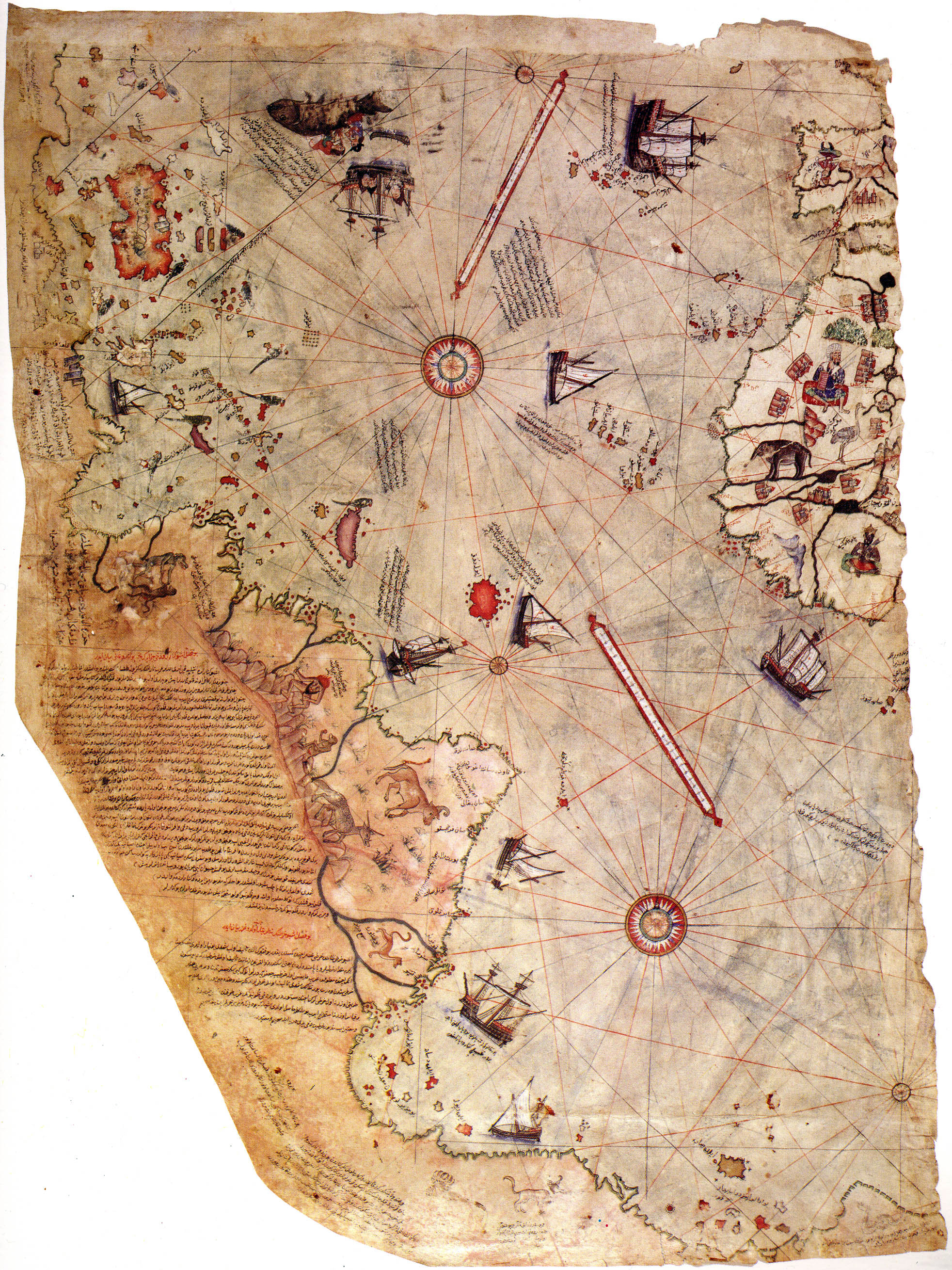
In 1929, a map surfaced in the Topkapi Palace library in Istanbul, drawn by the Ottoman admiral Piri Reis in 1513. While many of its features depict the known world of the early 16th century, one section has sparked endless fascination and debate: what appears to be a detailed coastline of Antarctica, free of ice. The problem? Antarctica wasn’t officially sighted until 1820, and its coastline wasn’t fully mapped until the mid-20th century, using modern seismic equipment.
How could a 16th-century mapmaker have such accurate knowledge of a continent supposedly unknown and covered in ice? Proponents of “forbidden archaeology” suggest that Piri Reis must have copied from much older source maps, perhaps from a lost civilization with advanced navigation and cartography skills. Critics argue that the depicted landmass is simply a misinterpretation of South America’s coast, or a speculative land bridge, and that the “ice-free” aspect is a misreading. Yet, the uncanny resemblance to Antarctica’s real sub-ice topography keeps the mystery alive, prompting questions about ancient explorers and their lost knowledge.
Göbekli Tepe: Rewriting the Dawn of Civilization
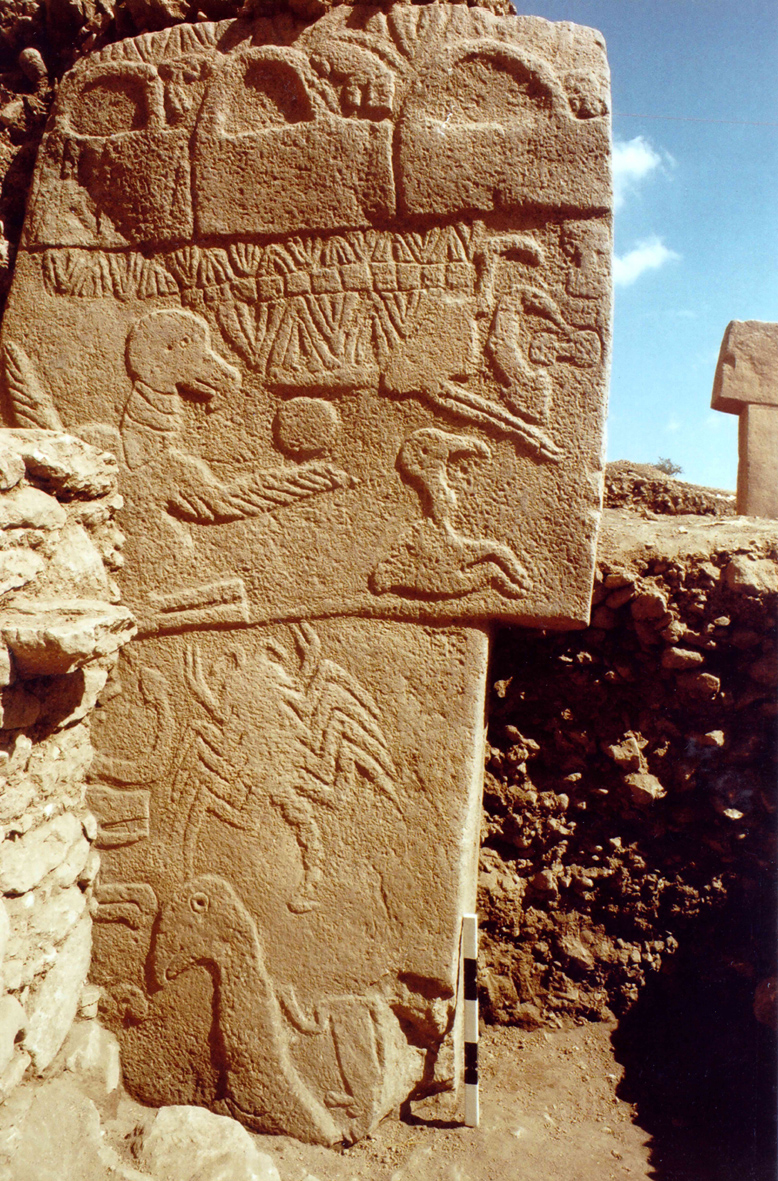
If you want a truly game-changing discovery that has forced mainstream archaeology to reconsider fundamental assumptions, look no further than Göbekli Tepe in southeastern Turkey. Discovered in the mid-1990s and dated to roughly 9600–8200 BCE, this site features massive, intricately carved stone pillars arranged in circular enclosures. Its construction predates Stonehenge by around 6,000 years and the invention of pottery, writing, and even the widespread adoption of agriculture.
The controversy here isn’t about “suppression,” but rather a dramatic shift in understanding. For decades, it was believed that complex monumental architecture and organized religion only arose after the development of settled agricultural societies. Göbekli Tepe flips this on its head, suggesting that monumental religious sites might have preceded and even driven the shift from hunter-gatherer lifestyles to settled communities. It challenges the very definition of “civilization” and pushes back its origins by thousands of years, painting a picture of sophisticated prehistoric cultures we’re only just beginning to comprehend. [Internal Link: Explore the mysteries of ancient civilizations]

The Dendera Light: Ancient Egyptian Technology?
Deep within the Hathor Temple at Dendera, Egypt, carvings adorn a crypt wall that, to some, depict something astonishingly anachronistic: ancient light bulbs. These reliefs show figures holding large, elongated objects resembling Crookes tubes or light bulbs, complete with filaments and what looks like a power cable running to a generator-like device.
Mainstream Egyptologists interpret these carvings as symbolic representations of Egyptian mythology, specifically the Djed pillar (a symbol of stability) and a lotus flower, from which a snake emerges representing creation. However, alternative theorists argue that the depictions are literal instructions or records of an advanced electrical lighting system used by the ancient Egyptians, allowing them to illuminate their tombs and temples without the soot of torches. While there’s no physical evidence of such technology, the visual similarity to modern electrical components keeps this “controversial discovery” alive in the minds of those who believe in a more technologically advanced ancient past.
The Baghdad Battery: A Spark of Ancient Power?
In 1938, Wilhelm König, a German archaeologist, discovered a clay jar in Iraq, dating to the Parthian era (around 250 BCE to 224 CE). Inside, it contained a copper cylinder and an iron rod, all sealed with bitumen. König proposed that this artifact, now famously known as the Baghdad Battery, was an ancient galvanic cell – essentially, a battery capable of producing an electric current.
If true, this would be an incredible example of “forbidden archaeology,” demonstrating knowledge of electricity centuries before its conventional discovery. While experiments have shown that a replica can indeed generate a small voltage with an acidic electrolyte like grape juice, mainstream archaeologists generally remain skeptical. They suggest it might have been used for electroplating (though no electroplated artifacts from the era have been found) or simply for storing sacred scrolls. The debate boils down to intent: was it a battery, or just a coincidence of materials? The lack of clear evidence for its use as a power source means it remains a fascinating “what if” rather than a definitive historical paradigm shift.
The Acámbaro Figures: Dinosaurs and Humans Together?
Few finds have been as thoroughly “debunked” by mainstream science yet remain so popular in alternative history circles as the Acámbaro Figures. In 1944, a German merchant named Waldemar Julsrud claimed to have discovered thousands of clay figurines in Acámbaro, Mexico, depicting an astonishing array of animals – including numerous dinosaurs – alongside humans. The figures were found in a context suggesting an ancient origin, and some were even said to be found in situ.
The controversy stems from the implication: if authentic, these figures would prove that humans coexisted with dinosaurs, directly challenging evolutionary theory and the established timeline of life on Earth. However, scientific investigations, including thermoluminescence dating, largely point to a modern origin, likely a hoax or elaborate fraud perpetuated by locals. The figures’ stylistic inconsistencies, lack of weathering, and the sheer improbability of their subject matter have led archaeologists to dismiss them. Yet, for those who believe in “suppressed history” or alternative interpretations of origins, the Acámbaro Figures remain a compelling, if unverified, piece of evidence.
The Dropa Stones: Alien Contact in Ancient China?
The narrative surrounding the Dropa Stones is a classic tale of “forbidden archaeology” entwined with claims of extraterrestrial contact. In 1938, during an expedition in the remote Baian-Kara-Ula mountains on the China-Tibet border, archaeologists allegedly discovered caves containing skeletons with unusually large heads and small bodies, alongside hundreds of stone discs with intricate grooves and hieroglyphic-like markings. These “Dropa Stones” were said to tell the story of an alien race, the Dropa, who crash-landed on Earth 12,000 years ago.
This story, popularized in the West in the 1960s, suggests suppressed knowledge of ancient alien visitation. However, despite the captivating narrative, there is virtually no credible evidence to support the existence of the Dropa Stones or the expedition itself. No Chinese archaeological reports confirm the discovery, the alleged decipherments are unverified, and the supposed photographs of the stones are dubious. While widely considered a hoax or urban legend, the Dropa Stones continue to be a cornerstone for “ancient astronaut” theories and those who seek evidence of extraterrestrial influence on human history.
The Bosnian Pyramids: A Modern Claim to Ancient Structures
In 2005, Semir Osmanagić, a Bosnian-American businessman, claimed to have discovered several ancient pyramids in Visoko, Bosnia-Herzegovina, including a massive structure he dubbed the “Pyramid of the Sun,” which he asserted was larger and older than the Great Pyramid of Giza. He proposed that these were part of an ancient, technologically advanced civilization that existed thousands of years ago.
This claim immediately sparked immense controversy. While Osmanagić garnered significant local support and media attention, the scientific community, including geologists and archaeologists from around the world, overwhelmingly dismissed his claims. Extensive geological surveys identified the “pyramids” as natural geological formations known as flatirons, composed of stratified layers of sandstone, clay, and conglomerates. The alleged “paved terraces” and “ancient tunnels” were also explained as natural phenomena. Despite the scientific consensus categorizing these as “debunked theories,” Osmanagić continues his work, attracting volunteers and promoting the site as an ancient wonder, highlighting the enduring appeal of extraordinary claims, even in the face of strong scientific counter-evidence.
Why Do These Finds Ignite Such Debate?
The human fascination with these controversial discoveries stems from several deep-seated desires. There’s the innate curiosity about our origins and the possibility of a grander, more mysterious past. The idea of “suppressed history” or “forbidden archaeology” appeals to a sense of intellectual rebellion against perceived dogmatic institutions, offering a narrative where the common person can uncover truths hidden by the elite.
These anomalies also tap into a universal yearning for the unknown and the extraordinary. They suggest that perhaps our current understanding of reality is incomplete, that ancient civilizations possessed knowledge we’ve lost, or that even extraterrestrial influences played a role in our development. It’s a thrilling thought that challenges the mundane and opens up endless possibilities.
Navigating the Evidence: Critical Thinking in Challenging History
For enthusiasts of history and the unconventional, it’s crucial to approach these “controversial discoveries” with a blend of open-mindedness and critical thinking. While it’s exciting to imagine a hidden past, responsible exploration requires evaluating evidence rigorously.
Mainstream archaeology, while sometimes perceived as rigid, is fundamentally about building a coherent picture of the past based on verifiable evidence. While paradigm shifts do occur (as with Göbekli Tepe), they are typically driven by robust data and rigorous analysis, not speculative interpretations. The scientific process is designed to be self-correcting, constantly re-evaluating and refining our understanding as new evidence emerges.
The Allure of “Suppressed History”
The narrative of “suppressed history” often suggests that powerful academic institutions, governments, or even secret societies are actively hiding archaeological finds that would overturn established history. This idea resonates with those who distrust authority and believe in grand conspiracies. While it’s true that archaeological interpretations evolve and sometimes clash, and funding biases can exist, the notion of a widespread, deliberate cover-up of world-changing artifacts is largely unsubstantiated. The vast majority of archaeologists are driven by a genuine desire to understand the past, not to conceal it.
Ultimately, the allure of “forbidden archaeology” lies in its promise of a more exciting, mysterious, and perhaps even spiritually significant past. These controversial finds, whether ultimately accepted or debunked, serve as powerful reminders that our understanding of history is always evolving, always open to new discoveries, and always ripe for passionate debate.
The past is not a settled book; it’s an ongoing excavation. Every new shovel of dirt, every re-examination of an old artifact, has the potential to challenge what we thought we knew. These “controversial discoveries” keep us on our toes, reminding us that the grand narrative of human history might have many more chapters yet to be written.
What do you think about these challenging finds? Do they hint at lost civilizations and forgotten knowledge, or are they simply misinterpretations and hoaxes? Join the debate in our community forum and share your insights!