
Cracking Ancient Enigmas: Unearthing Lost Knowledge and Unsolved Puzzles from Humanity’s Past
Have you ever gazed at an ancient ruin or pondered a cryptic artifact and felt a shiver of wonder? The past isn’t just a collection of dates and events; it’s a vast, unexplored landscape dotted with ancient mysteries, whispers of lost knowledge, and a trove of enigmatic artifacts that continue to baffle modern minds. From the precision engineering of forgotten empires to symbols that defy decipherment, humanity’s history is brimming with unsolved puzzles that challenge everything we think we know.
For mystery enthusiasts and history lovers alike, the allure of these historical enigmas is undeniable. They invite us to question, to speculate, and to imagine civilizations perhaps far more advanced or profoundly different than our current understanding suggests. This article will take you on a captivating journey through some of the most compelling ancient mysteries, exploring the evidence, the theories, and the enduring questions that keep us searching for answers. Prepare to delve into the depths of history where the line between myth and reality blurs, and the echoes of a forgotten past beckon us to unravel their secrets.

The Allure of Ancient Mysteries: Why We’re Still Fascinated by the Unknown
What is it about a 2,000-year-old mechanism or a sprawling geoglyph etched into a desert that captures our collective imagination? The fascination with ancient mysteries stems from a fundamental human curiosity: the desire to understand our origins and our place in the vast timeline of existence. These unsolved puzzles aren’t just historical footnotes; they are potent reminders that our understanding of the past is far from complete. They hint at forgotten technologies, sophisticated cultures, and perhaps even forms of knowledge that have been tragically lost to time.
Every discovery of an enigmatic artifact or a puzzling archaeological site opens a new window into the minds and capabilities of our ancestors. It challenges established historical narratives, pushing us to reconsider what was truly possible in the ancient world. The very act of confronting these riddles allows us to connect with the ingenuity, belief systems, and challenges of people who lived millennia ago, fostering a profound sense of wonder and a persistent drive to crack the code of history itself.

Enigmatic Artifacts: Objects That Defy Explanation
Sometimes, a single object can encapsulate an entire ancient mystery, its very existence a testament to lost knowledge or an unsolved puzzle. These enigmatic artifacts are tangible links to a past we can barely comprehend, compelling us to ask: how was this made, and why don’t we see more like it?

The Antikythera Mechanism: An Astounding Ancient Computer
Discovered in a shipwreck off the coast of the Greek island of Antikythera in 1901, this corroded bronze device is perhaps the most complex piece of ancient engineering ever found. Dating back to around 200-100 BCE, the Antikythera Mechanism is an intricate system of meshing gears, dials, and pointers. Its purpose? To predict astronomical positions and eclipses decades in advance, track the cycles of the Olympic Games, and even model the irregular motion of the Moon.
What makes it so enigmatic is its extraordinary sophistication. This device is often referred to as the world’s first analog computer, a level of mechanical complexity not seen again until the clock-making traditions of the 14th century. The sheer precision and knowledge of metallurgy, mathematics, and astronomy required to build such a device are staggering for its era. How did this advanced technology come to be, and why does no other similar device from antiquity survive? Was it a singular masterpiece, or a hint at a widespread lost knowledge of complex mechanics that simply didn’t endure?
Suggested External Link: Learn more about the Antikythera Mechanism’s incredible functions and ongoing research at the official Antikythera Mechanism Research Project website.

The Baghdad Battery: A Glimpse of Early Electricity?
In 1938, during excavations near Baghdad, a peculiar object was unearthed: a 13-centimeter-tall clay jar containing a copper cylinder, which encased an iron rod. When filled with an acidic liquid like grape juice or vinegar, this assembly could generate a small electrical current. Dubbed the “Baghdad Battery,” or sometimes the “Parthian Battery,” its discovery sparked intense debate.
Could this be proof that ancient civilizations possessed knowledge of electricity, long before Alessandro Volta’s 1800 invention? While some archaeologists argue it was merely a container for scrolls or used for electroplating jewelry, others believe it was indeed a voltaic pile. If the Baghdad Battery was a functional electrical device, it represents a remarkable instance of forgotten technology, an ancient innovation whose potential was either never fully realized or whose secrets were ultimately lost. The lack of documentation or widespread evidence of its use remains one of the most intriguing unsolved puzzles in archaeology.
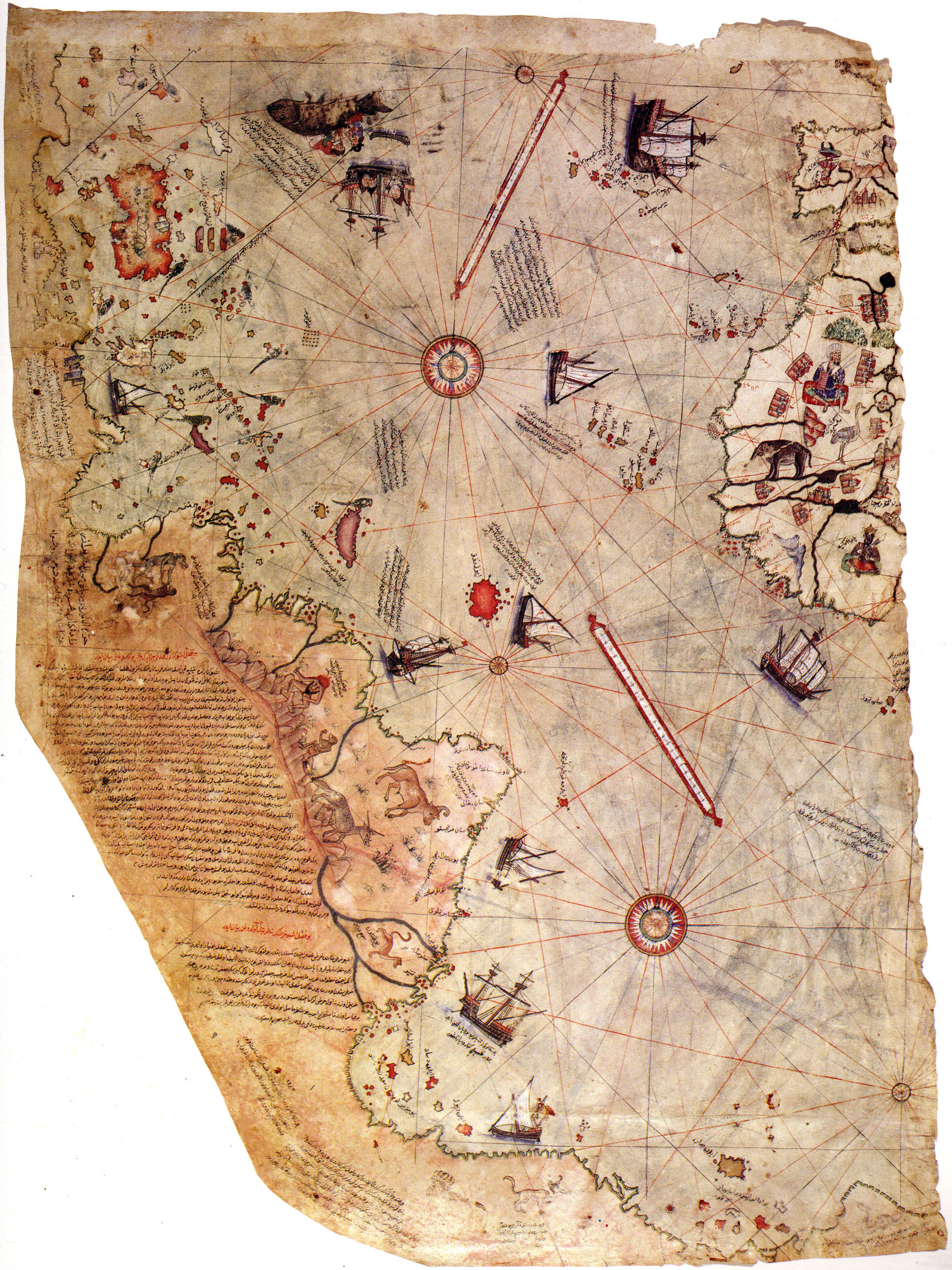
The Piri Reis Map: A Cartographic Anomaly
Dated to 1513, the Piri Reis Map is a fascinating document compiled by the Ottoman admiral and cartographer Piri Reis. While a remarkable piece of early cartography in its own right, its most enigmatic feature is its depiction of Antarctica. The map shows a portion of the coastline of Antarctica with surprising accuracy, even suggesting it was ice-free.
The puzzle here is profound: Antarctica was not officially “discovered” until 1820, and its coastline wasn’t comprehensively mapped until the 20th century, often with the aid of advanced sonar and seismic techniques. How could a 16th-century mapmaker possess such detailed geographical knowledge, especially of a continent supposedly covered in ice for thousands of years? Theories range from the map being based on earlier, now lost knowledge from ancient civilizations, to the possibility of a different, warmer climate period in history. The Piri Reis Map continues to challenge our understanding of ancient navigation and cartography, leaving us with a significant unsolved puzzle about its true origins.
Lost Knowledge and Forgotten Technologies: Echoes of Advanced Civilizations
Beyond individual artifacts, entire civilizations sometimes leave behind structures and practices that point to a level of sophistication we struggle to replicate even today. These are the grand statements of lost knowledge, monumental ancient mysteries carved into the very landscape.
Egyptian Pyramids: Engineering Marvels and Unanswered Questions
The pyramids of Giza stand as timeless symbols of ancient Egypt’s power and ingenuity. Built over 4,500 years ago, these colossal structures, particularly the Great Pyramid of Khufu, are engineering marvels. Composed of millions of precisely cut and fitted stone blocks, some weighing many tons, they showcase an almost unbelievable level of accuracy in alignment with cardinal directions.
The perennial unsolved puzzle is: how were they built? Ancient texts offer some clues, but none fully explain the logistics of moving and raising such immense stones with the tools available at the time. Theories abound, from elaborate ramp systems and complex lever mechanisms to more speculative ideas involving water channels, sound levitation, or even assistance from extraterrestrial beings. The techniques used by the ancient Egyptians to achieve such monumental feats remain a significant piece of lost knowledge, a testament to an ancient engineering prowess that still confounds us.
Suggested Internal Link: Explore more about the engineering feats of ancient civilizations in our dedicated article on forgotten wonders.
Roman Concrete: A Recipe for Eternity
While the Egyptians built with stone, the Romans mastered concrete. Their structures, like the Pantheon and countless aqueducts and bridges, have stood for two millennia, often outlasting modern concrete constructions. The secret to their incredible durability lies in their unique recipe for concrete.
Modern scientific analysis has revealed that Roman concrete, particularly that used in marine environments, contained volcanic ash (pozzolana), lime, and seawater. This mixture created a chemical reaction that formed exceptionally stable mineral compounds, making the concrete stronger and more resistant to erosion over time. Crucially, it became stronger with exposure to seawater, unlike modern concrete which degrades. The specific mix, curing processes, and understanding of material science that allowed the Romans to create such enduring structures represent a profound piece of lost knowledge that engineers are only now beginning to rediscover and replicate.
Vimanas: Flying Machines of Ancient India?
Ancient Indian texts, particularly the Sanskrit epics like the Mahabharata and Ramayana, describe incredible flying machines known as Vimanas. These descriptions are vivid, detailing aerial vehicles that could travel at immense speeds, maneuver through the air, and even carry weapons. Some texts describe them as chariots of the gods, while others imply they were functional aircraft used by powerful rulers or divine beings.
The existence of Vimanas poses an extraordinary ancient mystery. Were these purely mythological constructs, products of fertile imaginations? Or do these ancient accounts contain a kernel of truth, hinting at a forgotten era of advanced aerial technology? If Vimanas were indeed real, their existence would be a monumental example of lost knowledge, suggesting that ancient Indian civilizations possessed an understanding of aerodynamics and propulsion far beyond what is conventionally attributed to them. The debate continues, fueling both academic research and popular speculation.
Unsolved Puzzles: Sites and Structures That Challenge Our Narratives
Some ancient mysteries are not confined to a single object but encompass entire sites, vast landscapes, or monumental structures whose purpose and construction remain shrouded in the mists of time. These unsolved puzzles force us to re-evaluate the timelines of human development and the capabilities of prehistoric peoples.
Stonehenge: A Megalithic Calendar or Cosmic Observatory?
Standing proudly on Salisbury Plain in England, Stonehenge is one of the world’s most iconic prehistoric monuments. This enigmatic ring of massive standing stones, some weighing up to 50 tons, was constructed between 3000 and 2000 BCE. Its purpose has been the subject of intense debate for centuries.
Was it a burial ground, a place of healing, a ceremonial site, or perhaps a sophisticated astronomical observatory? The precise alignment of some stones with the solstices and equinoxes strongly suggests an astronomical function, allowing ancient peoples to track the seasons and celestial events. However, the exact methods used to transport the colossal “bluestones” from over 150 miles away and erect the huge sarsens remain an unsolved puzzle. Stonehenge represents not just a marvel of prehistoric engineering, but also a profound ancient mystery regarding the beliefs, scientific understanding, and social organization of its builders.
Göbekli Tepe: The World’s First Temple and a Paradigm Shift
Located in southeastern Turkey, Göbekli Tepe is a site that has fundamentally rewritten human history. Dating back to approximately 9600-9500 BCE, it predates agriculture, pottery, and even the invention of writing. What archaeologists have uncovered are massive carved stone pillars, arranged in circles, adorned with intricate reliefs of animals and abstract symbols. This is not just a settlement; it is arguably the world’s first temple, a complex ceremonial center built by hunter-gatherers.
This challenges the long-held belief that complex societal structures and monumental architecture only emerged after the development of agriculture. Göbekli Tepe suggests that sophisticated religious or ceremonial practices may have preceded agriculture, perhaps even inspiring the shift towards settled life. The unsolved puzzles here are immense: Who built it? What was its precise purpose? And why, after centuries of use, was it deliberately buried and abandoned around 8000 BCE? It’s an ancient mystery that continues to unravel, hinting at lost knowledge of early human spirituality and social organization.
Suggested External Link: Read more about the revolutionary discoveries at Göbekli Tepe and its impact on archaeology from reputable sources like Smithsonian Magazine.
The Nazca Lines: Geoglyphs for the Gods or a Celestial Map?
Stretching across 450 square kilometers of the arid Nazca Desert in Peru, the Nazca Lines are an extraordinary series of geoglyphs—massive designs etched into the earth. Created by the Nazca culture between 500 BCE and 500 CE, these lines depict animals (hummingbirds, monkeys, spiders), plants, geometric shapes, and long straight lines. Some designs are so vast they can only be fully appreciated from an aerial perspective.
The primary unsolved puzzle is their purpose. Were they part of elaborate religious rituals, intended as offerings to sky gods? Were they an astronomical calendar or a map of celestial constellations? Some theories even suggest they were landing strips for extraterrestrial visitors, or intricate pathways to water sources. How the Nazca people, without the benefit of flight, managed to create such precise and enormous designs with perfect proportions remains a significant ancient mystery. The Nazca Lines are a testament to an ancient civilization’s artistic vision and engineering skill, leaving us to decipher their profound, lost message.
Decoding Cryptic Texts and Symbols: Voices from the Past
Not all ancient mysteries are etched in stone or built on a grand scale. Some are contained within the pages of a book or carved into a tablet, offering a different kind of unsolved puzzle: the challenge of understanding a language or symbol system that has been utterly forgotten.
The Voynich Manuscript: An Unreadable Book
Housed at Yale University’s Beinecke Rare Book & Manuscript Library, the Voynich Manuscript is an illustrated codex written in an entirely unknown writing system. Discovered in 1912 by antiquarian Wilfrid Voynich, this medieval book (carbon-dated to the early 15th century) contains hundreds of pages filled with peculiar botanical illustrations, astronomical diagrams, cosmological charts, and what appear to be pharmaceutical recipes, all accompanied by an undeciphered script.
For over a century, cryptographers, linguists, and codebreakers have attempted to decipher the Voynich Manuscript, but to no avail. Its language defies all known linguistic structures, leading to theories ranging from it being a sophisticated hoax, a forgotten natural language, a coded message, or even an alien communication. The Voynich Manuscript is perhaps the ultimate enigmatic artifact, a comprehensive document that represents a complete piece of lost knowledge, its secrets stubbornly locked away.
Suggested External Link: View digitized pages of the Voynich Manuscript and learn about its history on the Yale University Library website.
Rongorongo: The Undeciphered Script of Easter Island
Easter Island, or Rapa Nui, is famous for its colossal moai statues. But the island holds another profound ancient mystery: Rongorongo, a system of glyphs carved into wooden tablets. Discovered in the 19th century, this script is believed to be the only true writing system developed in Oceania.
Tragically, by the time European missionaries arrived and took an interest, most of the islanders who could read Rongorongo had either died from disease or been enslaved. The lost knowledge of how to read and write this unique script vanished with them. Only a few dozen tablets survive today, and despite numerous attempts, Rongorongo remains undeciphered. It stands as a poignant reminder of how fragile knowledge can be, an unsolved puzzle that represents the lost voice of an isolated civilization.
The Search for Atlantis and Other Mythical Cities: Fact or Fiction?
No discussion of ancient mysteries would be complete without mentioning the enduring legend of Atlantis. First described by Plato around 360 BCE, Atlantis was portrayed as an advanced, powerful island civilization that sank beneath the waves in a single day and night of catastrophic events. For millennia, the story has captivated imaginations, sparking countless expeditions and theories.
Is Atlantis merely a philosophical allegory, a cautionary tale from Plato? Or does it represent a grain of truth, a memory of a real, highly developed lost knowledge civilization that met a watery end? Modern theories have connected Atlantis to various real-world locations and events, such as the volcanic eruption of Thera (Santorini) in the Aegean Sea, which destroyed the Minoan civilization, or even underwater geological formations like the Bimini Road. The search for Atlantis embodies humanity’s persistent hope that somewhere, an advanced ancient civilization awaits rediscovery, a testament to the ultimate ancient mystery.
The Future of Ancient Enigmas: New Discoveries and Technologies
While many ancient mysteries remain stubbornly unsolved puzzles, the future holds immense promise for cracking these codes. Modern technology is revolutionizing archaeology and historical research. Techniques like LIDAR (Light Detection and Ranging) are revealing previously unseen ancient cities hidden beneath dense rainforests in places like Mesoamerica. Satellite imagery allows for the discovery of vast archaeological sites from space. Ground-penetrating radar can map underground structures without disturbing the earth.
Furthermore, advancements in genetic analysis, materials science, and even artificial intelligence for deciphering ancient texts are opening new avenues of exploration. These technological frontiers mean that the age of discovering lost knowledge and solving ancient enigmas is far from over; in many ways, it’s just beginning. Each new piece of evidence, no matter how small, contributes to a richer, more nuanced understanding of our shared human story.
Conclusion: The Unending Quest for Lost Knowledge
Our journey through ancient mysteries, lost knowledge, enigmatic artifacts, and unsolved puzzles reveals a profound truth: the past is far more complex and intriguing than we often imagine. From the astonishing complexity of the Antikythera Mechanism to the paradigm-shifting revelations of Göbekli Tepe, these historical enigmas challenge our assumptions, ignite our curiosity, and remind us of the boundless ingenuity and diverse experiences of ancient civilizations.
Every undeciphered script, every unexplained monument, and every hint of forgotten technology is a call to further exploration. They remind us that history is not a closed book, but an ongoing narrative waiting for new chapters to be written and old ones to be reinterpreted. The past isn’t just history; it’s a living mystery waiting to be unraveled. The quest for lost knowledge continues, driven by our insatiable desire to connect with those who came before us and understand the full tapestry of human achievement.
Are you ready to test your knowledge of these incredible ancient riddles? Delve into ancient enigmas with our interactive quiz and see how well you know humanity’s most baffling historical secrets!