
Forbidden Archaeology Discoveries: Shocking Finds That Defy Historical Narratives
Imagine unearthing an intricately crafted bronze computer from a 2,000-year-old shipwreck. Or holding a clay pot that apparently generated electricity in ancient Mesopotamia. What would you do with evidence that the beautifully linear story of human history is missing some mind-blowing chapters?
Most of us were taught a tidy timeline: Stone Age, Bronze Age, Iron Age, rinse, repeat. But scattered in museum basements, private collections, and forgotten archives are artifacts so anachronistic they’ve been called “forbidden archaeology.” These controversial discoveries don’t just raise eyebrows—they threaten to rewrite everything we think we know about our ancestors. And yet, officialdom often dismisses them as hoaxes, misidentifications, or plain impossible. That refusal to engage has birthed a tantalising question: Is mainstream history actively suppressing the truth?
Grab a metaphorical shovel, because we’re digging into the most compelling controversial discoveries, the debunked theories that still won’t die, and the very real possibility that our past is far stranger than textbooks admit.
—
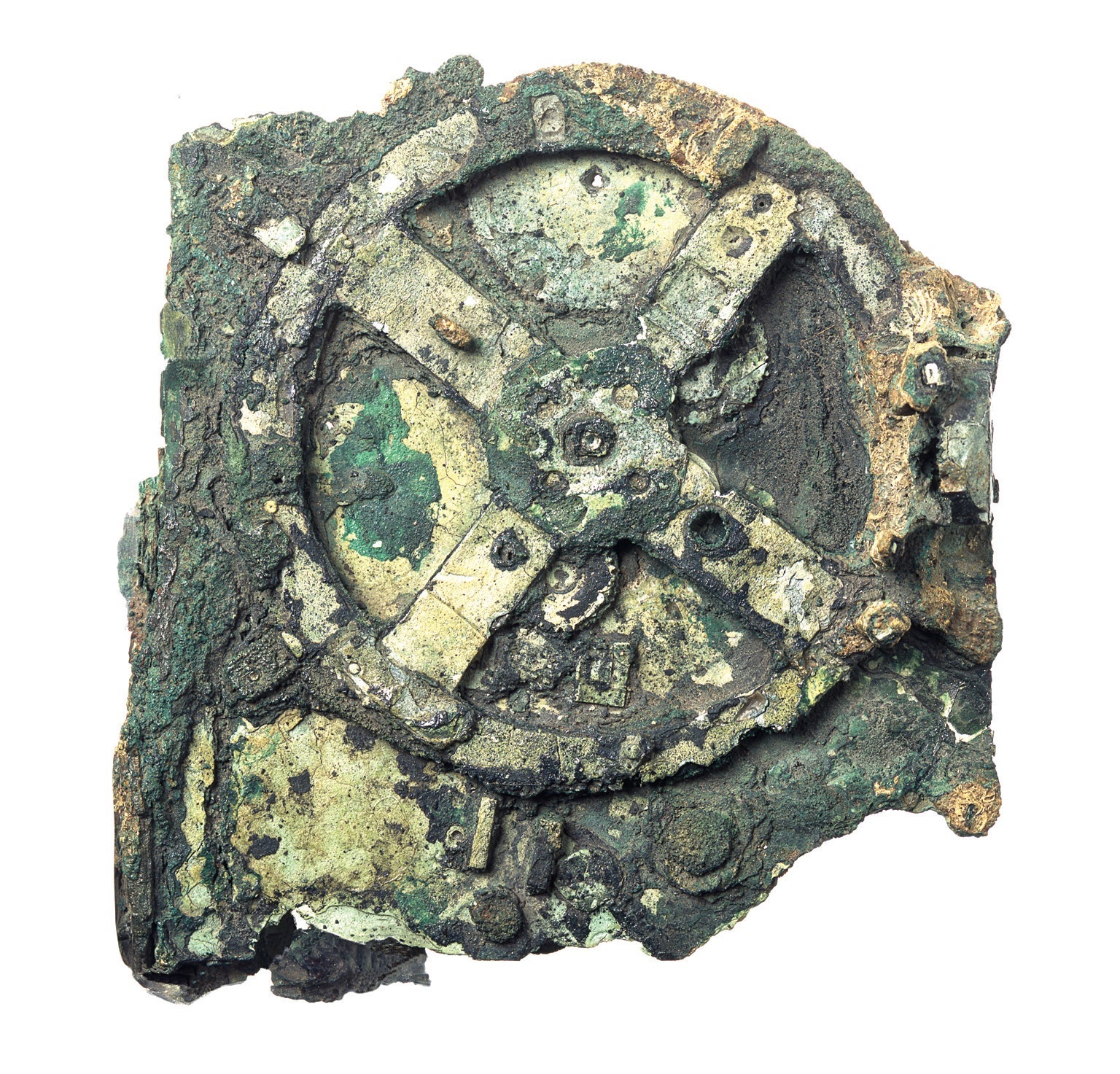
The Antikythera Mechanism: Ancient Computer That Wasn’t Supposed to Exist
In 1901, sponge divers off the Greek island of Antikythera pulled a corroded lump of bronze from a Roman-era shipwreck. For decades it sat ignored, until X-ray and CT scans in the 2000s revealed something staggering: an intricate arrangement of at least 30 meshing gears. This wasn’t a simple trinket—it was an analogue computer capable of predicting astronomical positions, eclipses, and even the four-year cycle of the Olympic Games.
The problem? High-precision gears shouldn’t appear until the 14th century, not around 100 BCE. Its complexity rivals 18th-century clockwork. Mainstream archaeology quickly embraced it as a one-off marvel of Hellenistic engineering, but the deeper shockwave remains: what other advanced technology existed that we haven’t found? Could the Antikythera Mechanism be a surviving fragment of a much wider ancient technological tradition that was somehow lost?
The forbidden archaeology angle here isn’t about suppression—it’s about the realisation that our ancestors were capable of intellectual leaps we’ve systematically underestimated. And if one device slipped through the cracks of history, how many more lie on the ocean floor, waiting to shatter our chronological hubris?
—
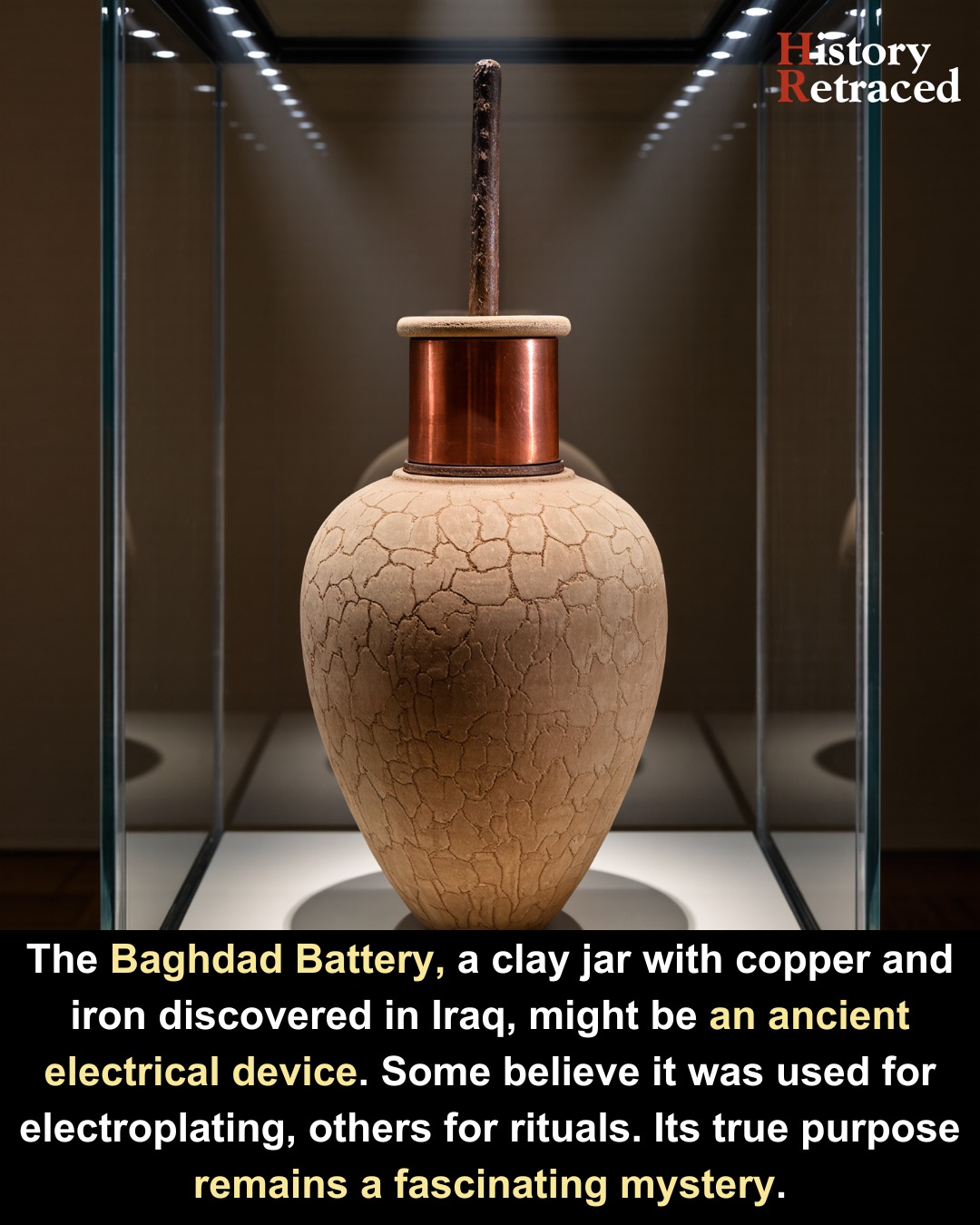
The Baghdad Battery: Electricity in the Ancient World?
If you thought the Parthians were just savvy horseback archers, the “Baghdad Battery” might short-circuit your assumptions. Discovered near Khujut Rabu, Iraq, in the 1930s, this object consists of a clay jar, a copper cylinder, and an iron rod suspended inside. Fill it with an acidic liquid like vinegar or grape juice, and you get a weak but unmistakable electric current.
Debunkers argue it was merely a storage vessel for sacred scrolls, or that any electrical effect is coincidental. After all, what would ancient people do with such a low voltage? But enthusiasts counter that several jars could be linked in series to electroplate objects—a process supposedly not invented for another millennium. Indeed, experiments have successfully gilded small silver items using replicas of the jar.
Is this suppressed history? The archaeological community largely dismisses the battery as a curiosity with no proven ancient electrical grid. Yet the seed of doubt has been planted: what if the ancients dabbled in forms of energy we’ve only recently rediscovered? The Baghdad Battery remains an icon of forbidden archaeology, a literal spark of controversy that refuses to be extinguished.
—
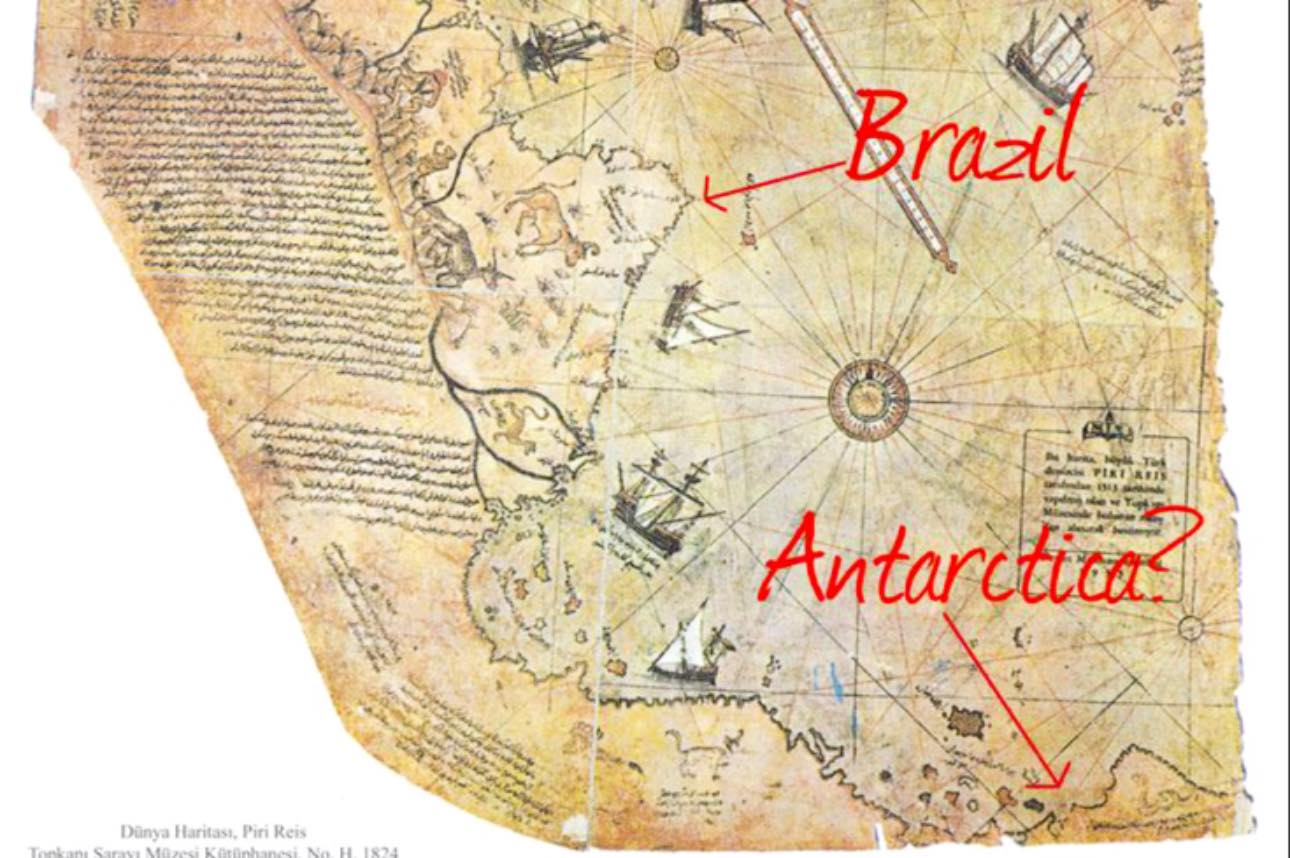
The Piri Reis Map: Antarctica Without Ice?
In 1513, Ottoman admiral Piri Reis compiled a world map from earlier source maps, some supposedly dating back to Alexander the Great. What’s stunning is that the map appears to show the northern coastline of Antarctica—centuries before the continent was officially discovered in 1820. Even wilder, it depicts Queen Maud Land free of ice, a condition not seen for at least 6,000 years, and possibly millions.
Conspiracy theorists have a field day with this one. The map suggests ancient seafaring civilisations capable of global exploration and accurate cartography long before Columbus. Some even link it to a lost Ice Age civilisation, à la Graham Hancock, that passed down geographical knowledge to later cultures. Historians counter that the “Antarctic” coastline is simply a distorted South American coast, and that Piri Reis noted he stitched together many fragmentary maps, which naturally led to imaginative configurations.
But the sheer coincidence—coastline details that eerily match subglacial topography only recently mapped by seismic surveys—keeps the debate alive. This controversial discovery sits right at the intersection of science, speculation, and that irresistible whiff of suppressed history.
—

The Ica Stones and Acámbaro Figurines: Dinosaurs and Humans Together?
If the Piri Reis map makes your head spin, the Ica stones might make it explode. In the 1960s, Peruvian farmer Javier Cabrera collected thousands of andesite stones engraved with scenes of humans and dinosaurs—even depictions of brain surgery and telescopes. Nearby, in Mexico, thousands of ceramic figurines (the Acámbaro collection) were unearthed, showing what look like known dinosaur species in lively poses with people.
Both collections scream “hoax” to mainstream palaeontology. The Ica stones were traced to local artisans who admitted carving them for tourists. Carbon dating, however, is tricky on stone, and the sheer volume (over 10,000) makes a massive forgery operation seem plausible—or a genuine archaeological treasure trove. The Acámbaro figurines have been thermoluminescence-dated to between 2,500 and 6,500 years old, well after dinosaurs died out, but tantalisingly early for such detailed knowledge of prehistoric beasts to exist among indigenous people.
The forbidden archaeology community argues these artifacts are evidence that ancient humans coexisted with dinosaurs, or at least had accurate fossil reconstructions long before paleontology was a science. The mainstream labels them debunked theories, pointing to inconsistencies and the clear financial incentive behind early sales. Yet the sheer emotional punch of a human fighting a stegosaurus keeps these objects firmly in the underground spotlight.
—
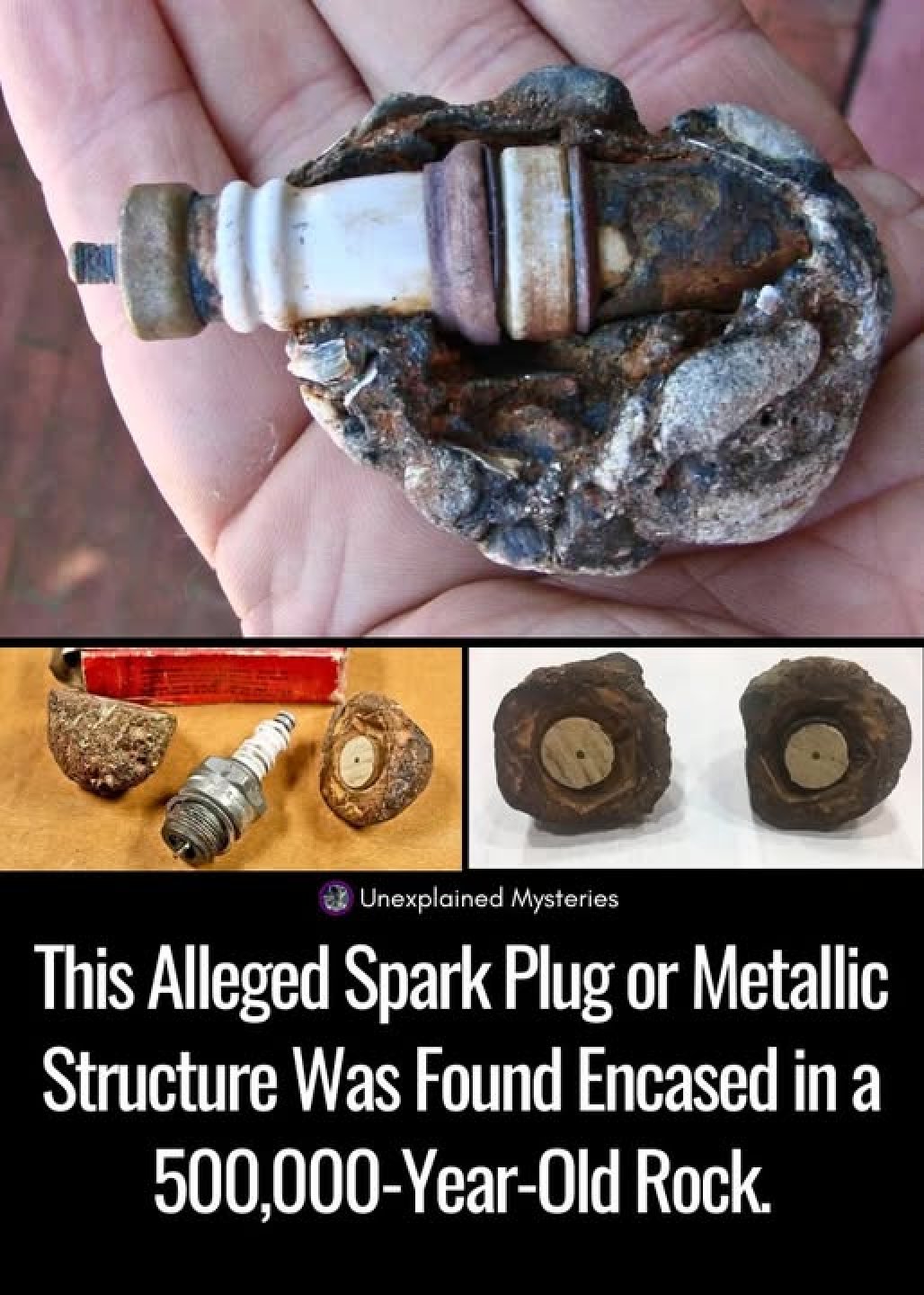
The Coso Artifact: A 500,000-Year-Old Spark Plug?
On February 13, 1961, three rockhounds hunting geodes near Olancha, California, found a nodule that encased something wildly impossible. When cut open, the stone revealed a hexagonal ceramic insulator, a titanium rod, and a magnetic metal ring—components that looked for all the world like a modern spark plug. The kicker? The geode was estimated to be at least 500,000 years old based on the surrounding geological context.
Proponents of suppressed history immediately cried “OOPArt” (Out-of-Place Artifact). They argued it’s proof of advanced technology in deep antiquity, perhaps from a lost civilisation or even extraterrestrial visitors. The spark plug, they say, was obviously manufactured and then fossilised under mysterious circumstances.
Here’s where debunked theories get interesting. Detailed analysis revealed the artifact is actually a 1920s Champion spark plug, similar to those used in Model T Fords. The “geode” was likely a concretion of iron oxide and calcium carbonate that rapidly formed around the discarded plug in the region’s mineral-rich hot springs—a process documented to occur within decades. The 500,000-year figure came from a misidentification of the rock formation.
Yet the Coso artifact refuses to die in forbidden archaeology circles. It’s become a cautionary tale of how quickly a mundane object can morph into a legend, and how eager we are to believe the establishment is hiding evidence of a mind-blowing past.
—
Why Does Mainstream Archaeology Reject These Finds? (The Suppression Angle)
For every controversial discovery that makes headlines, there are a hundred that academia quietly files in the “misinterpretation” drawer. So is this a sinister cover-up, or just rigorous science? Understanding the dynamics helps separate suppressed history from sloppy wishful thinking.
1. The Sagan Standard and Extraordinary Claims
Science operates on the principle that extraordinary claims require extraordinary evidence. A clay jar that might produce a mild current is fascinating but doesn’t prove ancient power grids. Without robust, repeatable proof, the default position is skepticism. This isn’t suppression—it’s the immune system of scholarship.
2. The Peer-Review Wall
Articles proposing a 500,000-year-old spark plug will never pass peer review in a reputable journal. The lack of publication then becomes a self-fulfilling prophecy: “They refuse to even look at it!” Meanwhile, archaeologists point to hoaxes like the Piltdown Man or crystal skulls that have made them wary. History is littered with forgeries that fooled experts for decades, breeding institutional caution.
3. Professional Egos and Dogma
Here’s where the conspiracy enthusiasts have a point. Academics are human. Entire careers are built on established timelines. A genuine out-of-place artifact would render textbooks obsolete and humiliate leading authorities. There is a vested interest in maintaining the status quo, even if it’s not a clandestine cabal. The brutal ridicule of independent researchers like Virginia Steen-McIntyre (who dated Mexican artifacts to 250,000 years BP and was ostracised) suggests that suppression, while not official policy, can certainly happen socially.
—
Debunked or Deep State Cover-Up? The Psychology of Forbidden History
The allure of forbidden archaeology goes beyond the artifacts themselves. It taps into a deep human desire: to believe our past is epic, mysterious, and hidden by the powerful. In a world where information is controlled, the notion that museums are hoarding truth feels plausible. It’s a rebellion against intellectual gatekeepers.
Consider the enduring myth of the “Smithsonian Cover-Up,” which claims the institution has systematically destroyed evidence of giant human skeletons to protect evolution narratives. While entirely unsupported, it thrives because it offers a simple, dramatic narrative: we are not who we’re told we are. Similarly, the show Ancient Aliens turned fringe ideas into mainstream fascination by framing every ancient engineering marvel as evidence of suppressed extraterrestrial contact.
The real forbidden archaeology isn’t necessarily the artifacts themselves, but the questions they force us to ask. Why do we cling to linear progress? What scares us about fluid, non-linear cultural development? When you strip away the hoaxes, what’s left are genuine anomalies like Göbekli Tepe—a monumental temple complex built before agriculture, which upended everything archaeologists thought about hunter-gatherers. It wasn’t suppressed, but it was initially dismissed because it defied the narrative. For every hard debunk, there’s a genuine enigma that reminds us humility is in order.
—
Frequently Asked Questions About Forbidden Archaeology
What exactly is forbidden archaeology?
Forbidden archaeology refers to physical evidence and artifacts that contradict the accepted timeline of human history and prehistory. These finds are often ignored, dismissed, or ridiculed by mainstream academia, leading enthusiasts to believe they are being deliberately suppressed.
Are there any undeniable OOPArts?
The Antikythera Mechanism is the strongest candidate because its authenticity is undisputed. While not as wild as a dino-human depiction, its technological sophistication was genuinely not supposed to exist at that time. Most other famous OOPArts have plausible natural explanations.
Why do people believe these controversial discoveries are suppressed?
It’s a mix of institutional inertia, legitimate academic skepticism toward extraordinary claims, and a few genuine instances where researchers were mistreated. Add to that a cultural appetite for conspiracy, and you get a powerful narrative of hidden history.
How can I tell a genuine anomaly from a hoax?
Look for: open scientific testing, publication in reputable journals, transparent provenance, and multiple independent analyses. If an artifact’s defenders avoid carbon-14 dating or hide the location of the find, skepticism is warranted.
—
Conclusion: History Is a Living, Frustrating Mystery
The world of forbidden archaeology is a carnival tent packed with genuine wonder, elaborate hoaxes, and dreams of a past more magnificent than we’re allowed to believe. While the spark plug in a geode might be a rusty reminder to stay grounded, the Baghdad Battery and the Antikythera Mechanism whisper that ancient peoples were no intellectual slouches. Mainstream narratives are not the whole story, but not every fringe claim is a victim of suppression.
The controversy itself is what keeps us digging. Because once you accept that our ancestors might have charted Antarctic mountains or electrified their rituals, the question becomes: what else lies buried, waiting to completely reshape the human adventure?
That’s where you come in. The debates around suppressed history are too juicy to have alone. Whether you’re a die-hard skeptic or a believer in lost Ice Age civilisations, we want your take.
Join the debate on forbidden archaeology in our community forum. Share your favourite OOPArt, challenge the debunkers, swap sources, and explore the tantalising grey area where archaeology meets mystery. Tap the link below to jump straight into the conversation—because the past is far too important to leave solely to the academics.
—
Quick Takeaways: Forbidden Archaeology at a Glance
– Antikythera Mechanism: Ancient Greek analogue computer that forced a rethink of Hellenistic technology.
- Baghdad Battery: Lingering question mark over electric experiments 2,000 years ago.
- Piri Reis Map: Incredible cartographic coincidence that suggests lost knowledge of Antarctica’s coast.
- Ica Stones & Acámbaro Figures: Vast collections of debunked yet persistent “proofs” of human-dinosaur coexistence.
- Coso Artifact: A modern spark plug in a very old concretion, debunked but legendary.
- Suppression narrative: More often institutional bias and flawed procedures than a literal conspiracy, but real instances of shunning exist.
- Healthy skepticism: The line between groundbreaking discovery and wishful thinking is razor-thin.
—
Ready to add your voice to the most electrifying history debate online? Visit our community forum and tell us which controversial discovery keeps you up at night. The truth might be stranger than fiction—let’s figure it out together.