Suppressed Historical Evidence: Uncovering the Truth Behind Censored Narratives
Imagine opening a dusty archive and finding a document that could rewrite everything we thought we knew about a pivotal moment in human history. Your heart races as you realize that this paper—this fragile, yellowed fragment—challenges the official story so completely that you understand immediately why someone tried to bury it. That electric sensation, equal parts discovery and defiance, is what drives the hunt for suppressed history. It’s the reason truth-seekers spend decades digging through classified files, why scholars learn dead languages to interpret newly unearthed gospels. The uncomfortable reality is that much of what we accept as settled history is actually a carefully curated narrative, shaped by the victors, consolidated by institutions, and guarded by gatekeepers who would rather you never peek behind the curtain.
We aren’t talking about fringe conspiracy theories here. We’re talking about well-documented cases where governments, religious bodies, and academic establishments intentionally obscured, destroyed, or manipulated evidence to maintain a preferred version of the past. From the deliberate burning of ancient texts to the modern-day classification of documents that won’t see daylight for decades, the mechanisms of historical cover-ups are deeply embedded in how we preserve—or fail to preserve—our collective memory. This article isn’t a dusty lecture; it’s an investigation. Together, we’ll pull back the veil on some of the most compelling examples of censored narratives, explore why powerful interests invest so much in controlling the past, and ponder a question that should keep every curious mind awake at night: if we can’t trust history, what can we trust?
If you’ve ever felt that the standard textbook account left out something vital, you’re in good company. Stick with me as we walk through the smoke-filled rooms where evidence was deliberately incinerated, the editing bays where photographs were airbrushed, and the backchannels where inconvenient truths were quietly buried. And at the end, I’ll show you how to stay connected to the ongoing search for hidden truths that are still emerging from the shadows.

The Mechanics of Erasure: How History Gets Buried
To understand suppressed historical evidence, you first need to recognize that erasure isn’t usually a single dramatic act. It’s a process—sometimes bureaucratic, sometimes violent, frequently both. Knowing the playbook helps you spot the game when it’s being played today.

Physical Destruction: From Flames to Shredders
The bluntest instrument is outright destruction. When Spanish conquistadors burned entire libraries of Mayan codices in the 16th century, they weren’t just eradicating pagan idolatry; they were systematically annihilating a civilization’s memory. Only four codices survived. That act of cultural arson was a historical cover-up executed at scorched-earth scale. But physical destruction doesn’t require conquistadors. In the 20th century, the British government ran “Operation Legacy,” a systematic program to destroy sensitive colonial documents on the eve of independence for dozens of territories. As subject peoples prepared for self-rule, British officials burned, pulped, or dumped at sea countless records that would have exposed atrocities, exploitation, and covert manipulation. Historians now pore over the fragments that survived by accident or defiance, piecing together what empire builders wanted forgotten.
Classification and Sealed Archives
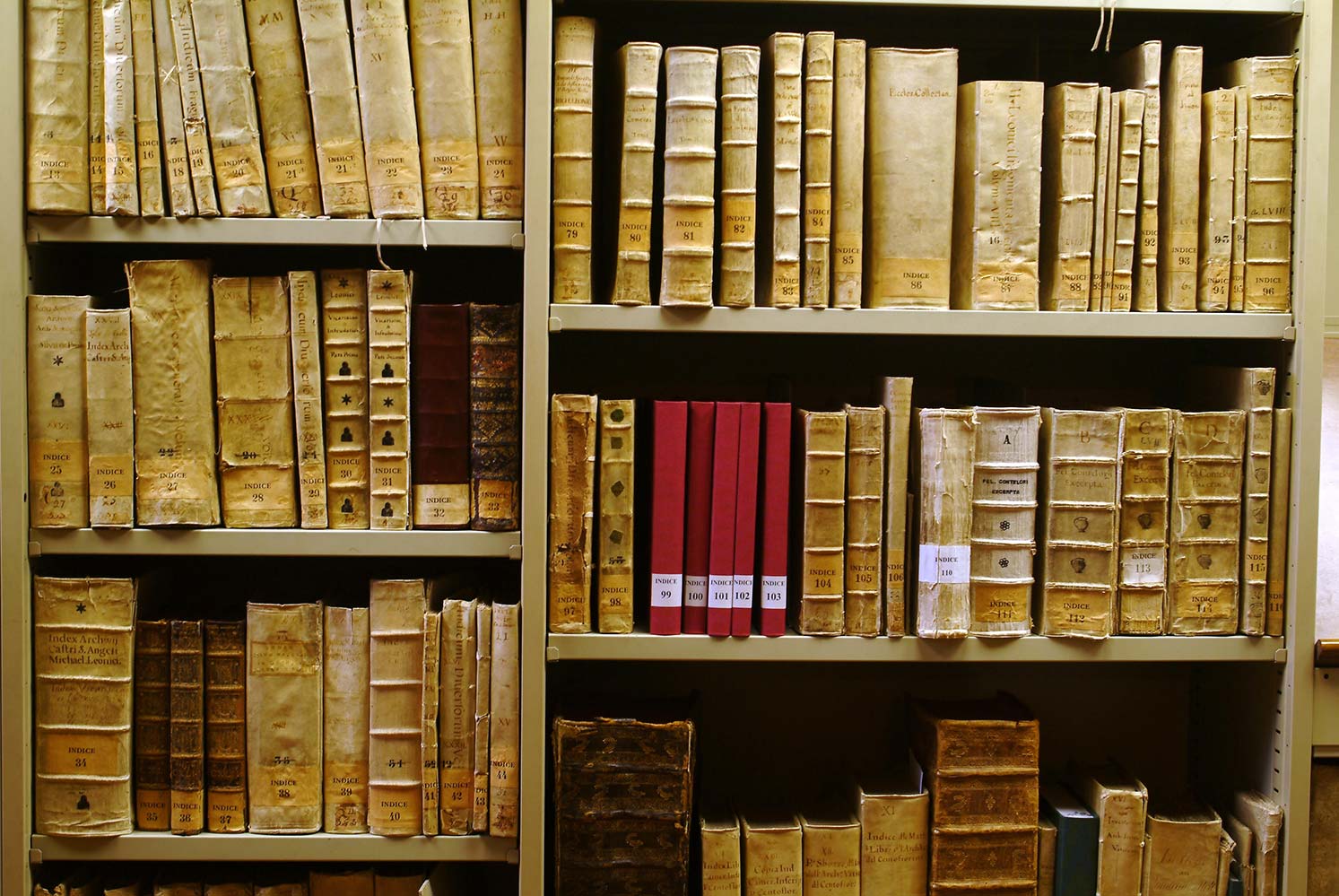
Governments learn quickly that you don’t need to burn evidence if you can simply lock it away until everyone who cares is dead. The Vatican’s Secret Archives—though partially opened in recent decades—still hide documents whose contents scholars can only guess at. For centuries, any material contradicting official church doctrine on, say, the life of Jesus or early Christian diversity was not merely ignored; it was actively suppressed. The discovery of the Nag Hammadi library in Egypt in 1945, with its dozens of Gnostic gospels, finally gave a voice to the losers of early theological battles. These texts had been hidden by monks precisely because the institutional church had labeled them heretical and demanded their destruction. Today, nation-states deploy the same instinct: to classify, to redact, to delay. The U.S. National Archives holds millions of pages that remain secret not because they jeopardize current national security, but because they would embarrass powerful figures or erode official narratives.

Academic Gatekeeping and Professional Ostracism
Sometimes suppression is velvet-gloved. When you control the means of scholarly publication, peer review, and tenure, you can effectively marginalize revisionist history that challenges established dogma—even when that revision is supported by strong evidence. Scholars who present findings that disrupt entrenched theories often face a wall of skepticism that goes beyond healthy academic rigor. Their grants dry up, their papers are rejected not for methodological flaws but for “controversial” conclusions, and their careers stall. This isn’t conspiracy-mongering; it’s a well-documented phenomenon in fields from archaeology to Cold War studies. The historian Howard Zinn argued that the very structure of formal education filters out perspectives threatening to nationalistic or elite interests. When a truth-seeker knows that publishing a manuscript could mean unemployment, the chilling effect becomes a silent partner to every other form of suppression.

Case Studies in Censored Narratives
Abstract mechanisms are convincing, but nothing hits the gut like a real story of evidence buried and then unearthed. Let’s look at a few cases that illustrate the breadth and depth of suppressed history.
The Tuskegee Syphilis Study: A Forty-Year Secret
For forty years, from 1932 to 1972, the U.S. Public Health Service conducted a study on African American men with syphilis in Macon County, Alabama—without their informed consent and without treating them, even after penicillin became the standard cure. The men were told they were being treated for “bad blood.” Researchers watched them suffer, go blind, go insane, and die, all to document the natural progression of the disease. This wasn’t a rogue operation; it was an official government program. The evidence—medical records, correspondence, study protocols—was suppressed for decades, shielded by institutional authority and the assumption that such a thing couldn’t possibly happen. Only when a whistleblower, Peter Buxtun, leaked the story to the press in 1972 did the public learn the horrifying truth. The Tuskegee cover-up showed how easily a powerful institution can hide ongoing atrocities under the guise of science and bureaucracy. Hidden truths like this don’t just corrode trust in medicine; they corrode the soul of a society.
Soviet Airbrushing: The Man Who Disappeared from History
Joseph Stalin didn’t just eliminate rivals; he erased them from photographic existence. Leon Trotsky, once the co-leader of the Bolshevik Revolution, was systematically removed from every official image after his falling out with Stalin. Albums were recalled, textbooks reprinted, and a new visual reality created. This wasn’t merely a cosmetic adjustment; it was ontological theft. By altering the documentary record, the Soviet regime sought to convince future generations that Trotsky had never been central to the revolution at all. When you control the photographic evidence, you control memory. Soviet revisionism was a blunt but effective template for historical cover-ups that many authoritarian governments still follow today, tweaking digital archives and airbrushing inconvenient figures from their online narratives.
The Lost Histories of African Kingdoms
European colonialism didn’t just seize land; it hijacked the historical narrative. When British forces sacked Benin City in 1897, they not only looted thousands of priceless bronzes; they destroyed the kingdom’s archival records. The oral histories that survived were dismissed by Western academics as primitive myth. For generations, schoolchildren across the world learned that sub-Saharan Africa had no significant civilizations, no written history, nothing but tribal warfare. Yet archaeological evidence and surviving artifacts now reveal the sophisticated governance, artistic mastery, and urban planning of empires like Ghana, Mali, and Great Zimbabwe. The deliberate erasure of these achievements was essential to justifying colonialism: if you’re “civilizing” a continent, you can’t admit it was already civilized. That racist revisionist history shaped global perceptions well into the 20th century and still lingers in many curricula.
Operation Paperclip: Smuggling Nazi Scientists into America
As World War II ended, the U.S. raced to acquire Nazi Germany’s top scientific minds—rocket engineers, chemists, aviation experts—before the Soviets could. The moral problem was that many of these men were dedicated Nazis who had used slave labor, conducted horrific experiments, and committed war crimes. The solution was astonishingly simple: sanitize their records. The Joint Intelligence Objectives Agency wiped incriminating evidence from files, rewrote biographies, and quietly resettled scientists like Wernher von Braun into American communities. Von Braun, the father of the Saturn V rocket that took humanity to the moon, had been an SS officer whose Mittelwerk factory was built with concentration camp labor; thousands perished under his watch. None of that appeared in the heroic profile fed to the press. For decades, the full story was buried in classified annexes. The cover-up was so successful that most Americans remain unaware of the extent to which their space program was built on a foundation of moral compromise and suppressed evidence.
Revisionist History: Dangerous Distortion or Necessary Correction?
The phrase “revisionist history” often carries a dirty-word connotation, evoking images of Holocaust deniers or Lost Cause Confederacy apologists. And certainly, there is a toxic form of revisionism that seeks to distort the past in service of modern political agendas—smoothing over slavery, minimizing genocide, polishing colonial violence. But not all revision is malign. Every honest historian is a revisionist in the sense that they revise prior understanding when new evidence emerges. The problem arises when powerful interests hijack the term to discredit any narrative that challenges their preferred version.
True revisionist history grounded in meticulous research and newly uncovered documents is the antidote to cover-ups. The late historian John Hope Franklin didn’t just “revise” the narrative of Reconstruction; he demolished the racist mythology that had enshrined it as a period of vengeful black rule. He used suppressed records, including Freedmen’s Bureau archives that earlier scholars had ignored, to reveal a complex story of democratic aspiration brutally crushed by white supremacist terrorism. That’s revisionism in its noblest form—a torch shone into corners that earlier generations had deliberately kept dark.
The key is to ask critical questions: Who benefits from this version of events? What source was cited, and what was left out? When you encounter a claim that the standard account is wrong, check for the backing evidence trail rather than rhetorical passion. The difference between a courageous truth-teller and a cynical manipulator often lies in the transparency and richness of their sources.
The Technology-Driven Revolution: Unearthing Hidden Truths
If history was once written by the victors, it is increasingly being rewritten by the curious—with the help of digitization, decentralized networks, and whistleblower platforms. The internet age has shifted the balance of power, making it harder to lock away suppressed history permanently.
Mass digitization projects by libraries and archives have made once-inaccessible documents available to anyone with a connection. The Dead Sea Scrolls, long tightly controlled by a small scholarly circle, were finally opened to widespread scrutiny after digital photographs were leaked and then officially released. Independent researchers quickly identified passages and interpretations that the official gatekeepers had underplayed. Similarly, the massive cache of diplomatic cables released by WikiLeaks in 2010 exposed decades of hidden statecraft, revealing not grand conspiracies necessarily, but the ugly, quotidian reality of how governments manipulate, spy on, and deceive each other and their own citizens. Whether you applaud or condemn the method of release, you cannot deny that the cables constitute a reservoir of hidden truths that traditional state-controlled archives would have kept sealed for generations.
Amateur historians, citizen archaeologists, and crowdsourced translation projects are now tackling problems that established institutions neglected. Satellite imagery has revealed lost cities beneath jungle canopy that colonial-era records dismissed as legendary. Genealogical DNA databases have pierced family secrets and forced reckonings with historical atrocities. The tools keep evolving, and each advance makes it harder to permanently erase an uncomfortable fact. If you’re a truth-seeker, this is your golden age—provided you can sift signal from noise.
Why Do We Suppress? The Psychology and Sociology of Cover-Ups
Understanding the impulse to bury evidence is as important as uncovering the evidence itself. At root, suppression is about identity management—the identity of a nation, a religion, an institution, or even an individual’s legacy. If you’re a government that defines itself as a beacon of democracy, you cannot easily acknowledge that you conducted a decades-long syphilis experiment on your own black citizens. If you’re a church that claims unbroken apostolic authority, you cannot admit that radically different Christianities flourished in the first centuries. So you hide the evidence, spin the story, or destroy the records.
Collective narcissism plays a role too. Societies, like individuals, want to feel good about their past. Acknowledging historical atrocities—colonial massacres, scientific racism, complicity in dictatorship—generates profound discomfort. Historical cover-ups serve as a psychological defense mechanism, shielding current generations from the shame of their ancestors’ actions. This isn’t a justification, but it’s a pattern worth recognizing. The more a group’s self-image depends on moral purity, the more aggressively it will resist evidence that tarnishes that image.
On a more cynical level, suppression is about power. The past is a resource, like oil or water, and he who controls the narrative controls the present. Politicians evoke a sanitized version of history to justify modern policies—think of the myth of the noble Confederacy fighting for “states’ rights” rather than slavery, a myth perpetuated for a century by textbook publishers eager to placate Southern markets. Follow the money. Follow the power. In most cases, the architects of cover-ups had a very clear, very concrete interest in keeping you ignorant.
What You Can Do: The Ethical Imperative of the Truth-Seeker
Reading about suppressed historical evidence can feel overwhelming, even paralyzing. If the records we depend on are so thoroughly compromised, is it even possible to know what really happened? Yes—but it requires effort and a willingness to embrace uncertainty. Here are some actionable steps for anyone who wants to engage more deeply with hidden truths without falling into cynicism or fantasy.
Diversify your sources. Never rely on a single book, documentary, or website. Look for primary documents online: declassified archives, scanned correspondence, eyewitness accounts. Compare how different historians from different backgrounds interpret the same event.
Cultivate historical empathy, not just historical knowledge. Try to understand why people in the past acted as they did, even when their actions horrify you. This doesn’t mean excusing atrocities; it means recognizing the complex context that cover-ups attempt to oversimplify.
Support independent researchers and investigative journalists. Much of the most groundbreaking work on suppressed history happens outside the tenured academy. Subscribe to nonprofit investigative outlets, contribute to crowdfunded research projects, and amplify credible but underrepresented voices.
Question everything, especially the narratives that make you feel comfortable. The history that flatters your nationality, your religion, or your political tribe is exactly the history most likely to have been massaged. The discomfort you feel when learning something ugly about “your side” is often a signal that you’re getting closer to the truth.
Most importantly, don’t let the scale of the problem paralyze you. Every suppressed document that is finally released, every forgotten massacre that is publicly memorialized, every textbook that replaces myth with fact is a victory. These small victories accumulate and, over time, reshape the collective memory. The truth rarely emerges in a single dramatic reveal; it seeps out through the cracks that persistent truth-seekers pound open.
The Conversation Never Ends
We’re standing in an extraordinary moment. Powerful technologies at our fingertips have democratized historical detective work, even as new forms of information control—deepfakes, algorithmic manipulation, mass surveillance—raise the stakes. The struggle between those who would bury the past and those who would unearth it is entering a new phase, and each of us has a role to play. Whether you’re an academic researcher, an amateur enthusiast, or simply someone who refuses to accept easy answers, your curiosity is a weapon against oblivion.
The examples we’ve explored—the burned codices, the purged photographs, the sanitized records, the locked archives—are not just dusty tales; they’re urgent reminders that history is a contested battleground. And in that battle, suppressed history isn’t just about the past; it’s about who gets to control the future. Because the stories we tell ourselves about where we came from shape every decision we make about where we’re going.
If your mind is buzzing with questions right now, that’s exactly the point. The quest for hidden truths doesn’t have a finish line, but it has plenty of rest stops where we can gather and compare notes. I’m committed to chasing down these stories—the newly declassified document, the archaeological find that smashes conventional timelines, the whistleblower testimony that cracks a long-held cover-up. If you want to come along for the ride, I invite you to subscribe to our newsletter. You’ll receive exclusive updates on suppressed historical evidence, deep dives into newly uncovered narratives, and tools to help you become a sharper, more effective truth-seeker. The archives are opening. The hidden is being revealed. Don’t miss what comes next.
Subscribe to our newsletter for exclusive updates on suppressed historical evidence, and join a community of scholars and truth-seekers who refuse to let the past stay buried.
What quiet story from the margins of your own education made you first suspect that the official history was incomplete? Keep asking that question. It’s the spark that ignites investigations that can change everything.