
Ancient Mysteries and Lost Knowledge: Journey into History’s Most Intriguing Unsolved Puzzles
Have you ever stood in front of an ancient ruin, felt the weight of millennia pressing down, and wondered, “What secrets are you hiding?” From the windswept deserts of Egypt to the dense jungles of Central America, our world is dotted with enigmatic artifacts and whispers of lost knowledge that defy explanation. These ancient mysteries aren’t just dusty footnotes in history books—they are living riddles, challenging everything we think we know about our ancestors.
In this article, we’ll travel together through time, picking apart some of the most baffling unsolved puzzles ever uncovered. We’ll sift through cryptic manuscripts, decode forgotten technologies, and stand on the shoulders of those who’ve spent lifetimes trying to crack these codes. Whether you’re a seasoned history lover or a curious newcomer with a taste for the mysterious, these stories will ignite your imagination and make you question how much wisdom has truly been lost to the ages.
Ready? Let’s unlock the vault of time and face these enigmas head-on. But be warned: once you start down this path, you might never look at history the same way again.
—

The Great Pyramid of Giza: A Monument to Lost Engineering?
Picture yourself at the foot of the Great Pyramid of Giza around 4,500 years ago. The structure towers 481 feet above the desert, built with over two million stone blocks, each weighing an average of 2.5 tons. Today, we struggle to explain exactly how it was built—and even more perplexingly, why it was built with near-perfect mathematical precision that hints at a level of lost knowledge we can’t easily dismiss.
What makes it an unsolved puzzle?
The pyramid aligns with true north to within 0.05 degrees, a precision that rivals modern engineering. Its dimensions encode the mathematical constant pi (π) and the golden ratio, long before such concepts were supposedly formalized. The casing stones—now mostly gone—were cut so flawlessly that a razor blade couldn’t slip between them, and they once reflected the sun like a second star.
Mainstream archaeology credits a vast workforce, simple tools, and inclined ramps. But alternative researchers point out that moving and placing blocks at the rate needed to complete the Great Pyramid in 20 years would require placing one block every two minutes, working 24/7. Could ancient builders have possessed a lost technique—perhaps sound levitation, water locks, or even a form of forgotten geopolymer chemistry? We simply don’t know. And the absence of the pharaoh’s mummy inside adds yet another layer to the ancient mystery.
If the Great Pyramid fires up your curiosity, you’ll love exploring our deep dive into other ancient engineering marvels that still stump experts.
—

The Voynich Manuscript: The Book That No One Can Read
Imagine finding a 15th-century book filled with lush illustrations of unknown plants, strange astronomical charts, and bathing women, all annotated in an elegant script that belongs to no known language. That’s the Voynich Manuscript, an enigmatic artifact that has defied the world’s best cryptographers, linguists, and even artificial intelligence for over a century.
Named after Wilfrid Voynich, the Polish book dealer who bought it in 1912, this vellum codex runs approximately 240 pages. Carbon dating places its origin between 1404 and 1438, likely in Central Europe. Yet the text—dubbed “Voynichese”—follows statistical patterns of real languages while simultaneously breaking every rule linguists understand. Attempts to decipher it, from rival cryptographers of World War I and II to today’s supercomputers, have all failed.
Why does it count as lost knowledge?
Some theories suggest it’s a hoax, an elaborate Renaissance art project with meaningless text. But the manuscript’s structure whispers of intent: the herbal section groups plants with medicinal properties; the astronomical wheels mirror zodiac calendars; and the famous “balneological” fold-outs might encode a secret recipe for eternal youth. If it’s genuine, it may preserve botanical and alchemical wisdom from a tradition that vanished—possibly a lost language of the Waldensians, Cathars, or even a surviving offshoot of Aztec heritage carried to Europe.
The more you stare at those curling vines and unreadable words, the more you sense that somewhere inside these pages, ancient mysteries of healing and the cosmos are waiting for the right key. Perhaps you, reading this, will one day crack it.
Key takeaway: “The Voynich Manuscript isn’t just a book—it’s a locked door to a secret garden of forgotten science.”
—

The Antikythera Mechanism: An Ancient Computer in a Bronze Box
In 1901, sponge divers off the coast of the Greek island Antikythera found a corroded lump of bronze among a Roman-era shipwreck. What they’d actually discovered was an enigmatic artifact so advanced that it forced historians to rewrite the timeline of technology. The Antikythera Mechanism, dated to around 100 BCE, is often called the world’s first analog computer—and it’s an unsolved puzzle of astonishing sophistication.
Using a labyrinth of precisely-cut gears, the device could calculate the positions of the sun, moon, and known planets, predict eclipses, and even track the four-year cycle of the Olympic Games. The level of miniaturization and mechanical complexity wouldn’t be seen again until the 14th-century astronomical clocks of Europe—that’s a gap of at least 1,400 years.
What makes it a true ancient mystery?
Where did this lost knowledge come from? The craftsmanship points to a workshop steeped in Hellenistic mechanical understanding, possibly influenced by the legendary Archimedes. But no other artifact from the era shows anywhere near this capability. Was it a unique prototype from a secret line of technicians? Or does it represent the tip of an iceberg—a widespread culture of mechanical computing that was wiped out by wars and time, leaving only this one bronze whisper?
And here’s the kicker: modern X-ray scans revealed tiny inscriptions that were a user manual, written in Koine Greek, describing the mechanism’s functions. That means it was intended for use, not just a philosophical toy. Imagine what entire libraries of such knowledge might have looked like before they crumbled to dust.
For a fascinating side-by-side comparison with modern gearwork, visit Scientific American’s deep analysis of the Antikythera Mechanism.
—
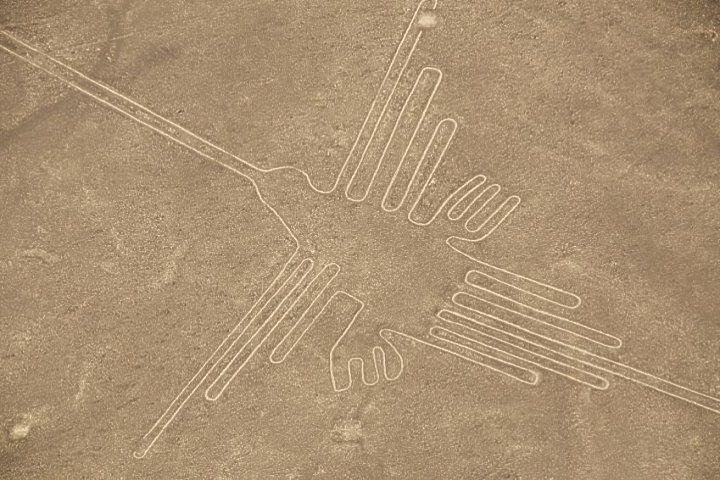
The Nazca Lines: Messages Only the Sky Can Read
In the arid plains of southern Peru, thousands of geoglyphs are etched into the desert floor. Known as the Nazca Lines, these images of hummingbirds, spiders, monkeys, and geometric figures sprawl across nearly 190 square miles. The biggest figures stretch over 660 feet across—and they can only be fully appreciated from the air.
Created by the Nazca culture between 500 BCE and 500 CE, the lines were made by removing the reddish pebbles to reveal the pale ground beneath. Incredibly, they have survived for millennia thanks to a dry, windless climate. But the unsolved puzzle isn’t how they were made (that’s well understood). It’s why.
Theories that hint at lost knowledge:
- Astronomical calendars – Some researchers propose the lines point to solstices and star constellations, serving as a giant celestial map.
- Ritual pathways – Other archaeologists believe the Nazca walked along the lines as part of water ceremonies, praying for rain in one of the driest places on Earth.
- Otherworldly signs – The most controversial theory, popularized by Erich von Däniken, suggests the lines were landing strips or signals for ancient astronauts. While largely debunked, this idea feeds our collective hunger for ancient mysteries that transcend terrestrial boundaries.
But here’s the truly haunting thought: the Nazca people lacked any means of flight. Why create art that only a god—or a future aviator—could appreciate? Was their lost knowledge of the landscape so profound that they understood perspective in ways we’ve forgotten? The lines remain silent, etched in time, waiting for someone to read their true meaning.
—

The Lost City of Atlantis: A Philosophical Warning or Real Place?
No list of ancient mysteries is complete without Atlantis, the fabled island nation described by the Greek philosopher Plato around 360 BCE. According to his dialogues Timaeus and Critias, Atlantis was a powerful naval empire located “beyond the Pillars of Hercules” (the Strait of Gibraltar) that sank into the ocean in a single day and night of cataclysm.
For over two millennia, explorers, scientists, and dreamers have searched for Atlantis. Theories place it everywhere from Santorini and Crete to the Bahamas, Antarctica, and even the Azores. Yet no verifiable evidence has ever surfaced—which leads us to a deeper question: was Atlantis meant to be a literal place, or is it one of humanity’s earliest examples of lost knowledge encoded as myth?
Plato himself insisted the story was true, but he also used Atlantis as a cautionary tale about the hubris of civilizations. Could the tale preserve a dim memory of the volcanic destruction of Minoan Thera (modern Santorini), or a collective trauma from the end of the Ice Age when rising seas swallowed vast coastal territories? The enigma of Atlantis endures because it taps into our fear that entire civilizations can vanish, taking their wisdom with them.
Whether you believe in a literal continent or a philosophical allegory, Atlantis symbolizes all that we’ve lost—and all we might reclaim. It’s the ultimate unsolved riddle, a mirror reflecting our longing for a golden age now drowned beneath the waves.
—
The Stone Spheres of Costa Rica: Perfect Orbs of Unknown Purpose
Deep in the Diquís Delta of Costa Rica, hundreds of stone spheres are scattered through the jungle, some no bigger than a baseball, others over 16 feet in diameter and weighing more than 16 tons. Carved from granodiorite, a hard igneous rock, these spheres were created by the pre-Columbian inhabitants between 600 and 1500 CE. And they are, mathematically speaking, astonishingly perfect: some deviate from a true sphere by less than half an inch.
What makes these enigmatic artifacts so baffling?
The builders lacked metal tools and the wheel, yet they chiseled, hammered, and polished these massive rocks to near-perfection. The spheres were then transported many miles from the quarry to their final resting places, often aligned in patterns or groups. But no written records, no oral traditions, and no clear evidence of their purpose survived the Spanish conquest.
Archaeologists speculate they might have marked status, served as celestial markers, or delineated property. Others suspect a deeper, lost knowledge of geometry and engineering that allowed these ancient artists to sculpt symbols of eternity. The spheres have been moved by modern hands—some decorate government buildings, a few ended up in the courtyard of the National Museum—but the mystery of their original intent remains locked in the silent roundness, as impenetrable as the stone itself.
—
How Much Knowledge Has the Sand Erased?
Every enigmatic artifact we’ve explored whispers the same unsettling possibility: our ancestors were far more advanced than we give them credit for. From the mechanical genius of the Antikythera device to the astronomical precision of the Great Pyramid, these unsolved puzzles flirt with a reality where ancient mysteries aren’t just curiosities—they’re fragments of a forgotten global wisdom.
Could it be that history is not a straight line of progress, but a series of peaks and valleys, with knowledge rising and falling like the tide? The Library of Alexandria, the sacking of Tenochtitlán, the Inquisition’s bonfires—so many vessels of human genius have been destroyed. What we call lost knowledge might just be the surviving crumbs of a much richer banquet.
As you close this page and look up at the night sky, remember that the same stars that guided the Nazca artists and the builders of the pyramids are still there. The riddles they left behind aren’t just intellectual games; they’re invitations. Invitations to stay curious, to dig deeper, and to never accept the comfortable story.
—
Frequently Asked Questions: Ancient Mysteries Unearthed
Q: What is the oldest unsolved ancient mystery?
A: Among the oldest unsolved puzzles is the construction of the megalithic site Göbekli Tepe in Turkey, dated to around 9600 BCE. Its purpose and the method by which huge stone pillars were erected before the invention of agriculture remain an open question, challenging our timeline of civilization.
Q: Is the Voynich Manuscript ever going to be decoded?
A: Maybe not in our lifetimes, but advances in natural language processing may one day crack it—or prove it’s an elaborate hoax. For now, it stands as the most famous unreadable text in the world.
Q: Why are the Nazca Lines still a mystery?
A: Because while we know how they were made, their purpose remains speculative. No definitive cultural record explains why the Nazca people created art visible only from above, making it a lasting ancient mystery.
Q: Could the Antikythera Mechanism be a modern fake?
A: No. Extensive testing, including carbon dating and the examination of its state of corrosion within a shipwreck context, confirms its ancient origin. It is a genuine enigmatic artifact of extraordinary technical sophistication.
Q: Do archaeologists believe Atlantis was real?
A: The overwhelming consensus is that Atlantis was a fictional allegory. However, it may have been inspired by real catastrophic events, like the eruption of Thera. As a tangible city, it remains a myth—but one that fuels endless exploration of our past.
For more cryptic tales, read our guide on the most shocking archaeological discoveries that rewrote history.
—
The Adventure Isn’t Over: Your Turn to Dig Deeper
The allure of ancient mysteries and lost knowledge isn’t just in the answers—it’s in the thrill of the chase. Every unsolved riddle we touched today is a doorway, and your curiosity is the key. How well do you really know these enigmas? Can you spot the truth among the legends?
Delve into the enigmas of ancient civilizations with our interactive quiz and test your inner explorer. From decoding cryptic messages to identifying mysterious artifacts, this quiz will transport you to the forgotten corners of history. Click below to start your journey—and remember, sometimes the most profound discoveries begin with a question.
Take the Ancient Mysteries Quiz Now
The past is talking. Are you listening?