
Forbidden Archaeology: 7 Shocking Discoveries That Defy Historical Narratives and Ignite Controversy
Have you ever felt that the history we’re taught in school is just the sanitized version—neatly trimmed of anything that doesn’t fit? You’re not alone. Across the globe, there are artifacts and sites so baffling that mainstream archaeology either quietly dismisses them or labels them hoaxes without a thorough second look. These are the crown jewels of forbidden archaeology—discoveries that could rewrite human history, if only they’d be allowed to.
From an ancient battery that predates electricity by millennia to maps showing Antarctica before it was even discovered, the evidence is out there. But it raises an uncomfortable question: what if the keepers of our historical narrative aren’t just protective, but actively suppressing what they can’t explain? In this article, we’ll dive deep into controversial discoveries that turn the conventional timeline upside down, examine why they’re labeled as debunked theories, and explore the tantalizing possibility of a suppressed history that might just be true.
Buckle up—this is going to be a wild ride through hidden knowledge that most textbooks will never show you. And if your curiosity gets fired up, we’ve got a place for you to unleash it: a community forum where the debate on forbidden archaeology never sleeps. So don’t just read—join the conversation at the end.

What Is Forbidden Archaeology, Really?
Before we dig into the artifacts themselves, let’s define the term. Forbidden archaeology isn’t just a buzzword; it’s a lens through which alternative researchers view the past. The idea is simple: the academic gatekeepers of archaeology and anthropology have constructed a strict timeline of human civilization—and any artifact that challenges that timeline is systematically ignored, ridiculed, or even physically hidden.
Think about it. If a hammer is found embedded in 400-million-year-old rock, that suggests humans (or something like us) were around far earlier than the accepted date of a few million years. That doesn’t just tweak the timeline; it shatters it. So, the easiest response from the mainstream? “It must be a hoax, a misinterpretation, or a geological anomaly.” Case closed, next question.
This is where suppressed history comes into play. According to proponents, powerful institutions like the Smithsonian were notorious for allegedly destroying giant skeletons and out-of-place artifacts in the early 20th century, effectively wiping the slate clean for the Darwinian view of gradual human evolution. Whether you believe the cover-up narrative or not, the sheer number of puzzling finds deserves more than a hand-waving dismissal. Let’s look at seven mind-blowing examples that refuse to stay buried.
Top 7 Forbidden Archaeology Discoveries That Will Make You Question Everything
Each of these finds has sparked fierce debate, thrilled history buffs, and set conspiracy theory enthusiasts’ hearts racing. Some have been “officially” debunked; others remain mysteriously sidelined. You decide where the truth lies.
1. The Baghdad Battery: Ancient Electricity 2,000 Years Too Soon
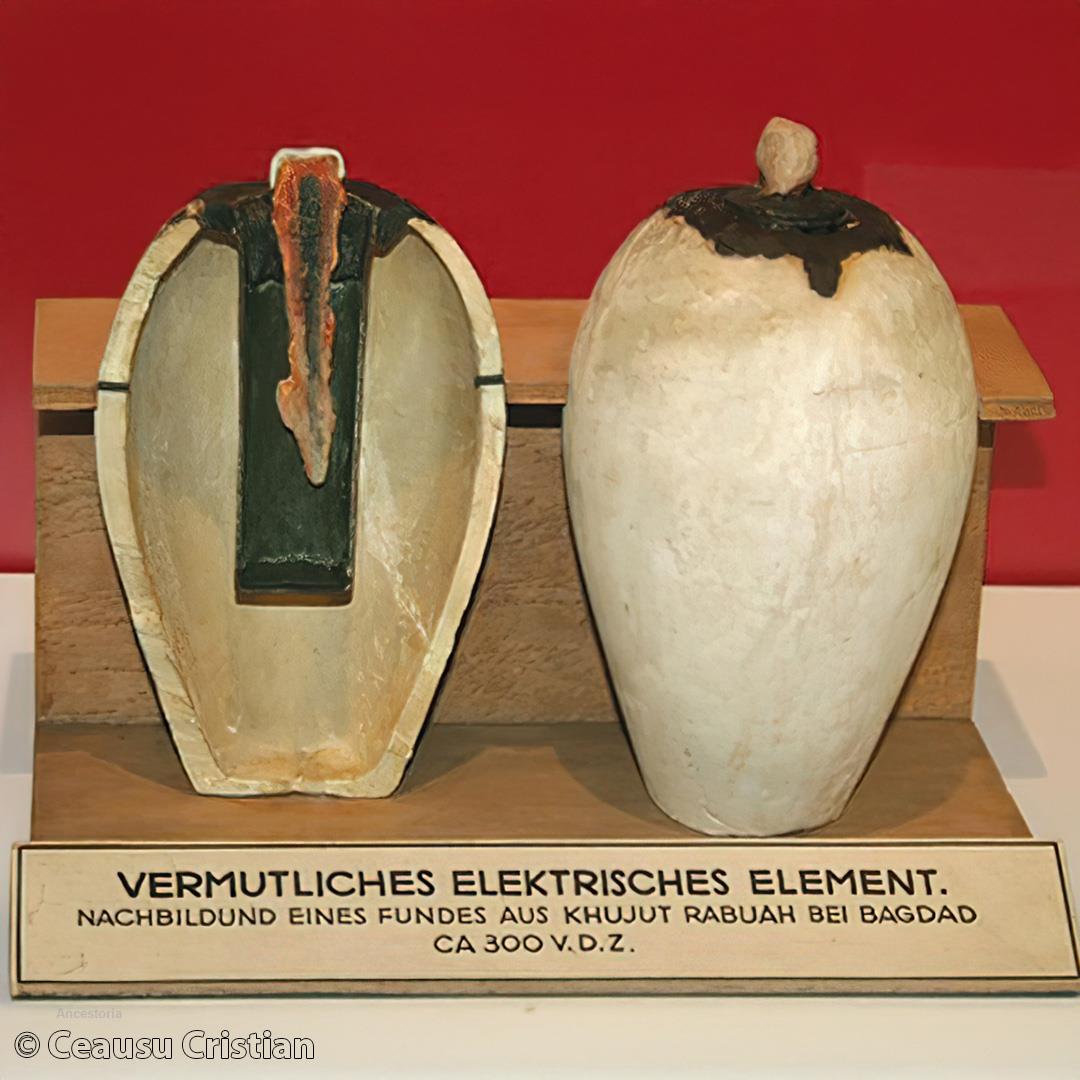
Discovered in the 1930s near Baghdad, this seemingly simple clay jar contained a copper cylinder and an iron rod. When filled with an acidic liquid like vinegar or lemon juice, it can produce a small electric charge. Mainstream archaeologists call it a storage vessel for scrolls. But replicas have shown it works as a galvanic cell. Why would anyone need electricity back then? Electroplating jewelry? Pain relief? Some even suggest it powered a primitive light source in the Temple of Solomon. Imagine: a working battery from the Parthian period, about 2,000 years ago—centuries before Volta’s pile. If it was just a scroll jar, why the perfect combination of different metals? The Baghdad Battery is a classic forbidden archaeology star that refuses to be pigeonholed.

2. The Antikythera Mechanism: A 2,000-Year-Old Analog Computer
Retrieved from a shipwreck off the Greek island of Antikythera in 1901, this corroded lump of bronze turned out to be something utterly impossible for its time. X-rays revealed a complex clockwork device with at least 37 interlocking gears, designed to calculate astronomical positions, eclipses, and even the cycle of the Olympic Games. It’s essentially the world’s first known analog computer, and its sophistication wouldn’t be matched until the 14th century. The mainstream accepts its existence—because it’s undeniably real—but its implications are so staggering that many still downplay how much technical knowledge the ancient Greeks must have possessed. Who taught them to build such a device? Could there have been earlier, lost civilizations whose knowledge trickled down? The Antikythera Mechanism whispers that our ancestors were far more advanced than we dare admit.

3. The Ica Stones: Dinosaurs and Humans Living Together?
In the 1960s, a Peruvian physician named Javier Cabrera received an engraved stone from a local farmer. It depicted a human riding what looked like a triceratops. Cabrera went on to collect thousands of these black volcanic stones, etched with scenes of humans interacting with dinosaurs, performing complex surgeries, and using telescopes. If genuine, the Ica stones would obliterate the timeline of dinosaur extinction. Mainstream science immediately cried fraud, pointing out that the farmer later admitted to carving some stones himself. But the sheer volume (over 15,000 stones) and the intricacy of some engravings make industrial-scale forgery seem improbable—especially since many show a knowledge of dinosaur anatomy, like the placement of plates on a Stegosaurus, that was only confirmed by modern paleontology. Are the Ica stones a hoax, a misunderstood collection of ancient art, or hard evidence of a lost co-existence? You can almost hear the archaeological establishment grinding its teeth.
4. The Acámbaro Figurines: Ceramic Dinosaurs from Mexico
In 1944, Waldemar Julsrud, a German hardware store owner in Acámbaro, Mexico, stumbled upon thousands of small ceramic figurines buried at the base of El Toro Mountain. They depicted everything from mundane domestic animals to incredibly accurate representations of dinosaurs—sauropods, iguanodons, and even a Tyrannosaurus-like creature with a pronounced spinal sail that resembles Spinosaurus long before its discovery. Carbon dating and thermoluminescence tests (though later hotly contested) suggested the figurines could be up to 6,500 years old. Critics say Julsrud’s workers manufactured them on demand, but the sheer variety and detail, coupled with the fact that many figurines show species unknown to the public in the 1940s, keeps this controversial discovery simmering. If they’re real, someone in ancient Mesoamerica had a reason to sculpt animals that shouldn’t have existed.
5. The Piri Reis Map: Antarctica Without Ice?
Drawn in 1513 by Ottoman admiral Piri Reis, this gazelle-skin map shows the coastlines of Europe, Africa, and South America with remarkable accuracy for the time. But the jaw-dropper is the lower portion, which appears to depict the Queen Maud Land region of Antarctica—supposedly not discovered until 1818, and buried under ice for millions of years. The map notes that Reis compiled it from older source maps, some dating back to Alexander the Great. If the map truly shows Antarctica’s subglacial topography, it implies that an ancient civilization charted the continent when it was ice-free, long before any known advanced seafaring culture existed. Skeptics argue it’s a distorted South America, yet the coastline’s resemblance to seismic soundings taken over Antarctic ice is uncanny. This piece of forbidden archaeology keeps cartographers and historians up at night.
6. The London Hammer: A Modern Tool Trapped in Ancient Rock
In 1936, Max Hahn and his wife were walking near London, Texas, when they spotted a rock with a piece of wood protruding. They cracked it open years later to find a hammer of typical American 19th-century design embedded inside. The rock, a Cretaceous formation, is around 100 million years old. How does a hammer get encased in 100-million-year-old rock? Geologists explain it as a concreted artifact—mineral-rich groundwater rapidly solidified around the hammer over centuries, not eons. But the wood handle has partially turned to coal, which takes millions of years under standard geology. The London Hammer is often touted as proof of suppressed history: a relic from a highly advanced pre-human civilization, or a stark warning that our geological dating methods are deeply flawed. Either way, it’s still on display at the Creation Evidence Museum, waiting for an honest debate.
7. The Kensington Runestone: Vikings Deep in North America
Discovered in 1898 by a Swedish-American farmer in Minnesota, this 202-pound stone slab bears runic inscriptions telling of a party of Scandinavian explorers in the year 1362. If authentic, it proves Norse presence in the heart of North America long after Leif Erikson’s brief settlement on the East Coast. Mainstream runologists initially dismissed it as a hoax based on linguistic anomalies, but recent geological examinations show the weathering of the runes is consistent with centuries of age, and some dubious language features have been found in medieval documents from Sweden. The Kensington Runestone falls neatly into debunked theories territory—the establishment won’t budge, but the data keeps chipping away at the dismissal. Not too long ago, the idea of Vikings in Newfoundland was itself a “crazy theory” until L’Anse aux Meadows was uncovered. Who’s to say this stone isn’t the next paradigm shift?
Why Mainstream Archaeology Dismisses These Finds
If even a fraction of these artifacts is authentic, the entire edifice of human history needs a rewrite. That’s a terrifying prospect for any academic field. So, the standard toolkit for dismissing controversial discoveries includes:
- Label it a hoax immediately: Even when evidence of forgery is thin, the stigma sticks. Once a find is associated with a local farmer looking to make a buck, it becomes toxic.
- Explain it away through context: The Baghdad Battery becomes a storage jar; the Antikythera Mechanism, a one-off curiosity with no predecessor. The goal is to normalize the anomalous.
- Invoke the “smoking gun” fallback: A single artifact without an unbroken chain of evidence can always be rejected. If you didn’t film the hammer getting trapped in 100-million-year-old mud from start to finish, it’s not science.
Yet, here’s the uncomfortable truth: the history of archaeology is littered with examples where the mavericks turned out to be right. Troy was a myth until Schliemann dug it up; the Vikings in America were a “fable” until physical proof emerged. So when we hear about debunked theories that refuse to die, maybe we should ask whether the debunking was rigorous or just a convenient way to avoid messy paradigm shifts.
This pattern of dismissal feeds directly into the narrative of suppressed history. Whether it’s the Smithsonian’s alleged destruction of giant skeletons (accounts of which fill newspaper archives) or the academic lockdown of sites like Göbekli Tepe before its release, the public senses that not all is being shared. You can almost hear the whispered question: What else is hidden in museum basements?
The Allure of a Hidden Past—And Why It Matters
Why do we find forbidden archaeology so seductive? Because it offers a version of history where humanity isn’t a recent accident, but the heir to vast, forgotten knowledge. It turns the dusty narrative of linear progress into an epic saga of lost high technology and cataclysmic resets. For history buffs and conspiracy enthusiasts alike, these controversial discoveries aren’t just curios—they’re proof that the powers-that-be might be selling us a fraction of the story.
But beyond the thrill, there’s a profound implication. If ancient people had electricity, global maps, and knowledge of dinosaurs, our modern superiority complex starts to crumble. We’re forced to confront the possibility that civilizations rise and fall in cycles, and we might just be the latest in a long line of humans who think they’re the smartest—until a flood, a comet, or time itself proves otherwise.
If this gets your mind racing, you’re not alone. Thousands of independent researchers and armchair archaeologists are scouring the edges of accepted knowledge every day, piecing together a bigger puzzle. The conversation is far from over, and your perspective could be the missing piece.
Join the Debate on Forbidden Archaeology in Our Community Forum
Now it’s your turn. You’ve just read about artifacts that challenge the official story, but is it all smoke and mirrors, or the real deal? Our community forum is buzzing with members who dissect these forbidden archaeology finds from every angle—skeptics and believers alike—sharing new evidence, old newspaper clippings, and first-hand accounts that never make it into textbooks.
Don’t let your curiosity fizzle out at the end of this article. Head over to the forum and jump into the thread on the London Hammer or start a new discussion about the Ica Stones. Pose the question that’s been nagging at you: “If the Piri Reis map shows Antarctica before ice, why isn’t this front-page news?” The debate is fierce, respectful, and exactly the kind of exchange that mainstream academia often avoids.
Join the debate on forbidden archaeology in our community forum—because the history that matters isn’t the one handed to you; it’s the one you dig up yourself.
—
Frequently Asked Questions About Forbidden Archaeology
What exactly is forbidden archaeology?
Forbidden archaeology refers to artifacts, structures, and evidence that challenge the conventional timeline of human history and are often ignored, suppressed, or ridiculed by mainstream science. Proponents argue that a rigid dogmatism keeps these finds out of textbooks and museums.
Are all controversial discoveries proven hoaxes?
Not all. While some finds like certain Ica Stones were partly fabricated by locals, many artifacts—such as the Antikythera Mechanism and the Baghdad Battery—are physically real, and their function is still debated. The label “hoax” is sometimes applied prematurely to protect established narratives.
Why would the government or museums hide ancient artifacts?
The suppression theory suggests that institutions like the Smithsonian fear social and scientific upheaval. If giants, ancient high technology, or non-human civilizations were proven real, it could undermine the current scientific paradigm and disrupt religious and historical foundations.
Can I trust mainstream archaeology?
Mainstream archaeology follows rigorous methods and self-corrects over time, but it is not immune to bias and inertia. A healthy skepticism—coupled with open-minded investigation—is the best approach for anyone exploring the past.
—
The Final Word: History Is Not Set in Stone (Or Is It?)
The seven discoveries we’ve explored are just the tip of a very deep iceberg. For every artifact locked away in a curator’s drawer, there’s a story waiting to ignite a new debate. Whether you lean toward the debunked theories explanation or you sense the ache of a suppressed history, one thing is clear: the past is far from settled.
So keep your mind open, your research sharp, and your voice loud. The forbidden archaeology movement thrives on people like you—those who refuse to accept the official narrative at face value. Hit the forum, share your favorite out-of-place artifact, and let’s rewrite the history books together, one shocking find at a time.