
Whispers of the Forgotten: Unraveling Ancient Mysteries and Lost Knowledge That Still Defy Explanation
Imagine holding an object so advanced that it shouldn’t exist—a relic that rewrites everything you thought you knew about our ancestors. That’s the gut-punch thrill of ancient mysteries: those tantalizing fragments of lost knowledge that whisper of civilizations far more brilliant than we give them credit for. They’re not just dusty artifacts in a museum; they’re unsolved puzzles that dare us to look deeper. And the deeper we dig, the more the past laughs at our assumptions.
It’s not just about what we’ve found, but what we’ve forgotten. How did people with supposedly primitive tools carve mountain-sized geoglyphs visible only from the sky? Why does a medieval manuscript hold plants that never existed on Earth? And what compelled hunter-gatherers to construct a stone temple millennia before agriculture even began? Buckle up, mystery enthusiast, because we’re about to step into a world where history feels like a half-remembered dream, and every enigmatic artifact begs the question: what truly happened?
If you’ve ever lost yourself in speculation over the pyramids or stared at a map that seems centuries ahead of its time, you already know the lure of ancient puzzles. In this journey, we’ll walk through seven of the most astonishing riddles of antiquity—each one a door into lost knowledge that still leaves even the sharpest minds scratching their heads. And when your curiosity reaches boiling point, we’ve got the perfect way to channel it: delve into the enigmas of ancient civilizations with our interactive quiz at the end and see if you can separate fact from legend. But first, let’s open those doors.
—

The Antikythera Mechanism: A Computer from the Deep
In 1901, sponge divers off the coast of the Greek island Antikythera pulled up an unassuming lump of corroded bronze from a shipwreck. For decades it sat ignored, until X-ray and CT scans in the 21st century revealed something staggering: this was an analog computer, built around 100 BCE, that could predict astronomical positions, eclipses, and even track the four-year cycle of the ancient Olympic Games. The level of miniaturization and precision gearing inside it would not be seen again until the 14th century. Yet here it was, a pocket of lost knowledge surfacing from the depths.
Picture the mechanism’s intricate bronze gears—more than 30 of them—meshing together with the sophistication of a Swiss watch. How did Greek engineers achieve such mechanical mastery without the metallurgy or precision tools we assume are modern? The existence of this enigmatic artifact suggests a tradition of sophisticated mechanical computing that vanished for over a thousand years. Was the Antikythera Mechanism just one item in a forgotten library of advanced devices, lost when knowledge was hoarded or destroyed? It’s an unsolved puzzle that forces us to rethink the antiquity of technology. Next time you glance at your smartphone, remember the ancient Greeks might have been closer to a pocket calendar than we ever imagined.
If this fires up your inner detective, you’ll love our interactive quiz on ancient inventions—it lets you match the lost technology to its era and see if you’re right.
—

The Voynich Manuscript: A Code No One Can Crack
Now let’s shift from gears to glyphs. Tucked safely at Yale University is a 15th-century book that has defeated armies of cryptographers, linguists, and artificial intelligence. The Voynich Manuscript is filled with elegant, looping script in a language—or code—that no one can read. On its vellum pages dance bizarre botanical illustrations of plants that don’t exist, peculiar astrological charts with naked women in baths, and tiny detailed diagrams of what look like biological systems. It’s beautiful, baffling, and utterly unreadable.
Consider this: the manuscript’s “Voynichese” characters follow patterns consistent with a natural human language but also contain structural oddities, like repeated words that real languages rarely use. Is it an elaborate hoax designed by a medieval con artist? An encrypted herbal encyclopedia of lost botanical knowledge? Or did its author tap into a consciousness so alien that we simply haven’t found the key? Professional codebreakers from both World Wars failed, and even modern AI algorithms that swallowed Wikipedia whole have coughed up only gibberish. The Voynich Manuscript remains one of the most enduring unsolved puzzles in history—a tangible time bomb of lost knowledge that could hold secrets about herbal remedies, early astronomy, or even human anatomy advanced beyond its time. Every time you think we’ve cracked the code, the manuscript laughs from its case.
—
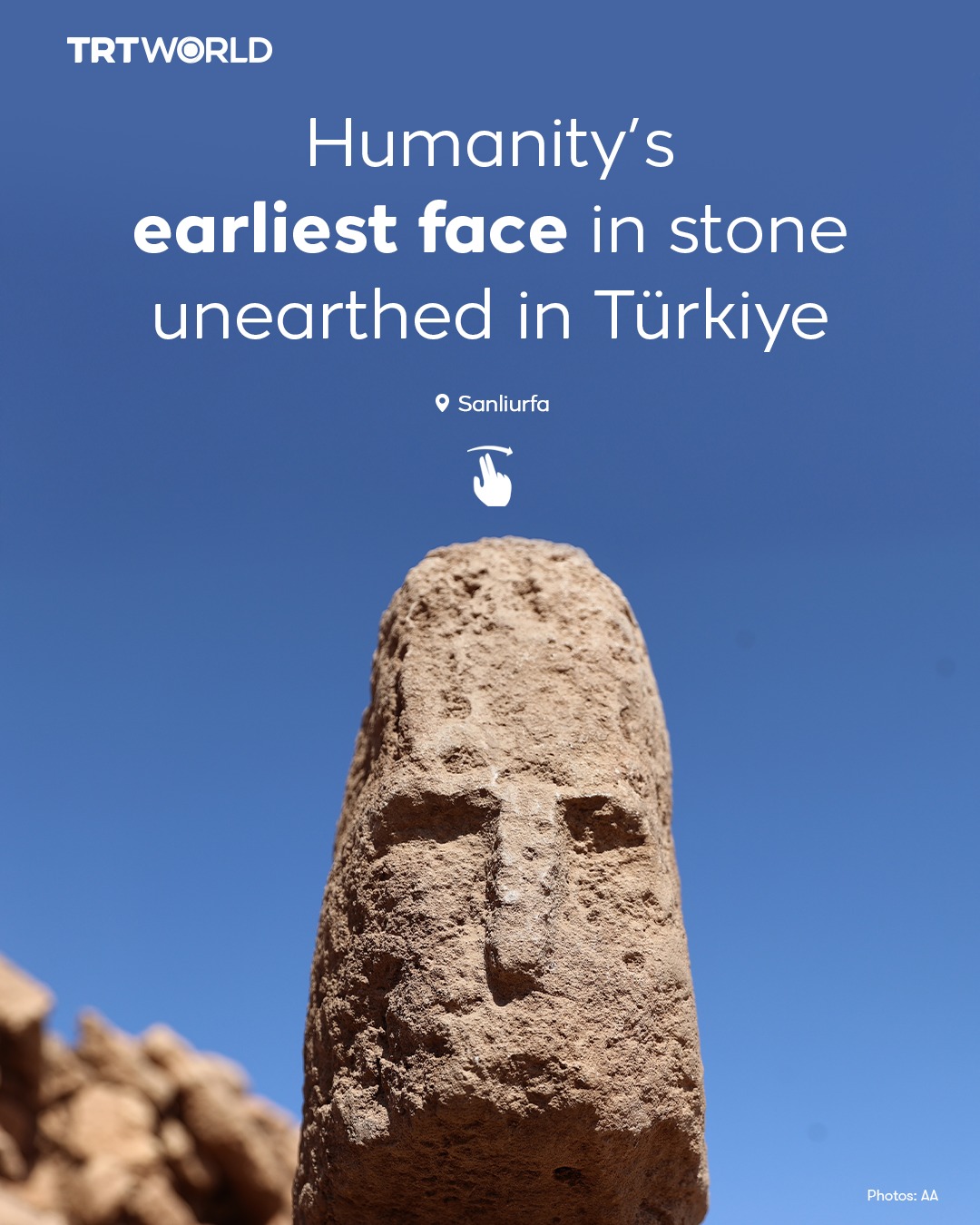
Göbekli Tepe: The Temple That Rewrote History
Imagine standing on a hill in southeastern Turkey, staring at colossal T-shaped limestone pillars—some 16 feet tall and weighing up to 20 tons—carved with intricate reliefs of foxes, scorpions, and serpents. Now imagine that this monumental complex was built around 9600 BCE, over 7,000 years before the Great Pyramid and a staggering 6,000 years before Stonehenge. That’s Göbekli Tepe, the world’s oldest known temple, and it flips our understanding of prehistory upside down.
At the time of its construction, humans were supposed to be simple hunter-gatherers, not organized enough to quarry, transport, and erect multi-ton stones in precisely aligned circles. Yet they did. And then, around 8000 BCE, they deliberately backfilled the entire site with tons of debris, burying it intact like a time capsule. Why? Did organized religion and monumental architecture come before agriculture and settled life, not after? The enigmatic artifact that is Göbekli Tepe hints at a sophisticated social and spiritual network—lost knowledge about community and the cosmos that Neolithic peoples possessed long before we assumed they could. Only about 5% of the site has been excavated. What else lies beneath? Perhaps the real puzzle isn’t how they built it, but what they knew about the sacred that we’ve long forgotten.
—

The Nazca Lines: Messages to the Sky
High in the arid Peruvian desert, a hummingbird nearly 300 feet long stretches its wings, a spider balances on delicate lines, and a geometric spiral uncoils for hundreds of yards—all carved into the earth so massive that their full shape can only be appreciated from the air. The Nazca Lines, created by the Nazca culture between 500 BCE and 500 CE, are one of the most visually haunting ancient mysteries you’ll ever encounter. How did a pre-flight civilization design such flawless zoomorphic shapes without a bird’s-eye vantage point? And more tantalizing—why?
Theories range from astronomical calendars to ritual pathways for water deities to alien landing strips (yes, that one still persists, though archaeologists roll their eyes). More grounded research shows that the Nazca people removed reddish pebbles to expose lighter soil, using simple surveying techniques and a lot of patience. But the why remains an unsolved puzzle with a whiff of the sacred. Many lines radiate from platform mounds and point toward water sources or specific celestial alignments—lost knowledge of hydrology and skywatching seamlessly fused with art. There’s also a compelling idea that these geoglyphs were an enormous, perpetual prayer for rain in one of the driest places on Earth. Every figure is an invitation: the ancients drawing in the dust, waiting for the gods to look down. It’s proof that mystery doesn’t always need a logical solution; it needs imagination.
—

The Great Pyramid’s Enigma: More Than Just a Tomb?
No list of ancient mysteries would be complete without the Great Pyramid of Giza, a structure so precisely engineered that even modern engineers with laser levels might blush. The Great Pyramid was built around 2560 BCE from over 2 million stone blocks, some weighing 80 tons, aligned within 1/15th of a degree of true north—tolerances that modern observatories achieve. How the ancient Egyptians managed that without the wheel (in the early stages) or a compass is a head-scratcher. But the greater puzzle lies in its purpose.
Was it just a tomb? No mummy was ever found inside, and the so-called “sarcophagus” in the King’s Chamber is too large to have been brought through the entrance. Intriguingly, the pyramid’s dimensions encode mathematical constants like pi and the golden ratio—perhaps deliberately, perhaps as a cosmic joke. Some researchers argue the Great Pyramid was a power plant, using the natural piezoelectric properties of quartz granite to harness Earth’s resonance. Others point to its role as a spiritual initiation chamber or an astronomically aligned monument to rebirth. The “air shafts” pointing to specific stars (Orion’s belt, the circumpolar stars) whisper of lost knowledge about the afterlife and the mechanics of the cosmos. So, tomb, machine, or gateway? The stones hold their secret, and every new chamber discovered (like the mysterious voids scanned by cosmic-ray muons) only adds to the unsolved puzzle. One thing is certain: the pyramid is a physical formula waiting to be read.
—
The Piri Reis Map: Cartography Before Its Time
In 1513, Ottoman admiral Piri Reis drew a world map on gazelle skin, compiling older source maps, many from the ancient library of Alexandria. What makes this map an enigmatic artifact is its shocking accuracy: it accurately depicts the coastline of Antarctica—centuries before the continent was officially discovered in 1820, and indeed before it was covered in ice. The map shows the Queen Maud Land coast without its ice sheet, a condition geologists say hasn’t existed for 6,000 years. Yet the level of detail suggests some civilization charted Antarctica at a time when it was ice-free.
Mainstream historians cautiously explain this as a depiction of South America stretched southward, or a misinterpretation of Patagonia. But the congruencies with seismic surveys under the ice are hard to dismiss entirely. If the map truly inherited lost knowledge from a pre-ice age civilization, who were they and how did their wisdom filter through ancient seafarers? The Piri Reis Map also accurately plots the Andes in South America, rivers in Africa, and islands in the Caribbean with a precision that shouldn’t have been possible for any 16th-century cartographer. The map is a parchment whisper from a drowned library, hinting that our ancestors might have sailed global oceans long before we placed them in the cradle of civilization.
Want to test your map-reading chops? Our interactive quiz challenges you to identify ancient sites from unusual depictions—guess correctly and prove your explorer’s instinct.
—
The Stone Spheres of Costa Rica: Perfect Geometry in Stone
Deep in the Diquís Delta of Costa Rica, hundreds of near-perfect stone spheres lie scattered—some just a few centimeters wide, others over 2 meters in diameter and weighing 16 tons. Carved by the extinct Diquís culture between 300 and 800 CE, these enigmatic artifacts boast an astonishing degree of roundness, with deviations as little as 2 centimeters from true spherical shape. But how do you craft a granite boulder into a perfect sphere without metal tools, compasses, or even a clear idea of what you’re making? And why?
The spheres were often positioned in alignments, possibly marking celestial events, territorial boundaries, or the residences of chiefs. Local legends whisper they were cannonballs from the god of thunder, or that they hold the sun’s heat. But the real puzzle is the lost knowledge of stoneworking: the spheres were shaped by pecking, grinding, and polishing hard granodiorite—a laborious process that must have held profound meaning. Imagine spending months, even years, circling a single stone until it becomes an echo of the cosmos. No written record survives to explain. The spheres now decorate plazas and museums, silently dazzling with their geometric purity, a riddle of patience and purpose.
—
What Lost Knowledge Still Awaits Discovery?
Every one of these ancient mysteries reminds us that history is not a straight line inexorably advancing from primitive to smart. It’s a jagged landscape of peaks and valleys, where knowledge is won, lost, and sometimes rediscovered. The burning of the Library of Alexandria alone wiped out decades—perhaps centuries—of accumulated wisdom on medicine, astronomy, and engineering. What other forgotten marvels lie buried under volcanic ash, submerged by rising seas, or sealed in unexplored chambers? The next enigmatic artifact that turns our worldview on its head might be unearthed tomorrow.
What ties all these unsolved puzzles together isn’t just the thrill of the unknown, but the humbling realization that we might not be the pinnacle of human achievement. Ancient peoples crafted astonishing beauty and precision precisely because their knowledge was holistic—blending science, spirit, and art into a seamless whole. That integrated worldview is perhaps the greatest lost knowledge of all.
—
So, Can You Solve the Riddle?
You’ve traversed the globe, from Greek shipwrecks to Peruvian desert canvases to Costa Rican jungles. Now it’s your turn to step fully into the mystery. The ancients left their clues like breadcrumbs scattered across millennia, and every dusty manuscript, stone circle, and perfect sphere is an invitation to think differently.
Delve into the enigmas of ancient civilizations with our interactive quiz, designed to challenge your assumptions and ignite your inner archaeologist. Can you spot the genuine artifact from the hoax? Do you know which lost technology predates its “official” invention by centuries? The quiz is a playground for mystery lovers—combining visual puzzles, cryptic clues, and surprising facts that will make you the most intriguing person at your next dinner party. Take the quiz now and join a community of fellow history enthusiasts who know that the past is never as quiet as it seems.
The mysteries are waiting. Will you answer the call?