Unmasking Censored Histories: Illuminating Hidden Truths and the Art of Historical Cover-Ups
History, as we often encounter it, can feel like a solid, unchangeable narrative. Yet beneath the surface of accepted facts and official accounts lies a dynamic, often contested terrain where truths are suppressed, inconvenient details are erased, and entire chapters are deliberately hidden. This article delves into the fascinating and crucial work of unmasking censored histories, exploring the mechanisms of historical cover-ups and the profound impact of bringing hidden truths to light for historians and truth-seekers alike.
At its core, suppressed history refers to events, perspectives, or facts that have been deliberately concealed, distorted, or omitted from public knowledge and official records. These hidden truths often challenge prevailing narratives, expose uncomfortable realities, or undermine the authority of those in power. Investigating historical cover-ups is thus an act of intellectual rebellion, a commitment to understanding the past not as a static story, but as a complex, often manipulated tapestry that demands constant scrutiny and a willingness to question what we think we know.

The Nature of Suppressed History: Beyond Simple Omission
When we talk about suppressed history, we are not merely discussing new interpretations or the natural evolution of historical understanding as new evidence emerges. We are pointing to active, intentional efforts to prevent certain information from seeing the light of day. This is not about historians debating the nuances of a particular event; it is about powerful entities—governments, institutions, corporations, or even cultural hegemonies—working to control the narrative.
Consider the difference between a newly discovered ancient text shedding light on a forgotten civilization and a government destroying documents related to a war crime. Both change our understanding of the past, but only one involves deliberate suppression. Hidden truths often reside in the uncomfortable spaces where power intersects with accountability, where national pride clashes with past atrocities, or where dominant ideologies seek to maintain their unchallenged reign. Unmasking these truths requires not just scholarship, but often a detective’s mindset, a relentless pursuit of what has been intentionally obscured. This journey challenges us to critically evaluate every source and ask: whose story is being told, and whose is being silenced?

The Architects of Obscurity: Why History Gets Rewritten or Erased
So why do historical cover-ups happen? The motivations are as varied as human ambition itself, but they almost always boil down to the preservation of power, reputation, or ideology. Understanding these drivers is key to recognizing the patterns of suppression.

Motivations Behind the Mask
* Protecting Power and Ideology: Regimes often rewrite history to legitimize their rule, demonize opponents, or create a unified national identity. The Soviet Union’s constant re-editing of official photographs to erase purged figures is a classic example.
- Preserving National Identity and Pride: Nations may conceal or downplay past atrocities, colonial abuses, or uncomfortable truths about national heroes to maintain a heroic self-image. This often leads to a sanitized version of history taught in schools.
- Economic and Geopolitical Interests: Corporations or states might suppress information about environmental damage, resource exploitation, or unethical business practices to protect profits or strategic advantages.
- Social and Cultural Norms: Information that challenges deeply held societal values, religious beliefs, or prevailing cultural norms can be suppressed to maintain social order or prevent perceived moral decay. Think of scientific discoveries that initially faced theological opposition.
- Deliberate Erasure and Destruction of Evidence: This is perhaps the most direct form of cover-up. It involves physically destroying documents, records, artifacts, or even entire sites. Archival manipulation, where documents are “lost,” reclassified, or simply made inaccessible, is another common tactic. Imagine crucial files being shredded or buried deep within forgotten government archives.
- Propaganda and Narrative Control: This involves actively shaping public perception through state-controlled media, biased educational curricula, and the constant promotion of an “official” version of events. Revisionist history, in this context, becomes a tool to rewrite the past to serve present political agendas, often seen in authoritarian states where textbooks are regularly updated to reflect the current party line.
- Silence and Omission: Sometimes, the most effective way to suppress a truth is simply to never mention it. Important events, the contributions of marginalized groups, or inconvenient aspects of historical figures are left out of mainstream narratives, creating vast silences that deny entire communities their place in history.
- Misinformation and Disinformation Campaigns: Beyond mere omission, this involves actively spreading false narratives, fabricating evidence, or sowing doubt about legitimate findings to confuse the public and discredit truth-tellers. This tactic is particularly potent in the digital age.
- Suppression of Dissenting Voices: Historians, journalists, activists, or whistleblowers who challenge official narratives often face intimidation, censorship, professional ostracization, or even persecution. This discourages further investigation and reinforces the power of the official story.
- Archival Research and Declassification: This is the bedrock of much historical unmasking. Historians meticulously sift through mountains of government documents, private collections, and institutional records, often utilizing Freedom of Information Acts (FOIA) or similar legislation to force the declassification of previously secret files. The painstaking work of connecting disparate pieces of evidence from across various archives can reveal deliberate omissions or outright fabrications in official accounts. For anyone serious about this work, understanding how to navigate and request documents from national archives is paramount.
- Oral Histories and Indigenous Knowledge: For communities whose histories have been systematically ignored or suppressed by dominant narratives, oral traditions and personal testimonies are invaluable. Giving voice to survivors, descendants, and elders allows for the recovery of perspectives that were never written down or were actively silenced. This is particularly vital for understanding colonial abuses, genocides, and the experiences of marginalized groups.
- Investigative Journalism and Whistleblowers: Often working in tandem with academic historians, investigative journalists play a crucial role in bringing suppressed information to public attention. Whistleblowers—individuals with inside knowledge who are willing to risk their careers or even their freedom—can provide the crucial documents or testimonies needed to expose cover-ups. Landmark revelations, from the Pentagon Papers to modern data leaks, underscore the power of this collaboration.
- Forensic Archaeology and Scientific Analysis: Sometimes, the earth itself holds the hidden truths. Forensic archaeology can uncover mass graves, evidence of atrocities, or the true nature of historical events long denied. Scientific methods like DNA analysis, carbon dating, and material analysis can provide irrefutable evidence that contradicts official narratives, helping to confirm dates, identities, and the scale of past events.
- Comparative History and Cross-Referencing: A crucial technique involves comparing different national histories, colonial records, or institutional accounts of the same event. Discrepancies, omissions, or contradictions between these narratives can signal areas where truths have been selectively presented or suppressed. By cross-referencing multiple sources and perspectives, historians can build a more comprehensive and accurate picture, challenging the singular, often biased, official story.
- Paving the Way for Reconciliation and Justice: Acknowledging past wrongs is the first step toward healing. When historical cover-ups are exposed, it opens avenues for victims and their descendants to seek justice, reparations, and recognition. This can be crucial for national reconciliation processes, allowing societies to confront uncomfortable aspects of their past and move forward.
- Informing Present and Future Policy: Understanding the true causes and consequences of past events, free from propaganda and distortion, is essential for making informed decisions today. Whether it is environmental policy, foreign relations, or social justice initiatives, a clear-eyed view of history helps prevent the repetition of mistakes and promotes more ethical governance.
- Strengthening Democratic Values and Accountability: Transparency and accountability are cornerstones of any healthy democracy. Exposing historical cover-ups holds institutions and individuals responsible for their actions, fostering a more critical and engaged citizenry. It demonstrates that power, even when abused, cannot permanently hide its transgressions.
- Reclaiming Identity and Heritage: For marginalized communities whose histories have been systematically erased or distorted, the unmasking of hidden truths can be profoundly empowering. It allows them to reclaim their narratives, restore their heritage, and assert their rightful place in the broader historical landscape, fostering pride and resilience.
- Challenging Dogma and Promoting Critical Thought: The very act of questioning established narratives encourages intellectual curiosity, skepticism, and critical thinking skills. It teaches us to look beyond official pronouncements, to seek out multiple perspectives, and to demand evidence—qualities that are essential for navigating a complex world filled with information and misinformation.

Mechanisms of Suppression: How History Is Manipulated
Once the motivation is clear, the methods employed to hide the truth can be shockingly sophisticated and pervasive:
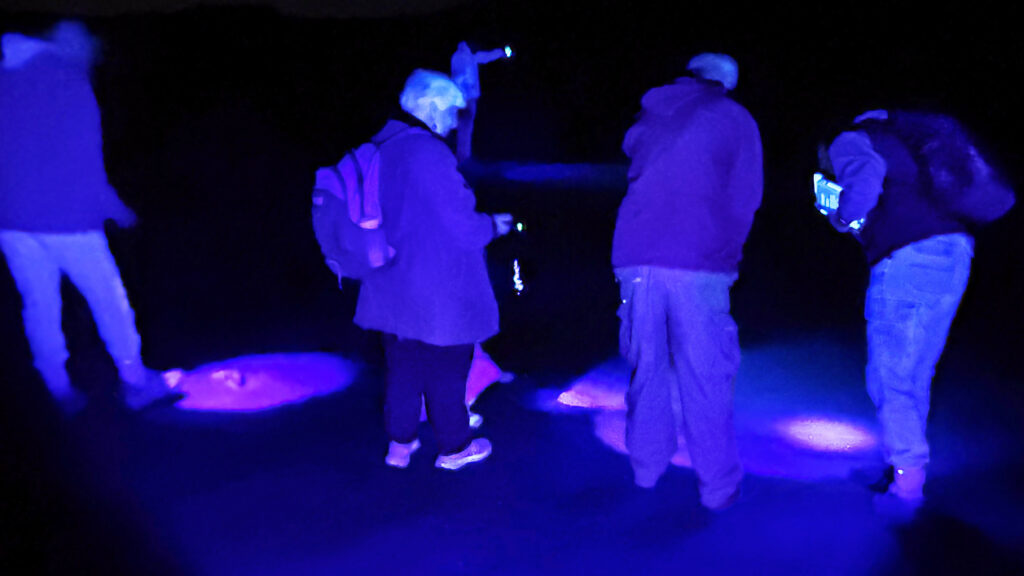
Unmasking the Shadows: How We Uncover Hidden Truths
Despite the formidable efforts to conceal them, hidden truths rarely remain buried forever. The relentless dedication of truth-seekers, combined with evolving tools and methodologies, allows us to piece together the fragments of suppressed history. This is where the investigative, thought-provoking work truly shines.
Case Files: Illuminating Specific Cover-Ups
History is replete with examples of deliberate suppression, and the persistent efforts to unmask them serve as powerful reminders of the importance of this work.
Take the Tulsa Race Massacre of 1921. For decades, this horrific event, where a prosperous Black community was bombed from the air and thousands were displaced or killed, was largely erased from official history books and public memory. Local newspapers initially downplayed or distorted the events, and state and federal authorities largely ignored it. It was through the persistent efforts of survivors, Black historians, and later, investigative journalists and state commissions, that the hidden truths finally emerged, revealing the extent of the violence and the subsequent cover-up.
Another chilling example is Unit 731 of the Imperial Japanese Army during World War II. For years after the war, the horrific human experimentation conducted by this unit was largely suppressed, particularly due to a deal struck by the U.S. government to gain access to the research data in exchange for immunity for the perpetrators. It took decades of persistent research by historians, the testimonies of former members and victims, and the eventual declassification of documents to bring the full scope of these atrocities to international attention.
Even within democratic societies, cover-ups occur. Operation Mockingbird, a purported CIA program involving the manipulation of media during the Cold War, was vehemently denied for years. It was through the persistent investigations of journalists, congressional inquiries such as the Church Committee, and the eventual declassification of some documents that the extent of CIA involvement in media and cultural manipulation began to surface, revealing hidden truths about government influence on public perception.
These examples, among countless others related to colonial exploitation, environmental disasters, or political assassinations, underscore a common thread: the truth, however inconvenient, often finds a way to surface through diligent, courageous inquiry.
The Profound Impact of Revelation: Why Hidden Truths Matter
Unmasking suppressed history is far more than an academic exercise; it has profound implications for societies, individuals, and our collective future. The illumination of hidden truths can resonate across generations, shaping our understanding of justice, identity, and accountability.
Navigating the Modern Landscape: The Ongoing Challenge of Revisionist History
The work of unmasking suppressed history is never truly finished. We live in an era where the lines between legitimate historical revision and deliberate denialism are often blurred. Genuine historical revision is a healthy, essential part of scholarship, where new evidence or methodologies lead to a re-evaluation of past events. However, a more insidious form of revisionist history actively seeks to distort, deny, or whitewash historical facts, often driven by political or ideological agendas.
The digital age presents both unprecedented opportunities and significant challenges for truth-seekers. On one hand, vast amounts of information are now accessible, allowing for quicker cross-referencing and the amplification of marginalized voices. Whistleblowers can reach global audiences instantly. On the other hand, the same digital tools can be used to propagate misinformation at an alarming rate, create echo chambers, and make it harder for genuine historical research to cut through the noise. We are constantly confronted with new attempts to suppress truths, from climate change denial to the downplaying of human rights abuses.
Therefore, the pursuit of hidden truths remains an urgent and ongoing endeavor. It requires not only the diligent work of historians and scholars but also the vigilance of every individual committed to understanding the world accurately. It demands a willingness to question, to investigate, and to stand firm against those who would prefer the past remain shrouded in convenient darkness.
Conclusion
The journey into unmasking censored histories is a profound and often challenging one. It compels us to confront uncomfortable realities, to question authority, and to recognize that history is not a fixed monument but a living, breathing narrative constantly being shaped and reshaped. By illuminating hidden truths and exposing historical cover-ups, we not only gain a more accurate understanding of our past but also equip ourselves with the wisdom and critical tools necessary to navigate the complexities of our present and future. The shadows of history hold powerful lessons, and it is our duty to bring them into the light.
The pursuit of truth is a continuous journey. Subscribe for exclusive updates on suppressed historical evidence and join a community dedicated to uncovering the full story of our past.