
Cracking Ancient Enigmas: Exploring Mysteries and Lost Knowledge from the Past
The human story is etched not just in triumphs and innovations, but also in the enduring questions left behind by those who came before us. From colossal structures built with impossible precision to undeciphered texts and entire civilizations that vanished without a trace, ancient mysteries continue to captivate our imaginations. These unsolved puzzles hint at lost knowledge and enigmatic artifacts, challenging our understanding of what was possible in the deep past and urging us to delve deeper into the secrets of our shared heritage.
For millennia, humanity has gazed upon the remnants of ancient cultures, marveling at their ingenuity while simultaneously being baffled by their origins, purposes, and ultimate fates. What secrets lie buried beneath the sands of time, waiting to be rediscovered? What wisdom did our ancestors possess that has slipped through the cracks of history? Join us on a journey through some of the most profound ancient enigmas, exploring the whispers of lost knowledge and the artifacts that continue to defy modern explanation.

Echoes from the Deep Past: Unveiling Ancient Mysteries
Imagine a world where the lines between myth and history blur, where colossal achievements seem to spring from impossible circumstances. These are the realms of ancient mysteries, where the sheer scale and sophistication of forgotten civilizations force us to reconsider everything we thought we knew about early human capabilities.
The Builders of the Impossible: Megalithic Marvels
Some of the most striking ancient mysteries revolve around monumental architecture that seems to defy the known technological capabilities of the time. How were these massive structures conceived, engineered, and erected?
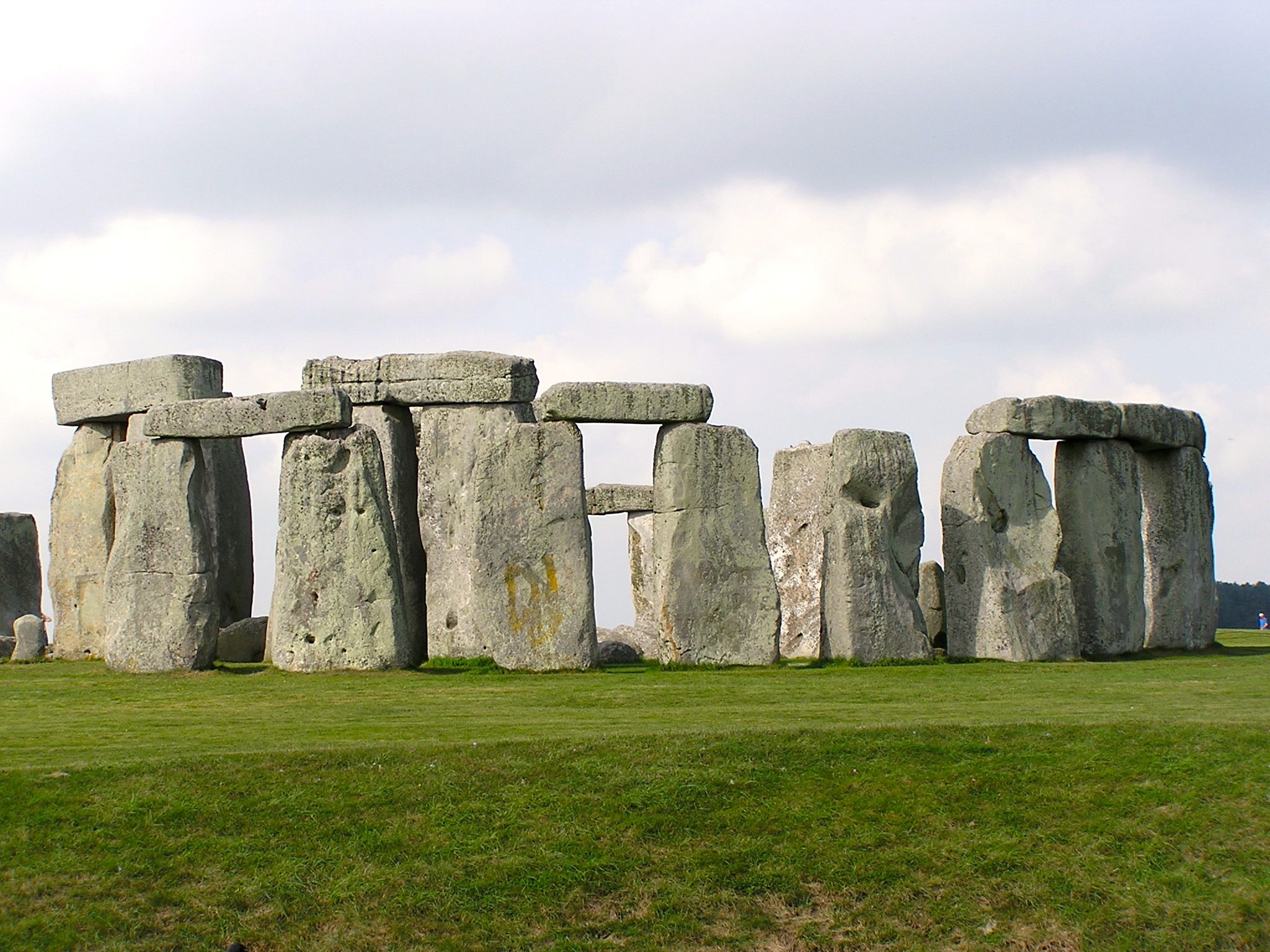
Stonehenge: Standing proudly on England’s Salisbury Plain, Stonehenge is arguably the world’s most famous prehistoric monument. This ring of colossal standing stones, some weighing up to 50 tons, was erected between 3000 and 2000 BC. Its precise astronomical alignments suggest a sophisticated understanding of the cosmos, possibly serving as an ancient observatory, a sacred burial ground, or a ceremonial site. Yet, the exact methods used to quarry, transport, and precisely place these enormous stones, some from hundreds of miles away, remain a subject of intense debate. Was it brute force, ingenious leverage, or a combination of techniques that have since been lost to time? The true purpose and the full story of its builders remain tantalizingly out of reach.
Image Alt Text: The majestic stone circle of Stonehenge at dawn, with rays of sunlight breaking through the ancient megaliths.
The Pyramids of Giza: The Great Pyramids of Giza, particularly the Pyramid of Khufu, are engineering marvels that continue to astound. Built over 4,500 years ago, these immense structures consist of millions of precisely cut and fitted stone blocks, some weighing many tons. Their near-perfect alignment with cardinal directions and celestial bodies, along with the incredible precision of their construction, has fueled theories ranging from advanced lost technology to extraterrestrial assistance. While mainstream archaeology offers compelling theories involving ramps, levers, and massive labor forces, the sheer scale and accuracy still leave many questions unanswered about the logistics, the tools, and the ultimate “secret” of their construction.
Göbekli Tepe: Perhaps one of the most revolutionary archaeological discoveries of recent times is Göbekli Tepe in southeastern Turkey. Dating back to around 9600 BC, it is considered the world’s oldest known temple complex, predating Stonehenge by over 6,000 years and the invention of agriculture by millennia. Its massive T-shaped pillars, intricately carved with animals and abstract symbols, suggest a complex, organized society of hunter-gatherers capable of monumental construction and symbolic thought far earlier than previously imagined. Göbekli Tepe challenges our understanding of the origins of civilization, suggesting that organized religion and monumental architecture may have predated settled agricultural communities, flipping conventional historical narratives on their head.

Vanished Civilizations and Lost Worlds
Beyond impressive structures, history is replete with tales of entire cultures that rose to prominence only to disappear, leaving behind enigmatic clues and tantalizing questions about their fate and what knowledge they may have carried with them.
Atlantis: The legend of Atlantis, first recounted by Plato, describes a technologically advanced island civilization that sank beneath the waves in a single day and night of catastrophic events. For centuries, explorers, historians, and dreamers have searched for evidence of this lost continent, from the Mediterranean to the Caribbean. While most scholars consider Atlantis a philosophical allegory, the enduring myth speaks to humanity’s fascination with lost golden ages and the possibility of advanced societies predating our own, whose knowledge was swallowed by the sea. Could there be a grain of truth in Plato’s tale, or does the search for Atlantis simply reflect our desire to believe in something more?
Rapa Nui (Easter Island): The remote island of Rapa Nui, famous for its colossal moai statues, presents a stark mystery of societal collapse. How did the ancient Rapanui people, isolated in the Pacific, carve and transport these enormous stone figures, some weighing over 75 tons, across the island? What led to the deforestation of the island and the subsequent collapse of their once-thriving civilization? Theories range from environmental degradation due to overpopulation to internal warfare and resource depletion. The island also possesses the undeciphered script known as Rongorongo, a unique system of glyphs that may hold vital clues to their history and beliefs, yet its secrets remain locked away.
Image Alt Text: Several ancient Moai statues stand facing inland on Easter Island, with the vast Pacific Ocean stretching behind them.
The Indus Valley Civilization: Flourishing around 2500-1900 BC in what is now Pakistan and northwest India, the Indus Valley Civilization was one of the world’s three early cradle civilizations, alongside ancient Egypt and Mesopotamia. It boasted advanced urban planning, sophisticated drainage systems, and a unique, undeciphered script. Cities like Mohenjo-Daro and Harappa were meticulously laid out, suggesting a highly organized society, yet there is little evidence of kings, armies, or grand temples. The civilization’s sudden decline around 1900 BC remains a puzzle, with theories including climate change, shifting river patterns, and disease. The inability to read their script means their voice, their history, and the full extent of their lost knowledge remain silent.
Cryptic Clues and Enigmatic Artifacts
Sometimes, the past speaks to us not through grand monuments, but through individual objects – artifacts whose origins, purpose, or very existence challenge our understanding of ancient capabilities. These enigmatic items often spark intense debate and fuel theories of lost technologies or forgotten wisdom.

Texts That Time Forgot: Undeciphered Scripts
The ability to write is one of humanity’s greatest achievements, a way to record knowledge and transmit it across generations. But what happens when that key is lost, and ancient texts become impenetrable puzzles?
The Voynich Manuscript: Discovered in 1912 by Polish book dealer Wilfrid Voynich, this medieval codex is perhaps the most famous undeciphered book in the world. Its 240 vellum pages are filled with strange botanical drawings, astronomical charts, biological sections, and cosmological diagrams, all accompanied by a unique, flowing script that has defied cryptographers, linguists, and codebreakers for centuries. Is it an elaborate hoax, a lost language, a coded message, or perhaps a secret medical text? The mystery of the Voynich Manuscript continues to baffle, hinting at a lost body of knowledge or a deeply personal, hidden world.
Image Alt Text: An open page of the Voynich Manuscript displaying intricate, unidentifiable plant illustrations and lines of its mysterious, undeciphered script.
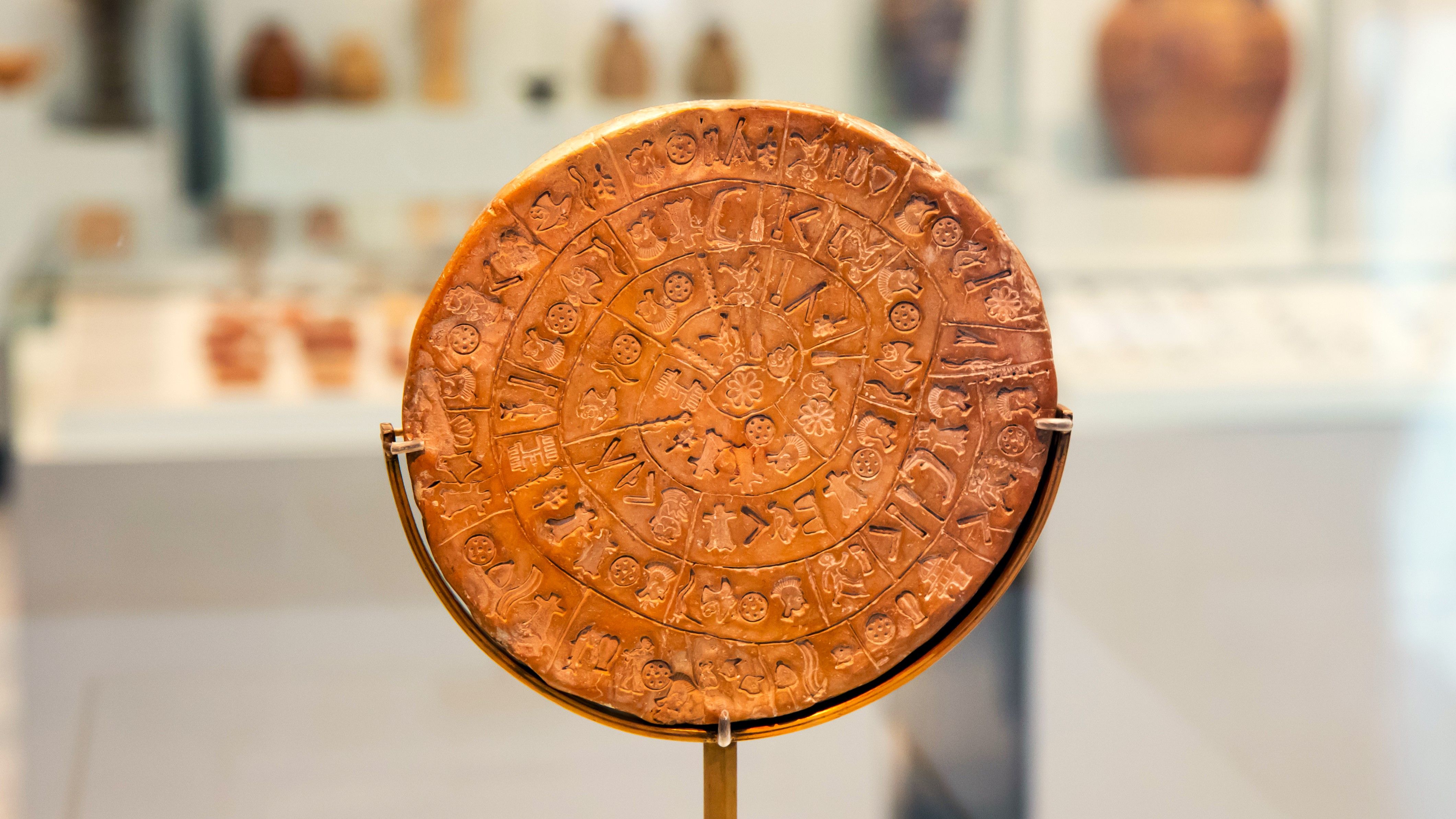
The Phaistos Disc: Unearthed in 1908 from the Minoan palace of Phaistos on Crete, this clay disc, dating to around 1700 BC, is stamped on both sides with a spiral sequence of 241 unique symbols. What makes it truly enigmatic is that these symbols appear to have been pressed into the wet clay using individual hieroglyphic “stamps,” making it a potential candidate for the world’s earliest known example of printing with movable type. No other artifact quite like it has ever been found, and its language, purpose, and the meaning of its symbols remain a complete mystery, a solitary voice from a distant past.
Linear A: The Minoan civilization of ancient Crete (c. 2700–1450 BC) developed two primary scripts: Linear A and Linear B. While Linear B, used by the Mycenaean Greeks, was famously deciphered in the 1950s, Linear A continues to resist all attempts at translation. Its structure appears similar to Linear B, but the underlying language is unknown. What stories, administrative records, or religious texts might be locked within these tablets? Deciphering Linear A could unlock a treasure trove of information about the sophisticated Minoan culture, offering insights into their beliefs, societal structure, and the full extent of their lost knowledge.
Objects of Unknown Origin and Purpose
Sometimes, it’s not a text but a physical object that sparks the most intense questions, hinting at technological capabilities far beyond what we attribute to ancient peoples.
The Antikythera Mechanism: Discovered in a shipwreck off the coast of the Greek island of Antikythera in 1901, this corroded bronze device is nothing short of astounding. Dating to around 150-100 BC, it is an incredibly complex analog computer, featuring a sophisticated system of dozens of interlocking bronze gears. It was designed to predict astronomical positions and eclipses for calendrical and astrological purposes. The precision and complexity of the Antikythera Mechanism are unparalleled for over a millennium, leading many to wonder how such advanced engineering was achieved and if it was a unique invention or merely one surviving example of a lost tradition of intricate clockwork technology. It forces us to reconsider the technological prowess of the ancient Greeks.
Image Alt Text: A detailed close-up of the reconstructed Antikythera Mechanism, showing its intricate bronze gears and calibrated dials.
The Baghdad Battery: Also known as the Parthian Battery, this artifact, discovered near Baghdad in 1936, consists of a clay jar containing a copper cylinder and an iron rod. Dating from the Parthian era (c. 250 BC – AD 224), some researchers propose it was an ancient electrical battery, capable of generating a small voltage if filled with an electrolyte like vinegar or grape juice. While its exact purpose is debated—it could have been used for electroplating jewelry, for medicinal purposes, or even as a ritual object to create a “shocking” experience—the possibility of ancient electrical knowledge is intriguing and challenges our assumptions about technological development.
The Crystal Skulls: These human skull-shaped artifacts, purportedly made from quartz crystal, gained notoriety in the late 19th and early 20th centuries. Often attributed to ancient Mesoamerican civilizations like the Maya or Aztecs, they were claimed to possess mystical powers or represent a lost, advanced technology. However, scientific analysis has largely debunked their ancient origins, revealing tool marks consistent with 19th-century lapidary techniques. While likely modern forgeries, the enduring myth of the crystal skulls highlights our desire to project advanced or supernatural capabilities onto ancient cultures, reflecting our own fascination with lost wisdom and hidden powers.
Whispers of Lost Knowledge: Advanced Science and Forgotten Wisdom
The recurring theme in many ancient mysteries is the hint of a scientific or philosophical understanding that seems far ahead of its time. Could ancient civilizations have possessed knowledge that we are only now beginning to grasp, or perhaps knowledge that has been entirely forgotten?
Astronomy and Mathematics Beyond Their Time
From megalithic observatories to intricate calendars, ancient peoples demonstrated a profound connection to the cosmos and an impressive grasp of numerical systems.
The Mayan Calendar: The ancient Maya civilization of Mesoamerica developed an incredibly sophisticated and accurate calendar system, far more complex than the Gregorian calendar we use today. Their Long Count calendar, with its intricate cycles and precise calculations, demonstrated a deep understanding of astronomy, mathematics, and the passage of time. They accurately predicted eclipses, solstices, and planetary movements. While the “end of the world” prophecies associated with their calendar were misinterpretations, the sheer intellectual achievement behind its creation points to a lost body of astronomical and mathematical knowledge that allowed them to track celestial events with astonishing precision.
The Nazca Lines: Etched into the arid plains of Peru, the Nazca Lines are geoglyphs of enormous proportions, depicting animals, plants, geometric shapes, and human-like figures. Created by the Nazca culture between 500 BC and AD 500, these designs are so vast that they can only be fully appreciated from the air. Their purpose remains a subject of intense speculation: were they astronomical observatories, ritualistic paths for religious ceremonies, giant calendars, or even signals to the gods? The precision with which they were laid out over vast distances, without the benefit of aerial perspective, speaks to a sophisticated understanding of geometry and surveying techniques that continues to puzzle modern researchers.
Image Alt Text: An aerial view of the Nazca Lines in Peru, clearly showing the intricate geoglyph of a hummingbird etched into the desert landscape.
Ancient cultures worldwide, from the Egyptians to the Chinese, meticulously charted the stars and developed complex mathematical systems. The precision of temple alignments, the development of advanced geometry, and the ability to predict celestial events all suggest a hidden depth of scientific understanding that we are still working to fully comprehend.
Forgotten Medical and Engineering Prowess
Beyond abstract sciences, evidence suggests ancient peoples possessed practical skills in medicine and engineering that were remarkably advanced.
Ancient Surgery: Archaeological findings and ancient texts reveal surprising insights into ancient medical practices. Evidence of trepanation (drilling holes into the skull) has been found in prehistoric remains across continents, often with signs of bone regrowth, suggesting patients survived the procedure. Ancient Egyptians had sophisticated medical texts, and the Greeks, particularly Hippocrates, laid the foundations for modern medicine. Even basic prosthetics, such as artificial toes, have been discovered in ancient Egyptian tombs. While often rudimentary by modern standards, these practices demonstrate a remarkable willingness to intervene surgically and a degree of anatomical understanding.
Roman Concrete: The durability of ancient Roman structures, many of which still stand today, is a testament to their engineering genius, particularly their use of concrete. Roman concrete, a mix of volcanic ash, lime, and seawater, was incredibly strong and resistant to decay, even in harsh marine environments. Recent research suggests it possessed self-healing properties, allowing it to withstand millennia of wear and tear. This ancient recipe, superior in some ways to modern concrete, represents a lost material science that we are only now beginning to fully understand and replicate.
Internal Link Opportunity: Learn more about the incredible feats of ancient engineering in our article on “The Marvels of Roman Architecture.”
Water Management Systems: Across the globe, ancient civilizations developed ingenious systems for managing water, crucial for agriculture and urban life. The Roman aqueducts, some of which still supply water today, are iconic examples. In ancient Persia, the qanats were underground tunnels used to tap into groundwater and transport it over long distances, preventing evaporation. The sophisticated irrigation systems of the Maya, the stepwells of India, and the intricate canal networks of Mesopotamia all speak to a deep understanding of hydrology and civil engineering that sustained vast populations in challenging environments.
The Quest for Answers: Why Do These Puzzles Endure?
If ancient civilizations were so advanced, why do so many of their achievements remain shrouded in mystery? The simple answer is the relentless march of time and the fragility of human knowledge. Natural disasters, wars, neglect, and the sheer passage of millennia have erased countless records. Languages die, technologies are forgotten, and the context necessary to understand artifacts vanishes.
Archaeology, linguistics, and modern scientific techniques like remote sensing and carbon dating are constantly bringing new pieces of the puzzle to light. Yet, each discovery often raises more questions than it answers. The absence of complete records, the destruction of libraries (like the legendary Library of Alexandria), and the inherent difficulty in interpreting ancient minds and cultures from fragmented evidence mean that many enigmas may never be fully “solved.” The human mind also tends to favor grand, mysterious explanations, sometimes overlooking simpler, though still ingenious, ancient solutions.
Bridging the Past and Present: What Lost Knowledge Can Teach Us
The study of ancient mysteries is more than just a historical curiosity; it offers profound lessons for the present and future. It reminds us of the cyclical nature of knowledge, how innovation can be lost and rediscovered. It fosters humility, showing that even the most advanced societies can falter and that our own scientific understanding is but a fleeting moment in a much longer human story.
Furthermore, exploring these enigmas inspires new avenues of inquiry. Researchers are studying Roman concrete to develop more sustainable building materials, while others are analyzing ancient astronomical data to understand long-term climate patterns. The ingenuity of ancient engineers, the wisdom of their healers, and the complexity of their worldviews challenge us to think differently, to look beyond conventional narratives, and to appreciate the boundless potential of the human mind throughout history. These mysteries are not just about what was lost, but about what we can still gain from the echoes of the past.
The journey into ancient enigmas is a perpetual adventure, a testament to humanity’s enduring curiosity and the vast, unexplored territories of our shared history. Each unsolved puzzle is an invitation to look closer, think deeper, and imagine the incredible stories that lie just beyond our current grasp.
Ready to test your own detective skills and delve deeper into the fascinating world of ancient enigmas? Take our interactive quiz now and uncover more secrets from the past!
—
Internal Link Opportunity: Explore other fascinating historical topics in our article, “Unearthing the World’s Most Famous Archaeological Sites.”
External Link Suggestion: For more on specific archaeological discoveries, consider linking to a reputable source like Smithsonian Magazine or National Geographic.
External Link Suggestion: For academic insights into ancient technologies, a link to an institution like the British Museum or a university’s archaeology department might be appropriate.
This article is suitable for Article structured data.