
The Vanished Ninth Legion: Unraveling One of Rome’s Greatest Military Mysteries
The Roman Empire, a colossus of the ancient world, left behind an astonishing legacy of engineering, law, and military might. Yet, even for an empire so meticulous in its record-keeping, certain enigmas persist, none perhaps more enduring and captivating than the fate of Legio IX Hispania, the Ninth Spanish Legion. This celebrated fighting force, with a history stretching back to Julius Caesar, simply disappears from the historical record in the early 2nd century CE, leaving historians and archaeologists to piece together its final, perplexing chapter. Its vanishing act has fueled centuries of speculation, giving rise to dramatic tales of annihilation, transfer, and quiet dissolution, making it one of the most compelling archaeological mysteries of the ancient world.

The Illustrious History of Legio IX Hispania
To understand the enigma of its disappearance, one must first appreciate the Ninth Legion’s formidable history and reputation.

From Caesar to Conquest
Legio IX Hispania was not just any legion; it was an ancient and distinguished unit with roots tracing back to the Roman Republic. Initially formed by Pompey the Great, it later served with distinction under Julius Caesar during his Gallic Wars (58-50 BCE) and the subsequent Roman Civil Wars. Its steadfast loyalty and effectiveness earned it a prominent place in Caesar’s legions. The cognomen “Hispania” (Spanish) was likely bestowed upon it after its service in Spain, where it participated in campaigns to consolidate Roman control over the Iberian Peninsula. Throughout the tumultuous years of the late Republic and early Empire, Legio IX proved itself a reliable and battle-hardened force, participating in critical engagements that shaped the Roman world.
A Stint in Britain
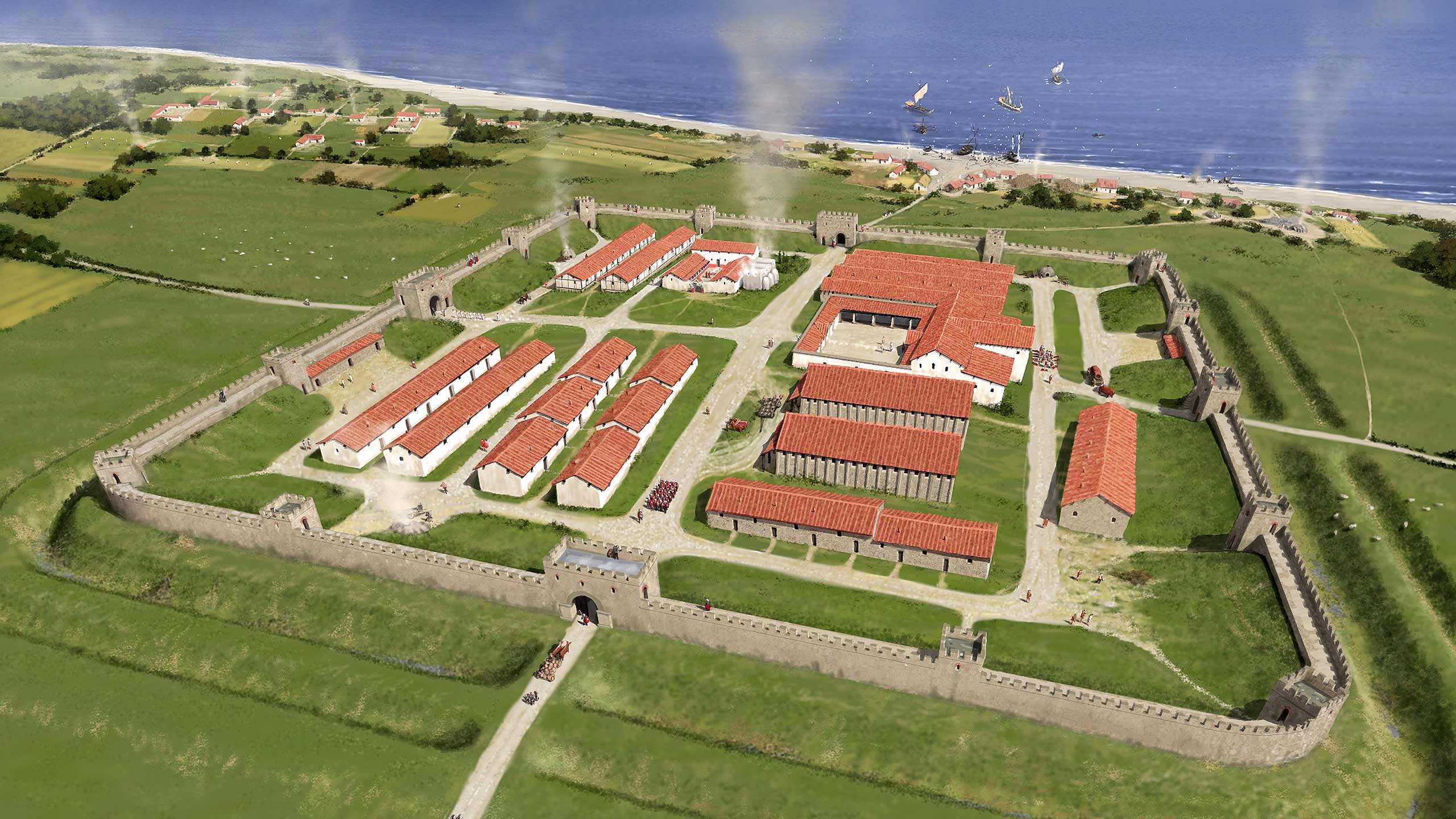
By the mid-1st century CE, the Ninth Legion had become a veteran unit, and its next major assignment would take it to the distant, often tempestuous, shores of Britannia. In 43 CE, under the command of Aulus Plautius, Legio IX Hispania was one of the four legions that spearheaded the Roman invasion of Britain. For decades, it played a crucial role in the conquest and pacification of the island, establishing a formidable presence in the newly acquired province.
Its most famous, or infamous, engagement in Britain occurred during the Boudican Revolt (60-61 CE). While stationed at Camulodunum (modern Colchester), a detachment of the Ninth, under its legate Quintus Petillius Cerialis, suffered a catastrophic defeat at the hands of Boudica’s Iceni warriors. According to the Roman historian Tacitus, the legion was almost entirely wiped out, with only Cerialis and a small cavalry contingent escaping. However, the legion was swiftly reinforced from Germania, rebuilt its ranks, and continued to serve in Britain, eventually establishing its permanent fortress at Eboracum (modern York) around 71 CE. This recovery demonstrates the Roman capacity for military resilience and the significant investment in maintaining their legions.

The Enigma of Its Disappearance: When and Where?
The historical record becomes notably sparse regarding Legio IX Hispania after the first decade of the 2nd century CE. This silence is the heart of the mystery, leading to two primary, competing theories about its fate.
The British Annihilation Theory (Pre-Hadrian)
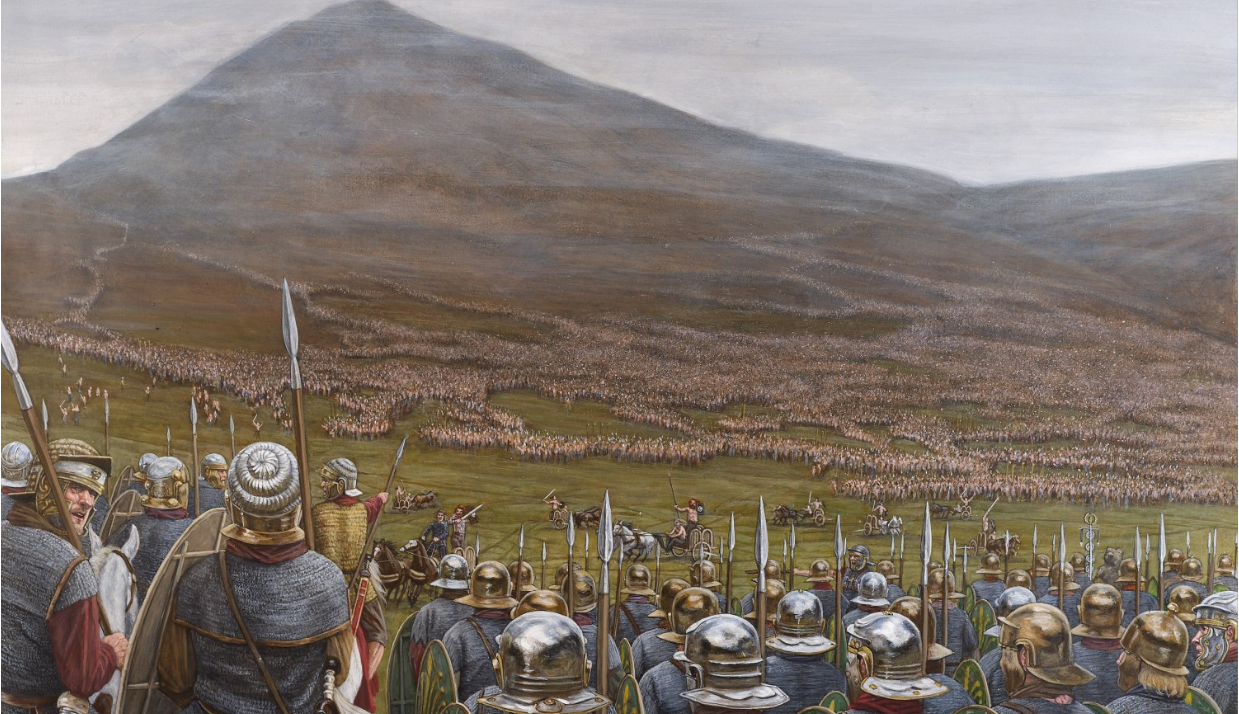
For many years, the most popular theory, especially in British popular culture, held that Legio IX was annihilated in northern Britain sometime between 108 and 117 CE. This period was marked by significant unrest and fierce resistance from the indigenous tribes north of what would become Hadrian’s Wall.
The argument for this theory rests on several points:
- Archaeological Evidence in Britain: Inscriptions and other archaeological finds confirm the Ninth Legion’s presence at Eboracum and other British sites up to 108 CE. After this date, evidence for the legion in Britain simply ceases.
- Historical Context: Roman Britain faced severe challenges during the early 2nd century. Cassius Dio, a Roman historian, mentions a period of significant losses for the Romans in Britain under Emperor Hadrian, stating that “the Britons did not submit to their rule.” This could be interpreted as a context for a major legionary disaster.
- The Bar Kokhba Revolt (132-136 CE): Some historians propose that the Ninth Legion might have been deployed to the East to suppress the massive Jewish revolt led by Simon bar Kokhba in Judea. Roman forces suffered heavy casualties during this conflict, and several legions were involved. It is plausible, though not definitively proven, that the Ninth Legion could have been destroyed or severely depleted during these brutal campaigns.
- Hadrian’s Military Reforms: Emperor Hadrian, who reigned from 117 to 138 CE, was known for his military reorganizations and consolidations. It is entirely possible that a depleted or underperforming legion, even one with a long history, could have been disbanded or merged with others during his reign, especially if it suffered heavy losses in a distant campaign.
- A Mass Grave: A large-scale burial site for thousands of Roman soldiers.
- Extensive Battle Scars: Evidence of a catastrophic defeat, such as widespread destruction, abandoned equipment, or fortifications overrun.
Absence from Later Records: The Notitia Dignitatum*, a late Roman document detailing military units, does not list Legio IX, confirming its disappearance by the late 4th or early 5th century CE.
The allure of a mighty Roman legion being swallowed whole by the wild British north is powerful, inspiring countless works of fiction. However, as we will see, historical and archaeological consensus has largely moved away from this dramatic scenario.
The Eastern Transfer Theory
A growing body of evidence, particularly epigraphic (inscriptions), strongly suggests that Legio IX Hispania was transferred out of Britain and eventually met its end elsewhere, most likely in the eastern Roman Empire.
Key pieces of evidence supporting an Eastern transfer include:
Inscriptions from Germania Inferior: Crucially, a tile stamp bearing the legion’s mark (LEG IX HISP) was found at Nijmegen (modern Netherlands), in the province of Germania Inferior. More significantly, inscriptions for individual soldiers of Legio IX Hispania have been discovered in the same region, dated to 121 CE – after* its supposed annihilation in Britain. This directly contradicts the British annihilation theory, proving the legion was still active and intact at this later date.
This theory posits a less dramatic, but perhaps more historically probable, end for the Ninth: not a single, catastrophic annihilation, but a gradual decline, heavy losses in a different theater, and eventual disbandment or absorption into other units.
The Scanty Threads of Evidence: What Archaeology Reveals
Archaeology plays a critical role in sifting through the theories surrounding the Ninth Legion. While it hasn’t provided a smoking gun, it offers vital clues.
Inscriptions and Tombstones
The most concrete evidence comes from epigraphy – the study of inscriptions.
British Inscriptions: As noted, funerary monuments and dedications for soldiers of Legio IX Hispania have been found in and around York (Eboracum), confirming its presence there until the early 2nd century CE. These provide a terminus post quem* (earliest possible date) for its disappearance from Britain.
Nijmegen Inscriptions: The aforementioned discoveries in Nijmegen are pivotal. They establish a terminus post quem for the legion’s existence beyond* its supposed destruction in Britain, pushing its active service into at least the early years of Hadrian’s reign. This evidence is crucial for shifting the historical consensus away from the British annihilation theory.
Absence of Later Records: The fact that the Ninth Legion does not appear in the Notitia Dignitatum – a comprehensive list of Roman military units from the late 4th to early 5th century CE – confirms that it was no longer an active legion by that point. However, this only tells us it vanished sometime* before that, not precisely when or how.
Absence of Evidence
Perhaps as telling as the existing evidence is the absence of certain evidence. If the Ninth Legion had been annihilated in a major battle in northern Britain, one would expect to find:
Despite extensive archaeological work in northern Britain, no such definitive evidence of a major legionary disaster has ever been found that could credibly be attributed to the Ninth Legion. This lack of a “battlefield grave” significantly weakens the British annihilation theory. Similarly, while the Bar Kokhba Revolt was devastating, no specific archaeological site has been definitively identified as the final resting place of Legio IX in the East.
Fact vs. Fiction: Debunking Popular Myths
The mystery of the Ninth Legion has proven irresistible to storytellers, leading to the creation of compelling narratives that, while entertaining, often diverge significantly from historical and archaeological fact.
The “Eagle of the Ninth” Myth
Perhaps the most famous popularization of the British annihilation theory comes from Rosemary Sutcliff’s 1954 historical novel, The Eagle of the Ninth. This beloved children’s book, and its subsequent film adaptation (The Eagle), tells the story of a young Roman officer who ventures beyond Hadrian’s Wall to recover the lost eagle standard of his father’s legion, the Ninth, which was supposedly wiped out by Pictish tribes in Scotland.
While a masterful piece of historical fiction that captured the imagination of generations, Sutcliff’s narrative, by its own admission, is a work of imagination. It cemented the idea of the Ninth Legion’s dramatic and complete destruction in the British wilds in the popular consciousness, despite the mounting archaeological evidence suggesting a different fate. It’s vital to distinguish between such compelling storytelling and the rigorous pursuit of historical truth.
Internet Speculation and Sensationalism
In the age of digital information, the mystery of the Ninth Legion continues to be a fertile ground for internet theories, ranging from the plausible to the utterly fantastical. Some websites or forums might present unsupported claims as facts, or conflate fictional accounts with historical evidence. It is crucial for anyone interested in ancient history and archaeological mysteries to approach such claims with a critical eye, always seeking verification from reputable academic sources and archaeological findings. The true fascination lies not in invented drama, but in the painstaking work of historians and archaeologists to piece together fragments of evidence.
Historians’ Leading Interpretations
Modern scholarship has largely coalesced around the Eastern transfer theory, though the exact circumstances of the Ninth’s ultimate demise remain a subject of ongoing debate.
The “Lost in the East” Consensus
Most contemporary historians and archaeologists now favor the view that Legio IX Hispania was transferred from Britain to Germania Inferior around 108-117 CE, likely to reinforce the legions there or to participate in campaigns along the Rhine frontier. The evidence from Nijmegen is simply too strong to ignore.
From Germania Inferior, its movements become murkier. It’s plausible that the legion, or at least detachments of it, was subsequently redeployed to the East, possibly to the volatile regions of Judea, Cappadocia, or Armenia, where Rome was frequently engaged in warfare. A major conflict like the Bar Kokhba Revolt (132-136 CE) offers a compelling, though unproven, scenario for its eventual destruction or severe depletion. Alternatively, it might have suffered heavy losses in another conflict or slowly withered away due to attrition and lack of recruitment, eventually being disbanded or absorbed into other legions without a dramatic final battle. The lack of its listing in the Notitia Dignitatum merely indicates it was no longer a distinct unit by the late Roman period.
The Challenge of Incomplete Records
Ultimately, the enduring mystery of Legio IX Hispania highlights a fundamental challenge in ancient discoveries and historical mysteries: the incompleteness of the historical record. Despite the vast archives of the Roman Empire, gaps exist. Scrolls perish, inscriptions erode, and events considered minor at the time may not have been meticulously recorded for posterity. The disappearance of a legion, while significant to us, might have been a gradual process or a consequence of administrative changes that simply weren’t deemed worthy of detailed chronicling by subsequent generations. This limitation forces historians to rely on circumstantial evidence, inference, and the careful interpretation of what little survives.
The Enduring Allure of the Vanished Legion
The mystery of the Ninth Legion continues to captivate because it touches upon fundamental human fascinations: the unknown, the fragility of power, and the limits of knowledge. The idea of an entire, powerful Roman legion—a force of thousands of highly trained soldiers, a symbol of empire—simply vanishing from the face of the earth is inherently dramatic. It reminds us that even the mightiest civilizations can leave behind unanswered questions, and that the past is far from a fully understood narrative.
This forgotten history invites us to engage with archaeology not just as a collection of facts, but as an ongoing investigation, a puzzle with missing pieces where every new inscription or excavated artifact can potentially rewrite a chapter of our understanding. The Ninth Legion remains a powerful symbol of the enduring appeal of ancient world enigmas.
Conclusion
The fate of Legio IX Hispania, the storied Ninth Spanish Legion, is one of the most persistent and debated archaeological mysteries of the Roman history. While popular narratives often depict its dramatic annihilation in the wilds of northern Britain, the weight of ancient artifacts and archaeological evidence, particularly inscriptions from Germania Inferior, strongly suggests a different trajectory. It is now widely accepted that the legion was transferred out of Britain around 117 CE, likely serving on the Rhine frontier before possibly being deployed further East. There, amidst the complex military landscape of the Roman Empire, it most probably met its end through attrition, battle, or eventual disbandment, rather than a single, cataclysmic event in Britain.
The exact circumstances of its final demise may forever elude us, a testament to the gaps in Roman record-keeping and the relentless march of time. Yet, the ongoing investigation into the Ninth Legion underscores the vibrant, dynamic nature of historical inquiry, where new discoveries continually challenge old assumptions and keep the ancient world alive with intrigue.
Discover more documented mysteries and forgotten stories at TrueHistories.com.