
Unveiling Hidden Empires: Modern Archaeology’s Quest for Lost Civilizations
Imagine a world where entire cities, vast empires, and sophisticated cultures lie buried beneath our feet, hidden by millennia of earth, jungle, or ocean. Modern archaeology, far from being a dusty pursuit of ancient relics, is actively transforming our understanding of human history, continually unearthing these lost worlds. Thanks to groundbreaking technologies and innovative methodologies, we are now discovering—or dramatically re-evaluating—ancient civilizations at an unprecedented pace, revealing the true scale and complexity of humanity’s past and challenging long-held assumptions about how our societies developed.
For centuries, archaeologists relied on intuition, historical texts, and painstaking manual excavation. Today, the field is experiencing a revolution, armed with tools that allow us to see through dense rainforests, peer beneath deserts, and explore ocean floors with astonishing clarity. These advancements are not just finding new ruins; they are redefining what we thought we knew about established civilizations and bringing entirely new, complex societies into the light, proving that the story of humanity is far richer and more intricate than previously imagined.
The Dawn of a New Era: How Modern Archaeology Sees the Unseen
The romantic image of an archaeologist brushing dust from a pottery shard still holds true, but it’s now just one piece of a much larger, technologically driven puzzle. The shift in modern archaeology began with a fundamental change in perspective: moving beyond individual sites to understanding entire landscapes and the complex interactions within ancient societies. This broader view, combined with revolutionary tools, has opened up previously unimaginable possibilities for discovery.
Early archaeology was often serendipitous, relying on chance finds or the rediscovery of sites mentioned in ancient texts. The 20th century brought systematic excavation and scientific analysis. However, it’s the 21st century that has truly revolutionized the search for hidden empires. We’re no longer just digging; we’re surveying vast areas from above and below, analyzing data with artificial intelligence, and even extracting genetic information from ancient remains to trace migrations and relationships. This holistic approach means fewer hidden places remain truly hidden for long.

Peering Through the Veil: Technologies Unlocking Ancient Secrets
The ability to “see” through natural obstructions is the cornerstone of modern archaeological discovery. These technologies allow researchers to identify potential sites, map their layouts, and plan excavations with precision, drastically reducing time and cost while maximizing scientific yield.
- LiDAR (Light Detection and Ranging): The Rainforest’s X-Ray
- Ground-Penetrating Radar (GPR): Unveiling Buried Structures
- Satellite Imagery and Remote Sensing: Eyes in the Sky
- Underwater Archaeology: Exploring the Submerged Past
- Geographic Information Systems (GIS): Mapping the Past
- Genetic Archaeology and Bioarchaeology: Unraveling Human Stories
Perhaps the most game-changing technology for finding hidden empires in dense, vegetated areas is LiDAR. Mounted on aircraft or drones, LiDAR systems emit millions of laser pulses per second. These pulses penetrate gaps in the tree canopy, bounce off the forest floor, and return to the sensor, creating a detailed 3D map of the terrain beneath the vegetation. By digitally removing the trees, archaeologists can reveal ancient roads, agricultural terraces, defensive walls, and entire urban landscapes that have been invisible for centuries. This technology has been particularly transformative in the Maya lowlands, as we’ll explore shortly.
For sites buried beneath soil, GPR offers a powerful solution. This technique sends radio waves into the ground, which reflect off buried objects and changes in soil composition. By analyzing these reflections, archaeologists can create detailed subsurface maps, identifying walls, foundations, tombs, and other features without disturbing the ground. GPR is invaluable for non-invasive surveys, allowing researchers to understand a site’s layout before a single shovel breaks the soil.
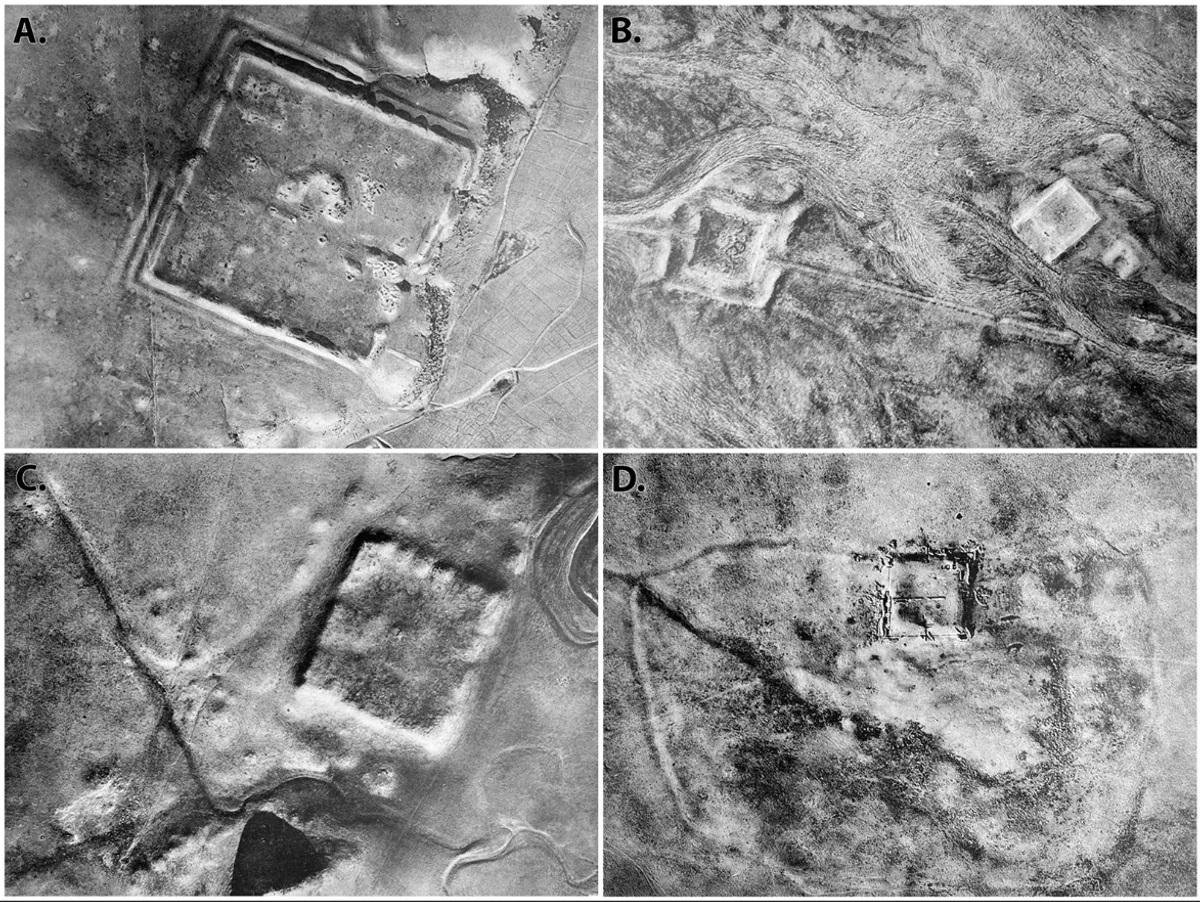
High-resolution satellite imagery, including multispectral and hyperspectral imaging, provides a bird’s-eye view of vast landscapes. Different types of vegetation, soil moisture levels, and even subtle changes in topography can indicate the presence of buried structures or ancient land use patterns. By analyzing historical satellite images, researchers can also track changes over time, sometimes revealing features obscured by more recent development.
The oceans and lakes hold countless submerged secrets. Advanced sonar, remotely operated vehicles (ROVs), and autonomous underwater vehicles (AUVs) equipped with cameras and manipulators allow archaeologists to explore shipwrecks, drowned cities, and ancient harbors in extreme depths. These tools have opened up an entirely new frontier for discovering civilizations lost to rising sea levels or natural disasters.
GIS is a powerful framework for organizing, analyzing, and visualizing spatial data. Archaeologists use GIS to integrate data from LiDAR, GPR, satellite imagery, excavation records, and environmental studies. This allows them to create comprehensive maps, identify patterns, model ancient landscapes, and understand the relationships between sites, resources, and trade routes across vast regions.
Beyond structures, modern archaeology delves into the very biology of ancient populations. Advances in ancient DNA (aDNA) analysis allow scientists to extract and sequence genetic material from human remains, plants, and even soil. This provides insights into migration patterns, population movements, diets, diseases, and even social structures, adding a deeply personal layer to the story of hidden empires.

Unearthing Wonders: Remarkable Discoveries of Hidden Empires
These advanced tools are not just theoretical; they are actively rewriting history books with incredible finds. Let’s journey to some of the most compelling examples of hidden empires and civilizations brought to light by modern archaeology.

The Maya Lowlands: A Megalopolis Revealed by LiDAR
For decades, scholars believed the ancient Maya civilization in the lowlands of Guatemala and Belize consisted of scattered city-states connected by a few major routes. The dense jungle canopy, however, made it impossible to grasp the true scale of their urbanism. Then came LiDAR.
In 2018, the PACUNAM LiDAR Initiative, using airborne LiDAR, scanned over 2,000 square kilometers of the Petén region of Guatemala. The results were astounding. What appeared to be pristine jungle was, in fact, a vast, interconnected megalopolis. Researchers uncovered over 60,000 previously unknown structures, including houses, palaces, defensive fortifications, raised highways, and intricate irrigation systems. This wasn’t just a few cities; it was a sprawling, highly engineered landscape supporting millions more people than previously estimated, potentially up to 10–15 million inhabitants during the Maya Classic period (250–900 CE).
This discovery fundamentally altered our understanding of Maya society, revealing a level of agricultural intensification, engineering prowess, and population density comparable to some of the most complex ancient civilizations globally. It showed that the Maya were not simply isolated groups, but part of a highly integrated and sophisticated network that profoundly shaped their environment.
Göbekli Tepe, Turkey: The Dawn of Monumental Architecture
Nestled in southeastern Turkey, Göbekli Tepe is a site that utterly reshaped our understanding of early human civilization. Discovered in 1994 and continuously excavated since, this site dates back to the Pre-Pottery Neolithic period, around 9600–8200 BCE. To put that into perspective, it predates Stonehenge by roughly 6,000 years and the Egyptian pyramids by 7,000 years.
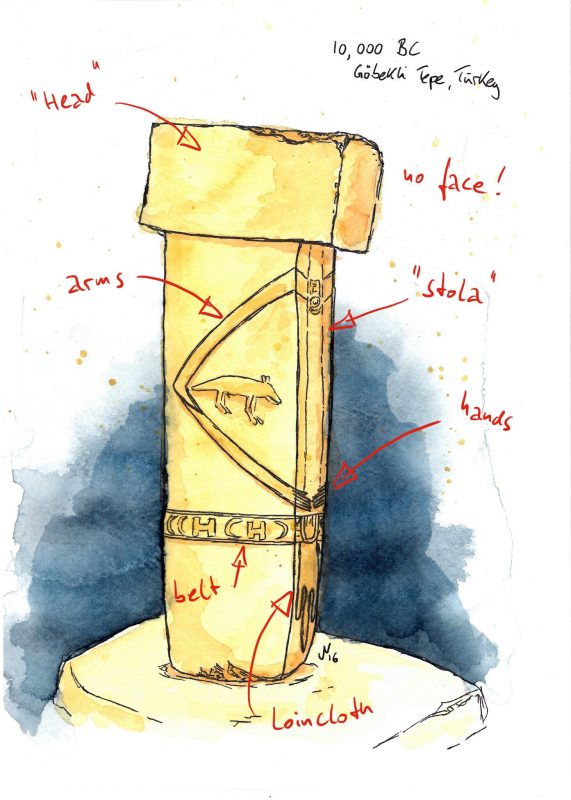
Göbekli Tepe consists of massive, intricately carved T-shaped pillars arranged in circular enclosures, some weighing up to 20 tons. These pillars feature detailed reliefs of animals like boars, foxes, lions, snakes, and birds, suggesting a rich symbolic and religious world. What makes Göbekli Tepe truly revolutionary is its age and sophistication. It was built by hunter-gatherers, long before the advent of settled agriculture, which was previously considered a prerequisite for monumental architecture and complex social organization.
The discovery of Göbekli Tepe forces us to reconsider the timeline of human development. It suggests that the desire for communal ritual and monumental construction might have preceded agriculture, perhaps even acting as a catalyst for settled life as people gathered to build and maintain these sacred sites. It’s a hidden empire not of vast cities, but of profound religious and social complexity, pushing back the origins of “civilization” itself.
Caral-Supe, Peru: South America’s Ancient Metropolis
While the Inca Empire is widely known, modern archaeology has unveiled a much older, equally impressive civilization on the Peruvian coast: the Norte Chico civilization, centered around the city of Caral-Supe. Discovered in the 1990s and extensively excavated since, Caral is now recognized as the oldest known city in the Americas, dating back to around 2600 BCE. This makes it contemporary with the great pyramid builders of Egypt and the early cities of Mesopotamia.
Caral-Supe boasts impressive monumental architecture, including six large platform mounds (pyramids), sunken circular plazas, and residential complexes spread over 150 acres. Its sophisticated urban planning, advanced irrigation systems, and the presence of intricate musical instruments (flutes made from bird bones) and textiles demonstrate a highly organized society. Notably, Caral appears to have developed in isolation, without evidence of warfare or defensive structures, suggesting a different path to urbanism focused on trade and cultural exchange, particularly in cotton, which was vital for fishing nets.
The rediscovery of Caral-Supe reshapes our understanding of the independent emergence of complex societies globally, proving that sophisticated urban centers arose in the Americas much earlier than previously thought, long before the Olmec or Maya civilizations.
Thonis-Heracleion, Egypt: A City Lost to the Waves
Not all hidden empires lie beneath the soil. For centuries, the legendary Egyptian city of Thonis-Heracleion was believed to be a myth, a city of immense wealth mentioned in ancient texts but never found. Then, in 2000, underwater archaeologist Franck Goddio and his team, using advanced sonar and magnetometers, discovered its ruins submerged 6.5 kilometers off the coast of Alexandria in Aboukir Bay.
This wasn’t just a collection of artifacts; it was an entire city, incredibly well-preserved by the Mediterranean’s cool waters and protective silt. Excavations have revealed monumental statues, temples dedicated to Amun and Heracles, sphinxes, countless gold coins, jewelry, and hundreds of smaller artifacts. The city’s port, once a bustling gateway to Egypt, was found littered with shipwrecks, their cargo still intact.
Thonis-Heracleion was a vital trading hub and religious center from the 6th to the 4th century BCE, before a combination of earthquakes, tsunamis, and rising sea levels caused its foundations to liquefy, swallowing the city whole. Its discovery provides an unparalleled snapshot of a thriving ancient port and offers invaluable insights into the economic and religious ties between Egypt and the Greek world. It’s a powerful reminder that some of the greatest discoveries await beneath the waves.
The Indus Valley Civilization: Re-evaluating a Forgotten Giant
While known since the 1920s with the discovery of Harappa and Mohenjo-Daro, the Indus Valley Civilization (also known as the Harappan Civilization) is undergoing a significant re-evaluation thanks to modern archaeological techniques. Spanning parts of modern-day Pakistan, India, and Afghanistan, it was one of the three early civilizations of the Ancient Near East and South Asia (alongside ancient Egypt