
Ancient Mysteries and Lost Knowledge: Exploring Enigmatic Riddles of the Past
Have you ever gazed at a star-strewn sky and wondered what our ancestors knew that we’ve forgotten? Or held an ancient artifact in a museum, feeling that electric tingle of a secret waiting to be unlocked? You’re not alone. Across millennia, civilizations rose and fell, leaving behind whispers of knowledge that modern science still struggles to explain. From colossal stone monuments that align with celestial bodies to manuscripts written in an utterly unbreakable code, these ancient mysteries are more than just history—they’re invitations to a grand, unsolved puzzle.
In this journey, we’ll wander through the most tantalizing riddles of antiquity, exploring enigmatic artifacts, lost knowledge, and the enduring allure of unsolved puzzles. So, dim the lights, let your imagination roam, and step into the shadows of the past, where truth is often stranger than fiction.
—

The Great Pyramid of Giza: A Monumental Enigma
No list of ancient mysteries would be complete without the Great Pyramid. Standing on the Giza Plateau for over 4,500 years, this architectural marvel still defies simple explanation. How did a civilization without modern machinery move 2.3 million stone blocks, each weighing between 2 and 80 tons, into near-perfect alignment? The precision is staggering—the base is level within 2.1 centimeters, and the sides are aligned to true north with an error of only 1/60th of a degree.
But it’s not just the engineering that inspires awe; it’s the tantalizing hints of lost knowledge. The pyramid’s dimensions encode mathematical constants like pi and the golden ratio, though some scholars argue this could be coincidence. More compelling is its astronomical alignment: the shafts from the King’s and Queen’s Chambers point to specific stars—Orion and Sirius—as they appeared around 2500 BCE. The Egyptians associated these stars with Osiris and Isis, gods of the afterlife and rebirth. Was the pyramid a cosmic engine designed to launch the pharaoh’s soul into the stars? Or did it serve a more practical purpose we have yet to grasp? Even with today’s technology, constructing such a monument would be a monumental challenge. Perhaps the real mystery isn’t how they built it, but what they knew that we have since lost.
—

The Voynich Manuscript: A Book No One Can Read
Imagine stumbling upon a 600-year-old book filled with lush illustrations of plants that don’t exist, astrological diagrams, and swirling text written in a language no one has ever deciphered. That’s the Voynich Manuscript—perhaps the most enigmatic artifact in the world. Carbon-dated to the early 15th century, this codex has baffled cryptographers, linguists, and historians for centuries. Its vellum pages feature bizarre flora, naked nymphs bathing in interconnected pools, and astronomical charts that seem to map some unknown cosmos.
The script, dubbed “Voynichese,” has a structure similar to natural languages, with letter frequency and word groupings that suggest real meaning. Yet every attempt to crack it has failed—from World War II codebreakers to modern AI algorithms. Is it a hoax, an elaborate cipher, or a glimpse into a lost knowledge system of alchemy or herbal medicine? Some theorists propose it was written by a secret society encoding forbidden teachings. Others believe it’s a window into a parallel world or even extraterrestrial communication. The most intriguing aspect? The manuscript feels intentional, as if its creator wanted to preserve a message that only the worthy could understand. What do you think—are we simply not smart enough to read it, or is it guarding a secret that could upend our understanding of medieval science?
—

The Antikythera Mechanism: Ancient Computer Ahead of Its Time
In 1901, sponge divers off the coast of the Greek island Antikythera hauled up a corroded lump of bronze from a 2,000-year-old shipwreck. It sat in a museum for decades before X-ray and CT scans revealed something astonishing: an intricate clockwork mechanism of at least 30 precision gears, designed to calculate astronomical positions and predict eclipses. Dubbed the world’s first analog computer, the Antikythera Mechanism challenges everything we thought we knew about ancient technology.
The craftsmanship is mind-boggling. Its gears mesh with the sophistication of 18th-century Swiss clockwork, and inscriptions indicate it could track the movements of the sun, moon, and possibly the five known planets. It even accounted for the irregular orbit of the moon with a pin-and-slot mechanism that mimicked elliptical motion. Ancient mysteries like this force us to reevaluate the timeline of innovation. Who built it? Some historians point to Archimedes or the school of Hipparchus, but the device is so singular that it might represent a forgotten lineage of mechanical knowledge. How much else was lost when empires collapsed and libraries burned? If the Greeks had this technology, what other unsolved puzzles lie dormant in the depths of the Mediterranean, waiting to rewrite history?
—
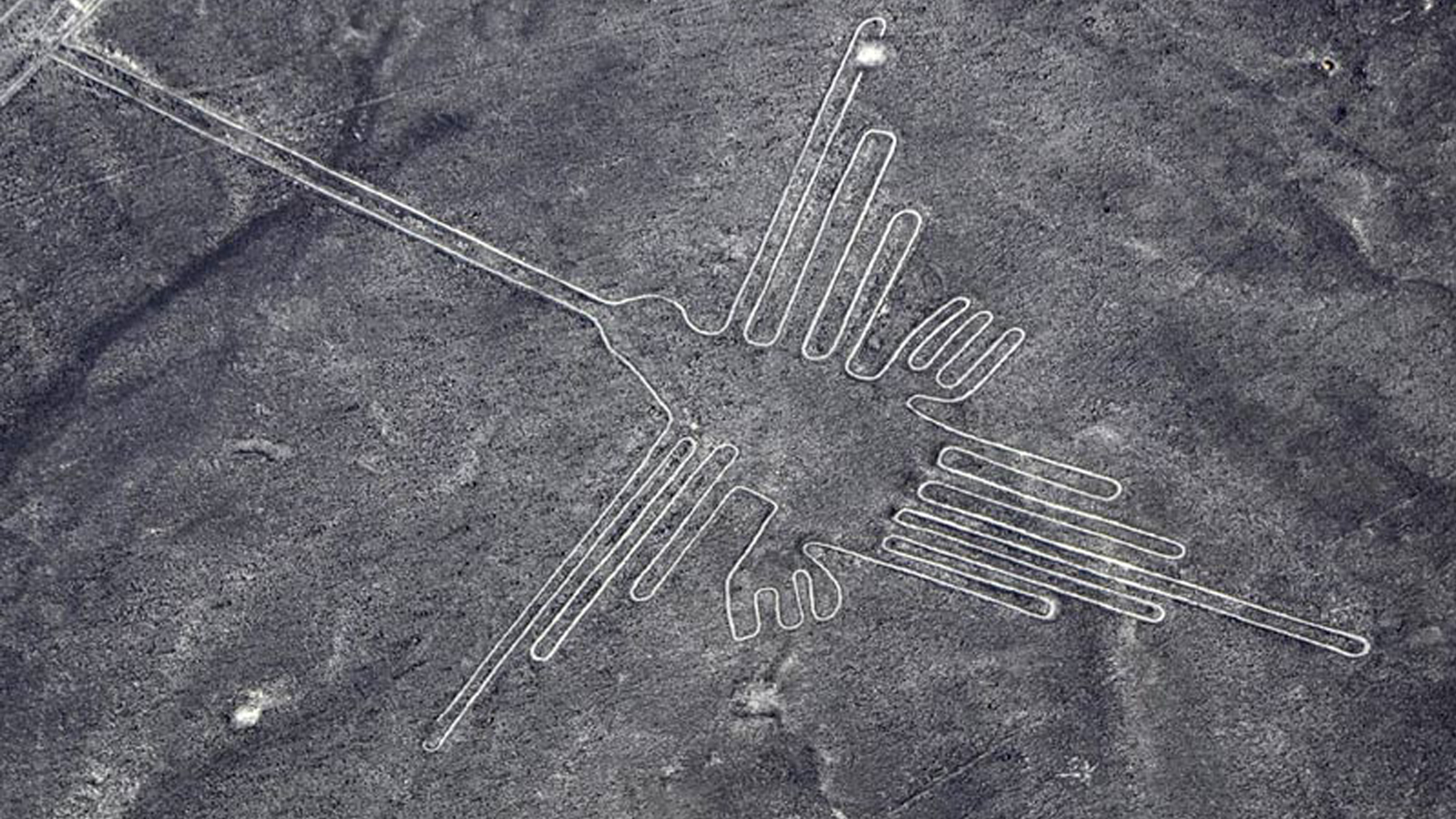
The Nazca Lines: Giant Geoglyphs Visible Only from Above
Etched into the arid plains of southern Peru, the Nazca Lines are a suite of huge geoglyphs depicting animals, plants, and geometric shapes. Spanning over 1,000 square kilometers, these figures—including a 100-meter-long hummingbird, a spider, and a monkey—were created by removing reddish-brown iron oxide-coated pebbles to reveal the lighter clay beneath. The remarkable thing? You can only truly appreciate their forms from high above the ground. Yet the Nazca people, flourishing between 200 BCE and 600 CE, had no aircraft.
So why create art for the sky? Theories abound. Some researchers suggest they were astronomical calendars aligned with solstices and star positions, serving as markers for ritual ceremonies. Others believe they were pathways for ceremonial processions or offerings to deities who looked down from the heavens. Then there’s the more provocative speculation: landing strips or messages for extraterrestrial visitors. While that may sound far-fetched, the sheer scale and precision of the lines—drawn with a single continuous line that never crosses itself—remain a testament to a refined understanding of geometry and landscape. Are the Nazca Lines a form of lost knowledge encoded in the earth, a message from a civilization that knew how to converse with the cosmos? Next time you’re flying over Peru, glance down—you might be looking at a 2,000-year-old mystery that refuses to be solved.
—
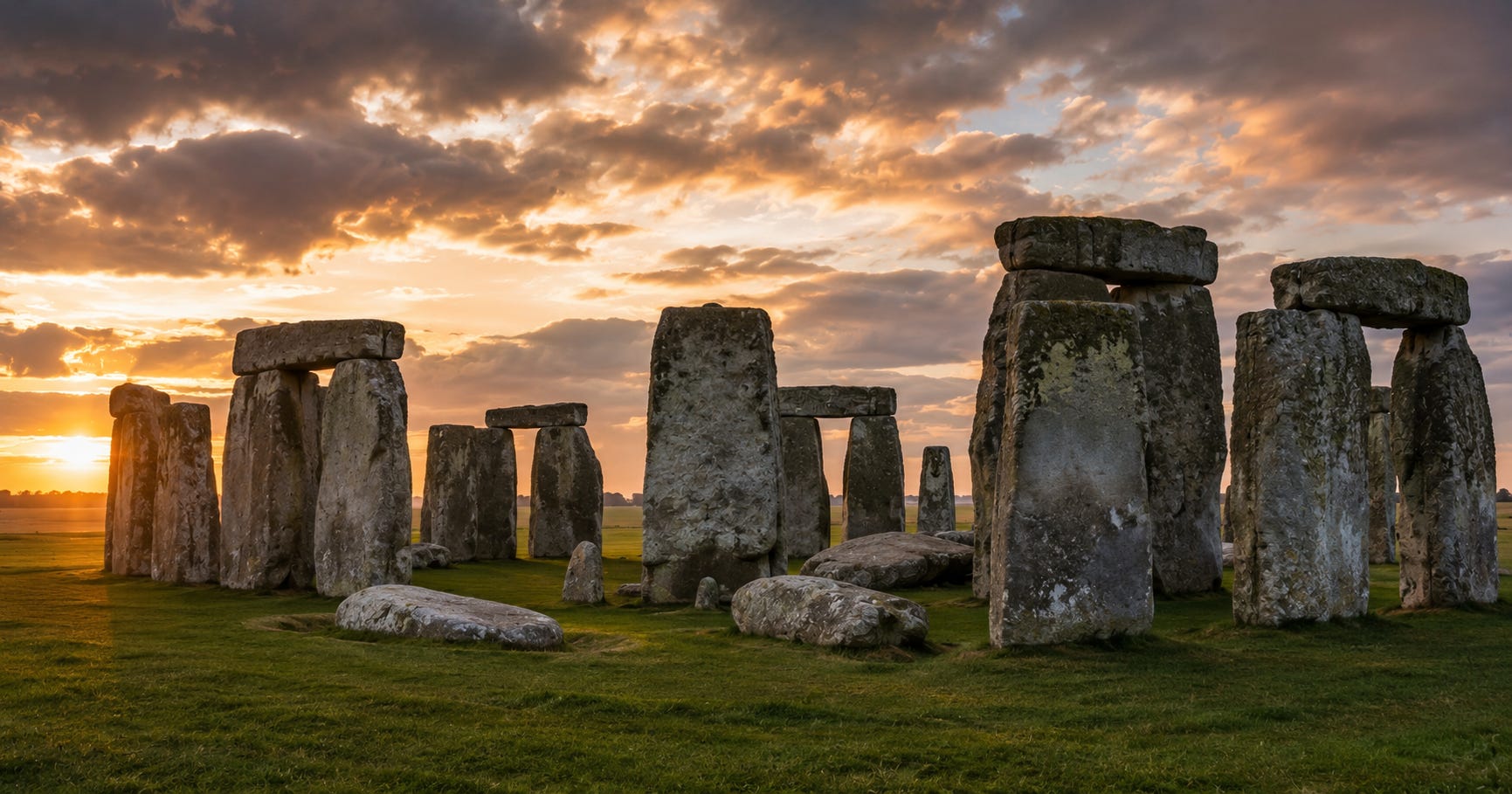
Stonehenge: A Megalithic Puzzle in the English Countryside
The rugged sarsen stones and bluestones of Stonehenge have inspired wonder for over 5,000 years. This prehistoric monument on Salisbury Plain is not just a circle of rocks; it’s a masterpiece of ancient engineering and celestial alignment. The smaller bluestones, weighing up to 4 tons each, were transported from the Preseli Hills in Wales—some 250 kilometers away. How did Neolithic people move such massive stones without wheels or draft animals? And why did they go to such lengths?
Stonehenge’s alignment with the summer solstice sunrise and the winter solstice sunset reveals a deep understanding of astronomy. It may have functioned as a temple, a healing center, or a burial ground—evidence of cremated remains suggests it served as a monumental cemetery for the elite. But the real mystery lies in the lost knowledge of its builders. They lacked written language, yet they orchestrated a construction project that spanned centuries and required precise planning. The placement of the stones seems to amplify sound, creating an immersive acoustic experience during rituals. Was Stonehenge designed to open a portal to another realm, a place where the living could communicate with ancestors? We may never know for certain, but every time the sun rises over the Heel Stone, it’s as if the stones themselves whisper their secrets to those willing to listen.
—
Lost Knowledge: Did Ancient Civilizations Possess Advanced Wisdom?
When you string together these mysteries, a pattern emerges. Across vastly different cultures and continents, we find echoes of a sophisticated understanding of the world—knowledge that seemingly vanished, only to be rediscovered centuries later. Consider the precise astronomical alignments of Mayan pyramids, the Baghdad Battery’s potential galvanic properties, or the intricate water management systems of the Indus Valley. Could it be that early civilizations shared a global reservoir of wisdom, perhaps from an even older, forgotten source?
This notion of lost knowledge is both thrilling and unsettling. It suggests that human progress isn’t a straight line but a cycle of rise and collapse, where hard-won insights are obliterated by war, natural disasters, or deliberate suppression. The Library of Alexandria alone housed hundreds of thousands of scrolls containing the scientific and philosophical achievements of the ancient world—all gone in a fire. What secrets were reduced to ash? From sacred geometry in temple design to herbal remedies that modern pharmacology can’t replicate, the remnants we uncover hint at a more interconnected, enlightened past. The real question is: how much of that legacy lies dormant, waiting for us to piece together the unsolved puzzles that could unlock new frontiers?
—
Enigmatic Artifacts That Defy Conventional History
Sometimes the most compelling ancient mysteries come in small packages. Scattered in museums and private collections, certain artifacts fly in the face of accepted timelines. They’re tantalizing clues that history may not be as linear as we think. Here are a few that keep researchers up at night:
- The Baghdad Battery: A clay jar containing a copper cylinder and iron rod, dating to around 200 BCE. When filled with an acidic liquid like vinegar, it produces a small electric charge. Was it used for electroplating, medical therapy, or something else entirely?
- The Saqqara Bird: A wooden bird-shaped artifact from ancient Egypt (200 BCE). With a vertical stabilizer and aerodynamic lines, some argue it’s a model of a glider. Could the Egyptians have understood principles of flight millennia before the Wright brothers?
- The London Hammer: Found embedded in rock dated to be over 400 million years old, this iron hammer with a wooden handle suggests either a vastly different geological timeline or some form of time travel. Mainstream science explains it as a miner’s tool from the 19th century encased in a natural concretion, but the debate rages on.
- The Piri Reis Map: A 16th-century Ottoman map showing the coastline of Antarctica without ice, suggesting access to much older cartographic knowledge. How did medieval cartographers know of a continent only officially discovered in 1820?
Each of these enigmatic artifacts forces us to ask uncomfortable questions. Are we misreading the past, or has advanced technology surfaced and submerged multiple times in Earth’s history? The truth may be stranger than any fiction.
—
Why Do These Mysteries Endure?
Beyond the intellectual challenge, there’s a deeply human reason we’re drawn to unsolved puzzles of the past. In a world increasingly mapped, quantified, and explained, these ancient riddles offer a rare space for wonder. They remind us that our ancestors were not primitive brutes but curious, creative beings who sought to understand their place in the cosmos. Every statue, manuscript, and stone circle is a message across time—a hand reaching out from the darkness, inviting us to think differently.
There’s also the thrill of the chase. Solving an ancient mystery feels like winning a cosmic lottery; it could redefine history and give us a sense of shared triumph. And until that happens, the ambiguity allows for endless storytelling. Were the pyramids built with acoustic levitation rather than ramps? Did a forgotten global civilization leave blueprints buried under the sands? These speculations keep the past alive, turning history into a living dialogue rather than a closed book. So, the next time you encounter an ancient riddle, lean in. The whisper you hear might just be the echo of a truth waiting to be rediscovered.
—
Delve Deeper Into the Enigmas
Ancient mysteries are not just academic exercises—they’re an adventure for the mind. They challenge our assumptions, ignite our creativity, and connect us to the countless generations who stood under the same stars and wondered. If this journey through lost knowledge and enigmatic artifacts has sparked your curiosity, you’re in good company. History is full of secrets, and the best part is: you get to be part of the search.
Think you’ve cracked the code or can guess the true purpose of Stonehenge? Test your wits and dive even deeper. We’ve crafted an interactive experience that puts your knowledge of ancient civilizations to the ultimate test.
Delve into the enigmas of ancient civilizations with our interactive quiz – can you unravel the riddles that have baffled experts for centuries? Click below to begin your quest, and if you dare, share your score with fellow mystery lovers. The past is waiting. Let’s see what you uncover.