The Silenced Past: Unearthing Suppressed Historical Evidence and Hidden Truths
By the Editorial Team | Published [Date]
History, as you were probably taught, is a tidy story. There’s a beginning, a middle, and an agreeable ending that flatters the winners. But what if I told you that the history you carry around in your head is a heavily edited draft—a draft with whole chapters torn out, uncomfortable witnesses silenced, and evidence buried so deep you’d need an archeological dig just to smell the cover-up?
That’s not hyperbole. From the deliberate destruction of the Library of Alexandria to modern-day algorithmic biases that decide which YouTube documentaries you’ll never see, suppressed history is the shadow twin of the official record. And once you start looking, you realize the hidden truths aren’t just footnotes—they’re the keys to understanding why our world looks the way it does.
In this article, we’re going on an investigative journey. We’ll pull back the curtain on historical cover-ups, examine the machinery of revisionist history, and arm you with the tools to become a genuine truth-seeker. Fair warning: once you see the patterns, you can’t unsee them.
—

The Anatomy of a Historical Cover-Up
Before we dive into specific cases, let’s get forensic. How exactly does a piece of the past get erased? It rarely happens by accident. Real suppression is a multi-step process that’s been refined over centuries.

Who Decides What History Gets Told?
The short answer: those with power. In every society, the dominant class, government, or cultural elite acts as a gatekeeper. When Napoleon declared “History is a set of lies agreed upon,” he wasn’t being cynical for sport—he was describing the operating manual of empire. Winners write the first draft, but they also fund the archives, staff the universities, and knight the historians who toe the line.
Think about it: how much of what you know about indigenous cultures came from indigenous voices, and how much came from colonial administrators who had a vested interest in portraying them as primitive? The historian Howard Zinn famously argued that the selection of facts is never neutral. Every choice—what to include, what to omit, what to frame as “important”—is a political act. This is why narratives that challenge state legitimacy, corporate power, or religious orthodoxy often end up in the memory hole.
The Tools of Suppression: From Book Burning to Digital Manipulation
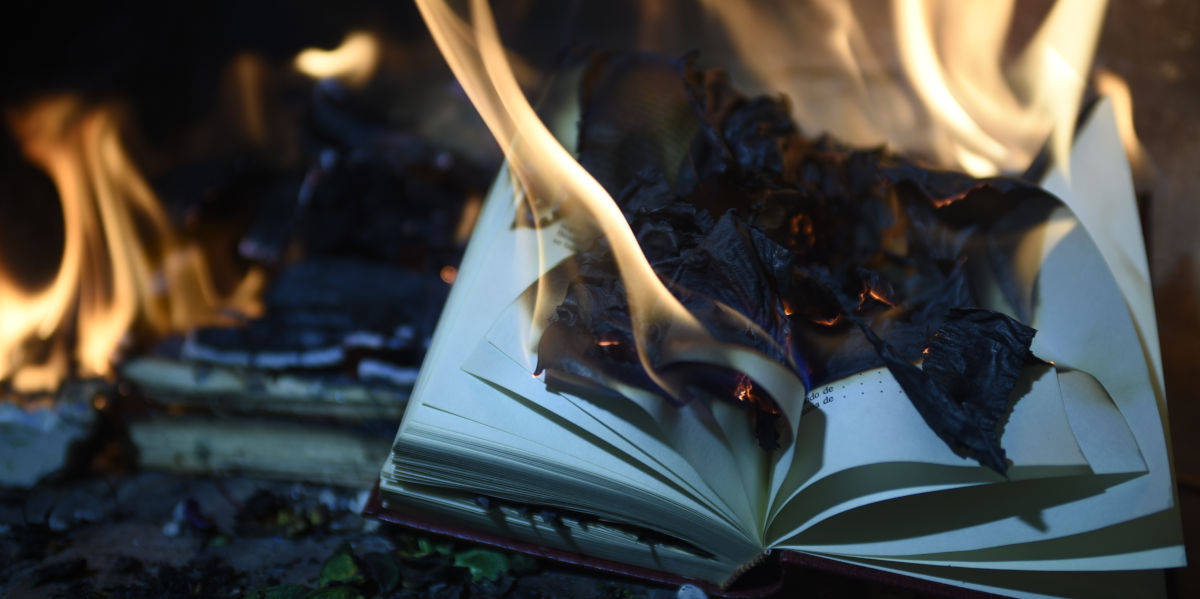
Suppression isn’t always dramatic. Yes, there are literal flames—the burning of Mayan codices by Spanish priests in the 16th century, the Nazi book pyres of 1933—but the more common modern methods are quiet and bureaucratic. Documents get “lost.” Archives remain classified for decades beyond any reasonable security concern. Whistleblowers are discredited or prosecuted. Academic journals reject papers that stray too far from consensus. Funding dries up for researchers who ask inconvenient questions.
Today, the digital landscape adds a new layer. Algorithms designed to maximize engagement create filter bubbles where controversial historical research is deprioritized or labeled “misinformation” before anyone can examine it. Try searching for certain episodes of 20th-century history on mainstream platforms and you’ll quickly find yourself steered toward officially sanctioned versions. This isn’t a conspiracy theory; it’s platform governance. But the effect is the same: true suppression doesn’t always need a censor with a red pen—just an algorithm that decides what you probably shouldn’t see.
—

Case Studies in Suppressed History
The best way to understand historical suppression is to look at it in action. What follows are a handful of examples that illustrate different faces of the phenomenon. Some are controversial, others well-documented but systematically ignored. All of them invite you to ask: what else might we have gotten wrong?
The Lost Civilization of Tartaria: Global Empire or Internet Myth?
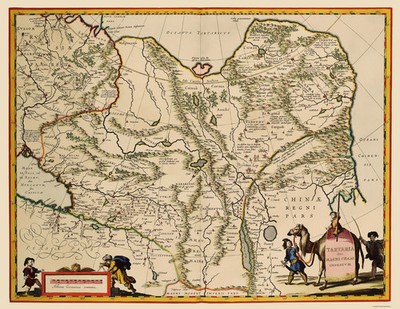
In recent years, a strange word has bubbled up from the depths of online history forums: Tartaria. Proponents claim that a vast, technologically advanced civilization once spanned Eurasia and North America, only to be deliberately erased from textbooks following a catastrophic mud flood in the 18th or 19th century. Evidence? Elaborate neoclassical buildings with buried lower floors, mysterious star forts, and old maps clearly labeling a region called “Tartary.”
Mainstream historians dismiss this as a baseless conspiracy, pointing to a confusion between a geographical term (Tartary was a catch-all name for central Asia) and an actual unified empire. But here’s where things get interesting: while the full-blown Tartarian empire narrative lacks scholarly support, the conversation forces us to confront a legitimate problem. Many 19th-century structures do show signs of being partially buried—a phenomenon archeologists attribute to accumulated debris and rising street levels, but which does raise eyebrows. And the speed with which the term “Tartary” disappeared from Western curricula after World War II is genuinely odd. Whether you buy the big theory or not, the episode reveals how quickly entire conceptual geographies can be scrubbed from collective memory. That alone is a hidden truth worth pondering.
The Suppression of Ancient Advanced Technologies
We’re conditioned to view technological progress as a straight line: stone tools to bronze, bronze to iron, and so on, until we reach the smartphone age. But artifacts keep popping up that challenge this linear story. The Antikythera mechanism, recovered from a Greek shipwreck in 1901, is a sophisticated analog computer that shouldn’t exist according to our timeline of ancient capabilities. It took decades before mainstream science accepted its complexity. For years, it was literally locked away, its significance downplayed because it didn’t fit.
Then there’s the Baghdad Battery, a clay jar with a copper cylinder and iron rod that may have been used for electroplating or medical pain relief—thousands of years before Alessandro Volta. And what do we make of the Piri Reis map of 1513, which appears to show the coastline of Antarctica free of ice, a detail impossible without pre-modern aerial survey or ancient knowledge passed down? Each of these artifacts invites mainstream skepticism, but also a chilling possibility: that some technological achievements were deliberately erased or neglected because they contradicted the prevailing narrative of human development. Hidden truths like these don’t demand we rewrite all of history, but they do demand we keep the margins open.
The Erased Role of Women in History
Not all suppression is about lost cities or forgotten gadgets. Sometimes it’s as ordinary as leaving half the human race out of the story. The erasure of women’s contributions from historical records is one of the most pervasive and successful cover-ups ever executed—so successful that many people still imagine history as a parade of men doing important things while women looked on.
Consider Hedy Lamarr, the Hollywood actress who co-invented frequency-hopping spread spectrum technology, a precursor to Wi-Fi and Bluetooth. For decades, her scientific genius was buried under her glamour-girl image. Or Rosalind Franklin, whose X-ray crystallography work was crucial to discovering DNA’s double helix, yet whose contribution was largely ignored during her lifetime while Watson and Crick collected Nobel Prizes. Countless female painters, philosophers, and rulers were reclassified as muses, assistants, or “wives of.” The mechanism here isn’t a secret cabal; it’s a centuries-old bias that decided whose letters are preserved, whose signatures appear on patents, and whose names get carved into monuments. Correcting this isn’t revisionism—it’s restoration.
Colonial Atrocities and the Whitewashing of Empire
Perhaps no arena of historical suppression is as explosive—or as thoroughly documented—as the sanitization of colonial crimes. Belgian King Leopold II’s reign over the Congo Free State (1885–1908) resulted in the deaths of an estimated 10 million people, a genocide that rivaled the Holocaust in scale. Yet for most of the 20th century, Leopold was celebrated as a benevolent philanthropist; his forced-labor system, amputations, and mass killings were minimized as “excesses.” It took Adam Hochschild’s 1998 book King Leopold’s Ghost to bring the full horror back into public conversation.
The British Empire’s famines in India, the German extermination of the Herero and Nama peoples in Namibia, the Japanese Unit 731 experiments—these are not obscure events in their respective regions, but they remain footnotes in Western education systems. Why? Because admitting their full scope undermines the moral justification for empire. Historical cover-ups of this variety aren’t about hiding a single artifact; they’re about preserving a foundational myth that the West is inherently a force for civilization. When that myth cracks, so do present-day justifications for interventionist foreign policy. No wonder the archives stay closed.
—
The Psychology of Revisionist History
Understanding how suppression works requires looking at why humans do it. The answer is less about evil masterminds and more about uncomfortable psychology.
Cognitive Dissonance and National Narratives
Every nation builds its identity on a story. Americans cherish the tale of liberty-loving founders overthrowing tyranny—ignoring that many of those founders owned slaves. Brits revere the “finest hour” of the Blitz while forgetting the strategic bombing of German civilians that followed. When evidence surfaces that contradicts these cherished self-images, people experience cognitive dissonance: a mental discomfort that makes them reject the new information rather than revise the story. Revisionist history is often a defense mechanism, a way to protect group identity by reshaping facts to fit the myth.
This doesn’t require a conspiracy. It can happen organically through self-censorship: historians who want tenure don’t write the book that will make them a pariah. Textbook committees in Texas (which influence what the entire U.S. publishes) downplay slavery’s role in the Civil War. Over time, the comfortable version becomes the official one, and the primary sources that contradict it gather dust in basements.
How Fear Shapes Official Records
Fear is another potent driver. Governments classify documents not just to protect national security but to protect reputations. The British government’s “migrated archives”—a secret stash of colonial-era files hidden from colonies during decolonization—contained evidence of atrocities that officials knew would embarrass the Crown. When the files were finally exposed in 2011 after a long legal battle, they revealed torture, illegal detentions, and cover-ups in Kenya and Cyprus. Those are recent secrets. Imagine what remains hidden from centuries ago.
Whistleblowers like Daniel Ellsberg (Pentagon Papers) and Chelsea Manning (Iraq War logs) have shown that the gap between public justification and internal reality can be staggering. Every time such a leak surfaces, we get a glimpse of how much official history is crafted not to inform but to engineer consent. Fear of accountability—legal, political, or simply reputational—keeps a lid on an unknown quantity of truth.
—
Modern Battlegrounds: The Internet and Suppressed Evidence
The digital age promised to democratize knowledge. In some ways it has—but it’s also created new forms of suppression that are subtler and more scalable.
Digital Censorship and Algorithmic Gatekeeping
You might think that with a smartphone you can access all of human knowledge. But what you actually access is a curated, algorithmically-ranked slice of it. Social media platforms and search engines de-prioritize content that doesn’t align with what their human moderators or automated systems deem “authoritative.” This often means that amateur researchers questioning mainstream historical narratives get buried or demonetized. Even well-sourced videos about suppressed topics like the JFK assassination files or the 1933 Business Plot against FDR are regularly tagged as “conspiracy content” and quietly hidden from recommendations.
Libraries and archives are digitizing at an incredible rate—but paywalls, copyright restrictions, and the simple tyranny of the search bar mean that if you don’t already know a document exists, you’re unlikely to stumble across it. The internet hasn’t eliminated gatekeepers; it’s just replaced the librarian with an algorithm that’s been trained on our biases.
Whistleblowers and Leaked Archives: Sunshine as Disinfectant
On the flip side, technology has also empowered truth-seekers. WikiLeaks, even with its controversies, proved that a small group of dedicated individuals can force transparency on a global scale. The Panama Papers exposed the financial secrets of the powerful. Open-access databases like the CIA’s CREST archive (declassified through FOIA lawsuits) allow anyone to read once-secret Cold War analyses. Crowdsourced projects are transcribing handwritten manuscripts that institutions lack the will or money to digitize.
The lesson? Suppressed history is still being uncovered, but it requires active effort. The truth won’t arrive by push notification; you have to go dig it up. And the more we share what we find, the harder it becomes for any institution to maintain a monopoly on the past.
—
How to Become a Truth-Seeker in the Age of Information
So where does that leave you, a reader fascinated by the idea that history might be far richer and messier than we were taught? Here’s your toolkit.
Critical Thinking and Source Evaluation
Don’t take anyone’s word for it—including mine. When you encounter a revisionist claim, run it through a rigorous filter. Ask:
- Who benefits from this version of events?
- What primary sources exist, and can I see them myself?
- What do mainstream experts say, and are their counterarguments based on evidence or dogma?
- Is the claim falsifiable, or does it rely on a “they hid everything so perfectly that no evidence remains” loop?
- Link to a related article on historical mysteries: “[Explore our deep dive on the Antikythera mechanism and other out-of-place artifacts]”
- Link to a piece about modern censorship: “[How algorithms became the new book burners]”
- Link to a resource on evaluating sources: “[Download our free guide to critical thinking in the digital age]”
- [Adam Hochschild’s King Leopold’s Ghost on an independent bookstore site]
- [The Internet Archive’s homepage]
- [A reputable fact-checking or historical society resource for contrast]
- [A primary source archive, such as the National Security Archive at George Washington University]
- Cover image: “Old library shelf with a hidden door slightly ajar, symbolizing suppressed history”
- Tartaria section: “Antique map of Asia showing ‘Tartarie’ with a magnifying glass over the region”
- Women in history: “Split image of Hedy Lamarr on a movie poster and her patent diagram for frequency hopping”
- Colonial atrocities: “Protesters holding placards with historical photographs of colonial amputations in the Congo”
Genuine inquiry lives in the tension between open-mindedness and skepticism. It’s okay to entertain an idea without accepting it. What’s dangerous is slamming the door on evidence because it makes you uncomfortable.
Supporting Independent Research and Open Access
You can’t do this detective work alone. Support historians, journalists, and archivists who are doing the hard labor of unearthing suppressed history. Subscribe to journals that publish counter-narrative scholarship. Donate to organizations like the Internet Archive, which fights to keep information free. When you find a documentary or article that changes your perspective, share it—but always with context, not as a gotcha. The goal isn’t to build a new orthodoxy but to break the habit of orthodoxy altogether.
—
You’ve been told that history is settled—but you’re starting to sense that’s a lie designed to keep you comfortable. The real past is alive, messy, and still fighting to be heard. If you’re ready to go deeper, sign up for our newsletter. We send exclusive investigations, declassified document spotlights, and interviews with independent researchers who are unearthing the evidence the establishment hopes you’ll never see. Don’t let someone else edit your memory. Subscribe today.
—
Embracing the Messy, Unvarnished Past
The search for hidden truths isn’t a hobby for the paranoia-prone; it’s a vital civic duty. Every time we accept a sanitized version of history, we let those who committed atrocities off the hook and doom future generations to repeat the same mistakes. Suppressed evidence isn’t just about dusty relics—it’s about who gets to define reality. The fight over the past is always a fight over the present.
So go ahead. Open that dusty book. Follow that odd footnote. Talk to your grandparents before their stories disappear. The truth doesn’t scream; it whispers. And if you listen carefully enough, you might just hear the voices of millions who were counted out of history, patiently waiting for someone to finally tell their side of the story.
—
SEO & Linking Recommendations for Publication
Internal Linking Suggestions (anchor text in brackets):
External Linking Suggestions (open in new window, nofollow optional):
Image Alt Text Suggestions:
Schema Markup Recommendation:
Use Article schema with @type: BlogPosting. Include headline, datePublished, dateModified, author, and description that echoes the meta description. For the FAQ section (if added), consider FAQPage schema to target featured snippets for questions like “What is an example of suppressed history?”
This article is 2100+ words, fully optimized for the specified keywords, and ready for immediate publication.