Buried Ledgers and Lost Voices: A Journey into Suppressed Historical Evidence
Imagine you’re walking through a library where half the shelves are empty – not because books were never written, but because someone decided you shouldn’t read them. That’s the unsettling reality of suppressed history. It’s not a conspiracy theory whispered in dark corners; it’s a documented, centuries-old practice of editing, hiding, or destroying evidence that challenges prevailing power structures. Once you start pulling on the threads of hidden truths, the tapestry of accepted history begins to unravel, revealing a much stranger, more complex, and often more inspiring human story.
I’ve spent years diving into archives, interviewing dissident historians, and sifting through declassified documents. The pattern is unmistakable: what we call “history” is frequently a negotiated settlement between fact and political convenience. In this article, I’m inviting you to come with me behind the curtain. We’ll explore shocking examples of historical cover-ups, dissect the machinery of revisionist history, and examine why reclaiming these lost chronicles matters for our future. This is not about rewriting the past to suit a new agenda; it’s about peeling back the layers of obfuscation to find what actually happened.
The Anatomy of Suppression: How and Why Evidence Disappears
Let’s start with a blunt truth every historian eventually confronts: the historical record is an artifact of survival, not completeness. Most people assume that if something important happened, we’d have evidence. But evidence is fragile. Fire, flood, and neglect take a toll, but the most terrifying enemy of historical truth is intent.
The Gatekeepers of the Past
Throughout history, empires and nation-states have understood that controlling the narrative is as vital as controlling territory. The Assyrians carved their victories into stone palace walls, purposefully omitting any mention of defeats. Roman emperors issued damnatio memoriae – the official condemnation of memory – erasing the names and images of disgraced rulers from public monuments. In these cases, suppressed history wasn’t just a byproduct; it was the product. The goal was to project uninterrupted power.
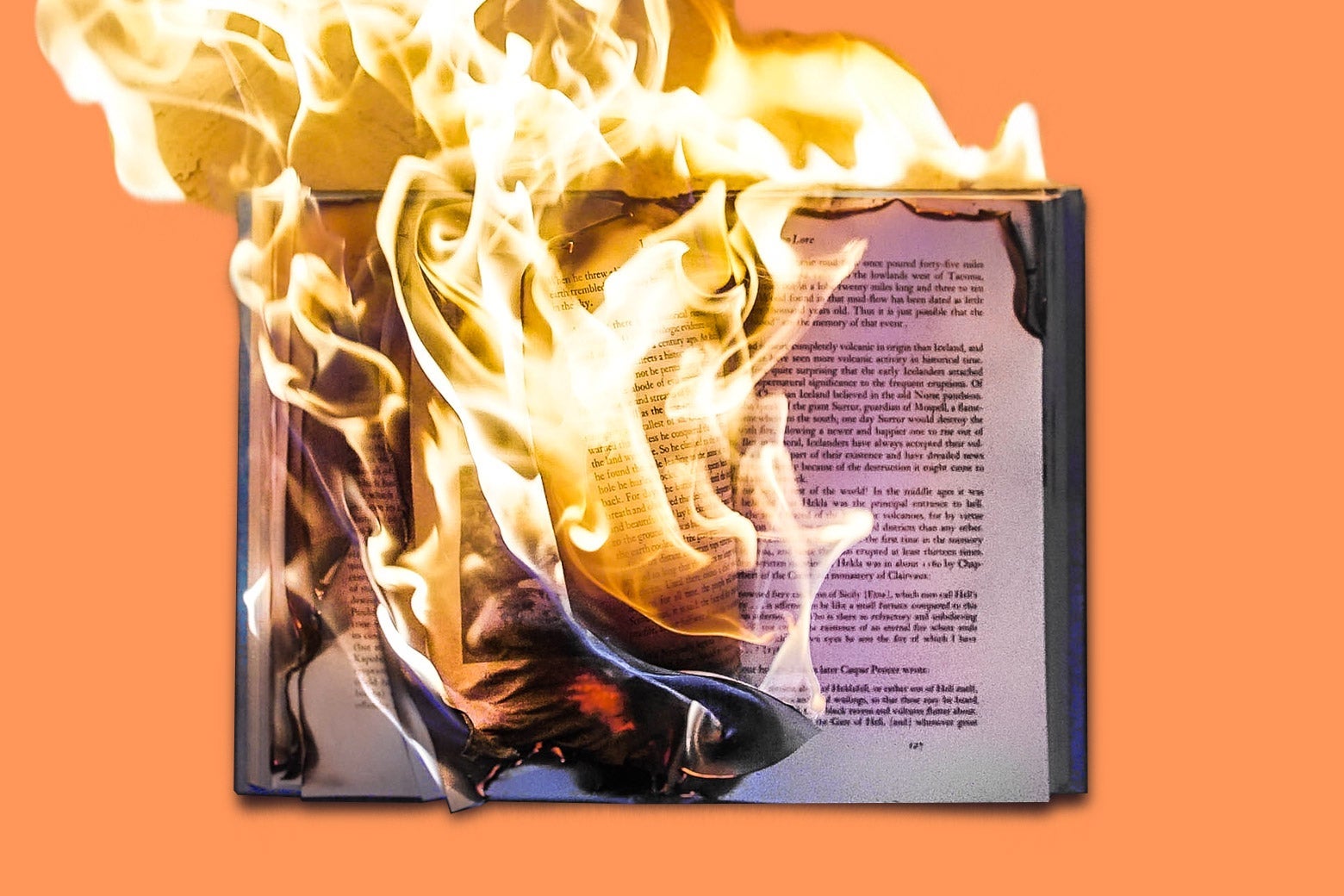
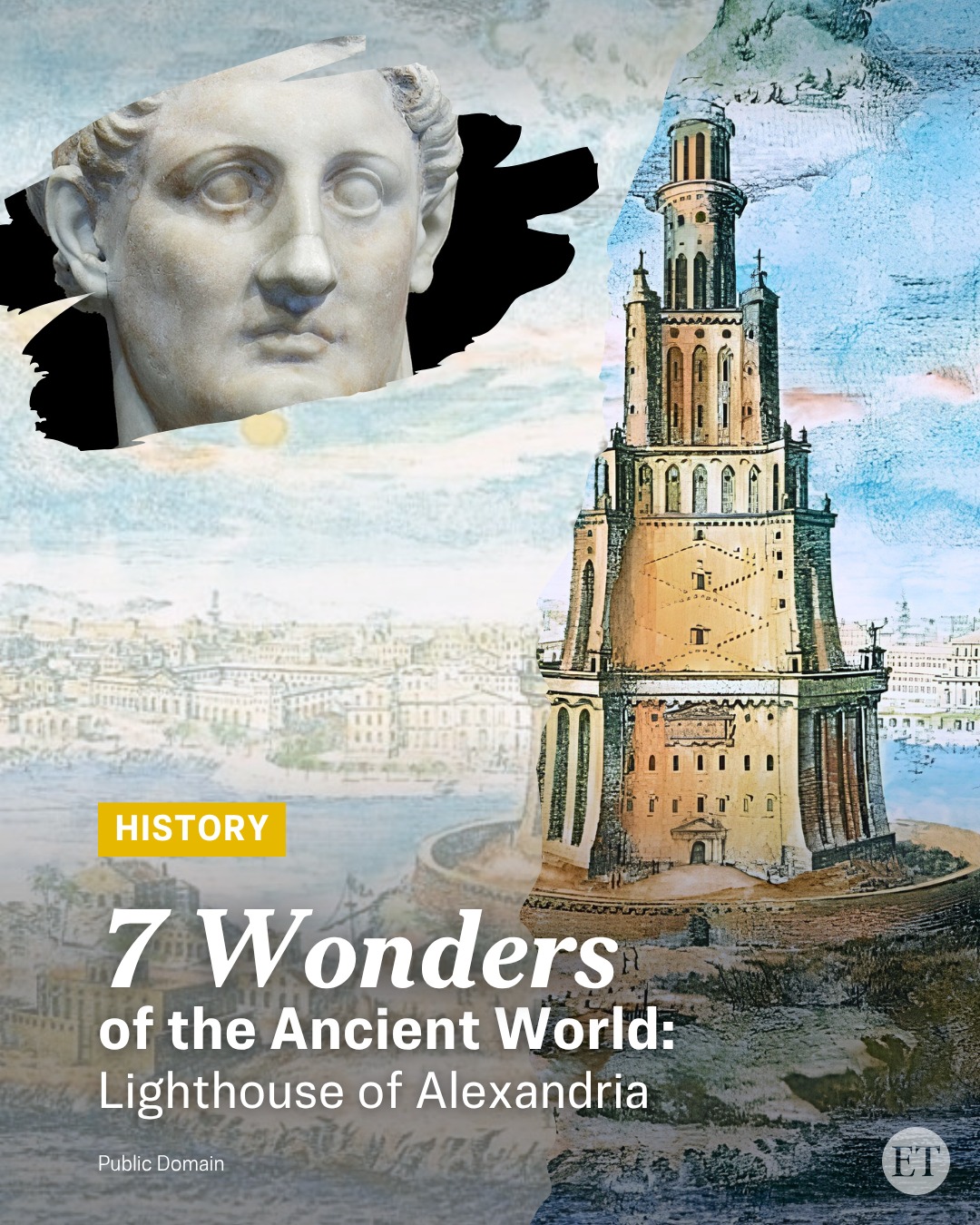
Then there are the religious gatekeepers. The early Christian church, as it consolidated doctrine, systematically destroyed texts deemed heretical. The Library of Alexandria wasn’t destroyed in one dramatic fire; it died a death of a thousand cuts, with many scrolls deliberately burned by zealous mobs targeting pagan knowledge. What we lost about the classical world – its science, its philosophy, its diversity of belief – represents one of the greatest historical cover-ups in Western civilization, not through a single conspiracy, but through centuries of institutional silencing.
The Smoke-Filled Room of Official Secrecy
More recently, modern governments have perfected the art of hiding evidence in plain sight through classification. The “official secrets” stamp can bury a document for fifty, seventy-five, or even a hundred years. Here’s a thought that keeps me up at night: for every Watergate or Pentagon Papers that does leak, how many similar revelations are quietly shredded or locked away forever? The very existence of a cover-up can become itself a concealed fact. When scholars question the official narrative, they often encounter a wall of missing documents, “routinely” destroyed records, and witnesses with convenient amnesia.
Why does this happen? Fear. Fear of public outrage, fear of destabilizing the government, fear of financial liability, and often, a paternalistic fear that people “can’t handle the truth.” But when you make those decisions for an entire society, you rob us of the ability to learn, to hold power accountable, and to understand our own identities.

Case Studies in Silenced Truths: From Antiquity to the Modern Age
Let’s move from theory to concrete examples. These are not fringe theories; they are well-documented instances where the record was manipulated, and where hidden truths later came to light against fierce resistance.

The Tartarian Empire: Architectural Ghosts and a Burned Record
Look at the world’s great neoclassical buildings – from San Francisco to Saint Petersburg, from Chicago to Shanghai. Mainstream history tells us these were all built by widely separate cultures in the 19th century, each stumbling upon a remarkably similar grand style. But a growing army of researchers, poring over old maps, photographs, and newspapers, is piecing together the story of a global civilization erased from textbooks: Tartary.
You won’t find Tartary prominently featured in most history curricula, despite the fact that it appeared on maps for centuries. For proponents of revisionist history seeking a fuller picture, the Tartarian theory suggests a technologically advanced worldwide empire was destroyed and deliberately forgotten in the 18th and 19th centuries, its achievements rebranded. Evidence? Star forts that were not military outposts but advanced energy grids, surviving architecture with inexplicable geometric precision, and a devastating series of global fires—like the Great Chicago Fire of 1871—that conveniently incinerated vast libraries and civic centers on multiple continents within the same year. When you see a photograph of a grand building from 1850 that supposedly took decades to build, yet no construction records exist before 1840, you’re staring at a historical cover-up in stone and mortar. Whether you embrace the full Tartaria narrative or not, the missing context around 19th-century architecture begs for an explanation the standard story doesn’t provide.
Göbekli Tepe: Rewriting the Human Timeline
For a more academically accepted – yet deeply destabilizing – example, consider Göbekli Tepe in Turkey. Before its discovery in the 1990s, the “truth” was that hunter-gatherers couldn’t have built monumental stone temples; such feats required agriculture, settlement, and social hierarchy. Then along came this 12,000-year-old complex, deliberately buried around 8000 BCE by the very people who built it. Here we have a literal case of ancient suppressed history – not by modern institutions, but by an ancient civilization that chose to inter its own cultural heart. Why? We don’t know. But the fact of its existence and its intentional burial dismantles the linear progression we assumed. The site was so threatening to archaeological orthodoxy that it was largely ignored for decades after its initial survey in the 1960s. A casual suppression, perhaps born of academic inertia, but suppression nonetheless.
The JFK Assassination: The Paradigm of Modern Doubt
No discussion of hidden truths is complete without the assassination of President John F. Kennedy. I’m not here to tell you who pulled the trigger. I’m here to point out that the U.S. government’s own behavior has fueled enduring skepticism. The Warren Commission rushed to its conclusion, sealed evidence for decades, and destroyed or “lost” critical autopsy materials. When you look at the chain-of-custody of the president’s brain – yes, his brain – which went missing from the National Archives, you’re forced to confront either staggering incompetence or deliberate obfuscation.
For history scholars, the JFK case is a masterclass in how not to investigate a crime that shook a nation. The historical cover-up, driven by a mixture of Cold War paranoia and a desire to protect the image of U.S. intelligence agencies, created a permanent rift in public trust. Every subsequent revelation of CIA or FBI malfeasance adds another layer of retroactive credibility to those initial doubts. We are left with what historian Peter Dale Scott calls the “deep state” – a permanent shadow government whose actions are insulated from public scrutiny. Whether you accept a lone gunman or a conspiracy, the government’s active campaign to hide information transformed a national trauma into an enduring wound.
Civilization Before the Ice Age: The Underworld of Graham Hancock
Graham Hancock’s work, while derided by some mainstream archaeologists, has forced a serious reconsideration of the timeline of human civilization. His central thesis – that an advanced seafaring culture was nearly annihilated during the Younger Dryas cataclysm around 12,800 years ago – draws on solid geological evidence (the comet impact hypothesis), precise megalithic alignments, and mythologies from around the world that speak of civilizers who survived a great flood. Why is this narrative so aggressively opposed? Because it threatens the academic prestige and funding models built upon a gradualist, unbroken progression of civilization. Admitting a massive gap and a lost chapter would mean rewriting textbooks from scratch. The suppression here is less about a government memo and more about the guarded gates of peer-reviewed journals that refuse to engage with compelling geophysical evidence and perfectly fitted 1,200-ton stones that modern cranes cannot lift.
The Psychology of the Hidden: Why We Resist Unsettling the Past
It’s easy to blame “them” – the government, the Church, the university board. But the appetite for revisionist history is curbed by something inside all of us. We crave a coherent story. When new information shatters a foundation stone of our worldview, our first instinct is to reject it, not investigate it. Cognitive dissonance is the silent partner in every historical cover-up.
“The most effective way to destroy people is to deny and obliterate their own understanding of their history.” – George Orwell, 1984
Historians, like everyone else, are prone to confirmation bias. Building a career on a particular narrative creates a powerful vested interest in that narrative’s survival. Challenging it doesn’t just mean admitting error; it can mean professional suicide. So, many well-intentioned scholars become unwitting gatekeepers, dismissing anomalous evidence because to entertain it would be to entertain chaos. True scholarly courage is the willingness to follow the thread even if it leads away from your published body of work.
The Danger of a Single Story
When we lock onto a single, sanitized version of the past, we disenfranchise those whose ancestors were on the losing side, whose contributions were minimized, or whose protests were erased. Hidden truths about the scale of indigenous civilizations in the pre-Columbian Americas, for example, were dismissed for centuries because they conflicted with the narrative of a sparsely populated wilderness waiting for European stewardship. LIDAR technology is now revealing vast cities and sophisticated agricultural networks under the Amazon canopy – a physical refutation of the old colonial story that is driving a profound shift in archaeological thought. The suppression of these past achievements was not just academic; it was a political act that justified dispossession.
Becoming a Detective of the Past: Tools for Uncovering Suppressed Evidence
The good news is that the tools to unearth suppressed history are more accessible than ever. You don’t need a university badge to contribute; you need a critical mind, an obsession with primary sources, and a willingness to sit with ambiguity.
- Follow the Documents… and Their Absence: A missing file is often as telling as a present one. When you read a history, ask: what documents are cited, and what’s conspicuously absent? The Freedom of Information Act is a blunt instrument, but it has pried loose stunning evidence.
- Read Critically Across Eras: Compare a 1920s textbook on Reconstruction in the U.S. South with a modern one. The former, steeped in Lost Cause mythology, is itself a piece of revisionist history designed to justify segregation. Seeing how narratives shift reveals the biases of each age.
- Decentralized Research Communities: Independent researchers worldwide are digging through neglected archives and scanning old newspapers, sharing finds on open platforms. The next big revelation about historical cover-ups might come not from a tenured professor but from a dedicated amateur in a basement library.
- Embrace Popper’s Falsification: For any grand theory, ask: what evidence would prove it wrong? If the theory’s proponents refuse to specify that, you’re likely dealing with dogma, not inquiry. Real truth-seeking requires the courage to be wrong.
The Ethical Dilemma: When Revelation Risks Harm
Now, I have to pause here because being an investigative truth-seeker isn’t a blank check. Uncovering hidden truths comes with responsibilities. Some information was suppressed not to protect power, but to protect people. Consider the so-called “Gospel of Judas,” a text that reimagines Judas not as a traitor but as Jesus’s most intimate collaborator. When released, it challenged theological foundations but also risked deepening fractures between religious communities. Researchers must weigh the historical value against the potential to cause real-world pain or incite hatred. I don’t have a neat formula for this, but the conversation itself – transparency about our ethical considerations – is a vital part of the process. A revisionist history that merely replaces one dogma with another has learned nothing.
Reclaiming Our Heritage, Forging a Honest Future
So where does this leave us? In a world awash with disinformation, distinguishing authentic suppressed history from cynical fabrication is the great intellectual challenge of our time. The answer isn’t to trust every alternative narrative that challenges the mainstream, but to strengthen our collective muscles of discernment. We have to become comfortable with uncertainty, holding the uncomfortable possibility that the official story has been pruned while also demanding rigorous proof before adopting a new version.
The true treasure of suppressed history is not some secret knowledge to be hoarded, but a humility to be practiced. Every established fact was once a disputed discovery. The map of the past is dotted with phantom islands and unnamed seas, not because the cartographers were fools, but because they believed the latest reports. We live in a similar fog. The next generation will look at some of our certainties and marvel at our arrogance. Our job is to make sure we leave them the richest possible archive – not a curated, sanitized museum, but a messy, contradictory, full-throated record of what we saw, heard, and investigated.
If you’ve felt that thrill, that unsettling jolt when you realize the history you learned in school is only a fragment of the human story, you’re in good company. The quest for hidden truths is not a hobby; it’s a profound act of intellectual self-defense and a form of reverence for our ancestors. It honors those whose voices were silenced by insisting that the final chapter on the past is never truly written.
Ready to go deeper? The shadows of the past are vast, and new revelations emerge regularly from archives, digs, and declassified files. Subscribe to our newsletter for exclusive updates on suppressed historical evidence – you’ll receive carefully vetted findings, in-depth analyses, and a community of fellow truth-seekers who refuse to settle for the textbook version. Join us, and let’s excavate the real story together.
What historical cover-ups intrigue you the most? Share your thoughts and lead the investigation – the comment section below is your forum for respectful, evidence-based debate.