
Challenging History: Unearthing Provocative and Controversial Archaeological Finds
Imagine a world where everything you thought you knew about human history was incomplete. What if ancient civilizations possessed technologies we attribute to modern times, or if human origins stretched back further than textbooks dare to suggest? For history buffs and those with a healthy skepticism toward official narratives, the allure of “forbidden archaeology” is not just a fringe theory; it is a tantalizing glimpse into a past far more complex and mysterious than we have been led to believe. This article delves into those provocative and controversial archaeological finds that refuse to fit neatly into established timelines, sparking heated debates and fueling theories of suppressed history.
Some archaeological discoveries have profoundly challenged conventional historical understanding, leading to intense scientific and public debate. From out-of-place artifacts (OOPArts) suggesting advanced ancient knowledge to structural anomalies that defy known construction capabilities, these finds often push the boundaries of what mainstream archaeology is willing to accept. They invite us to question whether there are chapters of human history yet to be rewritten—or even rediscovered.

The Allure of the Anomalous: Why We Question the Narrative
There is something inherently captivating about a mystery, especially when that mystery involves our own past. Mainstream archaeology, with its carefully constructed timelines and accepted narratives, provides a comforting sense of order. Yet for many, that order feels too neat, too complete. The human mind is drawn to anomalies, to the outliers that hint at a deeper, more complex truth. This is where “forbidden archaeology” finds its footing—in the space between established fact and tantalizing possibility.
The appeal is not just about sensationalism; it taps into a fundamental human desire for discovery and a healthy skepticism toward authority. If history is written by the victors—or, in this case, by dominant scientific paradigms—then what stories might have been overlooked, dismissed, or even actively suppressed? This quest for hidden truths, often propelled by a belief that conventional science is too rigid or unwilling to consider radical ideas, drives the fascination with controversial finds. It is a desire to peel back the layers of accepted history and peer into the shadows where truly revolutionary discoveries might lie.

Out-of-Place Artifacts (OOPArts): Echoes from an Impossible Past?
Perhaps no category of controversial find sparks more debate than Out-of-Place Artifacts, or OOPArts. These are objects that appear to defy their historical context, suggesting technological sophistication or cultural practices far beyond what is traditionally attributed to their era. While many are eventually explained by mainstream science, some continue to puzzle, fueling theories of lost civilizations, ancient astronauts, or an entirely different path for human development.

The Antikythera Mechanism: A Glimpse of Ancient Brilliance
Discovered in a shipwreck off the coast of Greece in 1901, the Antikythera Mechanism is often cited as the most complex piece of engineering recovered from the ancient world. Dating back to the 2nd century BCE, this intricate device, made of bronze gears and dials, was designed to predict astronomical positions and eclipses decades in advance. Its complexity rivals 18th-century clockwork, prompting many to wonder how such advanced knowledge could have existed over 2,000 years ago.
While the mechanism is now widely accepted and studied, its initial discovery was profoundly challenging. It forced archaeologists to re-evaluate the technological capabilities of the ancient Greeks, demonstrating a level of mechanical understanding previously thought impossible for that period. It serves as a powerful reminder that our understanding of ancient technology can be profoundly incomplete, and that genuine OOPArts can exist—shifting paradigms rather than merely being dismissed.

The Baghdad Battery: A Spark of Ancient Electricity?
Found near Baghdad in 1936, the “Baghdad Battery” consists of a clay jar containing a copper cylinder, an iron rod, and traces of acid. Dated to the Parthian era (around 250 BCE to 250 CE), some researchers propose it was an ancient electrical battery capable of generating a small current. If true, it would predate Alessandro Volta’s 1800 battery by nearly two millennia, suggesting ancient knowledge of electrochemistry.
Mainstream archaeologists generally consider the “battery” theory speculative, suggesting the jars were more likely used for storing scrolls or as ritualistic objects. However, experiments have successfully replicated the battery’s function, producing small voltages. The debate continues: was it a practical device, a curiosity, or simply a misinterpretation? Its very existence forces us to consider the possibility of ancient experimentation with concepts far ahead of their time.
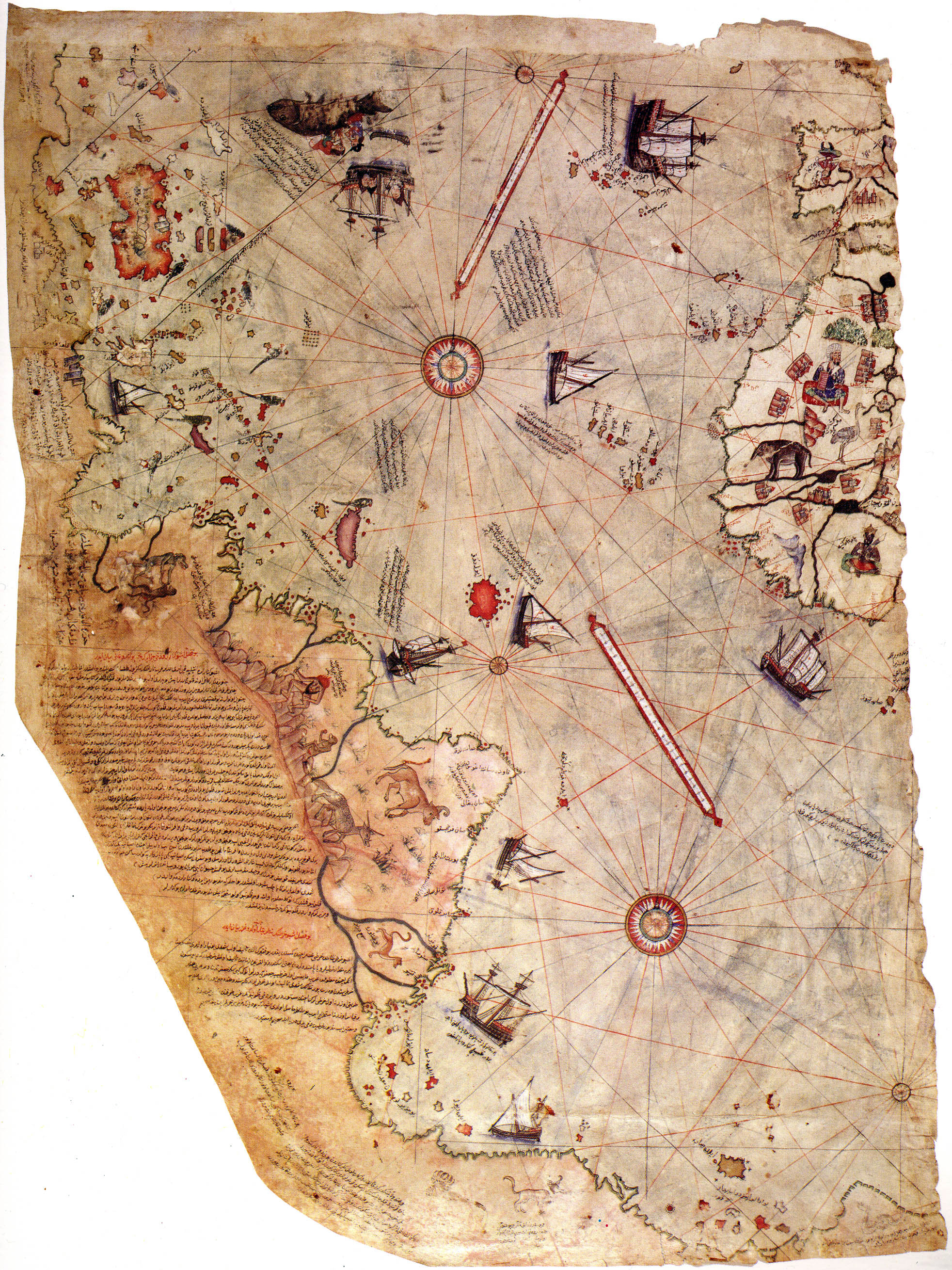
The Piri Reis Map: Antarctica Before Discovery?
Drawn in 1513 by the Ottoman admiral Piri Reis, this world map depicts parts of the western coast of Africa, the eastern coast of South America, and, most controversially, what some interpret as the coastline of Antarctica without ice. The map was supposedly compiled from older source maps, some dating back to the 4th century BCE. Antarctica was not officially “discovered” until 1820, and its coastline was not accurately mapped under its ice sheet until the 20th century.
Skeptics argue that the “Antarctica” section is either a misidentified South American coastline, a speculative drawing, or simply a coincidence. However, proponents of forbidden archaeology point to its striking accuracy for a landmass supposedly unknown and covered in ice, suggesting the existence of a lost civilization with advanced navigational and cartographic skills—or perhaps even a period when Antarctica was ice-free.
The Acámbaro Figures and Ica Stones: Dinosaurs and Humans Coexisting?
Among the most provocative OOPArts are the Acámbaro Figures and the Ica Stones, from Mexico and Peru respectively. The Acámbaro Figures, discovered in the 1940s, are thousands of small ceramic figurines depicting a startling array of animals, including many that strongly resemble dinosaurs, alongside humans. Similarly, the Ica Stones, thousands of engraved andesite stones found in Peru, show detailed images of dinosaurs, advanced medical procedures like brain surgery, and even what appear to be telescopes, all supposedly dating back thousands or even tens of thousands of years.
Both sets of artifacts present a direct challenge to the established timeline of human and dinosaur coexistence, which places their last shared moment at over 65 million years ago. Mainstream archaeology largely dismisses both as elaborate hoaxes or modern forgeries due to the lack of verifiable archaeological context and inconsistencies in dating. Yet for proponents of “forbidden history,” these artifacts are compelling evidence of an ancient human civilization that lived alongside—and even interacted with—creatures thought long extinct, hinting at a suppressed narrative of Earth’s past.
Giants, Megaliths, and Lost Continents: Reimagining Ancient Civilizations
The concept of ancient civilizations possessing capabilities far beyond what we typically credit them with extends beyond small artifacts. Legends of giants, impossible megalithic structures, and submerged cities fuel the imagination, suggesting a past populated by beings or cultures with advanced knowledge and power.
Göbekli Tepe: Rewriting the Dawn of Civilization
While not “forbidden,” Göbekli Tepe in Turkey is a prime example of a discovery that fundamentally rewrote history. Dating back over 11,000 years, it is a complex of massive carved stone pillars arranged in circles, predating Stonehenge by 6,000 years and even the invention of pottery or metallurgy. Its existence proves that sophisticated monumental architecture and organized religious practices emerged before the advent of settled agriculture, upending the long-held belief that farming was a prerequisite for complex societies.
Göbekli Tepe is not controversial in the sense of being a hoax, but its implications are revolutionary. It demonstrates that our understanding of the earliest human civilizations is still evolving and that even mainstream archaeology can uncover truths that shatter established paradigms. It opens the door to considering what other “impossible” structures might reveal.
Baalbek and the Question of Giant Builders
In Lebanon, the Roman temple complex of Baalbek stands atop a platform constructed with some of the largest hewn stones in the world, including the famous “Trilithon”—three massive blocks each weighing over 800 tons. Nearby lies the “Stone of the Pregnant Woman,” an even larger block weighing over 1,000 tons, still partially attached to the quarry. The precision with which these colossal stones were cut and moved, particularly at a time when cranes and heavy machinery were nonexistent, baffles engineers today.
While mainstream explanations involve ramps, levers, and enormous amounts of human labor, these theories often struggle to fully account for the scale and precision. This has led to speculation about advanced ancient technologies, anti-gravity devices, or even the involvement of “giants” or extraterrestrial assistance—theories often dismissed, but persistent due to the sheer monumental challenge these structures present.
Atlantis and Yonaguni: Myths or Memories?
The legend of Atlantis, first recounted by Plato, describes a powerful, technologically advanced civilization that sank beneath the waves. While largely considered a myth, the idea of lost continents and submerged cities continues to inspire archaeological quests. One particularly controversial site is the Yonaguni Monument off the coast of Japan. Discovered in 1986, this massive underwater rock formation features flat terraces, right angles, and distinct steps, leading some to believe it is a submerged pyramid or city built by an ancient civilization.
Geologists generally argue that Yonaguni is a natural formation, shaped by seismic activity and erosion. However, its striking geometric regularity and apparent carved features continue to convince others that it is an artificial structure, evidence of a lost culture now submerged beneath the ocean. The debate perfectly encapsulates the tension between geological processes and the possibility of human intervention in the distant past.
The “Suppressed History” Narrative: Who Benefits from Our Ignorance?
The idea that certain historical truths are being “suppressed” by an academic elite or a shadowy cabal is a powerful one, particularly among conspiracy theory enthusiasts. This narrative often suggests that mainstream institutions actively ignore or discredit evidence that contradicts established paradigms, either to protect careers, maintain funding, or control public perception. But why does this idea resonate so strongly?
Part of the appeal lies in human psychology: the desire to feel privy to secret knowledge, to be “in on” a truth that others are blind to. It also stems from genuine historical instances where new evidence did overturn long-held beliefs, sometimes after initial resistance from the establishment. For example, continental drift was initially ridiculed before becoming accepted science. This history of scientific paradigm shifts fuels the belief that today’s “fringe” could be tomorrow’s truth.
Furthermore, the narrative of suppression often suggests malicious intent: that powerful entities benefit from keeping humanity ignorant of its true origins or capabilities. Whether it is to maintain religious dogma, preserve nationalistic pride, or simply avoid the uncomfortable implications of truly revolutionary discoveries, the “suppression” theory provides a compelling antagonist for those seeking alternative histories. While often lacking concrete proof of deliberate suppression, the very human tendency for institutions to be conservative and resistant to radical change provides fertile ground for such theories to flourish.
Debunking and Re-evaluating: The Scientific Process at Work
While the allure of forbidden archaeology is strong, it is crucial to understand the scientific process that mainstream archaeology employs. The field is built on skepticism, rigorous methodology, and the demand for verifiable, repeatable evidence. This is not about suppression; it is about establishing trust and accuracy in our understanding of the past.
The Role of Skepticism and Critical Thinking
Mainstream archaeologists are trained to be critical. When a spectacular claim emerges, the first questions are always: What is the context? How was it dated? Are there natural explanations? Is there any evidence of forgery or misinterpretation? This skepticism is a safeguard against hoaxes and confirmation bias, ensuring that new claims are thoroughly vetted before being incorporated into the historical record. The Piltdown Man hoax, a fabricated “missing link” that fooled the scientific community for decades, stands as a stark reminder of the dangers of uncritical acceptance.
How Misinterpretations and Hoaxes Occur
Many controversial finds, upon closer inspection, turn out to be natural formations misinterpreted by enthusiastic observers, artifacts from a different culture or time period than initially assumed, or outright hoaxes. The “Crystal Skulls,” once touted as ancient Mesoamerican artifacts with mystical powers, were eventually revealed to be 19th-century European creations using lapidary tools unavailable in pre-Columbian America. Similarly, some “giant” bones turn out to be misidentified animal remains or exaggerated human bones. The desire to find something extraordinary can sometimes lead to overlooking simpler, more conventional explanations.
The Evolution of Understanding
It is also important to remember that archaeology is not static. New discoveries, improved dating techniques, and interdisciplinary research constantly refine our understanding of the past. Göbekli Tepe is a perfect example of how genuine, rigorously verified evidence can indeed overturn long-held beliefs, leading to a re-evaluation of human history. The scientific process, though sometimes slow and cautious, is ultimately self-correcting. It demands that even the most cherished theories be open to revision in the face of compelling new data.
The Fine Line: Pseudoscience vs. Paradigm Shift
The journey through controversial archaeological finds highlights a fascinating tension: the line between pseudoscience and genuine paradigm shifts. On one side, we have theories fueled by passion and speculation, often lacking robust empirical support and sometimes bordering on fantasy. On the other, there is the genuine potential for new evidence to force a radical re-evaluation of accepted history.
The key differentiator lies in the evidence and the methodology. Pseudoscience often starts with a conclusion—for example, “aliens built the pyramids”—and then selectively interprets evidence to fit that narrative, ignoring contradictory data. A true paradigm shift, however, is driven by undeniable, reproducible evidence that forces scientists to change their conclusions, even if those conclusions are uncomfortable or challenge long-held beliefs.
The ongoing debate surrounding many of these provocative finds is a testament to the dynamic nature of history itself. It reminds us that our understanding of the past is never truly “finished.” It is a continuous process of discovery, questioning, and re-evaluation, where the most compelling mysteries often lie just beyond the edge of our current knowledge.
Conclusion: The Unwritten Chapters of Human History
From the intricate gears of the Antikythera Mechanism to the colossal stones of Baalbek, and the controversial depictions of dinosaurs alongside humans, archaeological finds continue to provoke, challenge, and inspire. While many “forbidden” theories ultimately fall short of scientific validation, they serve a vital purpose: they push the boundaries of our inquiry, forcing us to scrutinize what we consider “settled” history and to remain open to the possibility of a past far richer and more complex than we currently comprehend.
The quest to unearth our true origins is an endless adventure, filled with both awe-inspiring discoveries and fascinating debates. Whether you lean toward mainstream explanations or believe in a suppressed, more fantastical history, the conversation itself is crucial to our collective understanding. The past is not a closed book; it is a sprawling, multi-volume epic, and many of its most captivating chapters are still waiting to be written—or perhaps unearthed.
What are your thoughts on these controversial finds? Do they hint at a forgotten chapter of humanity, or are they simply misinterpretations? Share your perspective in the comments below and join the debate over the enduring mysteries of our challenging history.