
Challenging History: Unearthing Provocative and Controversial Archaeological Finds
Archaeology, often seen as a meticulous science of digging up the past, isn’t always neat and tidy. Beneath the surface of established history lie a trove of provocative discoveries and “forbidden archaeology” that challenge our understanding of ancient civilizations, human origins, and the very timeline of our world. These controversial finds spark heated debates, ignite the imaginations of history buffs and conspiracy enthusiasts alike, and often lead to accusations of “suppressed history” when mainstream narratives push back.
From enigmatic artifacts that defy their supposed era to monumental structures that rewrite the dawn of civilization, these discoveries force us to question everything we thought we knew. They invite us into a world where ancient humans might have possessed far greater knowledge and capabilities than commonly accepted, suggesting a past far richer and more complex than history books often portray.

The Allure of the Anomaly: Why Do Some Finds Spark Such Controversy?
At its heart, archaeology seeks to reconstruct the past based on physical evidence. But what happens when that evidence doesn’t fit the established narrative? That’s when the controversy begins. Some finds are genuinely ambiguous, open to multiple interpretations, while others seem to represent what are often called “Out-of-Place Artifacts” (OOPArt) – objects that appear to be technologically or chronologically advanced beyond the capabilities of the civilization to which they are attributed.
The scientific community, rightly, demands rigorous evidence, peer review, and replicable findings. This often puts it at odds with enthusiasts who are eager to embrace new, paradigm-shifting theories, especially when those theories suggest a more mysterious or grander ancient past. This tension creates a fertile ground for debate, speculation, and the captivating notion that there’s more to history than meets the eye.

Case Files: Unearthing History’s Most Provocative Discoveries
Let’s dive into some of the most compelling and controversial archaeological finds that continue to fuel the fires of historical debate.

The Antikythera Mechanism: A Glimpse into Ancient Ingenuity
Discovered in a shipwreck off the Greek island of Antikythera in 1901, this intricate device has been dubbed the “world’s first computer.” Dating back to the 2nd century BCE, this bronze mechanism features dozens of interlocking gears, dials, and inscriptions, designed to predict astronomical positions and eclipses with astonishing accuracy. Its complexity was unparalleled for over a millennium after its creation.
- Why it’s controversial: The Antikythera Mechanism challenges the conventional view of ancient Greek technological capabilities. It demonstrates a level of mechanical sophistication that was thought to be impossible before the medieval period. How could such advanced gear-making and astronomical understanding simply vanish for so long? It suggests a lost thread of technological development, or perhaps a singular genius far ahead of his time.
- Why it’s controversial: Proponents argue that the device, when filled with an electrolyte like grape juice or vinegar, could have generated a small electrical current. If true, it would suggest that ancient civilizations possessed knowledge of electrochemistry far earlier than believed, possibly for electroplating precious metals or for medical purposes. Mainstream archaeologists generally dismiss this, suggesting it was more likely a storage vessel for sacred scrolls or a container for ritualistic purposes, as no ancient texts or other archaeological evidence explicitly describe its use as a battery.
- Why it’s controversial: Geologists largely argue that the monument is a natural geological formation, shaped by seismic activity and erosion, pointing to similar formations found elsewhere. However, proponents of its artificial origin highlight its striking symmetry, apparent cut marks, and what seem to be carvings, arguing that the precision and scale are too great to be purely natural. The debate continues to captivate, offering a tantalizing glimpse of a potentially lost civilization beneath the waves.
- Why it’s controversial: This is a prime example of “forbidden archaeology” in action. Osmanagić’s claims have been widely discredited by mainstream archaeologists and geologists who assert the hills are natural formations (geological features known as “flatirons”). Critics point to a lack of credible evidence, unscientific excavation methods, and the destruction of genuine medieval archaeological remains during his digs. Yet, for many enthusiasts, the idea of ancient European pyramids represents a thrilling challenge to established history, and the site continues to draw visitors and supporters who believe the scientific community is suppressing a monumental discovery.
- Piltdown Man: A famous early 20th-century hoax where fossilized bone fragments were presented as the remains of an early human, challenging evolutionary theory. It was eventually revealed to be a forgery combining an orangutan jaw with a human skull.
- The Cardiff Giant: In 1869, a 10-foot-tall petrified man was “discovered” in Cardiff, New York. It drew crowds and sparked theories of ancient giants, but was soon exposed as a gypsum statue fabricated by an atheist tobacconist to poke fun at religious fundamentalists.

The Baghdad Battery: Ancient Electricity or Ritual Object?
In 1938, German archaeologist Wilhelm König discovered a curious object in the Baghdad Museum: a 5.5-inch clay jar containing a copper cylinder, which encased an iron rod. Dating from the Parthian era (around 250 BCE to 250 CE), this “Baghdad Battery” or “Parthian Battery” was found near the ancient city of Ctesiphon.
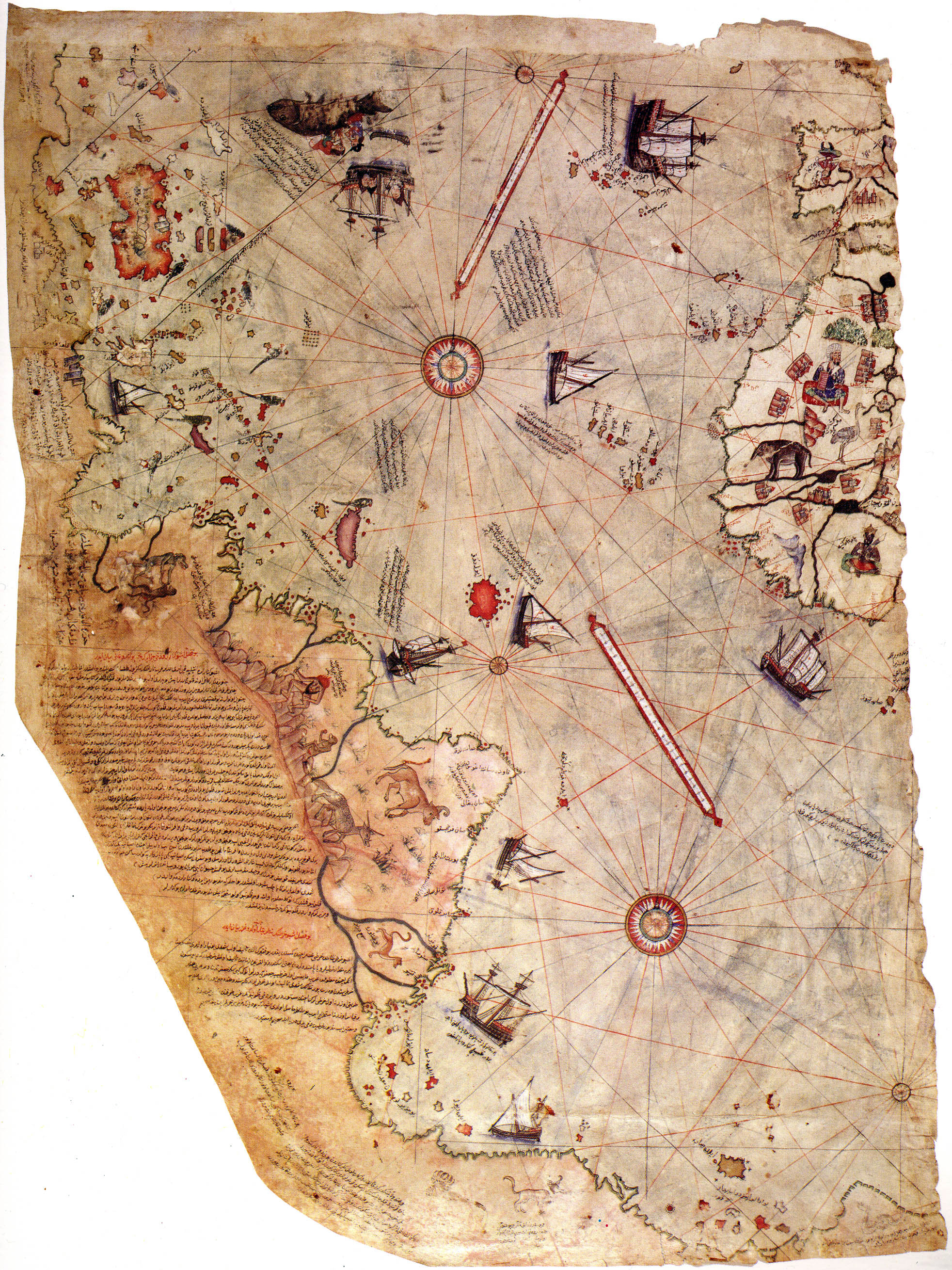
The Piri Reis Map: A Cartographic Enigma
Compiled in 1513 by the Ottoman admiral and cartographer Piri Reis, this world map depicts parts of the Western Hemisphere, Africa, Europe, and, most controversially, a detailed coastline of Antarctica – specifically, the Queen Maud Land region – completely free of ice. This is astounding, given that Antarctica was not officially “discovered” until 1820, and Queen Maud Land’s sub-ice topography wasn’t fully mapped until the mid-20th century using seismic sounding.
Why it’s controversial: How could a 16th-century map accurately depict a continent that wouldn’t be discovered for centuries, and show its landmass before* it was covered by its current ice sheet (a state that hasn’t existed for thousands of years)? Theorists suggest Piri Reis must have copied from much older source maps, possibly dating back to an advanced ancient civilization with sophisticated navigational and cartographic knowledge, or even from a civilization that existed when parts of Antarctica were indeed ice-free. Mainstream explanations typically attribute the Antarctic portion to speculative geography or misinterpretations of existing maps.
Göbekli Tepe: Rewriting the Dawn of Civilization
Located in southeastern Turkey, Göbekli Tepe is an archaeological site that has profoundly reshaped our understanding of human history. Dating back to approximately 9600–8200 BCE, it consists of massive carved stone pillars, some weighing up to 60 tons, arranged in circular enclosures. This predates Stonehenge by 6,000 years and the Egyptian pyramids by 7,000 years. What’s more, it was built by hunter-gatherers, not settled agriculturalists.
Why it’s controversial: For decades, the prevailing theory was that agriculture led to settled communities, which then led to complex social structures and monumental architecture. Göbekli Tepe flips this on its head, suggesting that complex ritual sites and communal efforts might have preceded* agriculture, perhaps even inspiring the shift to farming to support the large populations needed for such projects. It forces a complete re-evaluation of the timeline and drivers of civilization.
The Yonaguni Monument: Natural Formation or Sunken City?
Off the coast of Yonaguni Island in Japan lies a colossal underwater rock formation. Discovered in 1986, it features flat surfaces, sharp angles, terraces, and steps, leading many to believe it’s a submerged pyramid or a ruined city. If man-made, its age would push back the existence of complex civilizations in the region by thousands of years, as it would have been above water during the last Ice Age.
The Bosnian Pyramids: A Modern “Forbidden Archaeology” Saga
In 2005, Semir Osmanagić, a Bosnian-American businessman, claimed that several hills near Visoko, Bosnia, were in fact ancient pyramids, constructed by an unknown, advanced civilization. He named them the “Pyramid of the Sun,” “Pyramid of the Moon,” and “Pyramid of the Dragon,” among others, asserting they were far older and larger than the Egyptian pyramids.
The Great Divide: Mainstream vs. Maverick Archaeology
Why do these controversies persist? Often, it comes down to a fundamental difference in approach.
Mainstream Archaeology operates on principles of peer review, established scientific dating methods (like radiocarbon dating), stratigraphic analysis, and contextual evidence. It builds its understanding of the past incrementally, requiring overwhelming evidence to overturn widely accepted theories. When a sensational claim emerges, the burden of proof is incredibly high. Skepticism is seen as a necessary safeguard against error and fraud.
Maverick or Alternative Archaeology, on the other hand, often embraces anomalies more readily. It’s driven by a desire to find evidence for advanced ancient civilizations, extraterrestrial influence, or lost knowledge. While sometimes sparking genuine re-evaluation, it can also lead to premature conclusions based on insufficient evidence, misinterpretations, or outright hoaxes. For many enthusiasts, the caution of mainstream science can be perceived as a deliberate “suppression of history” or an unwillingness to accept anything that challenges their established worldview.
When Theories Get Debunked: The Importance of Critical Inquiry
It’s also crucial to remember that not all controversial finds stand the test of time. History is littered with examples of “forbidden archaeology” that were eventually debunked or exposed as hoaxes.
These instances highlight the critical importance of rigorous scientific inquiry. While the allure of a hidden, grander past is powerful, the scientific method provides the tools to discern genuine discovery from wishful thinking or deliberate deception.
Why We’re Still Fascinated by Challenging History
Despite the scientific skepticism surrounding many of these finds, their appeal endures. Perhaps it’s the human desire for a more exciting past, a yearning for proof that ancient peoples were more sophisticated, or a healthy distrust of “official” narratives. The idea of “suppressed history” resonates deeply with those who feel that conventional explanations are too mundane or incomplete.
These provocative discoveries, whether ultimately accepted or debunked, serve a vital purpose: they force us to constantly re-examine our assumptions, to question what we “know,” and to remain open to the possibility that the story of humanity is far more intricate and surprising than we can currently imagine. They remind us that history is not a static collection of facts, but an ongoing, dynamic narrative, constantly being unearthed and reinterpreted.
The debates sparked by these finds keep the past alive, vibrant, and incredibly captivating. They invite us all to become armchair archaeologists, piecing together clues and pondering the true extent of human ingenuity across the millennia.
Join the debate in our community forum and share your thoughts on these and other controversial archaeological finds!
*
Suggested Internal Links:
Suggested External Links:
Structured Data Recommendation:
This article is well-suited for Article schema. An FAQPage schema could also be added for the “Frequently Asked Questions” section, with each question and answer marked up accordingly.