
Challenging History: Unearthing Provocative and Controversial Archaeological Finds
Imagine a discovery that shatters everything you thought you knew about human history—a relic so out of place that it forces scholars to rewrite textbooks. Archaeology, often seen as a meticulous science of sifting through dirt, occasionally unearths finds that are far from neat and tidy. These controversial discoveries, sometimes labeled “forbidden archaeology” by their proponents, ignite passionate debates, challenge established timelines, and can even hint at suppressed histories, leaving us to wonder: are we truly seeing the full picture of our past, or are some chapters yet to be fully understood—or even acknowledged?
This article delves into some of the most provocative and fiercely debated archaeological finds, exploring why they spark such controversy. From ancient technologies that seem impossible for their era to evidence that pushes back the timeline of human civilization, we’ll examine the claims, the counter-arguments, and the tantalizing questions that persist. Get ready to question the narrative, because sometimes the most exciting history is the one still being unearthed, debated, and, occasionally, debunked.

The Nature of Controversy in Archaeology: Why Do Finds Spark Such Debate?
Archaeology is a dynamic field, constantly evolving as new data emerges. However, certain discoveries don’t just add to our knowledge—they fundamentally challenge existing paradigms. Controversy often arises when a find seems to contradict widely accepted timelines, technological capabilities, or cultural developments of ancient societies.
For instance, if a complex mechanical device is found in a context thousands of years before such technology was thought possible, it forces a re-evaluation of ancient ingenuity. Similarly, evidence suggesting human presence in a region far earlier than previously believed can upend migration theories. These “out-of-place artifacts” (OOPArts) or anomalous sites generate heated discussions because they threaten to destabilize long-held academic frameworks. The scientific method demands rigorous scrutiny, dating, and peer review, and when a find doesn’t easily fit, it often faces intense skepticism—leading to accusations of “suppressed history” from those who believe the mainstream is too resistant to new ideas.
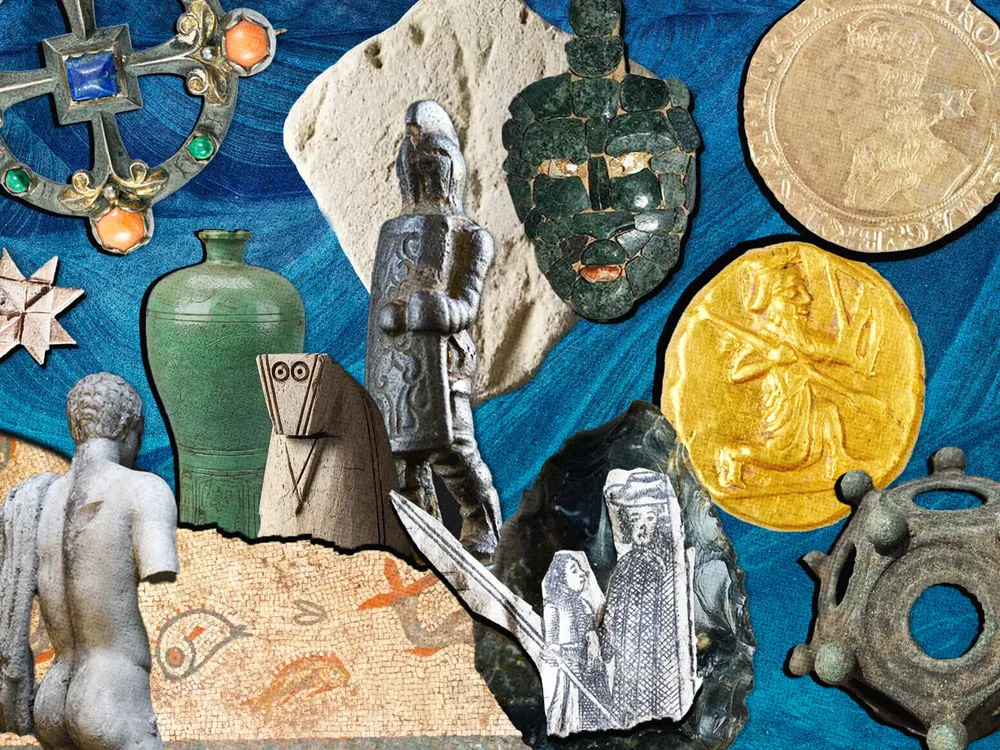
Out-of-Place Artifacts (OOPArts): When Evidence Defies Expectation
The term “OOPArt” refers to an object discovered in an unusual or impossible context, suggesting a level of technological or cultural advancement far beyond what is attributed to its supposed era. These finds are catnip for history buffs and conspiracy theorists alike, as they hint at forgotten knowledge or even lost civilizations.

The Antikythera Mechanism: An Ancient Analog Computer
Discovered in a shipwreck off the coast of the Greek island of Antikythera in 1901, the Antikythera Mechanism initially baffled researchers. Dating back to around 150–100 BCE, this intricate device, recovered in corroded bronze fragments, was far more complex than any known technology from its period. Subsequent research, using X-ray computed tomography, revealed it to be an astronomical calculator of astonishing sophistication.
It featured dozens of interlocking gears, pinions, and dials, capable of predicting solar and lunar eclipses, tracking the movements of celestial bodies, and even calculating the dates of ancient Olympic Games. The precision and complexity of its gearing were not seen again in Europe until the clockwork mechanisms of the 14th century CE. While not “forbidden,” the Antikythera Mechanism dramatically challenges our understanding of ancient Greek technological prowess, proving that ancient engineers possessed knowledge and skills previously attributed to much later periods. It stands as a testament to the fact that ancient civilizations were far more advanced than we often give them credit for. The Antikythera Mechanism research project continues to refine our understanding of this remarkable device.

The Baghdad Battery: Ancient Power Source?
In 1938, German archaeologist Wilhelm König discovered what became known as the “Baghdad Battery” or “Parthian Battery” in the National Museum of Iraq. Found near Baghdad, the artifact consists of a 13 cm (about 5-inch) clay jar containing a copper cylinder that encloses an iron rod. Dated to the Parthian era (around 250 BCE to 224 CE), its resemblance to a voltaic pile led König to hypothesize that it was an ancient electrical battery.
Experiments have shown that when filled with an acidic electrolyte such as grape juice or vinegar, the device can indeed produce a small electrical current—around 0.8 to 2 volts. Proponents suggest it might have been used for electroplating, pain relief, or religious rituals. Mainstream archaeologists, however, largely dismiss this interpretation, suggesting the jars were more likely storage vessels for scrolls or other materials and that the components were merely incidental. The debate continues, fueling speculation about forgotten ancient technologies and the possibility of ancient electricity.

The Piri Reis Map: A Glimpse of Antarctica?
The Piri Reis Map is a genuine Ottoman map compiled in 1513 by the admiral and cartographer Piri Reis. What makes it controversial is its alleged depiction of Antarctica’s coastline, specifically the Queen Maud Land region, free of ice. This is extraordinary because Antarctica was not officially “discovered” until 1820, and its coastline would not be accurately charted beneath its ice sheet until the