
Challenging History: Unearthing Provocative and Controversial Archaeological Finds
The past isn’t always as settled as history books might suggest. While much of our understanding of ancient civilizations is built on solid archaeological evidence, certain controversial discoveries continue to spark intense debate, shaking the foundations of established timelines and technological assumptions. These finds often push the boundaries of conventional thinking, leading some to explore concepts of forbidden archaeology and even suppressed history, while others meticulously work to integrate or debunk these theories within existing frameworks.
Archaeology, at its heart, is a detective story, piecing together fragments to reconstruct vanished worlds. But sometimes the evidence unearthed doesn’t fit the established narrative, forcing us to confront tantalizing mysteries that challenge everything we thought we knew. From anachronistic technology to impossible ancient maps, these provocative finds ignite the imagination and fuel endless discussions among history buffs and those fascinated by the unknown.
Why Do Archaeological Finds Become So Controversial?
Imagine finding a smartphone in a Roman ruin. That’s the kind of paradigm-shattering moment some controversial archaeological finds represent. The very nature of archaeological interpretation makes it ripe for debate. When a discovery deviates significantly from what’s expected based on current understanding, it can lead to several outcomes:
- Re-evaluation: Mainstream science rigorously examines the new evidence, potentially leading to a revision of existing theories.
- Skepticism: Initial findings might be met with doubt, requiring further verification and robust methodologies to gain acceptance.
- Fringe Theories: When mainstream explanations are perceived as insufficient or too slow to adapt, alternative theories emerge, often proposing advanced ancient civilizations, extraterrestrial influence, or even deliberate cover-ups, giving rise to ideas of suppressed history.
- Misinterpretation or Fraud: Sadly, some finds turn out to be misidentified, misinterpreted, or, in rare cases, outright hoaxes. The process of archaeology is one of constant peer review and critical analysis, working to filter out these errors.
It’s in this fertile ground of re-evaluation and skepticism that the most captivating and controversial discoveries take root, inviting us to question, explore, and sometimes even rethink the very fabric of our shared human story.

The Antikythera Mechanism: An Ancient Computer from the Deep
One of the most astonishing controversial discoveries that eventually found its place in mainstream science is the Antikythera Mechanism. Discovered in a shipwreck off the coast of the Greek island of Antikythera in 1901, this complex device initially baffled researchers. It looked like a corroded lump of bronze and wood, but upon closer inspection and painstaking restoration, its true nature was revealed.
Dating back to roughly 200–100 BCE, the Antikythera Mechanism is now widely recognized as the world’s first analog computer. Composed of dozens of intricate bronze gears, it was designed to predict astronomical positions and eclipses for calendrical and astrological purposes. It could track the cycles of the sun, moon, and visible planets, displaying them on a series of dials. The precision and complexity of its gearing system were unparalleled for its time, exceeding anything known from ancient Greece or Rome and resembling clockwork technology not seen again until the 14th century.
For decades, its existence challenged the historical narrative of ancient Greek technological capabilities. How could such a sophisticated device exist centuries before the Industrial Revolution? While it is no longer “forbidden archaeology” in the conspiratorial sense, its discovery forced historians of science to significantly revise their understanding of ancient Greek engineering and astronomical knowledge. It stands as a testament to the unexpected genius that can emerge from the past, reminding us that our ancestors were often far more advanced than we give them credit for.

Göbekli Tepe: Rewriting the Dawn of Civilization
If you want a truly paradigm-shifting archaeological find, look no further than Göbekli Tepe in southeastern Turkey. Discovered in the mid-1990s and continuously excavated since, this site has utterly revolutionized our understanding of when and why complex human societies first emerged.
Dating back an astonishing 11,600 years—roughly 6,000 years before Stonehenge and the pyramids of Giza—Göbekli Tepe consists of massive, intricately carved stone pillars arranged in monumental circular enclosures. What makes this site so profoundly controversial and significant is its age and the nature of its builders. It was constructed by hunter-gatherers, long before the advent of settled agriculture, which was previously thought to be the prerequisite for large-scale, organized construction and the rise of civilization.
The existence of Göbekli Tepe suggests that the desire for communal ritual or spiritual expression might have preceded agriculture and sedentary life, perhaps even driving it. Instead of agriculture leading to settlements and then to monumental architecture, Göbekli Tepe hints that complex social organization and monumental building came first, possibly prompting the need for a stable food supply and thus the development of farming. This completely flips the established narrative of human development on its head, making it one of the most exciting and genuinely controversial discoveries of our time, forcing a complete rewrite of history’s opening chapters.
The Piri Reis Map: Evidence of Ancient Global Knowledge?
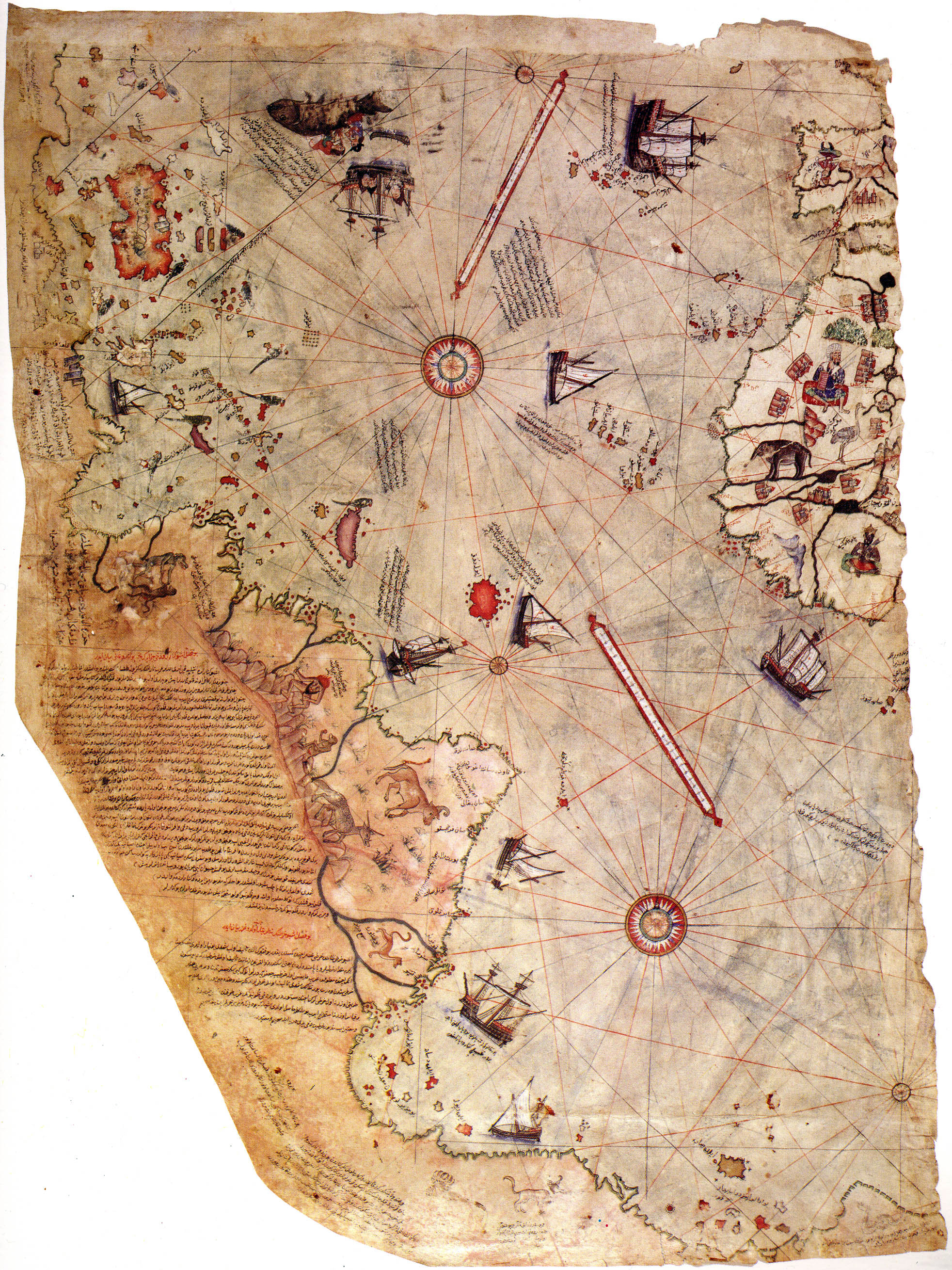
The Piri Reis Map is a fascinating document that has fueled debates about suppressed history and ancient cartographic knowledge for centuries. Discovered in 1929 in the library of the Ottoman Imperial Palace in Istanbul, this world map was compiled in 1513 by the Ottoman admiral and cartographer Piri Reis. While its authenticity is undisputed, its content is what makes it so provocative.
The map accurately depicts the western coasts of Africa and Europe, and the eastern coast of South America. So far, so good for 1513. However, it also shows what appears to be a portion of Antarctica, specifically Queen Maud Land, depicted without ice. This is astonishing because Antarctica wasn’t officially “discovered” until 1820, and Queen Maud Land’s subglacial topography wasn’t fully mapped until the mid-20th century using seismic sounding.
How could a 16th-century mapmaker possess such knowledge? The mainstream explanation is that Piri Reis explicitly stated he compiled his map from twenty older maps, including some drawn by Christopher Columbus and some dating back to the time of Alexander the Great. Scholars suggest that the “Antarctica” segment might be a misinterpretation of a southern landmass, a cartographic projection error, or perhaps a depiction of the South American coast extending further south.
However, proponents of forbidden archaeology argue that the Piri Reis Map is proof of a lost, highly advanced ancient civilization that possessed global surveying capabilities, or even evidence of extraterrestrial contact. They suggest these ancient source maps accurately depicted the world before the last Ice Age, when parts of Antarctica were indeed ice-free. While the mainstream view leans toward more conventional explanations, the Piri Reis Map remains a powerful symbol for those who believe in a suppressed history of advanced ancient knowledge.

The Yonaguni Monument: Natural Formation or Lost City?
Off the coast of Yonaguni Island in Japan lies one of the most visually striking and hotly debated underwater structures: the Yonaguni Monument. Discovered by a local diver in 1986, this massive sandstone formation features sharp angles, straight lines, terraces, and what appear to be carved steps and platforms. It looks, to many, like a submerged pyramid or a ruined city.
Its proponents argue that the monument is clearly man-made, or at least significantly modified by human hands. They point to the perfectly straight edges, 90-degree angles, parallel lines, and apparent geometric patterns as evidence of ancient construction. If artificial, its estimated age, submerged at the end of the last Ice Age, would place it around 10,000 BCE, suggesting a sophisticated civilization existed in Japan far earlier than conventionally believed. This would make it a prime example of forbidden archaeology, challenging established timelines of complex human settlement in the region.
However, the mainstream geological consensus largely views the Yonaguni Monument as a natural geological formation, specifically a type of sandstone known to fracture along straight lines and angles. Geologists argue that natural erosion, tectonic activity, and currents can create features that appear remarkably artificial. While some archaeologists remain open to the possibility of human modification, the evidence for tool marks or clear construction techniques has been inconclusive for many. The debate rages on, with divers, scientists, and enthusiasts offering compelling arguments for both sides, making it a truly captivating and controversial discovery.
The Baghdad Battery: Was Ancient Technology More Advanced?
Discovered in 1936 near Baghdad, Iraq, the Baghdad Battery is an artifact that consistently sparks discussions about advanced ancient technology and forbidden archaeology. Dating to the Parthian era (roughly 250 BCE to 224 CE), this unassuming object consists of a clay jar containing a copper cylinder, which encloses an iron rod.
When filled with an acidic electrolyte, like grape juice or vinegar, this setup can generate a small electrical current. This led to the theory that the Baghdad Battery was, indeed, an ancient electrical battery, capable of producing electricity. If true, it would represent a remarkable technological achievement centuries ahead of its time, challenging the notion that electricity was only harnessed in the modern era. Proponents suggest it could have been used for electroplating, mild electrotherapy, or even as a power source for religious statues.
However, many mainstream archaeologists and scientists remain skeptical. They point out that no wires or other electrical components have ever been found with the “batteries” (several similar artifacts exist). Alternative explanations suggest the jars were used for storing scrolls, as ritual vessels, or for some other non-electrical purpose. The iron rod could have simply been a structural element, and the copper cylinder a decorative or protective lining. Without definitive proof of its function as a battery, it remains a tantalizing “what if”—a controversial discovery that continues to fuel speculation about the true extent of ancient technological prowess.
Debunked Theories and the Lure of “Forbidden Archaeology”
While the allure of hidden truths and suppressed history is powerful, it’s crucial to distinguish between genuinely controversial discoveries that provoke scientific re-evaluation and those based on debunked theories, misinterpretations, or even outright hoaxes. The scientific method in archaeology is designed to be self-correcting, constantly testing hypotheses against new evidence.
Many sensational claims have, over time, been thoroughly debunked. The “Cardiff Giant,” a supposed petrified man discovered in 1869, was eventually revealed to be a meticulously carved gypsum statue. The “Piltdown Man,” presented in 1912 as the missing link between apes and humans, was exposed as a hoax in 1953, a combination of a medieval human skull and an orangutan jaw. These examples highlight the importance of rigorous scientific scrutiny and the potential for human error or deception.
The concept of “forbidden archaeology” often arises when proponents feel that mainstream science is too rigid, unwilling to consider evidence that contradicts established paradigms. While healthy skepticism is vital for scientific progress, an outright rejection of evidence without thorough investigation can be problematic. Conversely, embracing every fringe theory without critical analysis risks falling into pseudoscience. The line between challenging a paradigm and promoting a debunked theory can sometimes seem blurry, but it’s often clarified by the quality of evidence, the methodology of investigation, and the willingness of proponents to engage in peer review.
Navigating the Past: Skepticism vs. Open-Mindedness
Exploring controversial discoveries requires a delicate balance of skepticism and open-mindedness. It’s easy to get swept away by the romantic notion of a suppressed history or advanced ancient civilizations. However, genuine archaeological progress relies on methodical investigation, peer review, and a commitment to evidence, even when that evidence challenges long-held beliefs.
The beauty of archaeology is its dynamic nature. New technologies, new excavation techniques, and new ways of interpreting existing data constantly reshape our understanding of the past. Sites like Göbekli Tepe demonstrate that the established narrative can be dramatically altered by compelling new evidence. It’s not about rejecting everything that doesn’t fit, but about critically evaluating why something doesn’t fit and what that implies.
So, as you delve into the mysteries of the past, remember to question, to think critically, and to appreciate the ongoing journey of discovery. The past isn’t a static story; it’s a living, breathing narrative that continues to unfold with every new shovel in the dirt and every new interpretation of an ancient artifact.
Conclusion
The world is full of incredible archaeological finds, some of which continue to perplex and inspire us. From the mind-boggling complexity of the Antikythera Mechanism to the civilization-redefining structures of Göbekli Tepe, these controversial discoveries invite us to look beyond conventional wisdom and ponder the true capabilities and histories of our ancient ancestors. Whether they hint at forbidden archaeology, challenge debunked theories, or simply expand our understanding, these finds ensure that the story of humanity remains one of endless fascination and debate. The past is far from fully understood, and perhaps that’s what makes it so utterly captivating.
What are your thoughts on these enigmatic finds? Do you believe in suppressed history, or do you think mainstream archaeology will eventually integrate all these mysteries? Share your insights in the comments below.