
Unveiling Hidden Empires: Modern Archaeology’s Discoveries of Ancient Civilizations
For centuries, our understanding of ancient history was largely shaped by written records and monumental ruins that stood proudly above ground. Yet beneath dense jungles, shifting sands, and even the ocean’s surface, entire civilizations—vast, complex, and utterly transformative—lay hidden, their stories waiting to be told. Modern archaeology, armed with cutting-edge technology and innovative methodologies, is now piercing through the veils of time and nature, systematically revealing these “hidden empires” and fundamentally rewriting the annals of human history. These groundbreaking discoveries not only expand our knowledge of past societies but also offer profound insights into human ingenuity, resilience, and our intricate relationship with the environment.

The Allure of the Unseen: What Are Hidden Empires?
When we speak of “hidden empires,” we are not just talking about small, forgotten settlements. We are referring to entire civilizations or significant aspects of well-known ones that were either lost to memory, dramatically underestimated in their scale and complexity, or simply never recognized by previous generations of researchers. These societies, often flourishing for centuries or even millennia, disappeared for a multitude of reasons: catastrophic environmental shifts, political upheavals, relentless overgrowth by nature, or simply the passage of time eroding all visible traces.
Imagine sprawling cities swallowed by rainforests, their intricate networks of roads and farms becoming indistinguishable from the natural landscape. Picture vast port cities submerged by rising sea levels, their treasures preserved in the silty depths. Envision entire ceremonial landscapes, once bustling with life and ritual, now just subtle undulations in farmers’ fields. These are the hidden empires—not gone, but merely awaiting rediscovery, offering a fresh perspective on the human story. Their secrets, once considered irrevocably lost, are now being brought to light by a new wave of archaeological exploration.

Beyond the Shovel: How Modern Archaeology Unearths the Past
The traditional image of an archaeologist involves a dusty pith helmet, a trowel, and meticulous excavation. While those tools remain vital, modern archaeology has evolved dramatically, embracing a suite of advanced technologies that allow researchers to see beneath the surface, through dense vegetation, and across vast landscapes with unprecedented clarity.
Seeing Through the Canopy: LiDAR and Remote Sensing
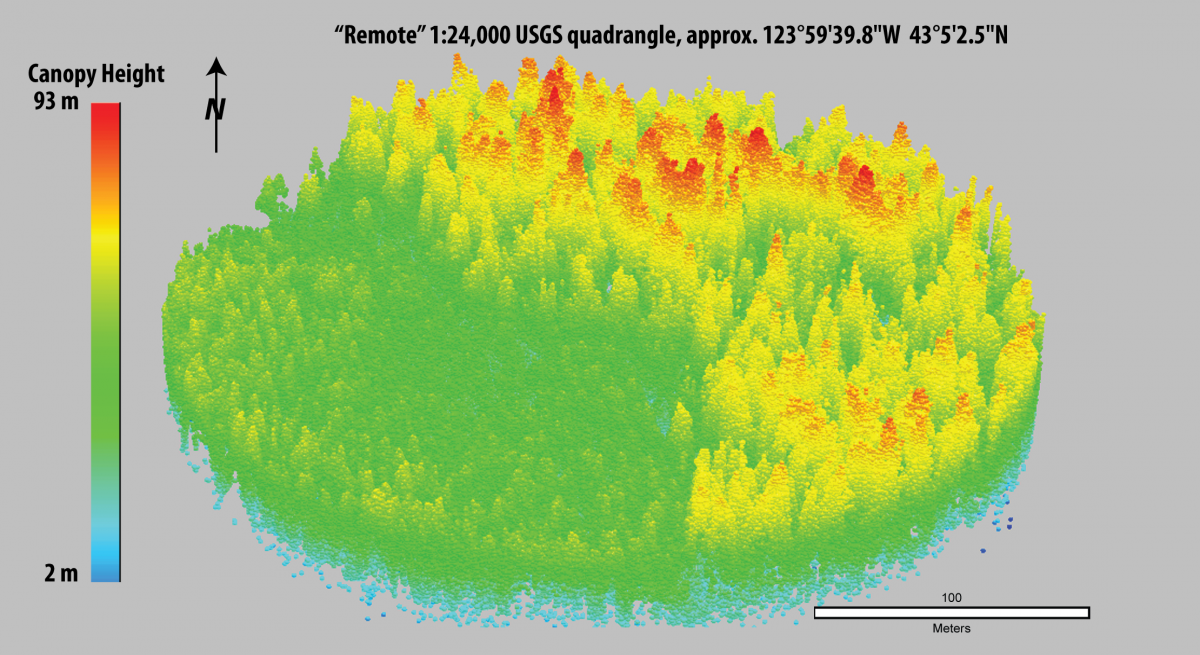
Perhaps the most revolutionary tool in recent decades is LiDAR (Light Detection and Ranging). Mounted on aircraft or drones, LiDAR systems emit millions of laser pulses per second, which penetrate even the densest forest canopies. The pulses bounce off the ground and return, creating incredibly detailed 3D maps of the terrain below. This technology can strip away centuries of vegetation, revealing faint outlines of ancient cities, roads, agricultural terraces, and defensive structures that are completely invisible from the ground or even from conventional aerial photography.
Beyond LiDAR, satellite imagery and other forms of remote sensing play a crucial role. Multispectral and hyperspectral imaging can detect subtle variations in soil composition, vegetation health, and moisture levels, often indicating buried structures or past human activity. Even historical aerial photographs, when re-analyzed with modern digital tools, can reveal patterns previously overlooked.
Peering Beneath the Earth: Geophysical Surveys
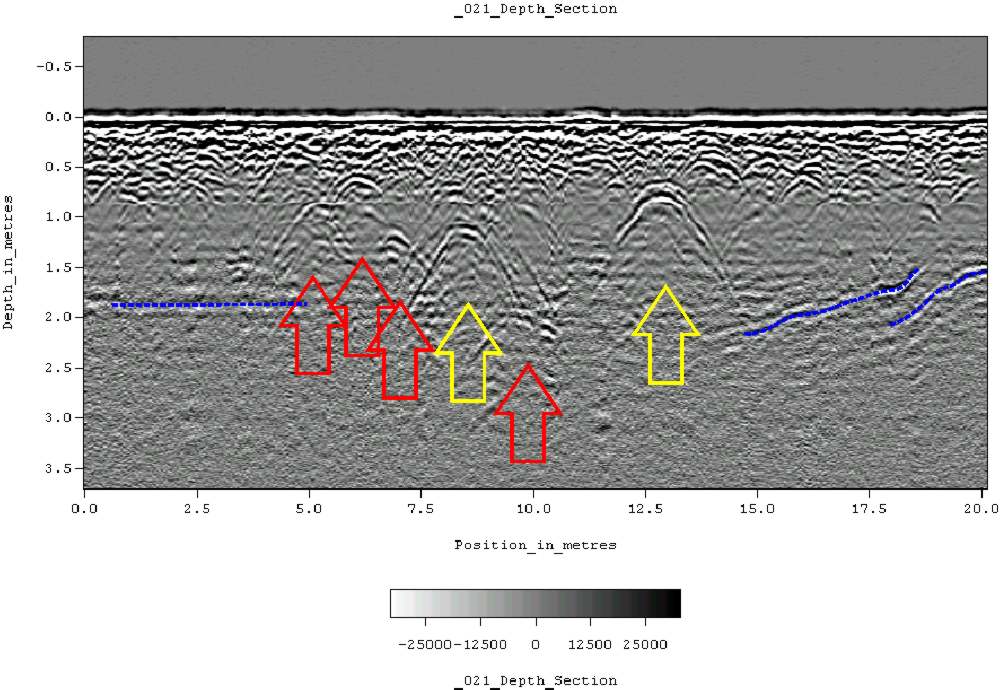
Before a single shovel breaks ground, geophysical surveys offer a non-invasive way to map subterranean features. Techniques like ground-penetrating radar (GPR) send electromagnetic waves into the earth, reflecting off different materials and creating a subsurface profile. Magnetometry measures slight variations in the Earth’s magnetic field, which can be altered by human activity like fires, ditches, or buried walls. Electrical resistivity surveys detect changes in electrical conductivity in the soil, again highlighting buried structures. These methods allow archaeologists to create detailed “x-rays” of sites, guiding excavations to the most promising areas and preserving undisturbed sections.

Exploring the Depths: Underwater Archaeology
For civilizations that bordered seas or rivers, or for those impacted by rising water levels, the aquatic realm holds countless secrets. Underwater archaeology utilizes advanced sonar, remotely operated vehicles (ROVs), and sophisticated diving equipment to explore submerged landscapes. Side-scan sonar can map the seafloor, identifying anomalies that might be shipwrecks or sunken cities. ROVs equipped with cameras and manipulators can investigate delicate sites without human intervention, while specialized diving techniques allow archaeologists to meticulously excavate underwater, preserving artifacts in their often pristine, anaerobic environment.
Unlocking Biological Clues: Bioarchaeology and DNA Analysis
Beyond structures and artifacts, the study of human and animal remains, known as bioarchaeology, offers invaluable insights. DNA analysis from ancient bones, teeth, and even soil samples can reveal migration patterns, genetic relationships between populations, dietary habits, and the prevalence of diseases. Isotopic analysis of teeth and bones can indicate where people lived during different stages of their lives, their diets, and even the climate conditions they experienced. These biological clues help paint a vivid picture of the people who inhabited these hidden empires.
The Digital Age: AI and Data Analysis
The sheer volume of data generated by modern archaeological surveys can be overwhelming. This is where digital humanities and artificial intelligence (AI) come into play. AI algorithms can be trained to identify patterns in LiDAR data, satellite imagery, or geophysical survey results that human eyes might miss. Databases and geographic information systems (GIS) allow researchers to integrate and analyze vast datasets, creating comprehensive maps and models that connect disparate pieces of evidence into a coherent narrative.
Shifting Methodologies: Interdisciplinary and Community-Focused
Modern archaeology also emphasizes interdisciplinary approaches, bringing together experts from geology, botany, climatology, anthropology, and computer science. This holistic view provides a richer context for discoveries. Furthermore, there is a growing movement toward community archaeology, involving local populations in the discovery and interpretation of their heritage, ensuring that the stories of hidden empires are told with respect and relevance to those whose ancestors built them.
Echoes from the Jungle: Mesoamerican Civilizations Reimagined
Mesoamerica, with its dense rainforests and complex history, has proven to be a fertile ground for the rediscovery of hidden empires, particularly those of the Maya and Olmec civilizations.
The LiDAR Revolution: Unveiling Maya Megacities
For decades, scholars believed Maya cities were relatively isolated urban centers, surrounded by sparse populations. The advent of LiDAR technology has shattered this perception, revealing an astonishingly vast and interconnected network of settlements, agricultural systems, and roadways.
One of the most profound revelations came from the El Mirador Basin in Guatemala, part of the Mirador-Kaan Plateau. LiDAR surveys unveiled a massive pre-Classic Maya civilization, dating back as far as 1000 BCE, featuring monumental architecture on a scale previously thought impossible for its time. The sheer size of cities like El Mirador, with its towering “La Danta” pyramid rising 72 meters, and the existence of an extensive network of elevated causeways (sacbeob) connecting dozens of cities demonstrated a level of political and economic integration far beyond earlier estimates. These were not just cities; they were vast, integrated urban landscapes supporting millions of people.
Similarly, LiDAR surveys around sites like Tikal in Guatemala and Caracol in Belize have transformed our understanding of their hinterlands. Researchers discovered extensive residential areas, sophisticated agricultural terraces—some capable of sustaining tens of thousands of people—and intricate water management systems that extended far beyond the visible monumental cores. This evidence suggests that the Classic Maya supported far larger populations and exerted much greater control over their environment than previously imagined, challenging theories about their collapse and highlighting their incredible ingenuity.
Olmec Origins: Rethinking Mesoamerica’s Mother Culture
Often referred to as Mesoamerica’s “mother culture,” the Olmec civilization (c. 1400–400 BCE) laid many foundations for later societies like the Maya and Aztec. While sites like San Lorenzo and La Venta have been studied for decades, modern archaeological techniques continue to unveil new layers of their complexity.
Recent work, combining traditional excavation with geophysical surveys at sites like San Lorenzo Tenochtitlán in Veracruz, Mexico, has revealed more about its extensive urban planning and hydraulic systems. The Olmec were master engineers, diverting rivers and creating sophisticated drainage systems, suggesting a highly organized society capable of massive public works. Discoveries of workshops and residential areas further illustrate the daily lives and specialized crafts of this influential culture. The ongoing re-evaluation of Olmec sites reinforces their pivotal role in developing writing systems, monumental sculpture like the colossal heads, and complex religious beliefs that permeated subsequent Mesoamerican civilizations.