
Cracking Ancient Enigmas: Exploring Mysteries and Lost Knowledge from the Past
From the silent whispers of forgotten civilizations to the baffling precision of artifacts crafted by unknown hands, the ancient world is a vast canvas painted with enduring mysteries. Humanity has always been captivated by the past’s unsolved puzzles, seeking to piece together fragmented clues that hint at advanced knowledge, forgotten technologies, or even entirely different ways of understanding the cosmos. This journey into ancient enigmas isn’t just about history; it’s about unlocking secrets that could reshape our understanding of human potential and our place in the grand tapestry of time.
Join us as we step into the shadows of history to explore some of the most compelling ancient mysteries, enigmatic artifacts, and lost knowledge that continues to elude our grasp, inviting us to question everything we think we know.

Lost Civilizations and Their Secrets: Echoes from Vanished Worlds
Imagine entire societies, once vibrant and advanced, now swallowed by time, leaving behind only tantalizing ruins and unanswered questions. The stories of lost civilizations are perhaps the most evocative of all ancient mysteries, reminding us of the fragility of even the greatest empires.
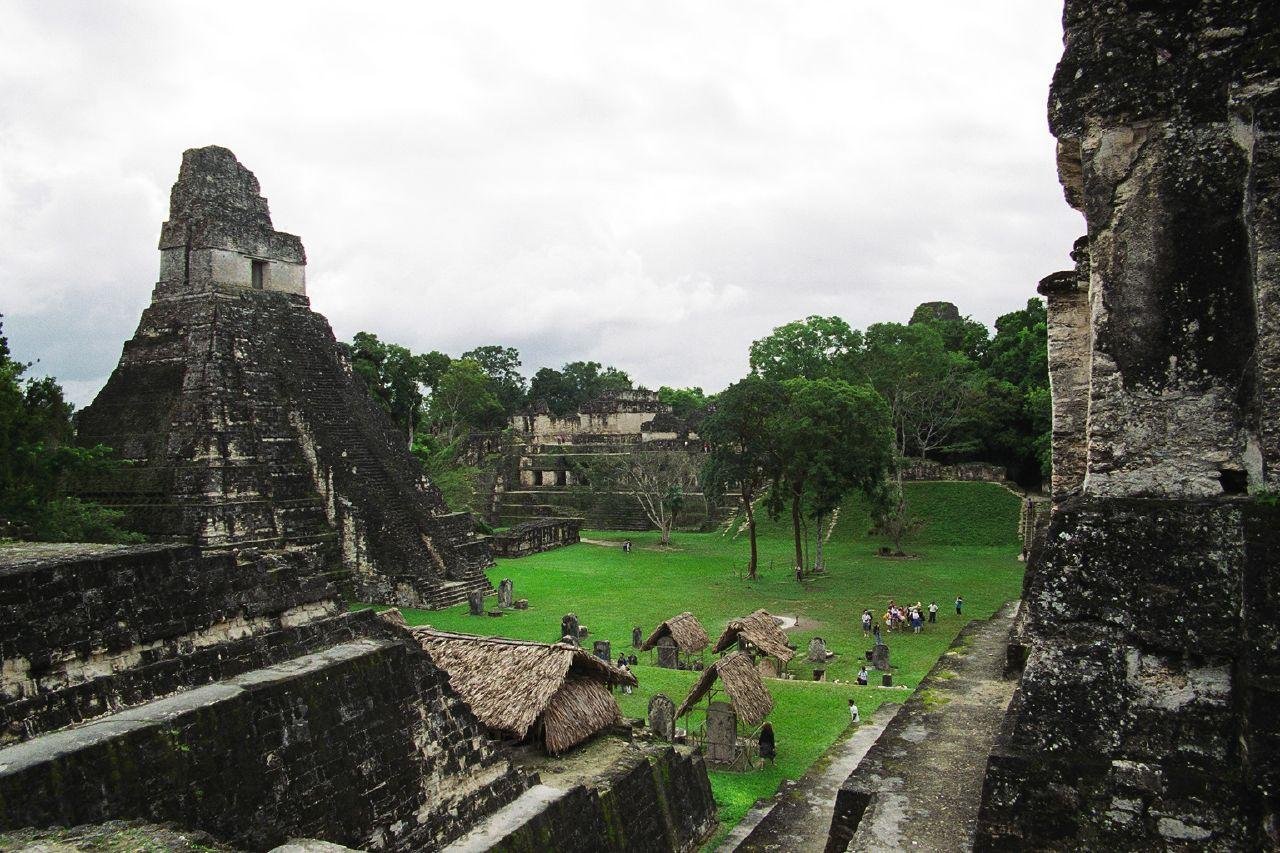
The Maya’s Vanishing Act
The Classic Maya civilization, which flourished in Mesoamerica for centuries, was an intellectual powerhouse that developed sophisticated writing systems, intricate calendars, and monumental architecture. Their cities, such as Tikal and Palenque, boasted towering pyramids and elaborate palaces. Yet around the 9th century CE, many of these great urban centers were abandoned, their populations dispersing into the jungle. What caused this dramatic collapse? Theories range from prolonged drought and environmental degradation to intense warfare and political instability. While we understand much about Maya achievements, the precise reasons for their widespread decline remain one of history’s most compelling unsolved puzzles, hinting at ecological and societal lessons we would do well to heed today.

The Enigma of the Indus Valley Civilization
Spanning vast areas of what is now Pakistan and India, the Indus Valley Civilization—also known as the Harappan Civilization—rivaled ancient Egypt and Mesopotamia in scale and sophistication. Cities such as Mohenjo-Daro and Harappa featured remarkably advanced urban planning, complete with grid layouts, sophisticated drainage systems, and multi-story brick houses. Yet despite their ingenuity, we know surprisingly little about their rulers, their political structure, or even their language. Their unique script remains undeciphered, a silent testament to a lost world. The civilization also experienced a gradual decline around 1800 BCE, possibly due to shifting river patterns or climate change, leaving behind an archaeological treasure trove whose full story is yet to be told.

The Allure of Atlantis
While often dismissed as a purely mythological tale from Plato’s writings, the legend of Atlantis continues to grip the imagination. Described as an advanced island civilization that sank beneath the waves in a single day and night, Atlantis embodies the ultimate lost knowledge—an entire utopian society vanished without a trace. Although no definitive archaeological evidence supports its existence, the story serves as a powerful metaphor for forgotten wisdom and the possibility that ancient civilizations possessed technologies or philosophies far beyond our current understanding. Could there be a kernel of truth behind the myth, perhaps inspired by real-world cataclysms or advanced ancient cultures?
Enigmatic Artifacts: Objects That Defy Explanation
Sometimes the past doesn’t just leave ruins; it leaves behind objects that seem to leapfrog centuries of technological development, forcing us to reconsider the capabilities of ancient peoples. These enigmatic artifacts challenge our timelines and spark endless debate.
The Antikythera Mechanism: An Ancient Computer
Discovered in a shipwreck off the coast of Greece in 1901, the Antikythera Mechanism is perhaps the most astonishing ancient artifact ever found. Dating back to the 2nd century BCE, this complex bronze device is an analog computer of incredible sophistication. It features dozens of interlocking gears, dials, and pointers designed to calculate astronomical positions, predict eclipses, and track the cycles of the Olympic Games. Its precision and complexity far exceed anything else known from that era, suggesting a lost tradition of mechanical engineering that vanished for over a millennium. Who built it, and how did they achieve such mastery? The Antikythera Mechanism stands as a powerful testament to the forgotten brilliance of ancient Greek inventors.
The Voynich Manuscript: An Unreadable Tome
For centuries, cryptographers, historians, and linguists have been baffled by the Voynich Manuscript, a medieval codex filled with strange illustrations and an entirely unknown writing system. Discovered in 1912 by antiquarian Wilfrid Voynich, the manuscript contains botanical drawings of nonexistent plants, astronomical diagrams, alchemical symbols, and what appear to be bathing women. Despite countless attempts, its script has never been deciphered, leading to speculation that it is an elaborate hoax, a lost language, or perhaps something even more extraordinary. The Voynich Manuscript remains one of the world’s most famous unsolved puzzles, a silent challenge from the past.
The Baghdad Battery: An Ancient Power Source?
Unearthed near Baghdad in 1936, the Baghdad Battery consists of a clay jar containing a copper cylinder, an iron rod, and traces of acid. Dated to the Parthian era (around 250 BCE to 250 CE), some researchers propose it was an ancient electrical battery capable of producing a small current. While its exact purpose is debated—some suggest it was used for electroplating jewelry or for medicinal purposes, while others believe it held sacred scrolls—its existence raises intriguing questions about ancient knowledge of electricity. If it was indeed a battery, it represents a technological leap far ahead of its time, hinting at forgotten applications of fundamental scientific principles.
The Piri Reis Map: A Cartographic Anomaly
Compiled in 1513 by the Ottoman admiral Piri Reis, this world map depicts parts of Europe, North Africa, Brazil, and, controversially, a portion of Antarctica’s coastline without ice. This is astonishing, as Antarctica was not officially discovered until 1820, and its coastline would have been ice-free thousands of years ago. The map itself states that it was compiled from twenty ancient charts, some dating back to the time of Alexander the Great. How did Piri Reis, or his ancient sources, possess such accurate geographical knowledge, particularly of a continent supposedly unknown and covered in ice? The Piri Reis Map is a compelling piece of evidence suggesting the existence of advanced ancient cartography and lost geographical knowledge.
Unsolved Engineering Marvels: How Did They Do It?
Across the globe, monumental structures stand as testaments to ancient ingenuity, yet their construction methods often remain shrouded in mystery. Without modern tools, how did ancient peoples achieve such feats of engineering?
The Pyramids of Giza: A Timeless Conundrum
The Great Pyramids of Giza, particularly the Pyramid of Khufu, are among the most iconic ancient wonders. Built over 4,500 years ago, these colossal structures comprise millions of precisely cut and fitted stone blocks, some weighing many tons. The sheer scale, precision, and astronomical alignment of these pyramids continue to astound engineers and archaeologists. How were these massive blocks quarried, transported across vast distances, and then lifted to incredible heights without the aid of wheels, iron tools, or modern machinery? Theories range from elaborate ramp systems to unknown levering techniques, but no single explanation fully satisfies all the evidence, leaving the methods of their construction as one of humanity’s most enduring ancient mysteries.
Stonehenge: A Megalithic Puzzle
In the heart of Salisbury Plain, England, stands Stonehenge, a prehistoric monument composed of massive sarsen and bluestone megaliths arranged in a distinctive circular pattern. Dating back as far as 3000 BCE, its purpose is widely believed to be astronomical, aligning with solstices and equinoxes. But the true puzzle lies in its construction. The bluestones, weighing up to 4 tons each, were transported from the Preseli Hills in Wales, over 150 miles away. The sarsen stones, even larger at up to 30 tons, came from Marlborough Downs, 20 miles away. How did Neolithic people move and erect these colossal stones with such precision, arranging them into a complex calendar or ritual site? The answer remains one of the greatest unsolved puzzles of prehistoric engineering.
Puma Punku and Tiwanaku: Precision Beyond Belief
High in the Bolivian Andes lie the ruins of Puma Punku, part of the larger Tiwanaku site. What sets Puma Punku apart are its incredibly precise, almost machine-like stone blocks. Many of these massive blocks, some weighing over 100 tons, are carved with intricate, interlocking designs, razor-sharp edges, and perfectly drilled holes that suggest the use of tools far more advanced than anything known to have existed in the region at the time (around 500–1000 CE). The fit is so exact that a razor blade cannot be slipped between the joints. The question isn’t just how they moved these stones, but how they achieved such incredible stone-cutting and shaping precision without metal tools capable of working such hard rock.
Mysterious Texts and Lost Languages: The Silent Voices of the Past
Imagine holding a book filled with profound wisdom, but its language is utterly alien, its meaning forever sealed. The loss of ancient texts and the inability to decipher certain languages represent some of the most frustrating aspects of lost knowledge.
Rongorongo of Easter Island: A Lost Script
Easter Island, famous for its enigmatic moai statues, also possesses another profound mystery: the rongorongo script. This system of glyphs, carved onto wooden tablets, was once the written language of the Rapa Nui people. However, by the time European contact intensified in the 19th century, knowledge of how to read and write rongorongo had largely vanished, tragically lost due to disease and cultural disruption. Only about two dozen tablets survive, and despite numerous attempts, the script remains undeciphered—a silent echo of a unique culture’s lost literary heritage.
The Phaistos Disc: A Unique Impression
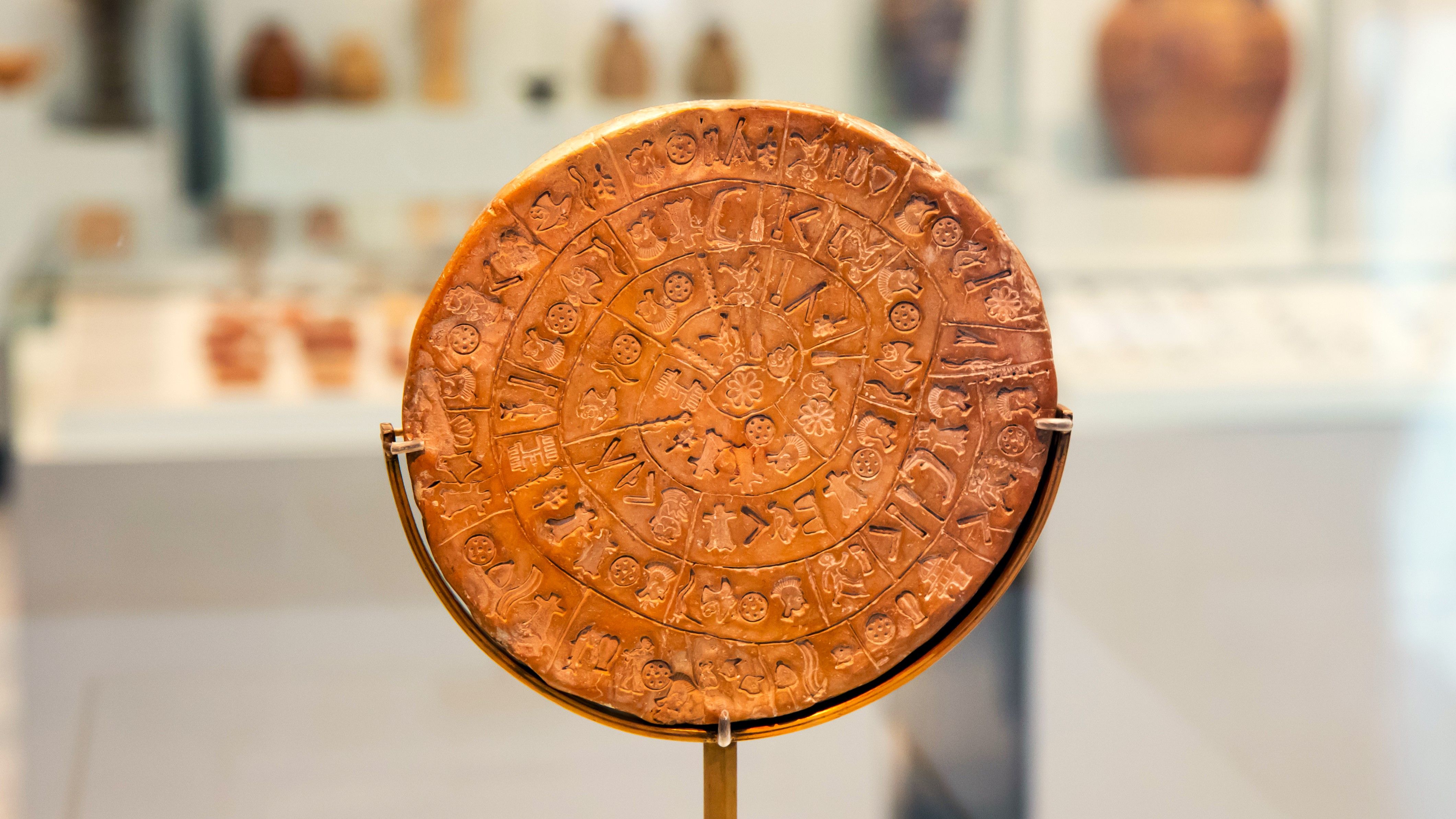
Discovered in 1908 in the Minoan palace of Phaistos on the island of Crete, the Phaistos Disc is a remarkable artifact dating to the Middle Minoan period (around 1700 BCE). It is a clay disc, about 6 inches in diameter, covered on both sides with a spiral of stamped symbols. What makes it truly unique is that the symbols appear to have been impressed into the clay using individual stamps, making it possibly the earliest example of movable type. Its purpose, the language it represents, and the meaning of its 241 symbols remain completely unknown. Is it a prayer, a game, or a historical record? The Phaistos Disc continues to be one of archaeology’s most captivating unsolved puzzles.
The Tragic Loss of the Library of Alexandria
While not a single artifact, the destruction of the Library of Alexandria represents arguably the greatest loss of ancient knowledge in history. Founded in the 3rd century BCE, it was the intellectual heart of the ancient world, housing hundreds of thousands of scrolls containing the accumulated wisdom of Greek, Egyptian, Persian, and other cultures. Its gradual decline and eventual destruction, possibly by fire or neglect over several centuries, meant that countless works of literature, philosophy, science, and history were lost forever. Imagine the scientific breakthroughs, philosophical insights, and historical accounts that vanished, leaving an irreplaceable void in our understanding of the ancient mind.
Ancient Astronomical Puzzles: Gazing at the Cosmos with Unknown Eyes
Many ancient cultures demonstrated an astonishing understanding of celestial mechanics, often without the aid of telescopes or advanced mathematics as we know it. How did they achieve such precise astronomical knowledge, and what was its purpose?
The Nazca Lines: Messages to the Sky?
Stretching across the arid plains of Peru, the Nazca Lines are massive geoglyphs etched into the desert floor by the ancient Nazca people between 500 BCE and 500 CE. These incredible designs depict animals, plants, geometric shapes, and long straight lines, some extending for miles. Only fully appreciable from an aerial perspective, their sheer scale and precision raise profound questions. Were they part of a complex astronomical calendar marking solstices and celestial events? Were they ritual pathways for religious ceremonies, or perhaps even messages intended for unknown sky-dwellers? The true purpose of the Nazca Lines remains one of the most compelling ancient mysteries, hinting at a deep connection between ancient cultures and the cosmos.
Megalithic Observatories: Tracking the Heavens
Beyond Stonehenge, numerous megalithic sites around the world demonstrate a sophisticated understanding of astronomy. Newgrange in Ireland, dating to around 3200 BCE, is a passage tomb precisely aligned so that the rising sun on the winter solstice illuminates its inner chamber. The Carnac stones in Brittany, France, comprise thousands of megaliths arranged in vast rows, some of which may have had astronomical significance. These structures suggest that ancient cultures meticulously observed the heavens, not just for practical purposes such as agriculture, but perhaps for profound spiritual or ceremonial reasons, embedding their lost knowledge of the cosmos into the very landscape.
The Pursuit of Lost Knowledge: Why Does It Matter?
Why do these ancient mysteries continue to fascinate us? The quest to unravel these unsolved puzzles is more than just academic curiosity; it is a fundamental human drive to understand our origins, our potential, and our place in history. Each deciphered script, each understood artifact, and each explained construction method adds another piece to the vast jigsaw puzzle of human civilization.
Lost knowledge isn’t just about forgotten technologies; it could encompass different ways of thinking, sustainable living practices, or even profound philosophical insights that could offer solutions to modern challenges. By exploring these ancient enigmas, we not only pay homage to the ingenuity of our ancestors but also open our minds to possibilities beyond our current understanding. The past holds lessons and inspirations that can illuminate our present and guide our future.