
Here is the polished, publication-ready version of your article. All placeholder text has been removed, and the content has been refined for clarity, consistency, and a professional tone while preserving your original structure and markdown formatting.
—
The Rise and Fall of Ancient Empires: A Student’s Guide to Understanding Historical Power, Collapse, and Legacy
Introduction (What you’ll learn)
Why do empires form, and why do they fall? From Mesopotamia to Rome, ancient empires shaped language, law, technology, and culture across continents. In this comprehensive guide for students and history enthusiasts, you will learn the drivers behind imperial expansion, the internal and external pressures that lead to decline, and how historians reconstruct these stories using evidence. This article blends clear explanations, comparative case studies, timelines, and practical methods for analyzing primary and secondary sources. By the end, you’ll be able to explain common patterns in imperial history, evaluate scholarly arguments, and apply lessons from antiquity to modern issues of statecraft and identity.

Why Study Ancient Empires? Relevance for Students and Enthusiasts
Studying ancient empires does more than satisfy curiosity—it trains critical thinking, comparative reasoning, and source analysis. Students learn to interpret archaeological finds, inscriptions, and ancient narratives. History enthusiasts gain insights into how institutions form, how multicultural societies negotiate power, and how collective memory shapes national myths.
- Develop analytical skills through cross-cultural comparison.
- Understand continuity and change in political and social institutions.
- Learn how economic and environmental factors influence human decisions.
- Empire: A political structure that exerts control over diverse peoples and territories beyond a central homeland, often ruled by a single authority.
- State vs. Empire: States can be small and homogeneous; empires are typically expansive and multiethnic.
- Imperial institutions: Bureaucracy, taxation systems, military command, and ideological legitimization (religion, law, or ruler cults).
- Centralized bureaucratic empires (e.g., Qin/Han China)
- Client-state or tributary systems (e.g., Persian Empire, Aztec tributary relations)
- Colonial-settlement models (e.g., later Roman practice in veterans’ colonies; relevant more to early modern empires)
- Political Fragmentation: Succession crises, court intrigues, or weak central authority lead to decentralization.
- Social Unrest: Class conflicts, uprisings, or ethnic tensions can erode state cohesion.
- Administrative Failure: Corruption, bureaucratic overload, and poor governance hamper crisis response.
- Loss of trade networks due to external competition or maritime shifts
- Climate change and pandemics affecting food production and population
- Contemporary histories and letters (analyzed with attention to bias)
- Start with survey texts for chronological frameworks (e.g., overviews on Rome, China, Persia).
- Move to specialized monographs and journal articles for debates on causation.
- Practice source criticism: identify who produced a source, for what audience, and with what purpose.
- Integrate interdisciplinary data (archaeology, climate studies) to avoid monocausal explanations.
- Use timelines and maps to visualize spatial-temporal relationships.
- A concise introduction that previews your argument and sources
- Analytical body paragraphs that combine primary evidence and historiography
- A conclusion that synthesizes findings and suggests implications
- Empires rise from a mix of military, economic, political, and ideological forces.
- Collapse is generally multifactorial—avoid single-cause explanations.
- Interdisciplinary evidence strengthens historical arguments.
- Comparative study reveals patterns useful for modern policy and civic understanding.
- Kenneth Harl, Empires and Overreach (a survey of imperial strategies)
- Peter Heather, The Fall of the Roman Empire (a debate-driven analysis)
- Ian Morris, Why the West Rules—For Now (a comparative longue durée study)
- Primary source collections, such as The Ancient Near East: An Anthology of Texts and Pictures
- Photograph of Roman road remains: alt=”Stone-paved Roman road with visible wheel ruts”
- Image of cuneiform tablet: alt=”Close-up of Mesopotamian cuneiform administrative tablet”
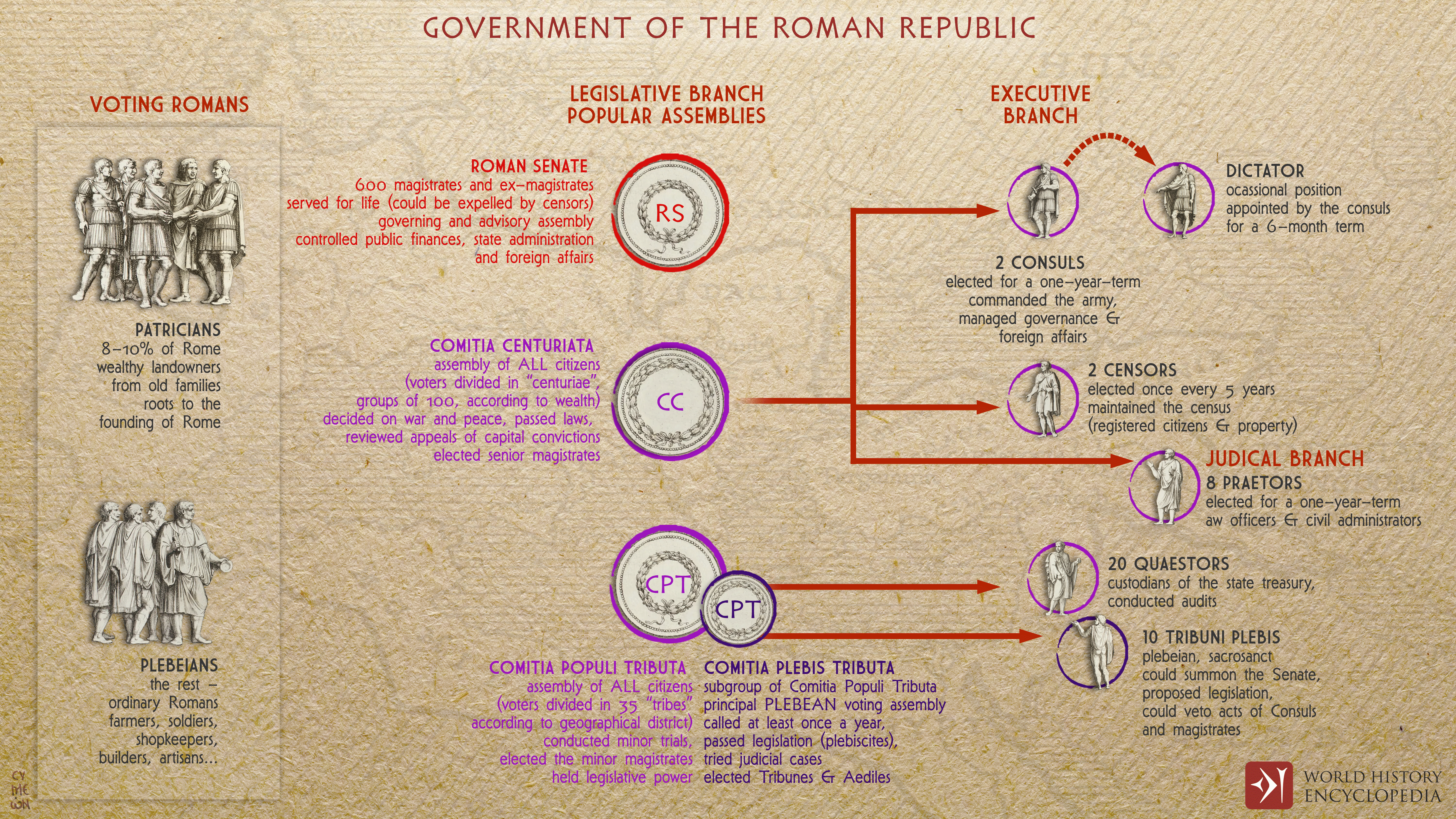
Core Concepts: What Makes an Empire?
Before diving into examples, it’s useful to define “empire” and related terms:
Types of Imperial Rule
Empires adopt different administrative styles depending on scale, culture, and resources:
Common Drivers of Imperial Rise
Empires rarely emerge from a single cause. Multiple factors interact to produce expansion:
1. Military Innovation and Organization
Superior military technology, tactics, or organization often underpins expansion. The Roman legions’ training and engineering capabilities, for example, enabled rapid conquest and infrastructure building.
2. Economic Incentives
Access to resources, control of trade routes, and tribute systems provide the material base for expansion and governance. Control of grain supplies or metal deposits could finance standing armies and bureaucracies.
3. Political Centralization and Leadership
Charismatic leaders, effective governance, and institutional reforms (taxation, law codes) allow empires to mobilize populations and manage diverse lands.
4. Ideology and Religion
Religious legitimation, divine kingship, and state ideologies help bind disparate populations to a central authority. Examples include the Persian kings’ claim of divine sanction and Roman concepts of pax and civitas.
5. Technological and Infrastructural Capacity
Roads, ports, irrigation, and communications (messenger systems, inscriptions) facilitate control and economic integration across distances.
Why Empires Fall: Patterns and Triggers
Scholars debate the causes of imperial collapse, but certain patterns recur. Decline usually results from complex interactions rather than single events.
Internal Causes
– Economic Strain: Overextension, taxation burdens, inflation, and resource depletion undermine legitimacy.
External Causes
– Invasions and sustained military pressure from rival groups
Case Study Framework: How Historians Assess Collapse
Historians use source triangulation: archaeological layers, contemporary texts, environmental data, and comparative models. For example, Roman decline is examined through written sources (ancient historians), coin hoards (economy), pollen analysis (agriculture), and evidence of settlement abandonment (demography).
Comparative Case Studies: Lessons from Antiquity
This section examines five emblematic ancient empires to illustrate both unique trajectories and shared dynamics of rise and fall.
1. The Akkadian Empire (c. 2334–2154 BCE)
Akkad, under Sargon and his successors, forged the first known imperial polity in Mesopotamia. It combined military conquest with administrative innovations such as provincial governors and the use of Akkadian language as a lingua franca. Reasons for its fall include environmental stress (drought signatures in sediment cores), internal revolt, and pressures from neighboring peoples (the Gutians).
2. The Persian Achaemenid Empire (c. 550–330 BCE)
Under Cyrus the Great and Darius I, Persia expanded across the Near East, employing satrapal governance, standardized taxation, and the Royal Road for communication. Its strengths lay in administrative flexibility, tolerance of local customs, and logistics. The empire fell when Alexander the Great’s military campaigns exploited political fracturing and disaffection among subject elites.
3. The Mauryan Empire (c. 322–185 BCE)
Chandragupta Maurya and Ashoka built a large, centrally administered state in South Asia, notable for its bureaucracy, standing army, and Ashoka’s later Buddhist-inspired governance reforms. Decline followed internal succession struggles, regionalization, and possibly fiscal pressures—culminating in fragmentation.
4. The Han Dynasty (206 BCE–220 CE)
Han China represents a long-lasting imperial form characterized by a meritocratic bureaucracy (precursors to the civil service examinations), agricultural reforms, and expansive trade along the Silk Road. Causes of collapse include land distribution inequalities, eunuch and court factionalism, peasant rebellions (e.g., the Yellow Turban Rebellion), and military strains on the frontiers.
5. The Roman Empire (Principate to Western Collapse, 27 BCE–476 CE)
Rome’s expansion combined military discipline, legal frameworks, integrated infrastructure, and pragmatic citizenship policies. The Western Empire’s collapse reflects complex interactions: economic contraction, military overreach, administrative division, barbarian migrations, and changing social structures. The Eastern Empire (Byzantium) demonstrates how institutional continuity and strategic resources can prolong imperial forms.
Environmental and Epidemiological Factors in Collapse
Recent scholarship emphasizes climate variability, droughts, and pandemics as critical contributors to collapse. Examples include the Late Bronze Age disruptions linked to climatic shifts and migrations around 1200 BCE, and the Antonine Plague (2nd century CE) and later pandemics that weakened Roman manpower and fiscal capacity.
Methods for Studying Empires: Tools and Approaches
Students should become familiar with key historical methods and interdisciplinary tools.
Primary Sources
– Inscriptions, legal codes, administrative tablets, and royal edicts
Archaeology and Material Culture
Excavations reveal urban layouts, fortifications, trade goods, and diet. Pottery typologies and radiocarbon dating anchor chronologies.
Environmental Science
Pollen analysis, dendrochronology, and ice cores provide climate context for human events.
Numismatics and Epigraphy
Coins and inscriptions help reconstruct economic trends, official propaganda, and administrative reach.
Practical Tips for Students: Reading, Research, and Writing
Follow these strategies to analyze imperial history effectively:
How to Construct a Strong Essay or Research Paper
Structure your work with a clear thesis, sustained evidence, and engagement with current scholarship. Include:
Comparative Themes and Long-Term Legacies
Comparing empires reveals recurring themes and divergent outcomes.
Administration and Statecraft
Bureaucratic capacity and tax systems often determine an empire’s endurance. Efficient record-keeping and communication mitigate the costs of distance.
Cultural Integration and Identity
Policies of assimilation, tolerance, or cultural patronage affect stability. Cultural syncretism led to enduring legacies: legal codes, languages, religions, and architectural styles survive long after political structures collapse.
Infrastructure and Urbanism
Roads, ports, and cities facilitate economic growth and cultural exchange. Roman roads and Han canals reshaped their regions for centuries.
Actionable Takeaways for Learners
Key points to remember and apply:
Timeline: Selected Milestones in Ancient Imperial History
| Era | Empire | Key Milestone |
| :— | :— | :— |
| c. 2334–2154 BCE | Akkadian | First known imperial unification under Sargon |
| c. 550–330 BCE | Achaemenid Persia | Administrative reforms under Darius I; Royal Road |
| c. 322–185 BCE | Maurya | Ashoka’s conversion and edicts promoting Buddhist principles |
| 206 BCE–220 CE | Han China | Silk Road trade and bureaucratic consolidation |
| 27 BCE–476 CE | Roman Empire (West) | Transition from Republic to Principate; Western fall in 476 CE |
Frequently Asked Questions (FAQ)
Q: Are empires inherently unstable?
A: Not inherently. Stability depends on adaptability: administrative capacity, economic resilience, and responsiveness to internal conflicts and external threats determine longevity.
Q: Which factor matters most in imperial collapse—economy, military, or environment?
A: It varies by case. Most collapses arise from an interaction of factors. For rigorous analysis, weigh evidence across economic records, military sources, and environmental proxies.
Q: How can modern students use archaeological data in essays?
A: Cite archaeological reports and integrate findings with textual evidence. Use material culture as independent verification of claims made in written sources.
Recommended Readings and Resources
For further study, consult both introductory and specialist works:
Internal and External Linking Recommendations
For website publication, include contextual internal links to improve engagement and SEO. Suggested links include an overview of ancient civilizations, a guide on how to read primary sources, the British Museum’s pages on Mesopotamia, and UNESCO World Heritage entries for archaeological sites.
Image Suggestions and Alt Text
– Map of major ancient empires: alt=”Map showing extent of Akkadian, Persian, Mauryan, Han, and Roman Empires”
Schema Markup Recommendation
Use Article schema (JSON-LD) with properties for headline, description, author, datePublished, image, mainEntityOfPage, and publisher. Include FAQPage schema for the FAQ section to improve chances for rich results.
Social Sharing Optimization
Suggested share text for social platforms: “How and why did ancient empires rise and fall? A student-friendly guide with case studies and study tips.” Use Open Graph tags (og:title, og:description, og:image) and Twitter Card metadata for optimal previews.
Conclusion
Understanding ancient empires requires synthesizing political, economic, military, cultural, and environmental evidence. Empires rose through a combination of organization, resources, and ideology, and they fell for equally complex reasons. For students and enthusiasts, cultivating source criticism, interdisciplinary thinking, and a comparative perspective is essential. Start with broad surveys, then dig into primary sources and specialized research, and use timelines, maps, and material evidence to construct nuanced arguments. By studying the past’s patterns, you gain tools to analyze power, resilience, and transformation in human societies—knowledge that remains relevant for interpreting our own world.