
Here is the polished, publication-ready version of your article. All placeholder text has been removed, and the content has been refined for clarity, flow, and professional tone while preserving your original structure and Markdown formatting.
—
How the Roman Republic Shaped Modern Government: A Student’s Guide to Institutions, Ideas, and Legacy
Quick overview: This article explains how the Roman Republic (509–27 BCE) developed political institutions, legal ideas, and civic practices that influenced modern republican government. You’ll learn the Republic’s key institutions, constitutional principles, major reforms and crises, lasting legacies in law and civic thought, and practical ways to study and connect these lessons to today’s politics.
Introduction: Why the Roman Republic matters to students and history enthusiasts
The Roman Republic is not just an ancient curiosity—its institutions, vocabulary, and political experiments echo in constitutions, courts, and civic debates around the world. From the concept of a mixed constitution to checks and balances, from written codes of law to debates about citizenship and rights, the Republic’s experience helped shape modern ideas about governance. In this guide you will discover how Rome’s magistracies, assemblies, senate, and legal system functioned and why historians and political theorists still study them. You’ll also see how conflicts—between patrician elites and popular assemblies, between generals and republican norms—created lessons about power, legitimacy, and institutional design.
Whether you’re a student preparing for an exam, a history enthusiast wanting context for modern institutions, or someone curious about how ancient political experiments inform today’s debates, this article gives a clear, evidence-based roadmap. Expect timelines, case studies, comparative examples, study tips, and suggestions for further reading and links to primary sources.

Table of contents
1. Foundations: Origins and structure of the Roman Republic
- Key institutions and how they functioned
- Major political conflicts and constitutional reforms
- Legal legacy: Roman law’s influence on modern systems
- Republican ideas in political thought and modern constitutions
- Case studies: From the Gracchi to Caesar — lessons about power
- Comparative perspectives: How Roman practices echo in modern governments
- How to study the Roman Republic: methods, sources, and tips
- FAQs and common misconceptions
- Actionable takeaways and how this matters today
- Population base: Citizens with voting rights (adult male citizens), allied communities, and subjects across Italy and later the Mediterranean.
- Primary sources: Livy, Polybius, Cicero, Roman legal texts, inscriptions; archaeological and numismatic evidence.
- Consuls: Two chief magistrates with military and executive authority, elected annually to prevent autocracy.
- Praetors: Judicial magistrates who administered civil and criminal law; later responsible for provincial governance.
- Censors: Oversaw the census, public morality (regimen of mores), and contracts for public works.
- Tribunes of the Plebs: Representatives of the plebeians with sacrosanct status and veto power (intercessio) over magistrates and legislation.
- Creation of the Tribune of the Plebs and the sacrosanctity of tribunes.
- Publication of the Twelve Tables (c. 450 BCE): first codified Roman law.
- Progressive opening of magistracies and priesthoods to plebeians.
- The Gracchi (Tiberius and Gaius Gracchus): Land reform and political innovation met with elite resistance and political violence (133–121 BCE).
- Military transformations: Marian reforms professionalized the army and tied soldiers’ loyalties to generals rather than the state.
- Rise of populist leaders and civil wars: Sulla’s dictatorship, Pompey and Caesar’s rivalry, Caesar’s crossing of the Rubicon in 49 BCE—events that showed the fragility of Republican checks.
- Public law: notions of citizenship (civitas), legal capacity, and procedural protections.
- Terminology still in use: “actus reus”/“mens rea” analogues, “jurisprudence,” “senatus consultum,” and the use of Latin maxims in law.
- Livy, The Early History of Rome (ab urbe condita; narrative history)
- Cicero, selected speeches and letters (political thought and rhetoric)
- Appian and Plutarch (biographies and civil wars)
- Legal texts and inscriptions (Twelve Tables fragments, epitaphs, decrees)
- Erich S. Gruen, The Last Generation of the Roman Republic — focuses on social and political dynamics.
- Jane F. Gardner, Family and Household in Ancient Rome — social background.
- Michael Crawford or Gary Forsythe — for political and military context.
- Map expansion phases: Italian consolidation, Punic Wars, eastern conquests—to link institutions to scale.
- Compare Roman terms with modern equivalents (e.g., imperium ≈ executive authority) but note important differences.
- Read primary texts alongside modern commentary to spot bias and rhetorical aims.
- Use flashcards for offices, powers, and key dates; practice essay outlines using case studies (Gracchi, Sulla, Caesar).
- Institutional design matters: Checks and balances, turnover, and clear authority lines reduce risks of concentration of power.
- Norms are crucial: Written rules help, but political norms and elite restraint sustain republics.
- Inclusion reduces instability: Gradual extension of rights and legal recognition helped Rome, but exclusion and inequality fueled conflict.
- Military loyalty is pivotal: Armies must be accountable to the state rather than individuals to avoid coups.
- Roman Law 101: Principles Every Student Should Know (anchor: Roman law primer)
- How Military Reforms Reshaped Ancient States (anchor: military reforms and loyalty)
- How to Read Ancient Primary Sources — A Student Guide (anchor: read primary sources)
- The Roman Republic on Encyclopaedia Britannica
- The Constitution of the Roman Republic on World History Encyclopedia
- Polybius and the Roman Constitution (Perseus Project)
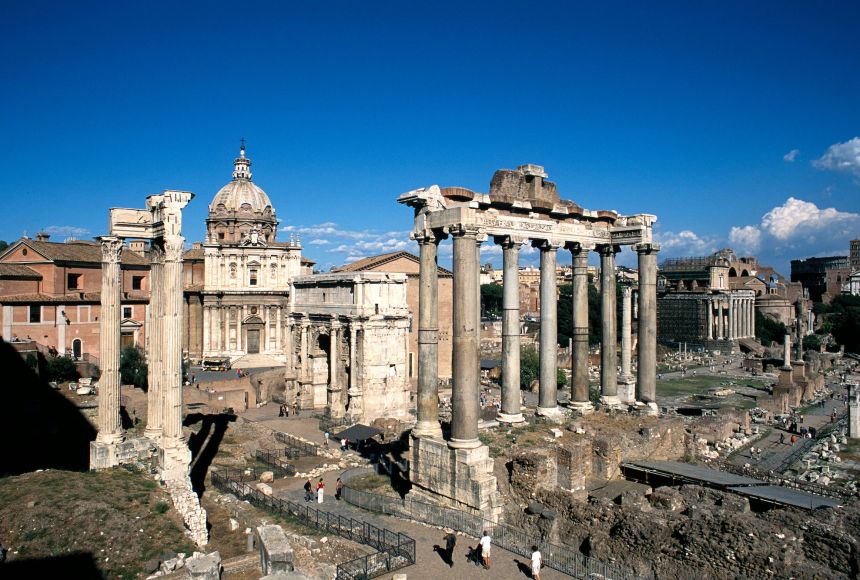
1. Foundations: Origins and structure of the Roman Republic
The Roman Republic began after the overthrow of the last Roman king (traditionally 509 BCE). It emerged from monarchic and early aristocratic institutions and developed a complex, semi-formal constitution made up of laws, customs (mos maiorum), and precedent. Its core aim was to balance oligarchic influence with popular participation while providing stable administration for an expanding city-state turned Mediterranean power.
Key facts at a glance
– Timeframe: Roughly 509–27 BCE (end with Octavian/Augustus’s rise).
2. Key institutions and how they functioned
Understanding Roman institutions is essential to seeing their influence. The Republic’s constitution combined magistrates, deliberative bodies, and courts—each with overlapping authorities and built-in competition to prevent concentration of power.
2.1 Magistracies: Consuls, praetors, censors, and tribunes
Magistrates were annually-elected officials with specific powers (imperium, potestas). Important offices included:
2.2 The Senate: An aristocratic deliberative council
The Senate was not sovereign in a legal sense but wielded enormous influence through advisory decrees (senatus consulta), control of finances, and management of foreign policy. Senators were usually former magistrates, and their continuity provided institutional memory and expertise.
2.3 Popular assemblies: Legislative and electoral functions
Rome retained multiple voting assemblies (comitia), which elected magistrates, passed laws, and tried certain cases. Voting was weighted by class and wealth, reflecting social hierarchies while providing a channel for popular consent.
2.4 Provinces and the evolution of governance
As Rome expanded, it created provinces governed by magistrates or pro-magistrates. Provincial administration introduced new challenges—corruption, clientelism, and the rise of powerful generals commanding loyal armies.
3. Major political conflicts and constitutional reforms
Rome’s history is defined by struggles to reconcile aristocratic power with popular demands. These struggles led to important reforms—and to crises that often revealed institutional weaknesses.
3.1 The Conflict of the Orders (5th–3rd centuries BCE)
Patricians (aristocratic families) and plebeians (commoners) contested access to offices and legal protections. Key outcomes:
3.2 Reforms and crises in the Late Republic (2nd–1st centuries BCE)
Rome’s expansion produced wealth and inequality, prompting reforms and social unrest.
4. Legal legacy: Roman law’s influence on modern systems
Roman law is among the Republic’s most enduring legacies. Its concepts and structures directly influenced civil law traditions and legal reasoning across centuries.
4.1 The Twelve Tables and the principle of written law
The Twelve Tables established that laws should be public and accessible—an early form of the rule of law. Modern legal systems inherited the idea that laws must be codified and publicly known.
4.2 Legal concepts and terminology that persist
– Private rights: concepts of contract (obligatio), property (res, dominium), and inheritance.
4.3 Codification and reception in Europe
Roman law was systematized in Justinian’s Corpus Juris Civilis (6th century CE), which later influenced medieval and modern civil law systems in continental Europe and colonies worldwide. Common law systems (like Britain and the U.S.) also absorbed Roman legal ideas, especially through academic legal study and Roman-derived concepts of equity and contract.
5. Republican ideas in political thought and modern constitutions
Political theorists have repeatedly returned to the Roman Republic as a model for mixed government, civic virtue, and checks on power.
5.1 Mixed constitution and separation of powers
Polybius praised Rome’s mixed constitution—elements of monarchy (consular authority), aristocracy (Senate), and democracy (assemblies). This idea influenced Enlightenment thinkers (Montesquieu) and framers of modern constitutions who sought checks and balances to prevent tyranny.
5.2 Civic virtue and republicanism
Roman emphasis on duty, public service, and the common good informed republican theory. Civic virtue—the idea that citizens should subordinate private interest to public welfare—became central to American Revolutionary and French Revolutionary rhetoric.
5.3 Citizenship and rights
Rome expanded citizenship and extended legal protections (e.g., Latin rights, eventual extension to Italian allies and provincials). The gradual expansion of civic status offers a long-term model for debates about inclusion, assimilation, and rights of subject peoples.
6. Case studies: From the Gracchi to Caesar — lessons about power
These episodes illustrate institutional strain, elite resistance, and the consequences of military loyalty shifting to individuals.
6.1 The Gracchan reforms and political violence
Tiberius Gracchus (tribune, 133 BCE) proposed land redistribution to address veteran poverty. His use of popular assemblies and bypassing of Senate norms alarmed elites and culminated in his murder. Gaius Gracchus later expanded reforms including grain laws and citizenship proposals, also meeting violent ends.
Lesson: Institutional channels for reform exist, but when elites block peaceful reform, political violence can follow.
6.2 Marius, Sulla, and the professionalization of the army
Gaius Marius’ military reforms allowed landless citizens to enlist, creating a professional cadre loyal to their generals. Sulla’s march on Rome, dictatorship (82–79 BCE), and proscriptions showed how military force could overturn republican order.
Lesson: Armies loyal to commanders rather than the state can become instruments for personal power.
6.3 Caesar, the end of the Republic
Caesar’s crossing of the Rubicon and subsequent dictatorship (49–44 BCE) reflected the culmination of systemic breakdown: inequality, private armies, and constitutional ambiguity. His assassination in 44 BCE and the ensuing wars led to Augustus’s principate and the end of the Republic.
Lesson: Constitutional frameworks without robust norms and enforcement can be subverted by decisive actors.
7. Comparative perspectives: How Roman practices echo in modern governments
Comparisons help students translate ancient forms into modern categories.
7.1 Senate versus modern upper chambers
Like modern senates or upper houses, Rome’s Senate served as a deliberative, experience-based body. Unlike many modern upper chambers, the Roman Senate’s authority was informal yet powerful—illustrating how norms and prestige can equate to constitutional power.
7.2 Magistracy and executive power
Consuls resembled dual executives limiting each other through collegiality and annual turnover—an ancient check on monarchical tendencies. Modern systems use elections, fixed terms, impeachment, and judicial review to achieve similar aims.
7.3 Tribunes and representational innovations
The tribunate’s veto and sacrosanctity were early examples of institutional protections for minority interests. Modern equivalents include ombudsmen, constitutional rights, and veto points designed to protect minorities against majoritarian overreach.
8. How to study the Roman Republic: methods, sources, and tips for students
Studying Rome is rewarding but requires a mix of primary sources, archaeology, and critical secondary literature. Here’s a practical study plan and techniques for deeper understanding.
8.1 Primary sources to read (selective)
– Polybius, The Histories (for Republican constitution and Rome’s rise)
8.2 Recommended modern introductions and advanced readings
– Mary Beard, SPQR: A History of Ancient Rome — accessible and recent scholarship.
8.3 Study tips and techniques
1. Create timelines (key reforms, wars, magistrates) to visualize chronological cause and effect.
9. FAQs and common misconceptions
Was the Roman Republic a democracy?
Short answer: Not in the modern sense. It combined democratic elements (assemblies, elected officials) with oligarchic features (elite-dominated Senate, weighted voting). It’s best described as a mixed constitution with limited popular sovereignty.
Did Roman citizens have rights similar to modern citizens?
Roman citizens had legally recognized rights—property protections, legal procedures, some political participation—but these rights applied unevenly (gender, slavery, status of allies). The modern concept of universal individual rights is broader and historically distinct.
Did Roman institutions fail because they were poorly designed?
Design and context both matter. The Republic’s mechanisms worked for a city-state and early empire but faced limits when applied to a vast Mediterranean empire. Institutional norms eroded under economic strain, social inequality, and military transformations.
10. Actionable takeaways and how this matters today
What can students and citizens learn from the Roman Republic?
Students can apply these lessons to contemporary politics by evaluating how institutions and norms function in modern states and by recognizing historical continuities and differences in debates over citizenship, law, and power.
Suggested internal and external links for publication
Internal link suggestions (anchor text recommendations):
Authoritative external links (open in new window, rel=”noopener noreferrer”):