
Uncovering Greed, Copper, and Tragedy: Investigating the 1913 Italian Hall Disaster
On a frigid Christmas Eve in 1913, joy turned to unspeakable horror in Calumet, Michigan. Nearly 73 innocent lives, mostly children, were tragically extinguished in minutes, not by fire, but by a stampede ignited by a single, chilling cry: “Fire!” inside the crowded Italian Hall. This devastating incident, often referred to as the “Christmas Eve Massacre,” stands as one of the most poignant and unresolved labor movement tragedies in American history. It was a catastrophe born from a crucible of industrial strife, corporate intransigence, and deep-seated community division, irrevocably scarring the heart of Michigan’s copper country.
This article delves into the investigative history of the 1913 Italian Hall disaster, peeling back the layers of a complex narrative steeped in the Calumet Michigan copper strike. We will examine the brutal economic realities faced by immigrant miners, the overwhelming power of the Calumet & Hecla Mining Company, and the raw tensions that ultimately culminated in the fateful cry. More than a century later, the question of who uttered that deadly word—and why—remains a haunting specter, casting a long shadow over the period’s corporate scandals and the often-overlooked history of midwest true historical crime. Join us as we explore the forces that converged on that tragic day, revealing a story of greed, desperation, and a community shattered by an unresolved injustice.
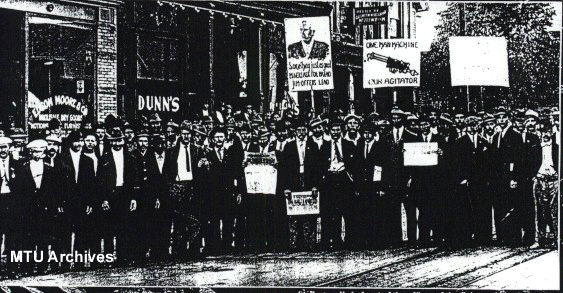
A Powder Keg in the Copper Country: The Calumet Strike of 1913
The Upper Peninsula of Michigan, particularly the Keweenaw Peninsula, was a world leader in copper production in the early 20th century. Beneath its rugged beauty lay immense wealth, extracted through the backbreaking labor of thousands of immigrant miners. These men, hailing from Italy, Finland, Croatia, and many other nations, toiled in deep, dangerous shafts for meager wages, often working 10 to 12 hours a day, six days a week. The dominant force in this landscape was the Calumet & Hecla (C&H) Mining Company, a corporate behemoth that epitomized the unchecked power of industrial capital in the Progressive Era.
C&H and other mining companies in the region operated what were essentially “company towns.” They owned the houses the miners lived in, the stores where they bought their goods, and often controlled local government and law enforcement. This system fostered an environment of dependency and suppressed dissent, allowing companies to dictate terms without significant challenge. However, by 1913, the simmering discontent among the miners reached a boiling point. The introduction of the “one-man drill,” a new piece of machinery that increased productivity but also eliminated jobs and intensified the workload for those remaining, became the final straw.
In response to these exploitative conditions, the Western Federation of Miners (WFM) arrived in Calumet, seeking to organize the workers. Their demands were simple yet revolutionary for the time: an eight-hour workday, a minimum wage, and the right to collective bargaining. On July 23, 1913, roughly 9,000 miners went on strike, initiating the Calumet Michigan copper strike that would last for nine long months. C&H, led by its formidable president, James MacNaughton, refused to negotiate. Instead, the company adopted a hardline stance, employing strikebreakers (often referred to as “scabs”), hiring private security forces like the notorious Pinkertons, and leveraging local authorities to intimidate and suppress the strikers. The stage was set for an epic confrontation between capital and labor, a clash that would ultimately claim far more than just economic casualties.
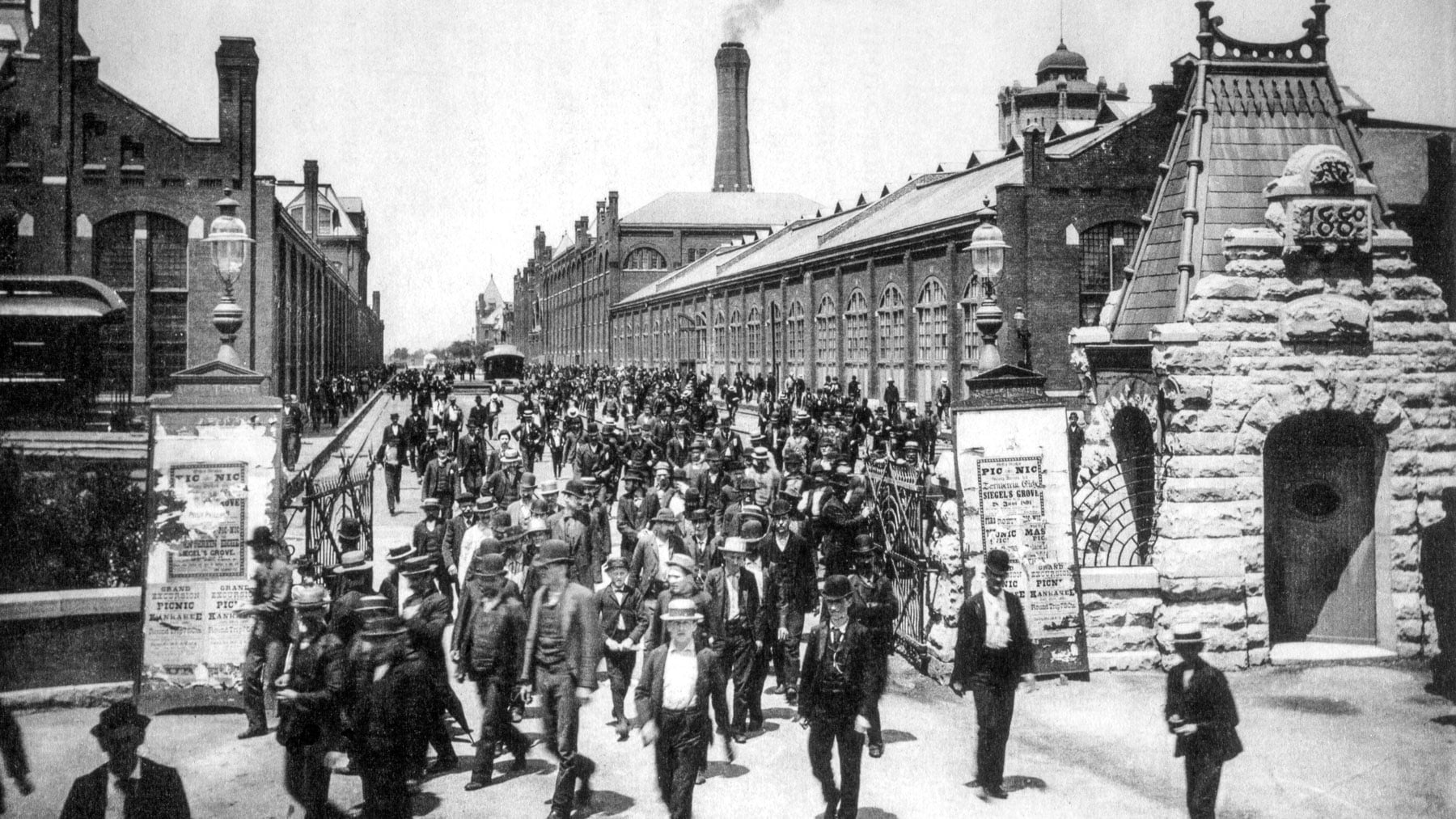
The Company Town and Its Grip
The pervasive influence of the Calumet & Hecla Mining Company extended far beyond the mine shafts. In a true “company town” fashion, C&H owned most of the housing, managed the general stores where workers were often paid in company scrip or through deductions, and even held sway over local political offices and judicial systems. This created a suffocating environment where dissent was not only economically perilous but could also lead to eviction, blacklisting, and social ostracization.
For striking families, this meant immediate and severe hardship. With wages cut off, many faced eviction from company-owned homes, forcing them into makeshift shelters or to rely on the WFM’s meager strike fund and community support. The company’s grip ensured that every aspect of a miner’s life, from his daily bread to his political voice, was subject to corporate control. This pervasive influence is a critical element in understanding the intense animosity and division that characterized the mining labor disputes of the era, making the strike not just an economic battle but a struggle for basic human dignity and self-determination.
Christmas Eve, 1913: A Day of False Hope and Fatal Fear
As the bitter Michigan winter descended, the Calumet Michigan copper strike dragged into its fifth month. Tensions remained exceptionally high, but on Christmas Eve, a brief respite was planned. The Western Federation of Miners had organized a festive party for the striking miners’ children at the Italian Hall, a two-story brick building on Seventh Street. For a few precious hours, the children could forget the strike, the hunger, and the cold, basking in the warmth, music, and anticipation of gifts. Hundreds of children, accompanied by their parents and other adults, filled the second-floor auditorium, their laughter and excitement a stark contrast to the grim reality outside.
The atmosphere inside the hall was one of communal warmth and temporary relief. As the party reached its peak, around 4:30 PM, a sudden, horrifying cry pierced the festive din: “Fire!” The word, shouted in English, instantly ignited panic among the crowded attendees. There was no visible fire, no smoke, no smell of burning. Yet, the sheer volume of people, the narrow egress, and the primal fear evoked by the word “fire” created an immediate, desperate surge towards the single main exit staircase.
The Italian Hall’s design proved to be a fatal flaw. The main staircase, narrow and steep, was the primary way out. Critically, the double doors at the bottom of the stairs opened inward. As the terrified crowd, predominantly women and children, pressed forward, the sheer force of their collective weight jammed the doors shut. Trapped in a cascading human wave, people stumbled, fell, and were crushed beneath the panicked mass. The horror unfolded in mere minutes. Rescuers eventually managed to pry open the doors, but it was too late for many. The scene was one of unimaginable devastation: piles of bodies, mostly small children, suffocated or crushed to death, their hopes for Christmas extinguished forever. Seventy-three people died that day, a grim testament to the unforeseen consequences of a moment of terror.
The Fatal Flaws of the Italian Hall
The Italian Hall, while a central gathering place for the community, possessed critical architectural flaws that turned a moment of panic into a mass casualty event. The primary issue was the single, narrow wooden staircase leading down from the second-floor auditorium. This bottleneck was exacerbated by the design of the main exit doors at the bottom of the stairs. These heavy double doors opened inward, against the flow of escaping people.
In a situation demanding rapid evacuation, such a design is catastrophic. As the hundreds of party-goers surged down the stairs, the pressure from behind quickly pinned the leading individuals against the doors, making it impossible to open them. People were then crushed and suffocated in the tightly packed stairwell. This tragic design flaw highlights the often-overlooked aspect of building safety in historical contexts and the nascent, often unenforced, fire safety regulations that existed in 1913. Had the doors opened outward, or had there been multiple, clear exits, the outcome might have been dramatically different, sparing dozens of lives from this preventable tragedy.
The Shadow of Suspicion: Who Cried “Fire”?
The most chilling and enduring aspect of the 1913 Italian Hall disaster is the profound mystery surrounding the cry of “Fire!” There was no fire. No smoke. No evidence of an actual blaze. The word was a lie, a malicious act that directly caused the deaths of 73 people. This immediately shifted the narrative from a tragic accident to a potential act of deliberate sabotage or terror, making it a pivotal subject in the investigative history of the disaster and a haunting entry in Calumet Michigan true crime.
Eyewitness accounts, gathered in the immediate aftermath, were conflicting and chaotic, as might be expected from such a traumatic event. Some recalled a man with a “Citizens’ Alliance” button shouting the warning. Others spoke of a voice, but couldn’t identify the person. The Citizens’ Alliance was a vehemently anti-union organization formed by local businessmen and professionals, heavily supported and influenced by the mining companies. Their stated goal was to break the strike, and their methods often involved intimidation, violence, and fostering extreme anti-union sentiment within the community.
The suspicion quickly fell upon this group. Why would someone aligned with the Citizens’ Alliance cry “fire” at a union-sponsored children’s party? The prevailing theory among strikers and many historians is that it was an intentional act of intimidation, meant to sow fear and disrupt the union gathering, albeit with catastrophic and unintended consequences. The motive, if true, would have been to terrorize the striking families, further weakening their resolve. However, no individual was ever definitively identified or held accountable. This unanswered question continues to fuel the historical debate and places the Italian Hall disaster firmly within the realm of unsolved historical mysteries, highlighting the deep divisions and bitterness of the era.
The Citizens’ Alliance: A Tool of Corporate Power?
The Citizens’ Alliance was not merely a group of concerned citizens; it was a well-organized and well-funded entity explicitly created to counter the Western Federation of Miners and break the ongoing Calumet Michigan copper strike. Composed primarily of local merchants, professionals, and company managers, the Alliance functioned as a powerful, quasi-vigilante force dedicated to upholding the interests of the mining companies, particularly Calumet & Hecla.
Their tactics were aggressive and often violent. They engaged in blacklisting, threatened to cut off credit to businesses that supported the strikers, and actively recruited strikebreakers. They also organized parades and demonstrations designed to intimidate union members and their families. Many strikers and their sympathizers firmly believed the Alliance was acting as an unofficial enforcement arm of the mining companies, utilizing fear and coercion to undermine the labor movement. The idea that a member of such an organization would deliberately shout “fire” at a union event, even if intending only to cause panic rather than mass death, was entirely consistent with their established pattern of anti-union tactics and the broader landscape of corporate espionage labor practices common during that period. The lack of a thorough and impartial investigation into this specific accusation remains a significant stain on the official narrative of the tragedy.
The Aftermath and the Cover-Up: An Investigation Stifled
In the immediate wake of the disaster, the horror was compounded by a deeply flawed and widely criticized official response. A local coroner’s inquest was quickly convened to determine the cause of death and assign responsibility. However, the inquest was perceived by many, particularly the striking miners and their supporters, as a sham. The jury was composed almost entirely of individuals sympathetic to the mining companies and hostile to the union, including members of the Citizens’ Alliance.
The inquest’s findings were swift and predictable: the deaths were ruled accidental, caused by a panic that occurred after an unidentified person cried “fire.” Crucially, no individual was ever held responsible for uttering the fatal word. Evidence that pointed towards specific individuals or groups, particularly those associated with the Citizens’ Alliance, was largely dismissed or suppressed. Witnesses who might have provided crucial testimony were reportedly intimidated or simply not called to speak. The local authorities, heavily influenced by the mining companies, seemed more interested in quickly closing the case than in pursuing a thorough and impartial investigation.
This perceived lack of justice only deepened the community’s wounds and fueled the conviction among strikers that a deliberate cover-up was underway. The state and federal governments showed little inclination to intervene meaningfully, leaving the local power structures to control the narrative. This episode remains a stark example of 1910s corporate scandals where powerful industrial interests could manipulate local institutions to serve their own ends, effectively denying justice to the victims of a profound tragedy. The failure to hold anyone accountable for the false alarm cemented a sense of profound injustice that resonated through generations, leaving the question of culpability an open wound in the collective memory of the copper country.
A Community Divided and a Strike Broken
The Italian Hall disaster dealt a crushing blow to the morale of the striking miners and their families. The sheer scale of the tragedy, particularly the loss of so many children, was unimaginable. While public sympathy initially leaned towards the victims, the mining companies and the Citizens’ Alliance skillfully leveraged the disaster to discredit the Western Federation of Miners. They argued that the union’s strike had created the conditions for such a tragedy, diverting blame from themselves and painting the WFM as irresponsible.
The local and national press, often influenced by powerful corporate interests, played a significant role in shaping public perception. Many newspapers downplayed the suspicions surrounding the “fire” cry and instead focused on the general chaos, or even subtly blamed the strikers for holding the event. This narrative manipulation further isolated the striking workers and eroded public support for their cause.
Ultimately, the strike aftermath saw the WFM’s efforts crumble. Exhausted, impoverished, and demoralized by the tragedy and the relentless opposition, the miners gradually returned to work, their demands largely unmet. The strike officially ended in April 1914, a bitter defeat for the labor movement. The long-term consequences were profound: the WFM’s influence in the region waned, and the mining companies maintained their stranglehold for decades. The disaster left an indelible scar, cementing divisions within the community that persisted for generations and serving as a painful reminder of the human cost of unchecked industrial power and the vulnerability of workers in the face of corporate might.
Legacy of Greed and Loss: Lessons from Calumet
The 1913 Italian Hall Disaster is more than a historical footnote; it is a chilling testament to the profound human cost of unchecked corporate power and the bitter struggles of the early American labor movement. The tragedy in Calumet, Michigan, encapsulates themes of industrial greed, class warfare, and the often-elusive nature of justice. It serves as a stark reminder of a period when workers’ rights were nascent, and corporate accountability was virtually nonexistent, making it a critical case study for understanding labor movement tragedies and the broader context of corporate accountability history.
The enduring mystery of who cried “Fire!” ensures the disaster remains a compelling subject for midwest true historical crime enthusiasts. While no individual was ever brought to justice, the evidence and historical context strongly suggest a deliberate act intended to terrorize, even if the scale of the tragedy was unintended. This lack of resolution underscores the power imbalances inherent in the conflict, where the voices of the victims and the striking workers were largely drowned out by the influence of the mining companies and their allies.
Today, the Italian Hall disaster resonates with contemporary issues surrounding workplace safety, the rights of organized labor, and the critical importance of impartial investigation in times of crisis. It highlights how economic disparities and corporate influence can compromise justice and leave communities scarred for generations. The legacy of Calumet compels us to remember the 73 lives lost, not just as victims of a stampede, but as casualties in a larger fight for dignity and fairness. Their story urges us to continually examine the forces that shape our societies and to advocate for a world where such tragedies, fueled by greed and division, are never repeated.
Conclusion
The 1913 Italian Hall Disaster stands as a searing indictment of a volatile era, a moment when the pursuit of profit eclipsed human welfare, and justice remained tragically elusive. From the harsh realities of the Calumet Michigan copper strike to the devastating panic on Christmas Eve, and the lingering shadow of an unpunished culprit, this event embodies the profound struggles of the early 20th-century labor movement. It is a story woven with threads of corporate power, community division, and an enduring mystery that continues to haunt the historical record. The 73 victims, predominantly children, serve as a permanent reminder of the ultimate cost of unchecked greed and a society’s failure to protect its most vulnerable. Their memory compels us to reflect on the past, demand accountability in the present, and strive for a future where such a tragedy can never again occur.
Explore more investigative history on early American corporate scandals and the fight for workers’ rights. Delve deeper into the stories that shaped our industrial landscape and the enduring quest for justice.
—
Image Alt Text Suggestions:
alt="A black and white photo of the Italian Hall building in Calumet, Michigan, showing its two stories and main entrance."alt="A historical illustration or photo depicting copper miners at work in a dark, narrow mine shaft, highlighting their difficult conditions."alt="A solemn black and white photograph of a memorial or grave marker for the victims of the 1913 Italian Hall disaster, possibly showing names and dates."alt="A crowd of people gathered outside the Italian Hall in Calumet, Michigan, in the aftermath of the 1913 disaster, with rescue workers visible."- Anchor Text: “early American labor movement” -> Link:
/blog/rise-of-american-labor-unions-history - Anchor Text: “Progressive Era” -> Link:
/blog/progressive-era-social-economic-reforms - Anchor Text: “workers’ rights” -> Link:
/blog/evolution-of-workplace-safety-laws - Anchor Text: “Western Federation of Miners” -> Link:
https://en.wikipedia.org/wiki/WesternFederationof_Miners(opens in new window) - Anchor Text: “Calumet & Hecla Mining Company” -> Link:
https://www.michiganhistorymagazine.com/2013/05/calumet-hecla-mining-company-a-history-of-innovation-and-controversy/(opens in new window) - Anchor Text: “Italian Hall Disaster Memorial” -> Link:
https://www.nps.gov/kewe/learn/historyculture/italianhall.htm(opens in new window) - Facebook: Uncover the tragic truth behind the 1913 Italian Hall Disaster in Calumet, Michigan. 73 lives lost on Christmas Eve amidst a bitter copper strike. Was it an accident or a deliberate act of terror? #ItalianHallDisaster #CalumetStrike #LaborHistory #TrueCrime #MichiganHistory
- Twitter: The 1913 Italian Hall Disaster: A Christmas Eve tragedy fueled by greed, copper, and an unsolved cry of “Fire!” Dive into this dark chapter of labor history. #Calumet #CopperStrike #LaborMovement #UnsolvedMystery
Internal Link Suggestions:
External Link Suggestions:
Social Sharing Optimization:
*Linked