
Women in History: Celebrating Inspirational and Powerful Women During Women’s History Month 2026
Women’s History Month 2026 gives us a focused, collective opportunity to examine the lives, achievements, struggles, and legacies of women throughout time. From scientists and political leaders to artists, activists, and everyday change-makers, women’s contributions have shaped societies, advanced knowledge, and expanded rights. This article offers a comprehensive guide to women in history: key figures, thematic groupings of powerful women, ways to celebrate Women’s History Month 2026, classroom and workplace resources, and suggestions for continued advocacy. You’ll find profiles of famous women in history, examples of inspirational women from history whose stories resonate today, and practical ideas to honor and learn from their legacies.
In this guide you will learn:
- Who the most influential and famous women in history are across fields and eras
- How to frame Women’s History Month 2026 with themes, events, and curricular activities
- Ways to elevate lesser-known but inspirational women from history
- Resources, internal and external link suggestions, and content optimization tips for educators and publishers
- Corrects historical omission and systemic bias
- Provides role models for girls and boys
- Illuminates how gender intersects with race, class, and culture
- Inspires policy and cultural change by connecting past struggles to present movements
- Women now earn the majority of bachelor’s degrees in many countries, yet remain underrepresented in STEM leadership, politics, and corporate boards.
- Diverse women led breakthroughs in science, civil rights, arts, and governance—many of which only received recognition decades later.
- Empress Wu Zetian (624–705): The only female emperor of China; instituted administrative and educational reforms.
- Elizabeth I (1533–1603): Stabilized England during religious turbulence and presided over cultural flourishing.
- Susan B. Anthony (1820–1906): Central to the U.S. women’s suffrage movement; her activism culminated in the 19th Amendment.
- Indira Gandhi (1917–1984): India’s first female prime minister; influential in shaping postcolonial Indian politics.
- Angela Merkel (b. 1954): Chancellor of Germany (2005–2021); led Europe through multiple crises with pragmatic leadership.
- Rosalind Franklin (1920–1958): Her X-ray diffraction images were critical to understanding DNA’s double helix.
- Katherine Johnson (1918–2020): Mathematician whose calculations were vital to early NASA missions.
- Ada Lovelace (1815–1852): Early computing visionary; recognized as the world’s first computer programmer.
- Chien-Shiung Wu (1912–1997): Experimental physicist who made key contributions to particle physics.
- Jane Austen (1775–1817): Author whose novels revolutionized social commentary and narrative form.
- Toni Morrison (1931–2019): Novelist whose literature gave voice to African American experience; Nobel Prize winner.
- Malala Yousafzai (b. 1997): Education activist and Nobel laureate advocating girls’ education worldwide.
- Sojourner Truth (1797–1883): Abolitionist and women’s rights advocate; delivered the famous “Ain’t I a Woman?” speech.
- Margaret Thatcher (1925–2013): The UK’s first female prime minister; known for transformative economic policies and polarizing leadership.
- Corazon Aquino (1933–2009): Led the Philippines’ restoration of democracy after authoritarian rule.
- Rachel Carson (1907–1964): Marine biologist whose book Silent Spring sparked the modern environmental movement.
- Estée Lauder (1906–2004): Built a global cosmetics brand and pioneered modern marketing strategies.
- Wangari Maathai (1940–2011): Kenyan environmentalist and Nobel laureate who linked conservation to women’s empowerment through the Green Belt Movement.
- Irena Sendler (1910–2008): Risked her life to rescue Jewish children during WWII, saving roughly 2,500 lives.
- Mary Seacole (1805–1881): Crimean War nurse and entrepreneur whose contributions were long overlooked in British medical history.
- Bessie Coleman (1892–1926): First African American and Native American female pilot who broke racial and gender barriers in aviation.
- Hedy Lamarr (1914–2000): Film actress and inventor whose frequency-hopping technology influenced modern wireless communications.
- Noor Inayat Khan (1914–1944): British SOE agent in WWII; exemplified bravery under extraordinary danger.
- “Science, Technology, and Women”: Celebrate women innovators and address ongoing gender gaps in STEM.
- “Climate & Care: Women at the Frontlines”: Link environmental leadership with social justice and care economies.
- “Hidden Histories”: Spotlight women marginalized by race, class, disability, or colonial histories.
- Panel events featuring local women leaders and historians
- Storytelling and oral history projects interviewing elder women in the community
- STEM workshops highlighting historical women scientists followed by hands-on experiments
- Public art projects or murals celebrating local women in history
- Interactive timelines or maps of women’s achievements
- Podcast minisodes featuring 5–10 minute biographies of inspirational women
- “If I Were…” Creative Writing: Students write from the viewpoint of a historical woman, grounding fiction in facts.
- Hands-on STEM Challenges: Recreate simple experiments inspired by women scientists (with safety oversight).
- Debate on Historical Impact: Teams argue the relative historical impact of pairs (e.g., Marie Curie vs. Rosalind Franklin) using evidence-based research.
- Civic Engagement Projects: Partner with local nonprofits to research community issues and create volunteer action plans.
- Archival research projects documenting local women’s contributions
- Public lectures or symposiums featuring scholars and activists
- Highlight Employee Stories: Share profiles of women employees and their career journeys.
- Philanthropic Partnerships: Sponsor programs that support girls’ education and women entrepreneurs.
- Produce multimedia series (video, podcasts) that explore thematic topics
- Curate reading lists and book clubs focused on women’s history
- Week 1: Launch event + keynote speaker; social campaign kickoff
- Week 2: Education week—school programs, lesson plans distributed
- Week 3: Community week—panels, local history showcases, oral histories
- Week 4: Action week—volunteer drives, fundraising for women-focused causes, policy briefings
- Black women, Indigenous women, immigrant women, and women with disabilities often faced compounded exclusion.
- Incorporating trans and nonbinary histories expands the frame of what women’s history can include.
- Practical step: pair mainstream figures with contemporaneous local or marginalized figures to create richer, comparative narratives.
- National Women’s History Museum – comprehensive biographies and lesson plans
- Library of Congress – Women’s History resources and primary source collections
- UNESCO – Women and science / education reports
- United Nations Women – Data and global initiatives on gender equality
- JSTOR or Project MUSE – Scholarly articles on women’s history and historiography
- Anchor: “Women’s History curriculum” → link to your site’s lesson plan or curriculum hub
- Anchor: “STEM role models” → link to articles profiling women in science and technology
- Anchor: “Local history projects” → link to community engagement pages or volunteer sign-up forms
- Use primary keywords (women in history, Women’s History Month 2026, famous women in history, powerful women in history, inspirational women from history) with 1–2% density spread naturally across the piece.
- Optimize title tags and meta descriptions with target phrases and action words.
- Implement schema.org Article markup and FAQ schema for potential featured snippets.
- Create image assets with descriptive alt text (examples below).
- Build internal links to related category pages (biographies, lesson plans, events).
- Promote content via social snippets and timed posts throughout March.
- “Students engaging in Women’s History Month 2026 classroom activity”
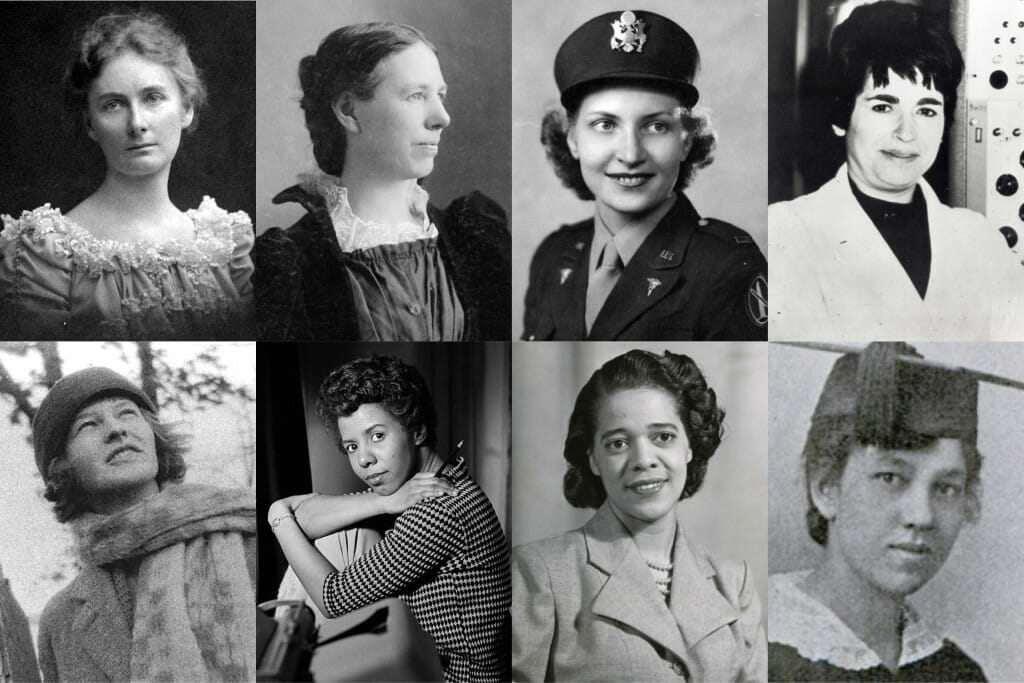
- “Portrait collage of famous women in history including Ada Lovelace and Wangari Maathai”
- Combine digital outreach and in-person programming
- Partner with local organizations for authenticity
- Collect and share metrics to secure future funding
- Sign up for a Women’s History Month newsletter to receive curated resources and event updates.
- Follow social channels for daily spotlights on inspirational women from history.
- Support organizations that fund girls’ education and women-led enterprises.
- Sponsor or volunteer for local history projects that document women’s contributions.
- Use hashtags: #WomensHistoryMonth2026, #WomenInHistory, #InspirationalWomen
- Encourage user-generated content: “Share a photo and story of a woman who inspired you” campaigns boost engagement and community storytelling.
- Integrate primary keywords throughout content as specified.
- Use internal and external links for credibility and SEO.
- Build accessible, multimedia resources to reach diverse audiences.
- headline, description, author, datePublished, image, mainEntityOfPage
- National Women’s History Museum: https://www.womenshistory.org
- Library of Congress Women’s History: https://www.loc.gov/collections/womens-history
- United Nations Women: https://www.unwomen.org
- Anchor: “education resources hub” → /education/womens-history-month-resources
- Anchor: “women in STEM” → /category/women-in-stem
- Anchor: “local history projects” → /community/local-history
- Open Graph title: Women in History: Celebrating Inspirational and Powerful Women for Women’s History Month 2026
- Open Graph description: A comprehensive guide to famous and powerful women in history, classroom activities, event planning, and ways to honor Women’s History Month 2026.
- Twitter card: summarylargeimage with an eye-catching collage of featured women (alt text provided above)
- Collage of diverse historical portraits for the header
- Classroom and event photos showing engagement (with model releases)
- Infographics: timeline of women’s suffrage milestones, statistics about women in leadership

Why Women’s History Month Matters in 2026
Women’s History Month is more than commemoration—it’s a corrective lens. Historically, narratives in textbooks, museums, and media centered men; women’s achievements were often marginalized. Recognizing women in history:
Key statistics to emphasize (useful for opening events or social posts):
Famous Women in History—Iconic Figures and Their Legacies
This section highlights widely recognized women whose lives altered the course of history. Each profile includes a concise summary of achievements and recommended resources for deeper reading.
Political Leaders and Trailblazers
– Cleopatra VII (69–30 BCE): Last active ruler of the Ptolemaic Kingdom of Egypt; navigated complex Roman geopolitics and left enduring cultural and historical legacies.
Scientists and Innovators
– Marie Curie (1867–1934): Nobel laureate in physics and chemistry; pioneer in radioactivity research.
Artists, Writers, and Cultural Innovators
– Frida Kahlo (1907–1954): Painter whose work explored identity, gender, and postcolonial Mexican culture.
Activists and Humanitarians
– Harriet Tubman (c. 1822–1913): Conductor on the Underground Railroad and advocate for abolition and women’s rights.
Powerful Women in History—Beyond the Icons
Power can be exercised formally (through office and titles) and informally (through moral authority and community leadership). This section groups powerful women by the kind of influence they wielded.
Political Powerholders Who Reshaped Nations
– Golda Meir (1898–1978): One of the first female prime ministers of a modern state—Israel—and a decisive wartime leader.
Intellectual and Scientific Authority
– Hypatia of Alexandria (c. 360–415): Philosopher, mathematician, and teacher; emblematic of scholarly women in antiquity.
Economic and Business Leaders
– Madam C.J. Walker (1867–1919): Entrepreneur and philanthropist who became one of the first female self-made millionaires in the U.S.
Grassroots and Community Powerholders
Local organizers, midwives, educators, and union leaders historically have exercised sustained influence often unrecorded in mainstream histories. Highlighting these stories broadens understanding of power.
Inspirational Women from History—Lesser-Known Stories Worth Telling
This section focuses on women whose stories are powerful role models but less frequently taught.
Thematic Approaches to Women’s History for 2026: Education and Events
Women’s History Month programs are more impactful when built around themes. For 2026, consider cross-cutting themes that highlight intersectionality, technology, climate, and civic engagement.
Suggested 2026 Themes and Rationale
– “Women Leading Change”: Focus on political, grassroots, and civic leadership.
Program Ideas for Schools and Communities
– Curated biography units by age group with primary sources and multimedia
Digital & Social Media Campaign Ideas
– #WomenInHistory2026 daily spotlight posts with shareable images and alt text
Teaching Resources, Lesson Plans, and Classroom Activities
This section provides practical, classroom-ready suggestions that educators can implement during Women’s History Month 2026 and year-round.
Elementary (Grades K–5)
– Biography Reading Circles: Assign short biographies of diverse women; students create timeline posters.
Middle & High School
– Research Projects with Primary Sources: Students investigate lesser-known women using archived letters, speeches, and images.
College and Adult Education
– Seminar series on intersectionality in women’s history
How Organizations Can Observe Women’s History Month 2026
Organizations can integrate celebrations into marketing, HR programming, and public-facing content to promote understanding and action.
Corporate and Nonprofit Strategies
– Internal Learning Days: Offer workshops about gender equity and the historical context of workplace norms.
Media and Publishing Ideas
– Commission guest essays on overlooked women in history
Celebrating Women’s History Month 2026 — Events Calendar Template
Use a simple, adaptable calendar to organize events. Example weekly structure:
Highlighting Intersectionality: Women’s Histories Across Race, Class, and Geography
Understanding women in history requires acknowledging intersectional identities. Women’s experiences differ vastly by race, socioeconomic status, nationality, and disability.
Resources for Further Research
Recommended authoritative sources to deepen coverage and validate facts:
Internal Linking Suggestions for Publishers and Educators
To improve SEO and user navigation, link to relevant internal pages:
SEO and Content Optimization Tips for Women’s History Month 2026
To maximize readership and search visibility:
Suggested Image Alt Texts
– “Portrait of Marie Curie in her laboratory, pioneering women in history”
FAQs: Answering Common Questions About Women in History
Q: What is Women’s History Month and when is it observed?
A: Women’s History Month is an annual celebration held in March in the United States (and recognized in various forms internationally) that highlights women’s contributions to history and society. It originated from a week-long celebration in 1981 and was expanded to a month in 1987.
Q: How can I teach Women’s History Month without centering only famous figures?
A: Balance well-known figures with local and marginalized women’s histories, use primary sources, and integrate themes like labor, care, and environmental stewardship to broaden the lens.
Q: Which women should be highlighted for STEM-focused programs?
A: Profiles to include: Ada Lovelace, Marie Curie, Katherine Johnson, Rosalind Franklin, Hedy Lamarr, and Noor Inayat Khan (radio/communications work), while also showcasing contemporary women in STEM.
Q: How can organizations measure impact from Women’s History Month programs?
A: Track attendance, engagement metrics, volunteer hours, partner feedback, and post-event surveys that measure knowledge gains and intention to act.
Case Studies: Effective Women’s History Month Programs
Case Study 1: A mid-sized university hosted a month-long series combining archival exhibits, public lectures, and student oral-history projects. Results: increased enrollment in women’s studies courses by 12% and sustained community partnerships.
Case Study 2: A public library network ran a storytelling campaign highlighting immigrant women’s histories, paired with multilingual resources. Results: 20% uptick in library card registrations in target neighborhoods and expanded community trust.
Actionable takeaways from these cases:
Calls to Action: How You Can Honor Women in History in 2026
Soft CTAs:
Strong CTAs:
Social Sharing and Engagement Tips
– Create shareable quote cards with short, powerful excerpts from historical speeches or biographies. Include accessible alt text and concise captions.
Closing Summary and Final Thoughts
Women in history provide vital perspectives for understanding the past and shaping future possibilities. Women’s History Month 2026 is an occasion to broaden public knowledge, celebrate both famous and overlooked women in history, and convert commemoration into sustained action. Whether you’re an educator, nonprofit leader, corporate communicator, or an individual, you can contribute by uplifting stories, creating inclusive programs, and supporting policies that advance gender equity. Remember: honoring women’s history means listening widely, centering diverse voices, and transforming recognition into concrete opportunity.
Final reminders:
—
This article was written to serve educators, organizers, publishers, and community leaders planning activities and content for Women’s History Month 2026. For classroom-ready lesson plans, event templates, and downloadable assets, subscribe to our newsletter or visit the education resources hub on this site.
Schema Markup Recommendation
Use Article schema with properties:
Add FAQPage schema for the FAQ section to improve chances for rich results.
Suggested External Links (open in new window)
Suggested Internal Links (same window)
Social Sharing Meta Suggestions
Image Recommendations
By centering diverse stories, providing practical programming, and encouraging ongoing action, Women’s History Month 2026 can become not only a time of remembrance but a catalyst for progress. Celebrate, learn, and act—so the contributions of women in history remain visible and inspire future generations.