
Challenging History: Unearthing Provocative and Controversial Archaeological Finds
The dust of history often conceals more than ancient ruins; it can hide narratives that challenge everything we thought we knew about our past. From artifacts that defy their timelines to structures that hint at lost civilizations, “forbidden archaeology” explores those tantalizing, often controversial discoveries that spark furious debate among scholars and enthusiasts alike. These are the finds that push the boundaries of established knowledge, forcing us to question conventional historical timelines and the very origins of human civilization.
For centuries, archaeologists have meticulously pieced together the human story, building a coherent timeline of technological and cultural development. But what happens when an artifact simply doesn’t fit? What if a discovery hints at advanced knowledge far too early, or human presence in places long before it was thought possible? These “out-of-place artifacts” (OOPArts) and anomalous sites have fueled captivating discussions, suggesting to some a suppressed history, while others see them as misinterpretations, hoaxes, or simply phenomena awaiting a conventional explanation. This article delves into some of the most provocative and controversial archaeological finds, examining the claims, the counter-arguments, and the enduring mysteries that continue to captivate our imaginations.

The Allure of the Anomalous: Why Do We Question History?
There’s something inherently thrilling about a puzzle, especially one that promises to rewrite our understanding of the past. For history buffs and those drawn to conspiracy theories, the idea that mainstream archaeology might be missing a piece—or even deliberately overlooking it—is incredibly compelling. This allure stems from several deep-seated human tendencies: a desire for wonder, a distrust of authority, and the romantic notion of a hidden truth waiting to be uncovered.
Mainstream archaeology, by its nature, is a conservative science, relying on rigorous evidence, peer review, and established methodologies such as carbon dating and stratigraphy. This careful, methodical approach is essential for building a reliable historical record. However, this very caution can be perceived by some as resistance to new ideas, especially when those ideas dramatically contradict existing paradigms. When a discovery surfaces that seems to defy logic or established timelines, it inevitably opens the door to alternative interpretations—from ancient alien theories to sophisticated lost civilizations—sparking passionate debates that rarely find easy answers.

Giants Among Us? Legends and Large Finds
Throughout history, myths and legends have spoken of giants—towering beings that walked the earth in ages past. From biblical narratives to Norse sagas, these stories persist, and some controversial archaeological finds are often interpreted through this lens. While mainstream science attributes unusually large skeletons or tools to individual variations within known human populations or the robust build of early hominids, alternative theories propose evidence of a separate, giant race.
For instance, scattered reports from the 19th and early 20th centuries describe discoveries of unusually large human remains in various parts of the world, often in burial mounds in North America. These accounts, frequently sensationalized by local newspapers, fueled speculation about a lost race of giants. While many of these claims were later debunked as misinterpretations, hoaxes, or simply the remains of exceptionally tall individuals, the idea of a giant past continues to resonate. The sheer size of some ancient monuments, such as the megalithic structures of Baalbek in Lebanon with their enormous cut stones, also inspires theories that such feats required strength beyond ordinary human capability, leading some to invoke giants or advanced technology.

Echoes of Advanced Civilizations: Beyond Our Grasp?
Perhaps one of the most persistent and captivating themes in challenging history is the idea of highly advanced ancient civilizations, long lost to cataclysms or the mists of time. These theories often point to architectural marvels or intricate artifacts that seem to defy the technological capabilities attributed to their supposed creators.

The Underwater Enigma of Yonaguni
Off the coast of Yonaguni Island in Japan lies a colossal underwater rock formation that looks strikingly like a submerged city. Discovered in the mid-1980s, the “Yonaguni Monument” features flat surfaces, sharp angles, terraces, and even what appear to be steps and carved channels. Proponents, notably marine geologist Masaaki Kimura, argue that these are artificial structures—evidence of an ancient civilization submerged by rising sea levels thousands of years ago.
However, mainstream geologists largely attribute the formation to natural geological processes. They suggest that erosion, fault lines, and the natural fracturing of sandstone can create remarkably regular and angular formations. While the debate continues, Yonaguni remains a powerful symbol for those who believe in complex, forgotten cultures existing much earlier than conventionally accepted.
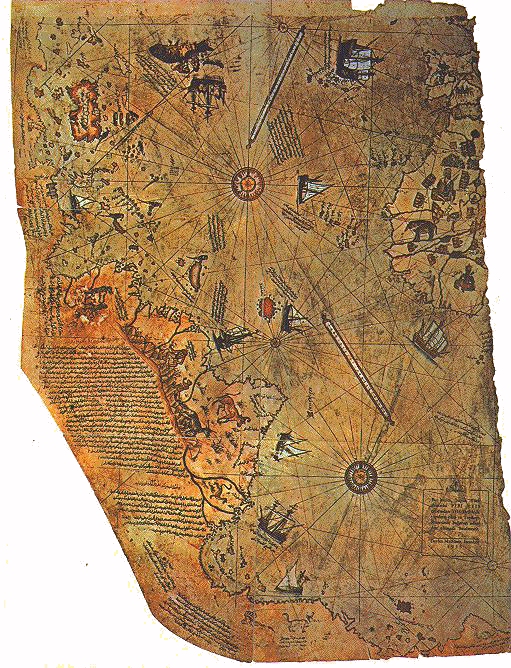
The Precision of the Pyramids and the Piri Reis Map
The Great Pyramid of Giza, a monumental achievement of ancient engineering, continues to inspire awe and speculation. Its sheer scale, precise alignment, and intricate construction lead some to question how such a feat was possible without advanced tools or knowledge. While mainstream Egyptology offers compelling explanations based on ingenuity, massive labor, and sophisticated planning, alternative theories range from lost technologies to extraterrestrial assistance.
Another intriguing piece of evidence often cited is the Piri Reis Map, compiled in 1513 by the Ottoman admiral Piri Reis. This map depicts parts of the western coast of Africa, the eastern coast of South America, and, most controversially, what appears to be a portion of the coastline of Antarctica—specifically, Queen Maud Land—free of ice. This is astounding because Antarctica wasn’t officially “discovered” until 1820, and Queen Maud Land’s sub-glacial topography wasn’t mapped until modern seismic techniques in the 20th century. While some scholars interpret the “Antarctica” portion as misidentified South American coastline or a speculative addition, proponents of suppressed history suggest it points to an ancient, highly advanced civilization that mapped the world long before conventional timelines allow.
Out-of-Place Artifacts (OOPArts): Anachronisms in Stone and Metal
OOPArts are perhaps the most direct challenges to established historical timelines. These are objects that, based on their supposed age or technological sophistication, simply shouldn’t exist where or when they were found. They are relics that seem to whisper of a different past.
The Baghdad Battery: Ancient Power Source?
Discovered in 1936 near Baghdad, Iraq, the “Baghdad Battery” consists of a 5-inch clay jar containing a copper cylinder, which encloses an iron rod. Dated to the Parthian era (around 250 BC to 224 AD), some researchers suggest it was an ancient electrical battery, capable of producing a small current if filled with an electrolyte like vinegar. This would imply an understanding of electricity thousands of years before Volta’s battery in 1800.
Mainstream archaeologists, however, largely view it as a container for scrolls or a ritualistic object. While experiments have shown it could produce electricity, there’s no archaeological evidence of wires, electrodes, or any practical application for electricity in the Parthian culture. The debate highlights the difference between potential functionality and proven use.
The Klerksdorp Spheres: Natural or Crafted?
Found in pyrophyllite deposits near Klerksdorp, South Africa, the “Klerksdorp Spheres” are small, metallic-looking objects, some with parallel grooves around their equators. What makes them controversial is their age—the rock layers they come from are estimated to be around 2.8 billion years old. For proponents of forbidden archaeology, these spheres, particularly those with grooves, suggest intelligent design, implying advanced beings existed billions of years ago.
Geologists, on the other hand, identify them as concretions—naturally formed geological phenomena. Concretions are masses of mineral matter that form within sedimentary rock, often acquiring spherical or disc-like shapes due to chemical processes. While some might appear remarkably regular, they are considered products of geology, not ancient craftsmanship.
The Acámbaro Figures: Dinosaurs and Humans Together?
In 1944, German merchant Waldemar Julsrud reportedly discovered thousands of ceramic figurines near Acámbaro, Mexico. These figurines depict a wide array of creatures, including what appear to be dinosaurs, alongside humans. If authentic and accurately dated to their claimed age (around 2500 BC), they would suggest that humans coexisted with dinosaurs, a notion entirely at odds with mainstream paleontology and evolutionary science.
Mainstream archaeology has largely dismissed the Acámbaro figures as a modern hoax or an elaborate folk art project. Radiocarbon dating of the figurines themselves has yielded inconsistent results, often pointing to much more recent origins or being inconclusive due to material contamination. The lack of any other supporting evidence for human-dinosaur coexistence in the archaeological record further undermines their authenticity.
Challenging Human Origins and Timelines
The story of human evolution and migration is constantly being refined, but certain finds have provoked major re-evaluations or remain highly contentious.
The Calaveras Skull and Other Anomalous Bones
In 1866, a human skull was reportedly found in a mine shaft in Calaveras County, California, beneath a thick layer of lava and ancient gravels, suggesting an age of millions of years. This would place modern humans in North America far earlier than accepted archaeological evidence, coexisting with extinct megafauna. While initially sensational, the “Calaveras Skull” was later widely dismissed as a hoax, likely planted in the mine by miners.
Despite this, similar finds of seemingly “modern” human remains or artifacts in geological contexts that suggest extreme antiquity continue to surface periodically, challenging the established timelines of human presence and technological development. Each such claim undergoes intense scrutiny, with factors like geological disturbance, misidentification, or deliberate fabrication often providing the conventional explanation.
The Idea of “Suppressed History”
Why do some believe these extraordinary finds are not simply debunked, but actively “suppressed”? The idea of a hidden truth, deliberately concealed by an academic establishment, is a powerful narrative.
Several factors contribute to this perception:
- Academic Conservatism: Science progresses through consensus built on robust evidence. New ideas that drastically contradict established paradigms face intense skepticism and require overwhelming proof. This rigorous vetting process, while necessary, can be perceived as resistance or suppression by proponents of fringe theories.
- The Paradigm Shift: Thomas Kuhn’s concept of “paradigm shifts” suggests that scientific progress isn’t always linear; sometimes, old frameworks must be completely overturned. Those who believe in a suppressed history often feel they are at the forefront of such a shift, but without the institutional support.
- Hoaxes and Misinterpretations: Unfortunately, some sensational claims turn out to be deliberate hoaxes (like Piltdown Man, a famous archaeological forgery). Others are genuine misinterpretations of complex geological or archaeological data. When these are exposed, it can lead to a general distrust of similar “anomalous” findings, even legitimate ones that simply require more study.
- Funding and Reputation: Academic careers and funding are often tied to established research areas. Pursuing highly controversial or unproven theories can be risky for academics seeking to maintain their professional standing. This practical reality can be misconstrued as a deliberate effort to silence dissenting voices.
- Critical Thinking: Engaging with controversial finds forces us to sharpen our critical thinking skills, evaluating evidence, questioning assumptions, and distinguishing between speculation and substantiated fact.
- Inspiring Curiosity: They ignite curiosity about the past, encouraging people to learn more about archaeology, geology, and anthropology.
- Understanding Human Narratives: Whether a find is proven or debunked, the stories surrounding it reveal much about human nature—our hopes, fears, and our enduring quest for meaning and knowledge.
It’s important to differentiate between genuine scientific skepticism, which requires strong evidence to overturn established theories, and deliberate suppression. While archaeology, like any human endeavor, isn’t immune to biases, its core methodology is designed to self-correct and pursue truth, even if that truth is sometimes uncomfortable or unexpected.
The Role of Mainstream Archaeology: Rigor and Revision
Mainstream archaeology operates on a foundation of rigorous methodology. Every new discovery is subjected to extensive scrutiny, requiring corroborating evidence from multiple sources. Context is paramount: where an artifact is found, what layers of soil or rock it’s embedded in, and what other objects are associated with it are all crucial for accurate dating and interpretation. Techniques like radiocarbon dating, thermoluminescence, and dendrochronology provide objective age estimates.
While established theories provide a framework, archaeology is far from static. New discoveries constantly refine our understanding. For example, recent finds in places like Göbekli Tepe in Turkey have pushed back the timeline for complex monumental architecture by thousands of years, forcing archaeologists to rethink the origins of civilization. Similarly, new genetic and archaeological evidence continues to rewrite the story of human migration across continents. This willingness to revise, when presented with compelling evidence, is a hallmark of scientific progress, not suppression.
Why These Debates Matter
The fascination with challenging history and controversial discoveries isn’t just about sensationalism; it speaks to a deeper human desire to understand our origins and potential. These debates, even when they involve debunked theories, serve several crucial purposes:
Pushing Boundaries: While many anomalous finds are eventually explained conventionally, some genuine discoveries have* challenged existing paradigms and led to breakthroughs. The scientific process thrives on questions, even provocative ones.
From the enigmatic structures of Yonaguni to the perplexing Baghdad Battery, the world of challenging archaeology offers a captivating glimpse into the ongoing quest to understand our past. It’s a field where mystery and rigor constantly intersect, inviting us all to ponder the possibilities and, perhaps, to look a little closer at the stories hidden beneath our feet.
The journey through our past is far from over, and the debates surrounding these provocative finds remind us that history is a living, breathing narrative, constantly being unearthed and reinterpreted.
Join the conversation in the comments below and share your thoughts on these controversial discoveries.