
Cracking Ancient Enigmas: Exploring Mysteries and Lost Knowledge from the Past
From colossal structures built with seemingly impossible precision to undeciphered scripts hinting at forgotten wisdom, the ancient world is a tapestry woven with threads of profound mystery. We stand at the threshold of understanding, constantly grappling with enigmatic artifacts, lost civilizations, and unsolved puzzles that challenge our perceptions of history and human capability. This journey into the past isn’t just about what we know; it’s about the thrilling, often perplexing questions that continue to echo through time, inviting us to peer into the shadowy corners of forgotten knowledge and wonder what secrets still lie buried.

The Irresistible Pull of the Unknown Past
What is it about a forgotten civilization or a cryptic artifact that so captivates our imagination? Perhaps it’s the humbling realization that our ancestors, despite lacking modern technology, achieved feats that still baffle us today. Or maybe it’s the tantalizing possibility that there is a vast reservoir of knowledge, wisdom, or even technology that was once understood but has since slipped through the cracks of time, leaving only tantalizing clues. This inherent human curiosity—this desire to connect with and comprehend the distant past—fuels our fascination with ancient enigmas. They are not merely historical footnotes; they are invitations to become detectives of history, piecing together fragments of truth from a world long gone.
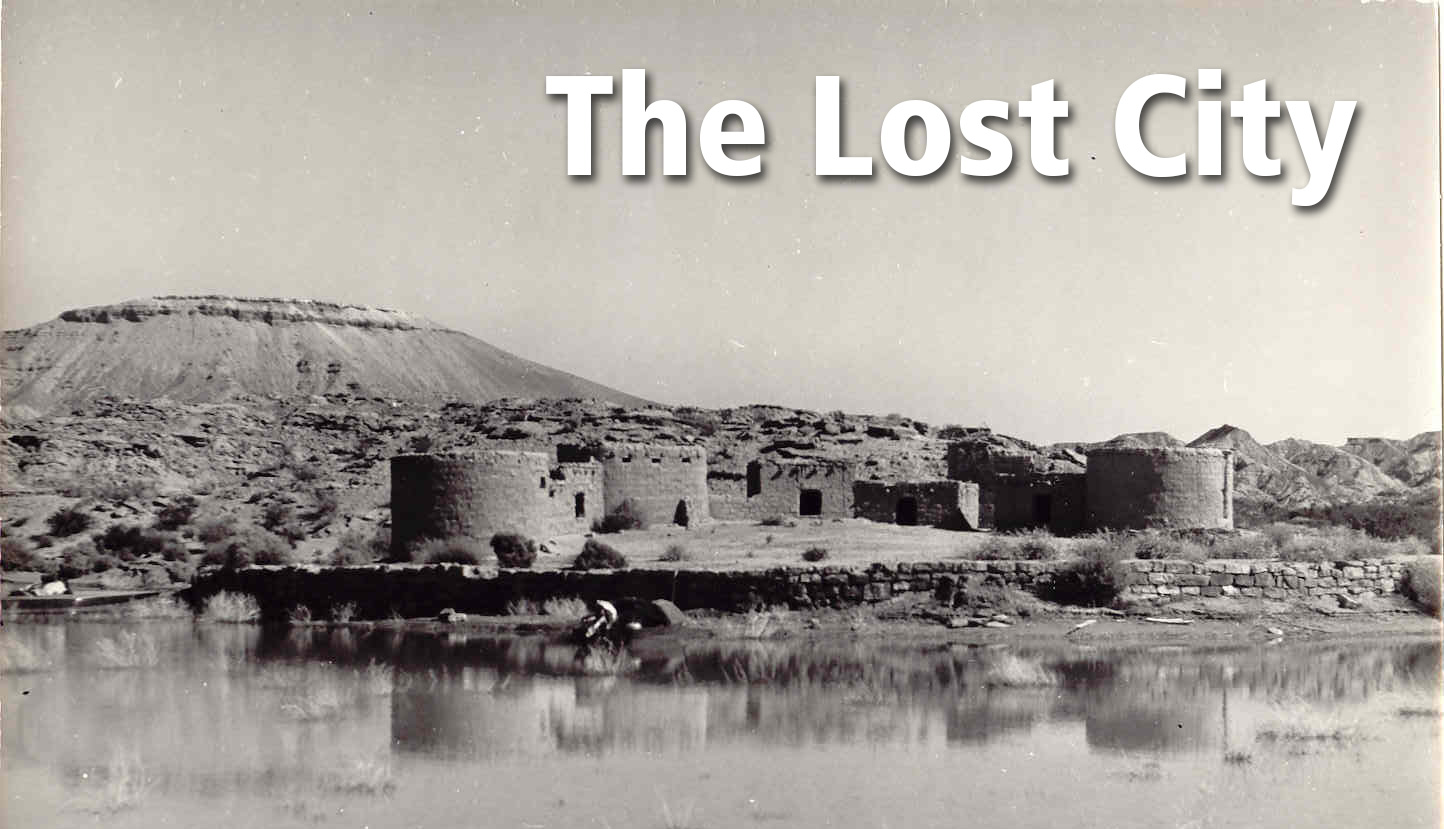
Lost Civilizations and Their Whispers of Grandeur
Our planet is littered with the remnants of societies that rose to incredible heights, only to vanish or decline, leaving behind legacies that continue to perplex and inspire. What secrets did they hold, and what can their ruins tell us about humanity’s journey?
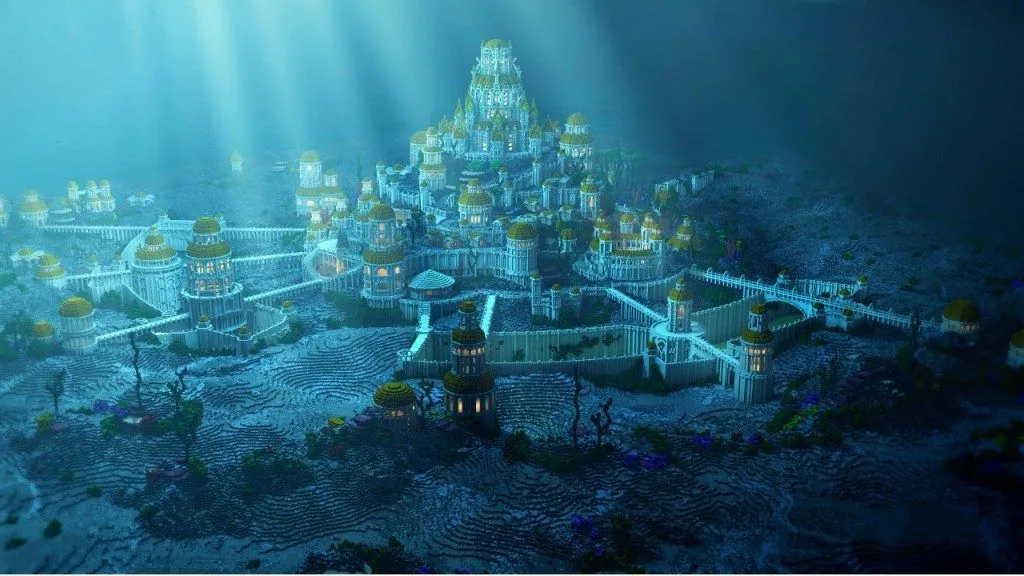
Atlantis: The Enduring Myth of a Sunken Utopia
No discussion of lost civilizations would be complete without Atlantis. First introduced by Plato in his dialogues Timaeus and Critias, Atlantis was described as an advanced island nation, technologically and philosophically superior, which ultimately succumbed to the wrath of the gods and sank beneath the waves in a single day and night. For centuries, scholars and adventurers have scoured the globe, from the Mediterranean to the Caribbean, searching for tangible proof of its existence.
While most mainstream historians view Atlantis as a philosophical allegory rather than a historical account, the myth persists, sparking countless theories. Was it inspired by a real catastrophe, such as the Minoan eruption of Thera? Or does it represent humanity’s recurring dream of a perfect society, lost to hubris and natural disaster? The enduring power of Atlantis lies not just in the search for a lost city but in its profound reflection on human ambition, divine judgment, and the fragility of even the greatest empires. It is a tale that continues to challenge us to consider the fine line between historical fact and allegorical truth.

The Maya: Advanced Calendars and a Mysterious Collapse
Deep within the jungles of Mesoamerica, the towering pyramids and intricate cities of the Maya civilization stand as testaments to an extraordinary people. Renowned for their sophisticated writing system, groundbreaking astronomy, and a calendar so precise it accurately tracked celestial events millennia into the future, the Maya developed a complex society that flourished for centuries. Yet, around the 9th century AD, many of their great urban centers in the southern lowlands were abandoned, their populations dispersed, and their monumental construction ceased. This “Classic Maya collapse” remains one of archaeology’s most enduring mysteries.
Numerous theories attempt to explain this decline: prolonged drought, endemic warfare, environmental degradation, or even internal social unrest. It was likely a combination of factors—a perfect storm that led to the unraveling of a once-mighty civilization. What truly happened to the Maya, and what hidden knowledge did they possess about the intricate balance between humanity and nature that we are only now beginning to grasp? Their cities, now partially reclaimed by the jungle, still guard secrets about their advanced understanding of mathematics, cosmology, and the delicate dance of societal survival.

Rapa Nui (Easter Island): The Secrets of the Moai
Imagine sailing across the vast, empty expanse of the Pacific Ocean and encountering a remote island dotted with hundreds of colossal stone heads, some weighing over 80 tons. Welcome to Rapa Nui, better known as Easter Island, home to the iconic Moai statues. How did the ancient Rapa Nui people, using only primitive tools, carve these massive figures from volcanic rock and then transport them across the island to their ceremonial platforms, sometimes miles away? This question has puzzled archaeologists for decades.
The prevailing theory suggests the Moai were “walked” into place using ropes, levers, and a rocking motion, a method demonstrated by experimental archaeology. Yet the sheer scale of the undertaking, coupled with the environmental degradation that ultimately befell the island’s ecosystem—likely due to deforestation for transport and other resources—presents a complex narrative. The Moai stand as silent, enigmatic guardians, not only of the island’s ancient culture but also as a stark reminder of humanity’s capacity for both monumental achievement and ecological oversight. And what of the Rongorongo script, the island’s unique system of hieroglyphic writing that remains largely undeciphered, offering tantalizing hints of lost stories and wisdom?
Enigmatic Artifacts and Structures: Echoes of Genius
Beyond lost civilizations, specific objects and constructions from the ancient world continue to defy easy explanation, hinting at technological prowess or conceptual understanding far beyond what we typically attribute to their eras.
The Antikythera Mechanism: An Ancient Astronomical Computer
Discovered in a Roman shipwreck off the coast of the Greek island of Antikythera in 1901, this corroded bronze device initially appeared to be little more than a clump of metal. However, careful conservation and scientific analysis revealed something truly astonishing: an incredibly complex astronomical calculator, or “computer,” dating back to the 2nd century BCE. With dozens of intricate bronze gears, dials, and pointers, it was designed to predict astronomical positions and eclipses for decades in advance, track the cycles of the moon, and even calculate the dates of ancient Olympic Games.
The Antikythera Mechanism is a testament to the extraordinary ingenuity of ancient Greek engineers and scientists. Its complexity rivals clockwork mechanisms from the 14th century AD, making it an out-of-place artifact that challenges our understanding of ancient technology. Who built it? How was such precision achieved without modern tools? And what other advanced devices might have been lost to time? The mechanism offers a tantalizing glimpse into a lost chapter of technological history, suggesting that the ancients may have been far more sophisticated than we give them credit for.
The Baghdad Battery: Electricity in the Ancient World?
In 1938, during an archaeological excavation near Baghdad, Iraq, a peculiar object was unearthed: a small clay jar containing a copper cylinder, which encased an iron rod. Dated to the Parthian era (around 250 BCE to 224 CE), this artifact, now famously known as the Baghdad Battery, sparked a fascinating debate. Could this be an ancient electrical battery? When filled with an electrolyte like vinegar or grape juice, similar reconstructions have indeed produced a small electrical current.
While the “battery” theory is compelling, its actual purpose remains a subject of intense discussion. Was it used for electroplating, applying thin layers of precious metals onto other objects? Or did it serve a ritualistic purpose, perhaps generating a mild shock for religious ceremonies? Some skeptics argue it was simply a storage vessel for scrolls. Regardless of its true function, the Baghdad Battery challenges our assumptions about ancient technology, forcing us to consider the possibility that our ancestors experimented with concepts we often associate solely with the modern age.
The Nazca Lines: Messages Etched into the Desert Floor
Stretching across the arid plains of Peru, the Nazca Lines are a collection of massive geoglyphs—designs etched into the ground—depicting animals, plants, geometric shapes, and even human-like figures. Created by the ancient Nazca culture between 500 BCE and 500 CE, these lines are so vast that many can only be fully appreciated from the air. The sheer scale and precision of these ancient artworks, some spanning hundreds of meters, raise profound questions.
Why were they made? And how did the Nazca people, without the benefit of aerial perspective, manage to create such accurate and enormous designs? Theories abound: they might have been part of astronomical calendars, used in water rituals, or even served as pathways for religious processions. The “how” is equally intriguing, with researchers suggesting sophisticated surveying techniques, perhaps using ropes, stakes, and observation points from nearby hills. The Nazca Lines remain a powerful testament to human creativity and spiritual devotion—a silent, monumental message left etched into the Earth, waiting for us to fully decode its meaning.
The Great Pyramid of Giza: A Monument to Unanswered Questions
Even after centuries of study, the Great Pyramid of Giza continues to be a source of wonder and controversy. How did the ancient Egyptians, using only rudimentary tools, manage to quarry, transport, and precisely place over two million massive stone blocks, some weighing upwards of 80 tons, to construct a structure that stood as the tallest man-made edifice for over 3,800 years? The precision of its alignment with true north, the intricate internal passages, and the sheer scale of the undertaking are mind-boggling.
While various theories exist regarding ramps and leverage systems, no definitive, universally accepted explanation fully accounts for every aspect of its construction. Furthermore, discoveries like the “air shafts” pointing to specific stars, and recent explorations revealing previously unknown voids and chambers, suggest that even after millennia, the Great Pyramid still holds secrets. Was there lost knowledge of advanced engineering or even acoustic principles involved? The pyramid stands as a monumental enigma, a beacon of ancient ingenuity that continues to challenge our understanding of what was possible in the distant past.
Stonehenge: A Prehistoric Astronomical Observatory?
On the Salisbury Plain in Wiltshire, England, stands Stonehenge, a prehistoric monument composed of a ring of standing stones, each weighing many tons. Built in several phases between 3000 BCE and 1500 BCE, this megalithic marvel raises fundamental questions about its purpose and the capabilities of its builders. How did Neolithic people transport massive sarsen stones from Marlborough Downs, some 20 miles away, and bluestones from as far as the Preseli Hills in Wales, over 150 miles distant? And why?
While the precise methods of transport and construction remain debated—likely involving sledges, rollers, and immense human effort—archaeological evidence strongly suggests Stonehenge functioned as a sophisticated astronomical observatory or calendar. Its precise alignments with the solstices and equinoxes indicate a deep understanding of celestial movements. Was it a temple? A burial ground? A place of healing? Or all of the above? Stonehenge is a powerful reminder that our distant ancestors possessed a profound connection to the cosmos and the ingenuity to express that understanding in monumental stone.
Unsolved Puzzles in Ancient Texts and Knowledge
Beyond physical artifacts, some of the most profound ancient enigmas lie within the realms of language and lost intellectual heritage. What forgotten wisdom, stories, or warnings might be hidden in texts we cannot read or libraries that no longer exist?
The Voynich Manuscript: The World’s Most Mysterious Book
Imagine a book filled with strange, beautiful illustrations of unknown plants, astronomical diagrams, and naked women bathing in peculiar green pools, all accompanied by a flowing script that no one—not even the most brilliant cryptographers—has ever been able to decipher. This is the Voynich Manuscript, a medieval codex dating to the early 15th century, discovered in 1912 by Polish book dealer Wil