
Unveiling Hidden Empires: Modern Archaeology’s Most Astounding Discoveries of Ancient Civilizations
For centuries, our understanding of human history was largely confined to written records and the most prominent ruins. We spoke of Rome, Egypt, Mesopotamia, and the Maya, believing these to be the cornerstones of ancient civilization. Yet beneath dense jungles, shifting sands, and even the ocean floor, countless hidden empires lay dormant, their stories waiting to be told. Thanks to revolutionary advancements in modern archaeology, we are now witnessing an unprecedented era of archaeological discovery, bringing to light ancient civilizations that challenge our preconceived notions about human ingenuity, complexity, and global interconnectedness. These revelations are not just adding new chapters to history; they are rewriting the entire book.

The Allure of the Lost: Why Empires Vanish from Memory
The idea of lost cities and forgotten kingdoms has captivated humanity for millennia, fueling myths and legends. But why do entire ancient civilizations simply disappear from the historical record? The reasons are as varied as the cultures themselves. Environmental shifts, such as desertification, volcanic eruptions, or rising sea levels, have swallowed once-thriving cities whole. Political upheavals, invasions, or internal collapses can lead to the abandonment of monumental centers, allowing nature to reclaim them over centuries.
Sometimes, the very lack of written language meant that once a society fell, its story was lost to all but the archaeological record. Remote locations, dense vegetation, or simply the sheer passage of time also played a significant role in obscuring these hidden empires. For generations, archaeologists relied on visible mounds, historical texts, or local folklore to guide their digs. This traditional approach, while fruitful, often meant that vast, complex societies hidden beneath impenetrable canopies or layers of sediment remained tantalizingly out of reach.
A New Lens on the Past: The Revolution of Modern Archaeology
The past two decades have ushered in a golden age for archaeological discovery, largely due to the integration of cutting-edge technology into fieldwork. Modern archaeology is no longer just about trowels and brushes; it is about satellites, lasers, and supercomputers. These advanced tools allow researchers to peer through dense foliage, penetrate layers of earth, and map vast landscapes in unprecedented detail, revealing the faint, often subtle signatures of human activity that would otherwise remain invisible.
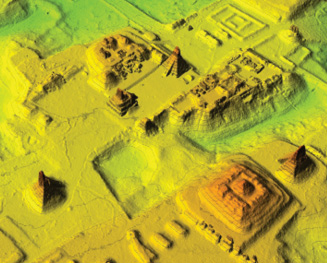
One of the most transformative technologies is LiDAR (Light Detection and Ranging). Mounted on airplanes or drones, LiDAR systems emit millions of laser pulses per second, mapping the terrain below. These pulses can penetrate even the thickest jungle canopy, bouncing off the forest floor and creating incredibly detailed 3D maps. By digitally stripping away the vegetation, archaeologists can see the subtle contours of ancient roads, agricultural terraces, building foundations, and defensive structures that have been hidden for centuries.
Satellite imagery, particularly high-resolution optical and radar satellite data, provides a bird’s-eye view of vast regions, helping to identify anomalies that might indicate buried structures or ancient land-use patterns. Ground-penetrating radar (GPR) uses radio waves to create images of subsurface features, making it ideal for detecting walls, foundations, and burial sites without disturbing the ground.
Beyond remote sensing, geophysical surveys such as magnetometry and electrical resistivity mapping can detect variations in the earth’s magnetic field or electrical conductivity, indicating the presence of buried architecture or human activity. Underwater archaeology has been revolutionized by advanced sonar, remotely operated vehicles (ROVs), and autonomous underwater vehicles (AUVs), allowing the systematic exploration of submerged sites.
Furthermore, drones and photogrammetry offer cost-effective ways to create detailed 3D models of sites from aerial photographs. Processing this immense data relies on big data analytics and artificial intelligence, which can identify patterns and features that human eyes might miss. Finally, modern archaeology is increasingly interdisciplinary, integrating insights from geology, botany, climatology, and even genetics to paint a holistic picture of ancient civilizations and their environments.

Unearthing Remarkable Hidden Empires: Case Studies in Discovery
The application of these technologies has led to a cascade of astounding archaeological discoveries, revealing hidden empires across continents. Each discovery not only expands our historical knowledge but often forces a complete re-evaluation of established timelines and cultural narratives.

Ciudad Blanca: The Lost City of the Monkey God (Honduras)
For centuries, legends spoke of a “White City” or “City of the Monkey God” hidden deep within the impenetrable rainforests of La Mosquitia, Honduras. Local Indigenous groups and early explorers recounted tales of a pristine city, untouched by time, perhaps even cursed. These stories were often dismissed as folklore or exaggerated accounts.
In 2012, a team led by archaeologist Chris Fisher and filmmaker Steve Elkins, using LiDAR technology, finally pierced through the dense canopy. The LiDAR scans revealed not just one city but the outlines of an extensive urban complex, complete with plazas, monumental earthworks, and what appeared to be pyramids. Subsequent ground expeditions in 2015 confirmed the LiDAR findings, discovering a vast collection of artifacts from a previously undocumented culture, including stone sculptures depicting zoomorphic figures, ceramic vessels, and ceremonial grinding stones. The site, provisionally named T1, dates to 1000–1400 CE and offers a glimpse into a sophisticated pre-Columbian society that thrived in an environment long thought incapable of supporting such complexity. This hidden empire challenges our understanding of Mesoamerican civilization, suggesting a much broader and more diverse cultural landscape than previously imagined.
The Maya Megalopolis: Unveiling the True Scale of a Civilization (Guatemala & Mexico)
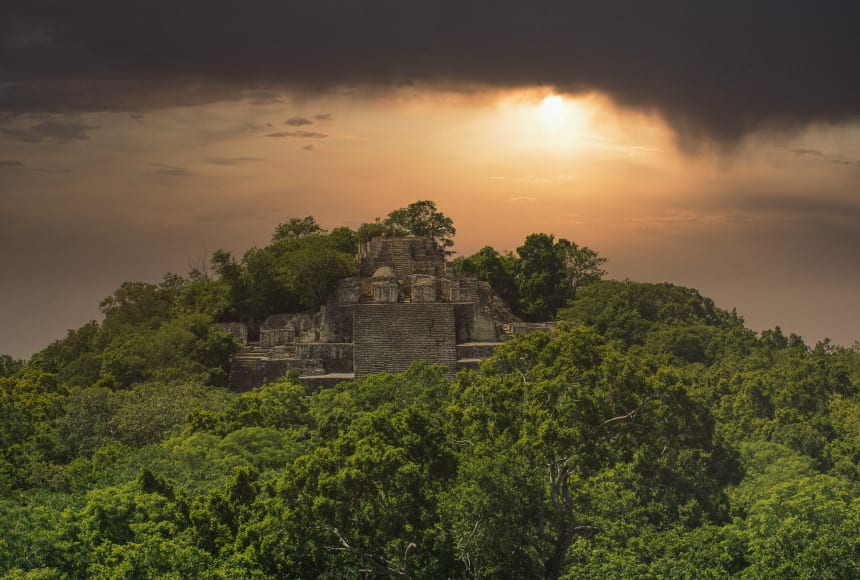
The Maya civilization has long been known for its magnificent cities, such as Tikal and Palenque. However, modern archaeology has revealed that the scale of Maya urbanism was far grander than anyone had conceived. LiDAR surveys across the Maya Lowlands, particularly in northern Guatemala’s Mirador Basin and around known sites like Tikal, have been nothing short of revolutionary.
These scans have uncovered an astonishing network of interconnected cities, towns, and villages linked by vast causeways that stretched for miles. Researchers have identified tens of thousands of previously unknown structures, including homes, agricultural terraces, and defensive fortifications, suggesting a population density and level of political integration far greater than previously estimated. For instance, the sheer extent of the El Mirador Basin, with its massive pyramids such as La Danta—one of the largest structures in the ancient world by volume—indicates a powerful, early state-level society that predates the Classic Maya period. LiDAR-based archaeological discoveries have effectively turned what we thought were isolated city-states into a sprawling, interconnected hidden empire of immense scale and sophistication.
Angkor’s Hidden Urban Sprawl: Beyond the Temples (Cambodia)
Angkor Wat is one of the most iconic archaeological sites in the world, a testament to the Khmer Empire’s grandeur. For decades, archaeologists focused on the visible temples and royal complexes. However, LiDAR technology applied to the region around Angkor has dramatically expanded our understanding of this ancient civilization.
In 2012 and 2015, LiDAR scans led by Damian Evans unveiled an immense urban landscape surrounding the temples, far more extensive and complex than previously imagined. They revealed vast, low-density urban areas, intricate water management systems, and an extensive network of roads and canals connecting settlements across hundreds of square kilometers. This included the discovery of Mahendraparvata, a hidden city on Phnom Kulen that predates Angkor Wat by several centuries. These archaeological discoveries demonstrate that the Khmer Empire was not just a collection of temples but a sprawling, highly organized megacity supported by advanced infrastructure and housing millions of people. This fundamentally reshapes our perception of Southeast Asian urbanism and challenges the idea that early cities were always densely packed.
The Casarabe Culture: Amazonia’s Sophisticated Earthwork Builders (Bolivia)
The Amazon rainforest has often been depicted as an untouched wilderness, home to small, nomadic tribes before European contact. However, modern archaeology is systematically dismantling this myth, revealing evidence of complex, settled societies that thrived in sustainable ways. The recent archaeological discoveries related to the Casarabe culture in the Llanos de Mojos region of Bolivia are a prime example.
Using LiDAR and extensive fieldwork, researchers have identified a vast network of interconnected settlements, complete with monumental earthworks, raised causeways, and intricate water management systems. These include pyramidal structures, plazas, and defensive ditches, all dating between 500 CE and 1400 CE. The Casarabe people transformed their landscape to support large populations, creating forest gardens and cultivating diverse crops within the rainforest. This hidden empire demonstrates that sophisticated urbanism and large-scale social organization were not exclusive to the Andes or Mesoamerica but also flourished in the Amazon Basin, proving that this environment could sustain complex ancient civilizations without external influence.
Göbekli Tepe: Redefining the Dawn of Civilization (Turkey)
While not a hidden empire in the traditional sense of a lost city, Göbekli Tepe is an extraordinary archaeological discovery that has fundamentally reshaped our understanding of the origins of ancient civilizations themselves. Discovered in southeastern Turkey in the mid-1990s, this site dates back to roughly 9600–9000 BCE and features massive carved stone pillars arranged in circular enclosures.
What makes Göbekli Tepe so revolutionary is its age. It predates the invention of pottery, metallurgy, and even settled agriculture. Previously, it was believed that complex societies and monumental architecture only arose after the development of agriculture, which allowed for sedentary living and surplus food. Göbekli Tepe, however, suggests the opposite: that the construction of large ritual centers might have preceded and even driven the development of agriculture as people gathered to build and maintain these sacred sites. This discovery forces us to reconsider the very sequence of human development and the catalysts for civilization.
Beyond Grand Monuments: Redefining “Civilization”
These archaeological discoveries do more than just add new names to a list of ancient civilizations. They profoundly challenge our Eurocentric and often narrow definitions of what constitutes a civilization or an empire. We often associate these terms with monumental stone cities, written scripts, and hierarchical political structures akin to Rome or Egypt.
However, the hidden empires of the Amazon, with their earthwork cities and sustainable forest management, demonstrate diverse forms of urbanism and societal organization. The sprawling, low-density cities of Angkor challenge the notion that urban centers must be tightly packed. The early monumentalism of Göbekli Tepe reshapes our understanding of the very foundations of human collective endeavor. Modern archaeology is revealing a global tapestry of human ingenuity, in which societies adapted to vastly different environments and developed unique pathways to complexity and social organization, often without centralized states or written records.
The Ethical Imperative: Preserving Our Shared Past
The excitement of archaeological discovery comes with significant responsibilities. Many of these newly revealed sites are fragile and vulnerable. Climate change, with its accelerating deforestation, erosion, and rising sea levels, poses an immediate threat. Development, logging, and agricultural expansion also encroach upon these hidden empires.
Furthermore, looting remains a persistent problem, robbing humanity of invaluable historical context. Modern archaeology emphasizes ethical practices, including non-invasive techniques, careful documentation, and, crucially, collaboration with local and Indigenous communities. Their knowledge, traditions, and perspectives are vital for understanding and protecting these ancient civilizations and ensuring that the benefits of discovery are shared equitably.
The Future of Discovery: What Else Lies Beneath?
The pace of archaeological discovery shows no sign of slowing. As technology continues to advance and become more accessible, the potential for uncovering even more hidden empires is immense. Vast regions of the Amazon, Southeast Asia, Africa, and North America remain largely unexplored with these new tools. The oceans, too, hold countless submerged secrets.