
Challenging History: Unearthing Provocative and Controversial Archaeological Finds
From ancient cities buried beneath modern metropolises to artifacts that defy our understanding of prehistoric technology, archaeology is a field constantly unearthing secrets. But sometimes, these discoveries don’t just fill in gaps—they blast holes in established timelines, challenge conventional wisdom, and ignite fiery debates. Welcome to the world of controversial discoveries, where the lines between groundbreaking revelation and thoroughly debunked theories can become blurred, fueling the allure of forbidden archaeology and whispered tales of suppressed history.
Archaeology is often seen as a meticulous, fact-driven science, slowly piecing together the human past. Yet every so often, a find emerges that throws a wrench into the carefully constructed gears of accepted history. These are the artifacts, structures, and sites that generate intense scrutiny, passionate defense, and fierce debunking. For history buffs and those fascinated by alternative narratives, these provocative finds offer a tantalizing glimpse into a past far stranger and more complex than we might imagine.

What Makes an Archaeological Find “Controversial”?
At its heart, archaeological controversy arises when a discovery seems to contradict well-established scientific paradigms. This could involve evidence suggesting human presence far earlier than currently accepted, technologies deemed impossible for ancient cultures, or civilizations existing in places or times where they “shouldn’t” have. Mainstream archaeology, built on peer-reviewed evidence and consensus, often views such claims with skepticism, demanding extraordinary proof for extraordinary assertions.
However, for proponents of “forbidden archaeology,” this skepticism is sometimes seen as resistance to new ideas or even a deliberate attempt to suppress information that doesn’t fit the approved narrative. This tension between scientific rigor and the allure of the unknown is precisely what makes these finds so captivating.
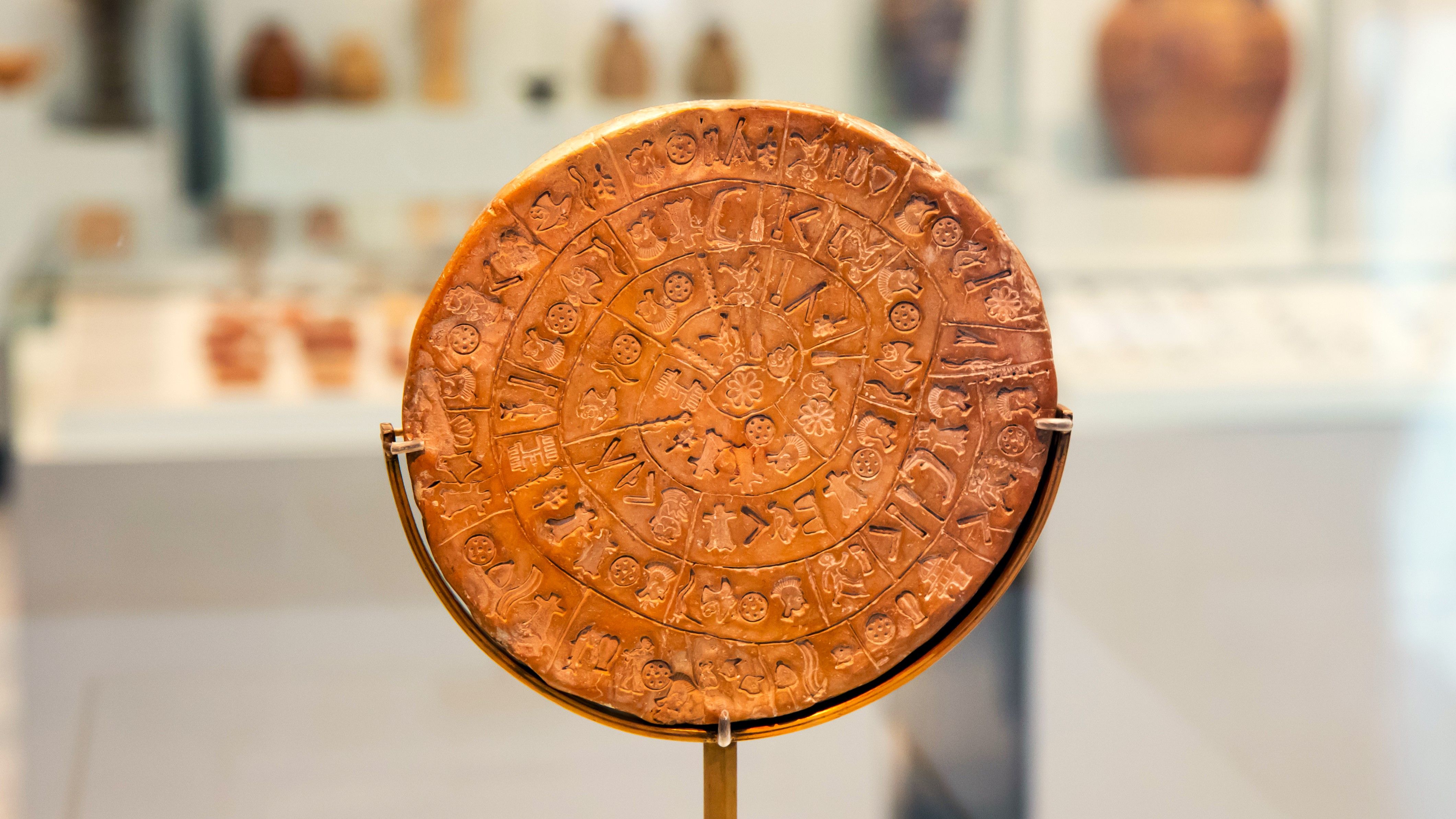
The Out-of-Place Artifact (OOPArt) Phenomenon
One of the most intriguing categories of controversial finds is the “Out-of-Place Artifact,” or OOPArt. These are objects that, based on their supposed age or technological sophistication, seem to defy the historical timeline of human development. They hint at forgotten knowledge, lost civilizations, or even extraterrestrial influence, captivating the imagination of many.

The Antikythera Mechanism: A Glimpse of Ancient Genius
Consider the Antikythera Mechanism, discovered in a shipwreck off the coast of Greece in 1901. At first glance, it was just a corroded lump of bronze. But after decades of painstaking research, it was revealed to be an incredibly complex astronomical calculator, dating back to the 2nd century BCE. With dozens of interlocking gears, it could predict solar and lunar eclipses, track planetary movements, and even calculate Olympic game cycles.
Why was it controversial? Its complexity was staggering, far exceeding anything known from ancient Greece. For a long time, it was considered an anomaly, a singular piece of technology that seemed to come from nowhere, challenging our understanding of ancient Greek engineering capabilities. Unlike many OOPArts, however, the Antikythera Mechanism has been thoroughly studied, replicated, and is now widely accepted as a genuine product of Hellenistic Greek ingenuity, albeit an exceptionally advanced one. It serves as a reminder that our understanding of the past is always evolving, and sometimes, the “impossible” simply requires more investigation.

The Coso Artifact: A 500,000-Year-Old Spark Plug?
In contrast to the Antikythera Mechanism, many OOPArts remain firmly in the realm of speculative or debunked theories. A classic example is the Coso Artifact. In 1961, while rockhounding in the Coso Mountains of California, three individuals found what appeared to be a spark plug encased in a geode. The rock was estimated to be 500,000 years old, leading to sensational claims of an advanced ancient civilization or even time travel.
The artifact quickly became a poster child for “forbidden archaeology.” However, upon closer scientific examination, the “geode” was identified as a concretion of hardened clay, sand, and other materials, and the “spark plug” was indeed a modern Champion spark plug from the 192