
Cracking Ancient Enigmas: Unearthing Lost Knowledge and Unsolved Mysteries of the Past
Step into a world where history whispers secrets and the past holds profound, tantalizing questions. Ancient enigmas are more than just old stories; they are the echoes of brilliant civilizations, forgotten technologies, and monumental achievements that challenge our understanding of human potential and the very timeline of history. From artifacts that defy their era to structures built with impossible precision, these unsolved puzzles beckon us to look beyond conventional narratives and explore the vast, mysterious expanse of lost knowledge.
What Makes Ancient Mysteries So Captivating?
There’s an undeniable allure to the unknown, especially when it concerns our distant ancestors. We gaze upon the remnants of ancient cultures—a broken pot, a weathered wall, a cryptic symbol—and wonder about the lives lived, the wisdom gathered, and the technologies mastered. The captivating power of ancient mysteries lies in this profound contrast: how could people who seemingly lacked modern tools or scientific understanding achieve feats that still baffle us today? It’s a question that ignites our curiosity, fuels archaeological quests, and occasionally forces us to reconsider everything we thought we knew about the dawn of civilization.
These enigmas are not just historical footnotes; they are invitations to participate in an ongoing global detective story. Every unearthed artifact, every deciphered inscription, every new theory brings us a step closer to understanding the brilliant minds that shaped our world, sometimes in ways we are only just beginning to comprehend.

Echoes of Advanced Civilizations: Lost Knowledge and Forgotten Technologies
Imagine discovering a device from antiquity that seems utterly out of place, or learning that a common material today was once a closely guarded secret of an ancient empire. The whispers of lost knowledge and forgotten technologies suggest that our ancestors might have possessed a scientific understanding far more advanced than traditionally believed. These discoveries often force us to re-evaluate the linear progression of human innovation.

The Antikythera Mechanism: An Astronomical Calculator Ahead of Its Time
Discovered in a shipwreck off the coast of the Greek island of Antikythera in 1901, this corroded bronze device initially appeared to be an unremarkable lump of metal. However, careful excavation and scientific analysis revealed something extraordinary: a complex arrangement of interlocking gears, dials, and inscriptions. Dating back to the 2nd century BCE, the Antikythera Mechanism is now widely recognized as the world’s oldest known analog computer.
This intricate device was capable of predicting astronomical positions and eclipses decades in advance, tracking the movements of the moon and planets, and even calculating the dates of the ancient Olympic Games. Its precision and complexity suggest a level of mechanical engineering and astronomical knowledge far beyond what was thought possible for the ancient Greeks. How was such a marvel designed and built without the benefit of a modern workshop, and what other similar technologies might have been lost to the sands of time? The Antikythera Mechanism remains a profound testament to the sophistication of ancient Greek science, reminding us that genius can emerge in any era.
Roman Concrete: A Durable Legacy Lost and Rediscovered
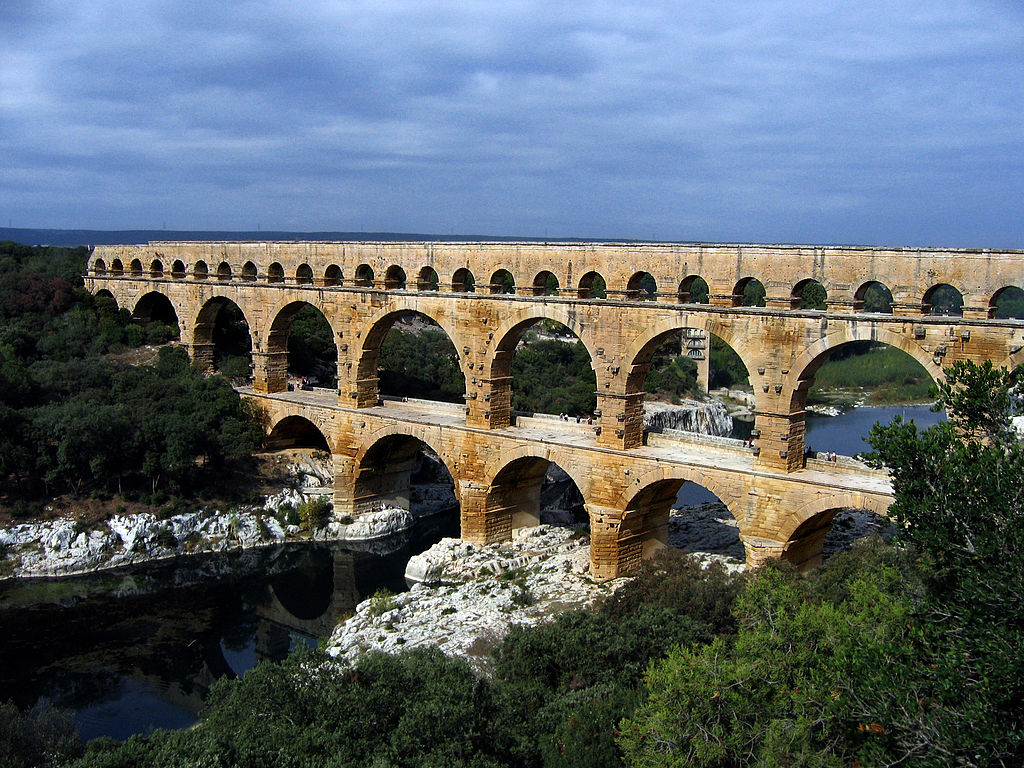
When we think of ancient Roman engineering, towering aqueducts, mighty coliseums, and enduring roads often come to mind. Much of this architectural grandeur owes its longevity to a remarkable material: Roman concrete. Unlike modern concrete, which often degrades over centuries, many Roman structures have stood for millennia, even in harsh marine environments.
The secret to its incredible durability lay in a unique recipe incorporating volcanic ash, lime, and seawater. This mixture created a chemical reaction that formed a rare, exceptionally stable mineral called tobermorite, which actually grew stronger over time when exposed to water. The Romans’ understanding of these geological properties allowed them to construct massive, resilient structures like the Pantheon’s dome, which remains the largest unreinforced concrete dome in the world. For centuries after the fall of Rome, the exact formula for this superior concrete was lost, only to be partially rediscovered through modern scientific analysis. The mystery isn’t just how they made it, but why this invaluable knowledge faded from human memory for so long.

Damascus Steel: The Secret of Legendary Blades
From the Crusades to epic tales, Damascus steel blades were legendary. Renowned for their exceptional strength, flexibility, and razor-sharp edges, these swords also possessed a distinctive wavy, watery pattern on their surface, making each one a unique work of art. The secret to forging this superior metal originated in the Middle East, particularly in the city of Damascus, and was based on wootz steel imported from India.
The exact metallurgical process used to create these blades was a closely guarded secret, passed down through generations of master smiths. Theories abound, suggesting specific heating and cooling cycles, unique forging techniques, or even the presence of trace elements and carbon nanotubes within the steel itself. However, by the 18th century, the knowledge of how to produce true Damascus steel was mysteriously lost. Modern metallurgists have attempted to replicate it, achieving some success, but the precise methods of the ancient masters remain elusive, leaving us to wonder about the full extent of their material science expertise.
Enigmatic Artifacts: Objects That Defy Explanation
Sometimes, the past leaves behind objects that simply don’t fit into our established timelines or understandings. These enigmatic artifacts challenge our historical narratives, suggesting alternative histories, lost civilizations, or even knowledge from sources beyond our current comprehension. They are tangible puzzles, begging to be solved.
The Voynich Manuscript: A Book No One Can Read
Among the world’s most mysterious books, the Voynich Manuscript stands alone. This medieval codex, dating back to the early 15th century, is filled with curious botanical drawings, astronomical diagrams, fantastical figures, and what appears to be a full script written in an unknown language. Despite intense scrutiny from cryptographers, linguists, and historians for centuries, no one has ever managed to decipher a single word.
The manuscript’s origins are debated, its author unknown, and its purpose a complete mystery. Is it a lost language, a coded message, an elaborate hoax, or perhaps a glimpse into a forgotten form of communication or knowledge? The illustrations depict plants that don’t exist, astronomical charts that don’t match known celestial bodies, and bizarre alchemical or biological processes. The Voynich Manuscript continues to baffle experts, serving as a powerful symbol of the lost knowledge that might still be hidden in plain sight.
The Nazca Lines: Giant Geoglyphs in the Desert
Stretching across the arid plains of Peru, the Nazca Lines are a series of colossal geoglyphs etched into the desert floor by the ancient Nazca people between 500 BCE and 500 CE. These magnificent designs depict animals like hummingbirds, monkeys, spiders, and condors, alongside geometric shapes and straight lines extending for miles. What makes them so enigmatic is their sheer scale and precision—many figures are hundreds of feet long and can only be fully appreciated from an aerial perspective.
How did the Nazca people, without the ability to fly, plan and execute such massive and accurate designs? And more importantly, why? Theories range from astronomical calendars, religious offerings to deities, markers for water sources, or even, in more speculative circles, landing strips for extraterrestrial visitors. The purpose of these monumental earthworks remains one of archaeology’s greatest unsolved puzzles, a silent, sprawling testament to a lost belief system or knowledge system.
The Baghdad Battery: An Ancient Electrical Source?
Discovered in 1938 near Baghdad, Iraq, this intriguing artifact consists of a clay jar containing a copper cylinder, which encloses an iron rod. Dating back to the Parthian era (around 250 BCE to 224 CE), its resemblance to a modern battery led some researchers to propose that it was an ancient electrical cell. If filled with an electrolyte like grape juice or vinegar, the device could indeed generate a small electrical current.
The potential implications are profound: did ancient civilizations possess knowledge of electricity? If so, for what purpose? Theories suggest it could have been used for electroplating jewelry with gold or silver, for medicinal purposes like pain relief, or even for ritualistic shock therapy. While the “Baghdad Battery” theory remains contentious, with some scholars suggesting it was merely a storage vessel for scrolls or a ceremonial object, its very existence sparks a fascinating debate about the technological capabilities of our ancestors and the potential for lost scientific discoveries.
Unsolved Puzzles: Challenging Our Historical Narratives
Beyond specific artifacts, entire historical narratives are sometimes challenged by monumental structures or persistent legends that defy easy explanation. These grand puzzles force us to confront the limitations of our current understanding and open the door to radically different interpretations of human history.
The Pyramids of Giza: How Were They Really Built?
The Great Pyramid of Giza, the largest and oldest of the three pyramids, stood as the tallest man-made structure for over 3,800 years. Composed of millions of massive stone blocks, each weighing several tons, its construction around 2580–2560 BCE remains one of humanity’s most enduring engineering mysteries. The precision of its alignment with the cardinal points, the exactness of its angles, and the sheer scale of the undertaking are breathtaking.
While conventional theories propose complex ramp systems, massive workforces, and ingenious leveraging techniques, the exact methods used to quarry, transport, and lift such immense stones to such heights, with the tools available at the time, still elude definitive explanation. Alternative theories, ranging from lost ancient technologies involving sound levitation to advanced water-based systems, continue to emerge, fueling the debate. The pyramids stand as a silent, monolithic question mark, challenging us to fully grasp the capabilities of ancient Egyptian civilization.
Atlantis: Myth, Legend, or Lost Continent?
The tale of Atlantis, a technologically advanced island civilization that sank into the ocean in a single day and night, has captivated imaginations for millennia. First described by the Greek philosopher Plato around 360 BCE, Atlantis was depicted as a powerful naval empire that eventually succumbed to divine wrath. For centuries, scholars and adventurers have scoured the globe for any evidence of its existence.
Is Atlantis merely an allegorical fable, a cautionary tale about hubris, or does it represent a kernel of historical truth? The search for Atlantis has led to countless expeditions and theories, pointing to locations as diverse as the Mediterranean Sea, the Caribbean, and even Antarctica. While no definitive archaeological evidence has ever been found, the enduring power of the Atlantis myth speaks to our fascination with lost civilizations and the tantalizing possibility that a glorious chapter of human history has been erased from our collective memory. The legend serves as a powerful reminder of how easily civilizations can vanish, leaving only whispers in their wake.
Göbekli Tepe: The Dawn of Civilization Rewritten
Nestled in southeastern Turkey, Göbekli Tepe is an archaeological site that has profoundly rewritten our understanding of early human history. Discovered in the 1990s, this monumental complex of massive, intricately carved stone pillars dates back to approximately 9600 BCE—making it thousands of years older than Stonehenge and the Egyptian pyramids. What makes Göbekli Tepe so revolutionary is its age: it predates the invention of agriculture, settled communities, and pottery.
The site consists of multiple circular structures, each featuring T-shaped megaliths adorned with detailed carvings of animals like boars, foxes, snakes, and birds. This sophisticated construction implies a level of social organization, symbolic thought, and artistic skill previously thought impossible for hunter-gatherer societies. Göbekli Tepe suggests that the creation of monumental religious sites might have preceded the development of agriculture and permanent settlements, challenging the long-held belief that complex societies only emerged after the agricultural revolution. It forces us to reconsider the very origins of religion, community, and civilization itself.