
Challenging History: Unearthing Provocative and Controversial Archaeological Finds
Step into the thrilling, often contentious world where ancient relics meet modern skepticism. Archaeology isn’t always a neat, linear progression of discovery; sometimes, finds emerge that actively defy our established timelines and understanding of human history. These “forbidden” archaeological discoveries spark intense debates, fuel theories of suppressed knowledge, and sometimes even turn out to be elaborate hoaxes. This article dives deep into some of the most captivating and controversial archaeological finds, exploring the mainstream interpretations alongside the provocative alternative theories that continue to fascinate history buffs and conspiracy enthusiasts alike.

The Allure of “Forbidden Archaeology”
Why do certain archaeological discoveries ignite such passionate arguments and give rise to terms like “forbidden archaeology”? It’s often because these finds appear to contradict widely accepted narratives about human development, technology, or ancient civilizations. The very idea that our understanding of the past might be incomplete, or even fundamentally flawed, is a powerful draw. For many, these controversial discoveries offer a tantalizing glimpse into a hidden past, suggesting that advanced civilizations might have existed far earlier than we imagine, or that ancient peoples possessed knowledge we’re only now rediscovering. This desire for a more extraordinary history often clashes with the rigorous, evidence-based approach of mainstream archaeology, creating a fertile ground for debate, speculation, and sometimes, outright confrontation.

Out-of-Place Artifacts (OOPArt): A Glimpse of the Impossible?
Perhaps nothing captures the imagination quite like an Out-of-Place Artifact (OOPArt) – an object found in an archaeological context that seems impossible for its time period. These finds often spark the most intense discussions, challenging our assumptions about ancient technology and human ingenuity.

The Antikythera Mechanism: Ancient Tech or Alien Intervention?
Discovered in a shipwreck off the coast of the Greek island of Antikythera in 1901, the Antikythera Mechanism is arguably the most complex ancient device ever found. Dating back to around 150-100 BCE, this intricate bronze mechanism, comprised of dozens of meshing gears, was an astronomical calculator of astonishing precision. It could predict eclipses, track the movements of celestial bodies, and even follow the cycles of ancient athletic games.
Mainstream View: Archaeologists and historians universally acknowledge the Antikythera Mechanism as an unparalleled feat of ancient Greek engineering and scientific thought. It demonstrates a level of mechanical sophistication previously thought impossible for its era, pushing back our understanding of ancient technology by centuries. It wasn’t “alien intervention,” but rather a testament to the genius of ancient Greek astronomers and engineers, perhaps even influenced by Babylonian astronomical knowledge.
Controversial Angle: Despite the mainstream acceptance of its Greek origins, the sheer complexity of the Antikythera Mechanism continues to fuel speculation among alternative theorists. How could such a device, seemingly centuries ahead of its time, have been created and then seemingly forgotten? Its uniqueness raises questions about other possible lost technologies or a more advanced ancient world whose achievements have largely vanished from the historical record. The gap between the Antikythera Mechanism and the next comparable complex geared device (from the medieval period) is so vast it often makes people wonder if there’s a missing link in our understanding.

The Baghdad Battery: Prehistoric Power Source?
Unearthed in Khujut Rabou, Iraq, in 1936, the Baghdad Battery consists of a clay jar containing a copper cylinder, an iron rod, and traces of corrosion, suggesting an acidic agent was once present. Dated to the Parthian era (around 250 BCE to 224 CE), its apparent resemblance to a galvanic cell, capable of generating a small electrical current, has made it a focal point of “forbidden archaeology.”
Mainstream View: While acknowledging its intriguing structure, mainstream archaeologists generally interpret the Baghdad Battery as a storage vessel for scrolls, a container for sacred texts, or possibly a device used for electroplating small items with gold or silver, though no definitive evidence for electroplating has been found at the site. The idea of it being a functional battery for general power generation is widely dismissed due to the lack of accompanying electrical equipment or evidence of its widespread use.
Controversial Angle: Proponents of the “ancient battery” theory argue that the artifact’s construction is too similar to modern batteries to be coincidental. Experiments have shown that replicas can indeed generate a small voltage, leading some to believe the Parthians possessed a rudimentary understanding of electricity, perhaps for therapeutic purposes (like pain relief through electro-stimulation) or for cultic rituals. The lack of other electrical devices, they contend, doesn’t negate the possibility of its existence, merely that its purpose might have been niche or its technology lost.
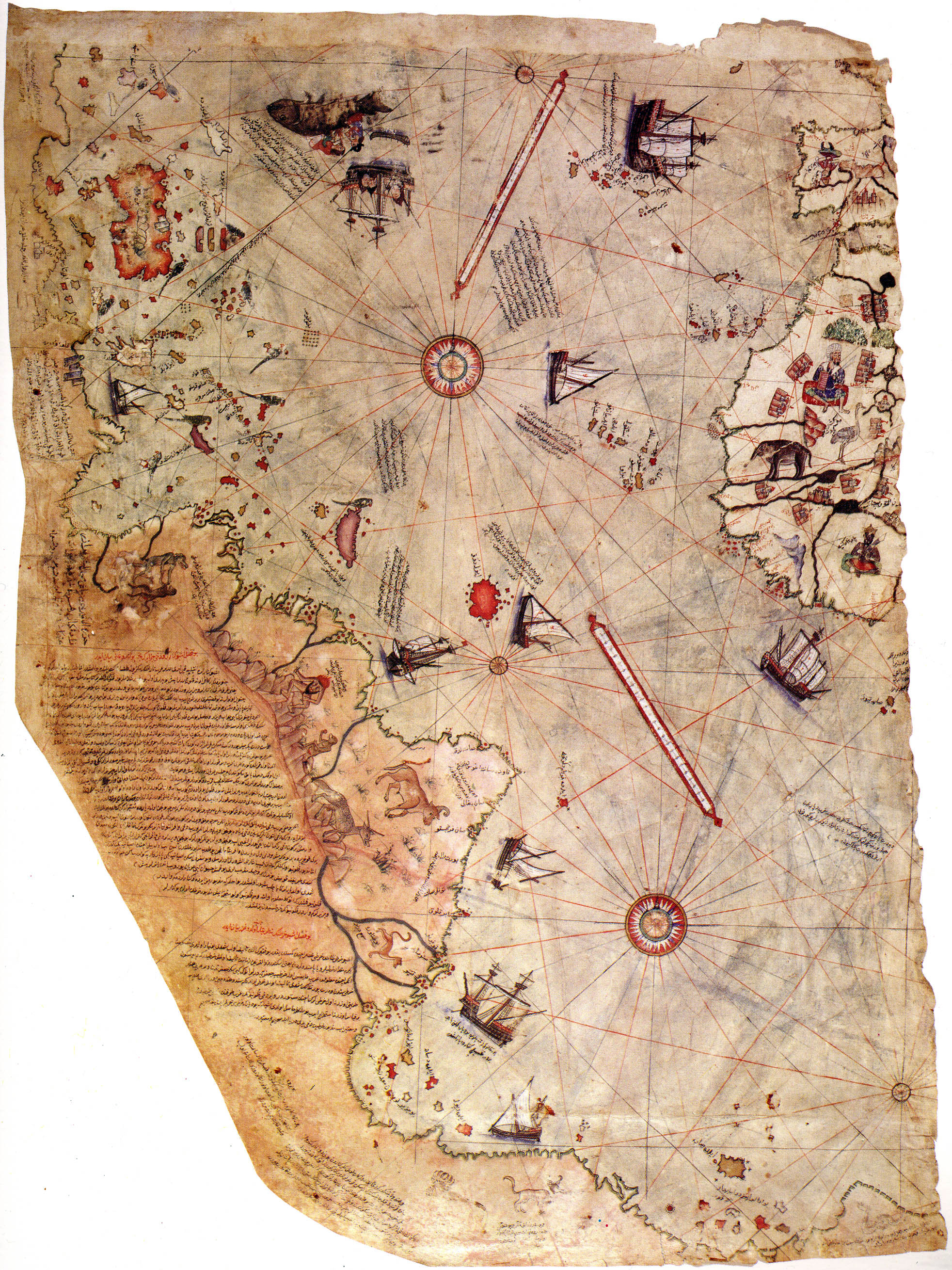
The Piri Reis Map: A Cartographic Enigma
Compiled in 1513 by the Ottoman admiral and cartographer Piri Reis, this world map is one of the most famous and controversial artifacts in cartography. It depicts parts of the western coast of Africa, the eastern coast of South America, and, most provocatively, what appears to be a portion of Antarctica’s coastline without ice.
Mainstream View: Historians generally agree that the Piri Reis Map is a compilation of various older maps, some accurate, some less so. The depiction of South America is largely consistent with early 16th-century knowledge. The “Antarctica” segment is often explained as a speculative extension of the South American coastline, a mythical “Terra Australis Incognita” (unknown southern land), or a coincidence where landforms are misinterpreted. The accuracy of some features is attributed to Reis’s access to a wide array of source maps, some likely from Columbus’s voyages or even older, now-lost charts.
Controversial Angle: The map’s most debated aspect is the apparent depiction of Antarctica’s Queen Maud Land coastline, which was not officially discovered until 1820, and whose sub-glacial topography wasn’t fully mapped until the mid-20th century. How could a 16th-century mapmaker have access to such information? Conspiracy theorists suggest that Piri Reis must have utilized much older source maps, perhaps from an unknown advanced ancient civilization, or even extraterrestrial sources, that possessed the ability to map the world from an aerial perspective and depict coastlines as they existed before the last ice age, when Antarctica was not covered in ice. This implies a “suppressed history” of global exploration and cartography far predating recorded history.
Giants, Lost Civilizations, and Suppressed Histories
Beyond individual artifacts, some controversial discoveries hint at entirely different narratives for human origins or the existence of advanced ancient societies that defy conventional timelines.
Giant Skeletons: Myth or Buried Truth?
Tales of giants are common in mythologies worldwide, from the Nephilim of the Bible to the Greek Titans. What makes these stories particularly intriguing to some are persistent reports from the 19th and early 20th centuries of massive human-like skeletons being unearthed across the Americas and elsewhere, often described as being 7 to 12 feet tall. These finds were frequently reported in local newspapers but rarely made it into mainstream scientific literature, often disappearing from public view.
Mainstream View: Mainstream archaeology largely dismisses these reports as sensationalist journalism, misidentification of animal bones (like mastodons or mammoths), or outright hoaxes prevalent in an era of “curiosity cabinets” and showmanship. While isolated cases of gigantism (a medical condition) exist, there’s no widespread archaeological evidence for a race of ancient human giants. The “disappearance” of these reported finds is often explained by their lack of scientific validity or simply being lost to time and poor record-keeping.
Controversial Angle: For proponents of “suppressed history,” the sheer volume of these historical reports, coupled with the consistent theme of giant humanoids, suggests something more than mere fabrication. They argue that these discoveries were systematically suppressed or covered up by institutions like the Smithsonian, perhaps to maintain established evolutionary theories or to avoid challenging prevailing religious or scientific dogmas. The idea of a pre-human or parallel race of giants existing in antiquity continues to be a potent element of alternative history narratives.
Gobekli Tepe: Rewriting the Dawn of Civilization
Located in southeastern Turkey, Gobekli Tepe is a monumental archaeological site dating back to around 9600 BCE, predating Stonehenge by 6,000 years and the invention of agriculture by millennia. It consists of massive carved stone pillars, some weighing up to 20 tons, arranged in circular enclosures, adorned with intricate animal reliefs.
Mainstream View: Gobekli Tepe is a revolutionary discovery, challenging the long-held belief that complex societal structures, monumental architecture, and organized religion emerged only after the development of agriculture and sedentary lifestyles. It suggests that hunter-gatherers were far more sophisticated than previously imagined, capable of large-scale cooperative projects and abstract thought. The site’s purpose is still debated, but it’s widely considered a proto-religious or ceremonial center. Its existence has already forced mainstream archaeology to rewrite parts of its narrative on the origins of civilization.
Controversial Angle: While mainstream archaeology fully embraces Gobekli Tepe as groundbreaking, its implications are still profoundly controversial within the field. How could hunter-gatherers, without permanent settlements or agriculture, organize such massive construction projects? Some alternative theorists push this further, suggesting the site’s complexity points to a “lost civilization” or a forgotten period of advanced knowledge that seeded the later development of human society, rather than being an indigenous development of local hunter-gatherers. The sheer scale and artistry of the carvings, seemingly appearing “out of nowhere,” fuel questions about its true origins and purpose.
The Bosnian Pyramids: A Modern Enigma
Since 2005, a series of hills in Visoko, Bosnia-Herzegovina, have been controversially promoted as ancient pyramids by Bosnian author and researcher Semir Osmanagić. He claims these hills are in fact massive, man-made structures with intricate tunnel systems, dating back tens of thousands of years, and possibly radiating energy fields.
Mainstream View: Geologists, archaeologists, and scientists from across the globe have overwhelmingly concluded that the “Bosnian Pyramids” are natural geological formations known as “flat-topped hills” or “pyramidal hills.” They point to the lack of archaeological evidence for construction, the natural stratification of the rock, and the absence of any credible dating that supports Osmanagić’s claims. International archaeological associations have condemned the project for damaging genuine medieval archaeological sites in the area.
Controversial Angle: Despite the scientific consensus, the Bosnian Pyramids project has garnered significant public support, attracting volunteers and tourists from around the world. Supporters believe that mainstream science is deliberately ignoring or suppressing evidence of an ancient, advanced civilization in Europe. They cite alleged energy readings, geometric alignments, and the sheer scale of the formations as proof of their artificial nature. For many, it’s a powerful symbol of “suppressed history” and the potential for a hidden, glorious past.
Debunked Theories and Hoaxes: The Importance of Skepticism
It’s crucial to acknowledge that not every strange or challenging find points to a hidden truth. The history of archaeology is also replete with debunked theories and outright hoaxes, which serve as important lessons in critical thinking and the scientific method.
The Piltdown Man: A Famous Forgery
For over 40 years, from its “discovery” in 1912 until its exposure in 1953, the Piltdown Man was considered a crucial missing link in human evolution. It consisted of a human-like skullcap and an ape-like jawbone, supposedly found together in a gravel pit in Piltdown, England.
Mainstream View: Initially accepted, the Piltdown Man began to raise suspicions as more genuine hominid fossils were discovered elsewhere, which didn’t fit its unique characteristics. In 1953, scientific analysis definitively proved it was a forgery: an orangutan jawbone and chimpanzee teeth had been deliberately stained and filed down to appear ancient and human-like, then combined with a medieval human skull. The perpetrator remains a subject of historical debate, but the incident highlighted the importance of rigorous scientific scrutiny and peer review.
Lesson Learned: Piltdown Man stands as a stark reminder that even within the scientific community, the desire to find evidence supporting a hypothesis can sometimes lead to susceptibility to fraud. It underscores why independent verification, reproducible results, and healthy skepticism are foundational to genuine discovery.
Crystal Skulls: New Age Mysticism vs. Archaeological Fact
These highly polished, human-skull-shaped objects, often made of quartz, gained notoriety for their alleged ancient origins and mystical powers, particularly their association with Mesoamerican civilizations like the Maya and Aztecs.
Mainstream View: Extensive scientific analysis, including microscopic examination and crystalographic studies, has conclusively shown that the famous crystal skulls held in museums (like the British Museum’s “Mitchell-Hedges Skull”) are not ancient artifacts. They bear tool marks consistent with 19th-century lapidary techniques and were likely produced in Europe, probably Germany, in the mid-1800s. There is no archaeological evidence of crystal skulls in pre-Columbian contexts.
Controversial Angle: Despite the scientific debunking, the mystique of the crystal skulls persists in New Age communities and popular culture. Believers attribute them with healing properties, psychic abilities, and connections to ancient wisdom or even extraterrestrial beings. For them, the scientific debunking is often seen as part of a larger effort to dismiss spiritual or esoteric knowledge that doesn’t fit a materialist worldview.
Why Do These Controversial Discoveries Endure?
The enduring fascination with “forbidden archaeology” and controversial discoveries speaks to several deeply human inclinations:
- The Lure of the Unknown: There’s an inherent thrill in the idea that there’s more to history than we’ve been told, a secret past waiting to be uncovered.
- Distrust of Authority: For some, skepticism towards mainstream institutions, whether scientific, academic, or governmental, naturally extends to archaeological narratives. If the “official story” is seen as flawed in one area, it’s questioned in others.
- Desire for a More Exciting Past: The idea of advanced ancient civilizations, forgotten technologies, or even extraterrestrial contact offers a far more dramatic and romantic vision of history than the slow, incremental progress often depicted by conventional archaeology.
- The Power of Narrative: Compelling stories, even if unproven, can be incredibly sticky. The narrative of “suppressed history” often taps into a universal underdog mentality, where the truth is fighting against an entrenched establishment.
Conclusion: The Ongoing Quest for Truth
The world of archaeology is a dynamic and ever-evolving field. While mainstream archaeology relies on rigorous scientific methods, peer review, and verifiable evidence to construct our understanding of the past, the human spirit’s desire for wonder, mystery, and alternative explanations will always find fertile ground in the unusual and the unexplained. Controversial finds, whether they ultimately rewrite history or are relegated to the realm of myth and hoax, serve a vital purpose: they force us to question, to investigate more deeply, and to continually re-evaluate our assumptions about who we are and where we come from. The tension between established knowledge and challenging new ideas is, in many ways, the engine of discovery itself.
What are your thoughts on these enigmatic finds? Do you believe there’s a suppressed history waiting to be fully unearthed, or is skepticism the most reliable path to truth? Join the debate in our community forum and share your perspective on these captivating and controversial archaeological discoveries!
—
Internal Link Opportunities:
External Link Opportunities:
Image Alt Text Suggestions: